Nike Air Max 1000 “Black/Volt” Returns via Zellerfeld: A New Era Drops for Air Max Day 2026

March 23, 2026
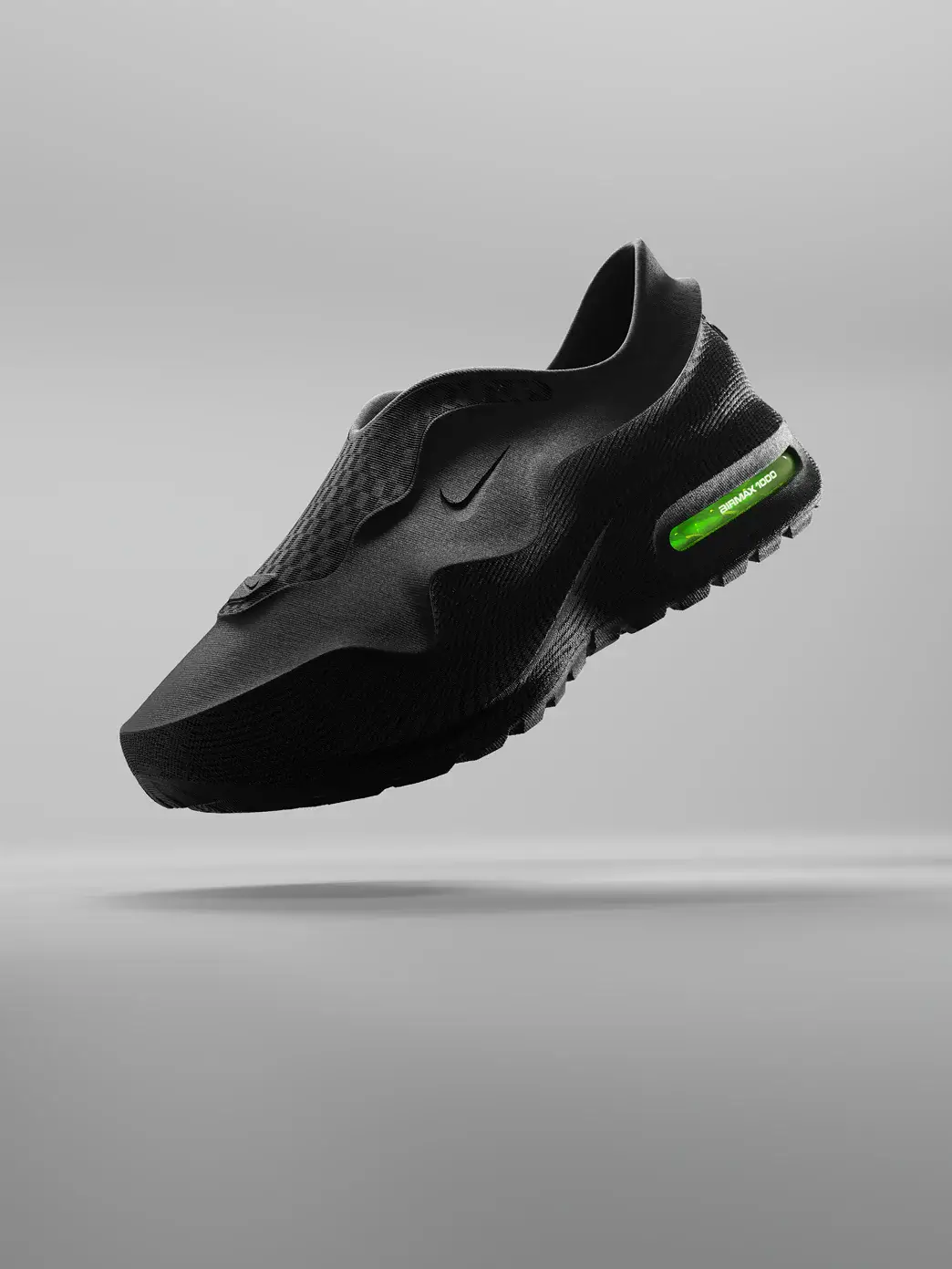
On March 22, 2026, the future of footwear quietly reloaded. Not through a flagship Nike SNKRS shock drop, not through tier-zero boutiques, but via a digital-first, design-forward platform redefining how shoes are made and distributed. Zellerfeld has officially announced the return of the Nike Air Max 1000 “Black/Volt,” timed precisely for Air Max Day—and once again, access comes down to a raffle.
Opening March 23 exclusively through Zellerfeld’s web channels, this release isn’t just another restock. It’s a reaffirmation of a new manufacturing philosophy—one where shoes are printed, not assembled, and where scarcity meets technological experimentation.
View this post on Instagram
stir
Forget traditional release mechanics. No campouts, no first-come-first-served chaos, no resale bots scrambling at checkout. The Air Max 1000 “Black/Volt” will be distributed through a controlled raffle system hosted entirely by Zellerfeld.
Participants enter digitally. Winners are selected. Pairs are produced and delivered.
It’s a model that feels closer to art editions or limited design objects than mass-market footwear. And in many ways, that’s exactly what the Air Max 1000 represents—a collectible artifact of where sneaker culture is heading.
This approach also reflects Zellerfeld’s production method. Unlike conventional factories that mass-produce inventory, Zellerfeld operates on-demand manufacturing, meaning each pair is printed as part of a controlled batch. The raffle isn’t just about hype—it’s about aligning supply with a new kind of production logic.
flow
At first glance, the Air Max 1000 looks like something out of a speculative future—organic, sculptural, and devoid of familiar construction cues. But its DNA is deeply rooted in the Air Max lineage.
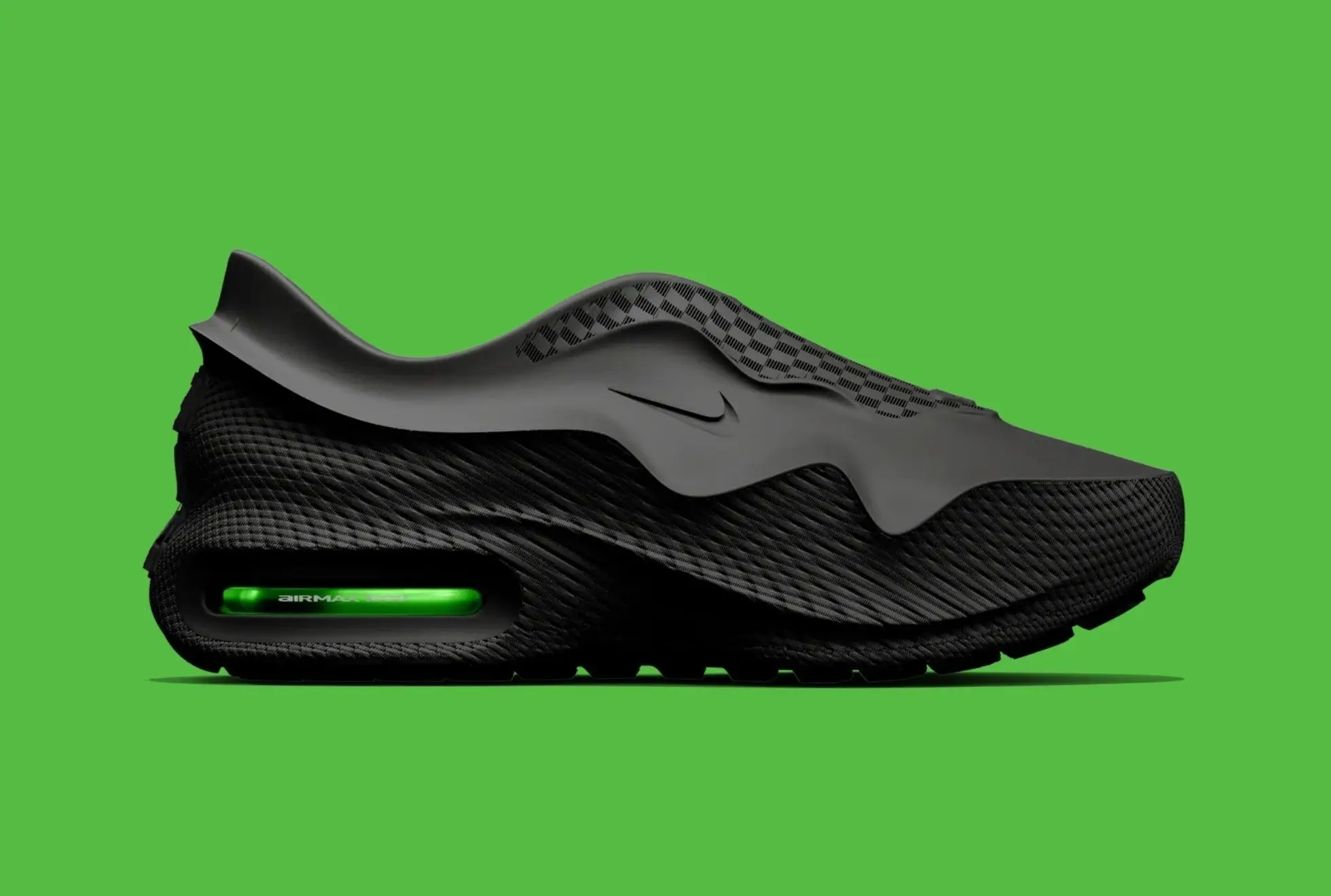
The visible Air unit at the heel remains the anchor. It’s rendered in Volt, that electric green synonymous with high-performance energy and Nike’s most iconic color storytelling. Against the all-black body, it glows like a signal—an unmistakable nod to decades of Air Max innovation.
But everything around it is new.
The shoe is almost entirely 3D-printed. No stitching. No layered panels. No glue. Instead, a single, continuous structure that shifts in density and texture depending on function. Breathability, flexibility, and support are engineered directly into the form.
This isn’t just design—it’s computational design.
view
The “Black/Volt” colorway has long been part of Nike’s visual language, appearing across performance runners and lifestyle silhouettes alike. It’s bold without being loud, technical without being sterile.
On the Air Max 1000, that palette is distilled to its essence.
The black upper acts as a canvas for the shoe’s intricate geometry. Wave-like ridges ripple across the surface. Micro-perforations emerge organically. Patterns transition seamlessly from one zone to another, creating a sense of motion even when the shoe is still.
Then comes the Volt.
Not splashed across the upper, not used as an accent on branding—but concentrated entirely within the Air unit. It’s restrained, deliberate, and powerful. A single point of contrast that draws the eye and grounds the design in Air Max heritage.
wear
Another defining feature of the Air Max 1000 is its laceless construction. The absence of laces isn’t just an aesthetic choice—it’s part of a broader shift toward frictionless design.
The shoe is engineered to be slipped on, adapting to the foot through material elasticity and structural precision. It’s minimal, but not simplistic. Every curve, every contour serves a purpose.
This approach aligns with a growing trend in footwear where ease of use is prioritized alongside performance and style. In a world where everything is becoming more seamless—from digital interfaces to physical products—the Air Max 1000 feels perfectly in sync.
zellerfeld
To understand the significance of this release, you have to understand Zellerfeld.
The company has positioned itself at the forefront of 3D-printed footwear, collaborating with designers, brands, and innovators to push the boundaries of what shoes can be. Their process eliminates many of the inefficiencies of traditional manufacturing—reducing waste, simplifying supply chains, and enabling rapid iteration.
With the Air Max 1000, Zellerfeld isn’t just a production partner. It’s a co-architect of a new paradigm.
Each pair is produced using advanced additive manufacturing techniques, allowing for precise control over material distribution. This means different parts of the shoe can have different properties—soft where you need cushioning, firm where you need support—all within a single printed structure.
It’s a level of integration that traditional methods simply can’t replicate.
day
Since its inception, Air Max Day has been a moment to celebrate Nike’s past while hinting at its future. Retro reissues, new silhouettes, and experimental concepts all converge around March 26.
But the Air Max 1000 stands apart.
This isn’t a throwback. It’s not a remix of a classic. It’s a forward-facing statement—a declaration that the next chapter of Air Max won’t be defined by nostalgia alone.
By choosing to re-up the “Black/Volt” colorway through Zellerfeld, Nike is doubling down on that message. Innovation isn’t a side project. It’s the main event.
rare
Within sneaker culture, the Air Max 1000 occupies a unique space. It doesn’t rely on celebrity co-signs or archival hype. Its value comes from its design, its technology, and its limited availability.
The initial 2025 release sold out almost instantly, with pairs quickly appearing on resale platforms at significant markups. But beyond resale value, the shoe has become a symbol—an early adoption piece for those tapped into the future of design.
Owning a pair isn’t just about style. It’s about participation in a shift.
how
For those looking to secure a pair, the process is straightforward but far from guaranteed:
- Visit Zellerfeld’s official web channels
- Enter the raffle starting March 23, 2026
- Await selection ahead of Air Max Day (March 26)
There are no shortcuts. No early links. No backdoor access.
Just a digital entry and a chance to be part of something new.
fin
The re-release of the Nike Air Max 1000 “Black/Volt” isn’t just another date on the sneaker calendar. It’s a signal.
A signal that design is evolving.
That manufacturing is changing.
That the definition of a sneaker is expanding.
Through its partnership with Zellerfeld, Nike is exploring a future where shoes are printed on demand, tailored through data, and distributed through new channels.
And while the Air Max 1000 may still feel experimental, moments like this—raffles, re-ups, Air Max Day spotlights—are how experiments become the norm.
So when the raffle opens on March 23, it’s not just an opportunity to buy a sneaker.
It’s an opportunity to step into the future—one printed layer at a time.