Review: Jim Morrison, Laurel Canyon, and the Corner Store That Refuses to Fade

March 23, 2026
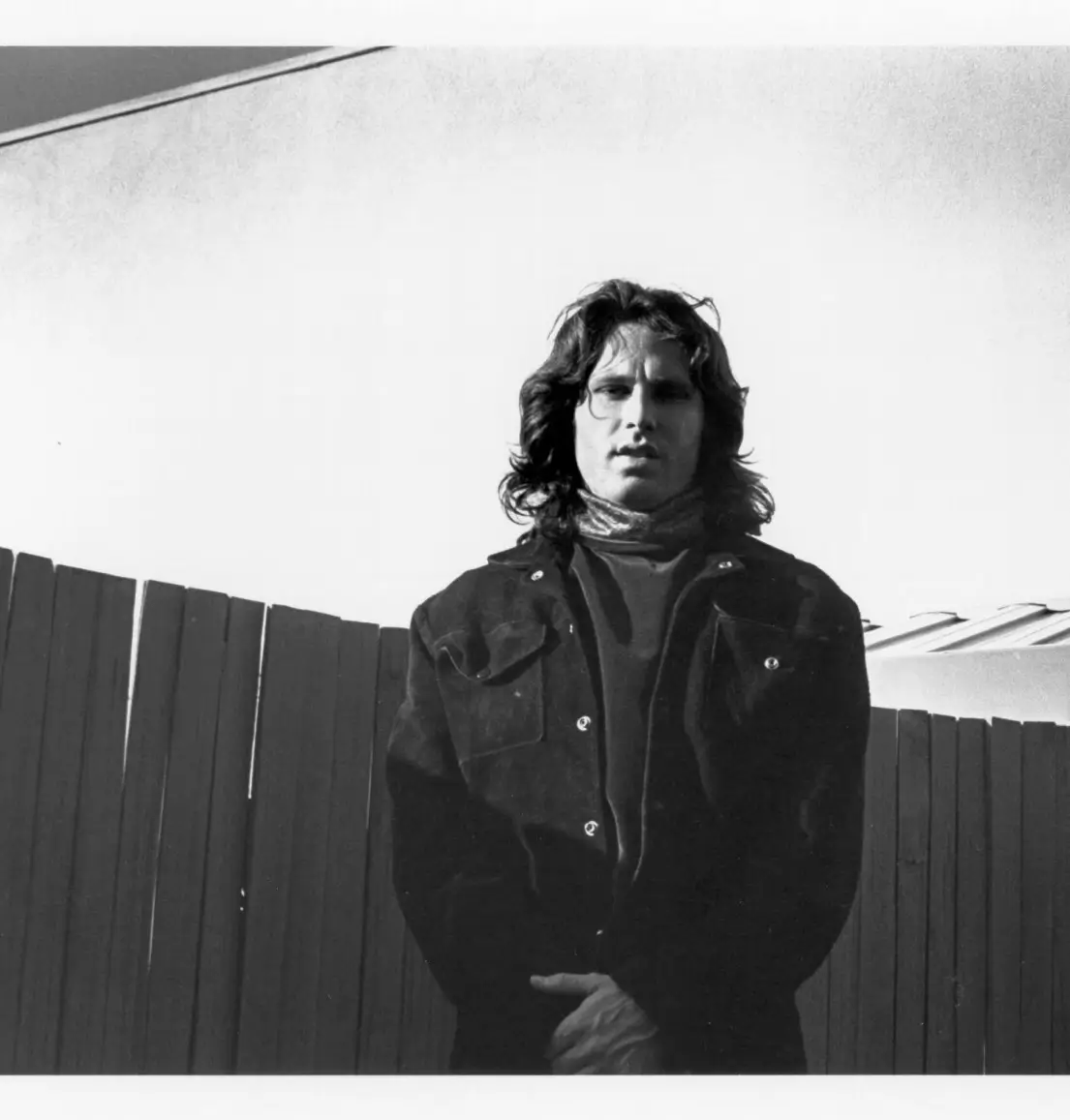
In Los Angeles, history rarely announces itself with monuments. It hides instead in plain sight—behind sun-faded signage, within wood-paneled interiors, and along canyon roads that wind just far enough from the city to feel like an escape. The corner store at Laurel Canyon Boulevard and Lookout Mountain Avenue is one such place: modest, weathered, and, until recently, quietly enduring. But its sale has stirred something larger than a real estate transaction. It has reopened a cultural fault line—between preservation and progress, memory and market value, myth and material reality.
At the center of that mythology stands Jim Morrison, whose presence in Laurel Canyon during the 1960s helped transform the neighborhood into a crucible of American counterculture. The store, like the canyon itself, is not simply a location. It is a relic of a moment when music, identity, and place converged with unusual intensity. And now, as ownership changes hands, the question is not only what will become of the building—but what becomes of the stories it holds.
idea
It offered proximity to the Sunset Strip’s recording studios and performance venues while maintaining a sense of isolation that encouraged experimentation, both artistic and personal.
Artists gathered here not by accident, but by instinct. The canyon became home to a constellation of musicians whose influence would define an era: Joni Mitchell, Frank Zappa, David Crosby, and, crucially, members of The Doors. The geography of Laurel Canyon fostered a kind of creative intimacy—neighbors became collaborators, and songs became shared currency.
Within this ecosystem, even the most unassuming spaces acquired meaning. A corner store was not merely a place to buy cigarettes or bread; it was a social node, a site of accidental encounters, a backdrop to conversations that might later echo through vinyl grooves.
jim
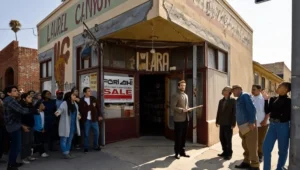
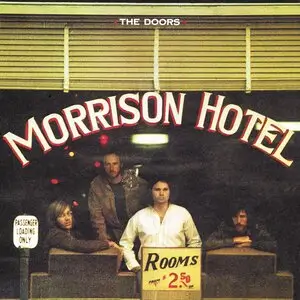
If Laurel Canyon was a stage, Jim Morrison was one of its most enigmatic performers. Arriving in Los Angeles as a film student, Morrison quickly gravitated toward music, forming The Doors with Ray Manzarek, Robby Krieger, and John Densmore.
Morrison’s relationship to place was never incidental. His lyrics often reflected a deep engagement with environment—desert landscapes, urban tension, and, crucially, the psychological terrain of Los Angeles. The canyon offered him both refuge and resonance. It was here, among the eucalyptus trees and winding roads, that Morrison cultivated the persona of the “Lizard King,” blending poetry, performance, and provocation.
The corner store, though not central in a literal sense, existed within Morrison’s orbit. It represented the everyday infrastructure of a mythic lifestyle—a place where the extraordinary brushed against the ordinary. And in Morrison’s work, that tension was everything.
flow
The store’s cultural footprint extends beyond Morrison. It is also associated with Cass Elliot, whose presence in Laurel Canyon embodied the communal ethos of the time. Known affectionately as “Mama Cass,” Elliot was both a musical force and a social catalyst, hosting gatherings that blurred the line between private life and public creativity.
In this context, the corner store functioned as an extension of the canyon’s social fabric. It was where musicians might cross paths between sessions, where conversations began that would later become collaborations. Its significance lies not in any single event, but in its accumulation of moments—fleeting, undocumented, yet collectively transformative.
region
The thematic conjure of Laurel Canyon is inseparable from the music it produced, and few bands captured that mythology more vividly than The Doors. Morrison’s lyrics often invoked movement—roads, highways, thresholds. The famous line “Keep your eyes on the road” has become shorthand for a kind of existential navigation, a directive that resonates beyond its original context.
The corner store, situated along one of those roads, becomes part of that narrative. It is not explicitly immortalized in song, but it exists within the same symbolic geography. It is a place you pass, a place you remember, a place that anchors the abstract in the tangible.
bal
Some locals argue that the transaction was conducted with insufficient transparency, fueling speculation about the store’s future. Rumors of conversion into a liquor outlet have circulated, though others insist these claims are unfounded. What is clear, however, is that the sale has exposed a deeper anxiety: that Los Angeles, in its relentless pursuit of growth, risks erasing the very textures that make it culturally significant.
Preservation advocates see the store as a landmark—not necessarily in the official, bureaucratic sense, but in the cultural imagination. It is a site of memory, a physical link to a period that continues to shape global music and identity.
show
Los Angeles has always struggled with its own history. Unlike older cities, where architecture enforces continuity, Los Angeles often prioritizes the new over the old. Buildings are demolished, neighborhoods reconfigured, and cultural landmarks repurposed with little regard for their past lives.
This tendency is not merely aesthetic; it is economic. Land in Los Angeles is valuable, and the pressure to maximize that value is constant. In this context, a small corner store—no matter how storied—can easily be seen as expendable.
Yet the backlash to the sale suggests that something is shifting. There is a growing recognition that cultural heritage cannot be measured solely in square footage or profit margins. Places like the Laurel Canyon store carry intangible value—stories, associations, atmospheres—that cannot be replicated once lost.
fwd
Decades after his death, Jim Morrison remains a figure of enduring fascination. His image—part poet, part provocateur—continues to circulate across media, fashion, and music. But what sustains that fascination is not just Morrison himself; it is the world he inhabited.
Laurel Canyon is part of that world. The store is part of that world. They provide context, grounding the myth in physical reality. Without them, Morrison risks becoming abstract—a symbol detached from the conditions that produced him.
This is why the debate over the store matters. It is not simply about nostalgia. It is about maintaining a connection between past and present, ensuring that cultural memory remains anchored in place.
fin
The corner store at Laurel Canyon and Lookout Mountain Avenue stands, for now, at a threshold. Its future is uncertain, its past secure but increasingly distant. Whether it becomes a preserved landmark, a reimagined space, or something else entirely, its story will continue to resonate.
Because in the end, the store is not just a building. It is a reminder of a moment when Los Angeles briefly aligned—when geography, creativity, and community converged to produce something extraordinary. It is a fragment of a larger narrative, one that includes Jim Morrison and countless others who passed through the canyon, leaving traces that still linger.
And as long as those traces remain—whether in song, in memory, or in the quiet persistence of a weathered storefront—the canyon will continue to speak.