Toy Story 5 — São Paulo, November 2024: A Franchise Meets Its Own Present

March 24, 2026
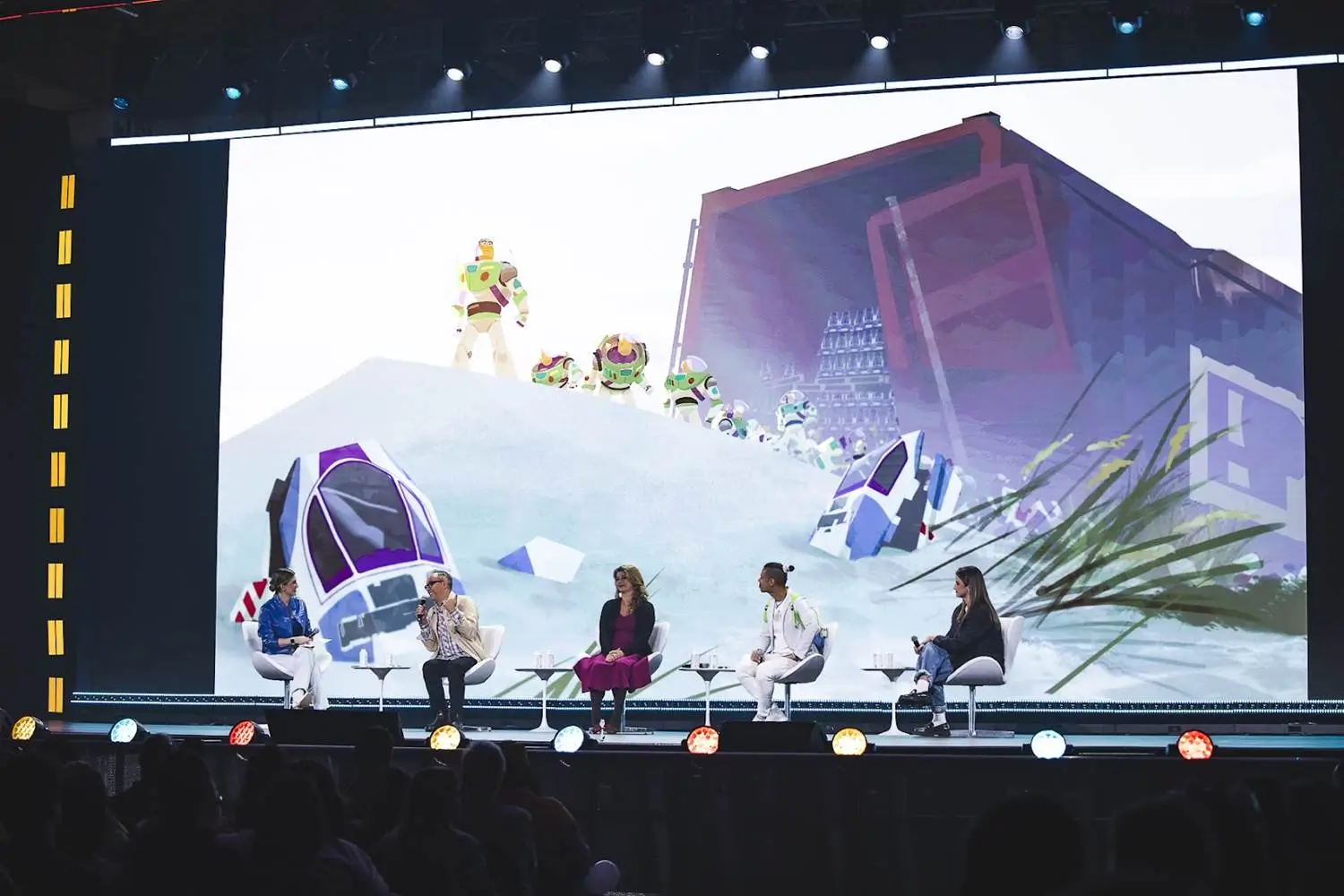
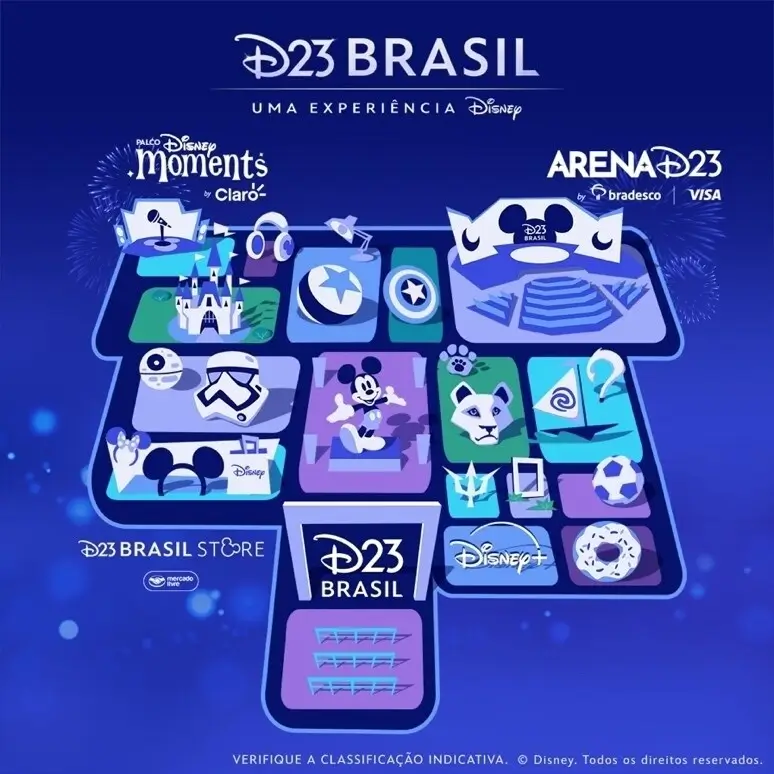
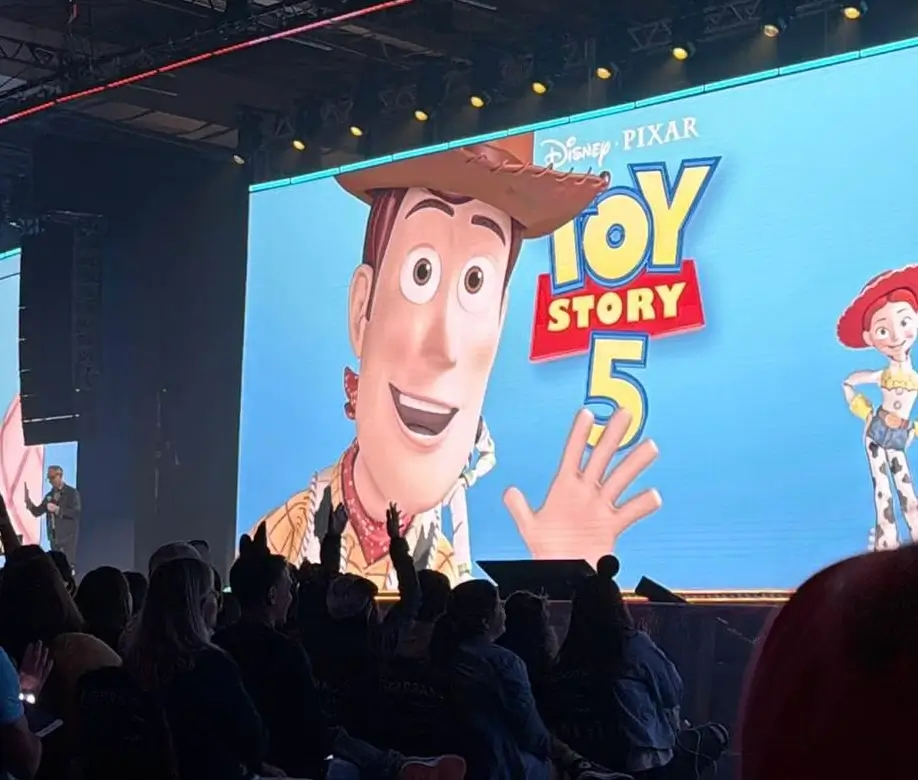
Between November 8 and November 10, 2024, inside the São Paulo staging of D23 Brazil, Disney and Pixar anchored a specific, deliberate reveal: the first widely circulated concept image tied to Toy Story 5. It did not arrive as a teaser trailer, nor as a cast-heavy spectacle. It surfaced instead within the framework of a Toy Story anniversary panel, calibrated to coincide with the franchise’s nearing 30-year threshold since Toy Story.
This matters because Pixar’s reveals are rarely arbitrary. The date, the geography, and the format all function as signals. São Paulo—rather than Anaheim or Burbank—positions the franchise within a global rather than domestic continuum. November 2024—rather than closer to the film’s June 2026 release—positions the image as a conceptual declaration rather than a marketing beat.
The panel itself, staged within that November weekend, was less about announcing Toy Story 5’s existence (already confirmed) and more about articulating its direction. The image became the message.
View this post on Instagram
idea
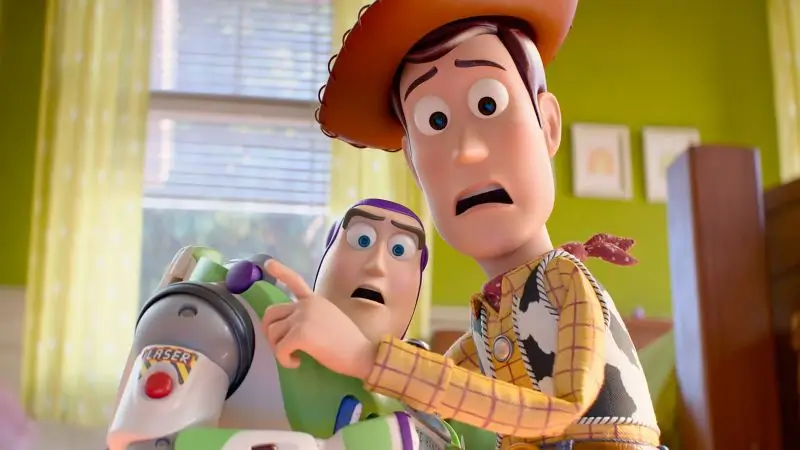
The concept art shown during the panel presents a composition that is almost static in structure yet dynamic in implication. A child—widely interpreted as Bonnie or a Bonnie-adjacent figure—is seated, absorbed in a tablet. Around her, arranged with the quiet patience that has always defined them, are toys: Woody, Buzz Lightyear, and Jessie among them.
No one is discarded. No one is broken. No one is boxed away.
And yet the emotional distance is unmistakable.
The scene reframes the franchise’s central anxiety. In Toy Story 3, the fear was physical abandonment—donation, disposal, transition. In Toy Story 4, the question became existential—what is a toy without a singular owner? In this new image, the anxiety shifts again, toward something less visible but arguably more pervasive: attention displacement.
The child is present. The toys are present. The bond, however, is no longer active.
retro
Anchoring the reveal to November 2024 is not incidental. The date sits at a particular intersection:
- Nearly three decades after Toy Story redefined animation in 1995
- Roughly eighteen months ahead of the confirmed June 2026 release window
- Deep within a period where screen-based childhood has become not emergent, but normalized
By choosing this moment, Pixar positions Toy Story 5 not as a reactive project, but as a reflective one. The film is not catching up to a trend; it is interpreting a condition that has already stabilized.
The D23 Brazil panel therefore functions as a timestamp. It marks the point at which Pixar formally acknowledges that the central ecology of play has shifted.
stir
The decision to stage this reveal in São Paulo rather than at the flagship U.S. D23 Expo reframes the conversation geographically. Brazil represents one of Disney’s most engaged international markets, but more importantly, it represents a context where digital adoption and mobile-first interaction are deeply embedded in daily life.
The image of a child engaged with a tablet is not culturally specific—it is globally legible. By presenting this image in São Paulo, Pixar underscores that the thematic pivot of Toy Story 5 is not tied to a single market or demographic. It is a shared global condition.
This aligns with Disney’s broader strategy: decentralizing major announcements to reflect a worldwide audience base.
flow
The progression from Andy’s room to Bonnie’s environment has always mirrored real-world shifts. Andy’s space, as seen in Toy Story and Toy Story 2, was defined by physical play—objects manipulated, narratives invented in real time.
Bonnie’s introduction in Toy Story 3 expanded this dynamic, introducing a more eclectic, improvisational mode of play. By Toy Story 4, that improvisation culminated in the creation of Forky, a literal redefinition of what constitutes a toy.
The D23 Brazil concept art suggests a further evolution. Bonnie—or her equivalent—is no longer primarily constructing narratives through objects. Instead, narrative is being delivered to her through a device.
This is a fundamental shift. The child moves from being a creator of stories to a consumer of them.
consider
Woody’s narrative arc, particularly after Toy Story 4, places him outside the traditional framework of ownership. He is no longer defined by being “Andy’s toy” or “Bonnie’s toy.” He exists in a more fluid state.
The D23 concept art complicates this fluidity. If toys are no longer central to play, then Woody’s independence becomes ambiguous. Freedom without relevance risks becoming isolation.
Within the context of the panel reveal, Woody’s presence in the image suggests a reintegration into the core ensemble. His role may shift from participant to interpreter—someone who understands change not as loss, but as transformation.
leg
Buzz, as a character, has always occupied a unique position within the franchise. He is a toy designed to simulate technology—a space ranger with lights, sounds, and programmed responses.
In the context of the D23 concept art, Buzz becomes a point of comparison. His interactivity, once advanced, now appears limited when placed alongside modern devices. He represents an earlier stage of interactive design—finite, predictable, tactile.
The tablet, by contrast, represents an infinite interface—adaptive, immersive, and constantly updated.
This juxtaposition allows Toy Story 5 to explore different paradigms of engagement. Buzz is interactive within constraints; the device is interactive without visible limits.
frame
Jessie’s emotional framework, established through her backstory of abandonment, finds new resonance in the D23 image. The fear is no longer tied to a singular event—being left behind or given away—but to an ongoing condition of partial attention.
Being overlooked is not as dramatic as being abandoned, but it is arguably more persistent. It lacks a clear beginning or end.
The concept art captures this ambiguity. Jessie is present, visible, intact—yet not engaged with. Her emotional arc, if extended into Toy Story 5, may explore the psychology of existing in the background.
stage
One of the most striking elements of the concept art is its use of light. The tablet emits a cool, concentrated glow that dominates the visual field. The toys, by contrast, are situated within softer, warmer ambient lighting.
This contrast is not incidental. It encodes the film’s thematic tension directly into its visual language.
Warm light suggests presence, shared space, and relational interaction. Cool light suggests focus, isolation, and immersion in a singular source.
The child is oriented toward the cool light. The toys remain within the warm.
The divide is subtle, but definitive.
tech
The D23 Brazil reveal avoids framing technology as antagonistic. The tablet is not depicted as threatening or malicious. It is simply effective—designed to capture attention.
This distinction is crucial. By removing the moral framing, Pixar opens the narrative to a more nuanced exploration. The conflict is not between good (toys) and bad (screens), but between different modes of engagement.
This aligns with contemporary realities. Digital devices are not external forces imposed on children; they are integrated into daily life.
The question, therefore, is not whether toys can “defeat” technology, but whether they can coexist with it.
focus
The decision to present this concept art within an anniversary panel adds another layer of meaning. The panel itself functions as a retrospective—looking back at nearly 30 years of Toy Story.
Within that retrospective, the concept art operates as a projection forward.
This dual framing—past and future within a single presentation—reinforces the franchise’s continuity. It suggests that Toy Story 5 is not a departure, but an extension.
industry
From an industrial perspective, the November 2024 reveal positions Toy Story 5 within a long lead-time marketing cycle. By introducing the film’s thematic core early, Pixar allows for a gradual buildup of anticipation.
The confirmed release date—June 19, 2026—places the film within Pixar’s traditional summer window, historically reserved for major releases.
The gap between reveal and release—approximately 19 months—suggests confidence in the film’s conceptual foundation. Pixar is not rushing to sell the film; it is establishing its premise.
show
The expected return of Tom Hanks and Tim Allen anchors the film within its established emotional landscape. Their voices are not merely performances; they are cultural artifacts.
The D23 panel, while focused on concept art, implicitly reinforces this continuity. The characters remain the same, even as their environment changes.
This continuity allows audiences to navigate new themes without losing their connection to the characters.
anticip
The São Paulo reveal underscores the franchise’s global resonance. The themes introduced—screen time, digital engagement, shifting modes of play—are universally recognizable.
For some audiences, the image may read as a critique of modern childhood. For others, it may read as a neutral observation.
This interpretive flexibility is a strength. It allows the film to engage with its themes without prescribing a singular viewpoint.
end
Fixing the reveal to November 8–10, 2024, in São Paulo, provides more than just a timestamp. It establishes an origin point for the narrative of Toy Story 5—a moment where the franchise publicly acknowledges its next thematic evolution.
The image unveiled during that weekend is not final. It is not a finished frame from the film. It is a concept—a visual thesis.
Yet within that thesis lies the direction of the film: a move from physical absence to attentional absence, from abandonment to displacement, from analog certainty to digital ambiguity.