The BERLINC Camo Hoodie and Logic of Two-Sided

March 24, 2026
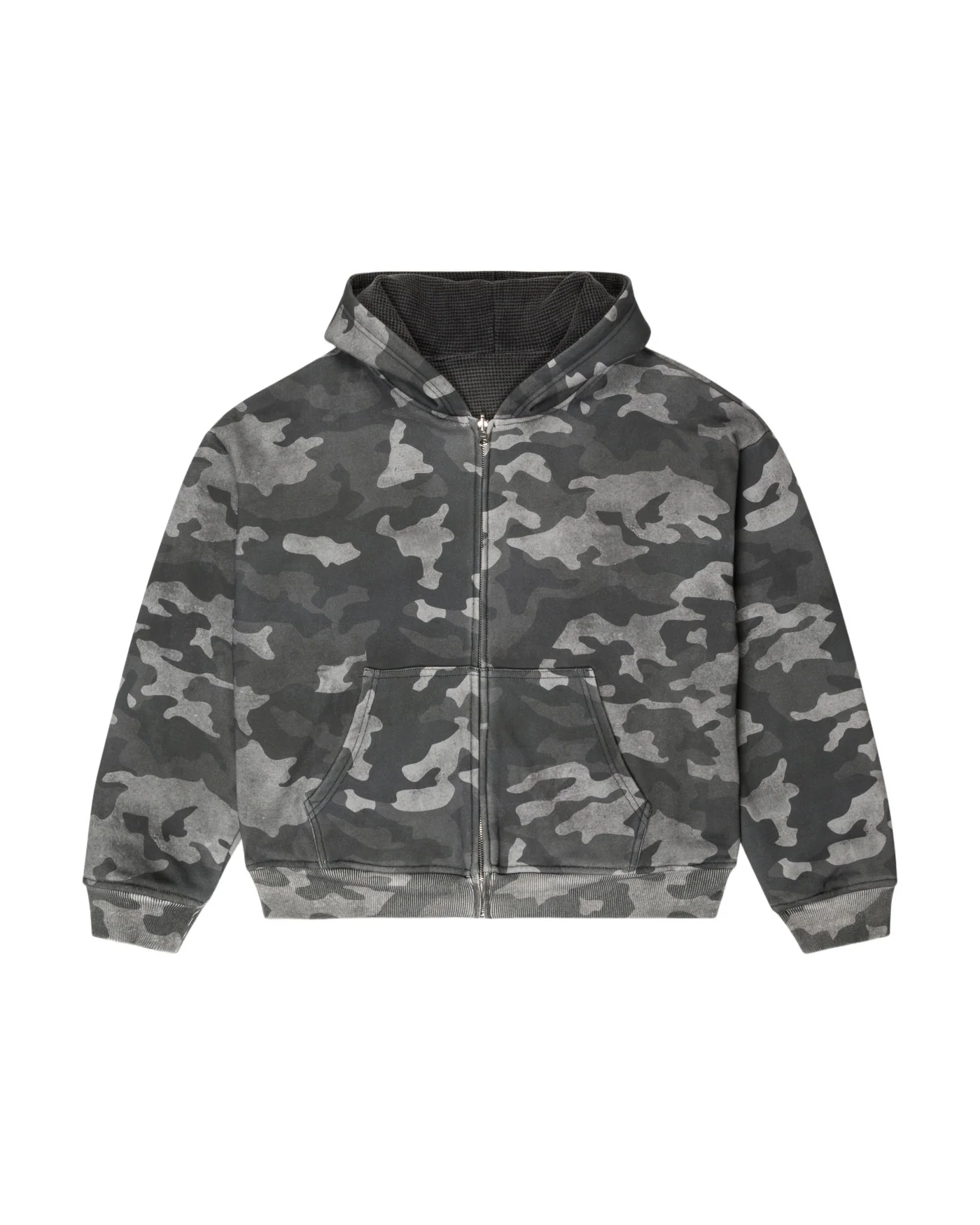
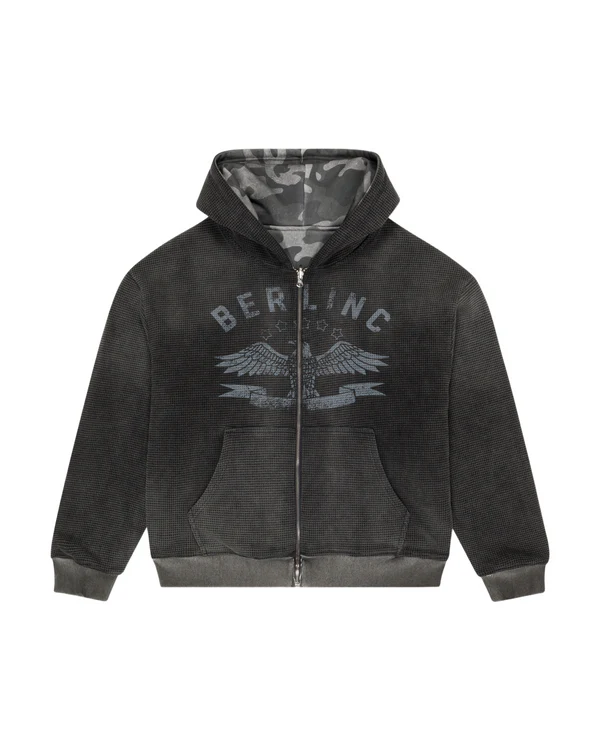
The reversible camo zip-up hoodie by BERLINC operates within a category that has shifted from utilitarian anonymity into a site of deliberate design expression. Once tied to military surplus and outdoor functionality, camouflage has been recontextualized through decades of streetwear adoption, where it now functions less as concealment and more as a visual code—one that signals adaptability, identity, and urban awareness. BERLINC’s interpretation leans into this transformation, using reversibility not as novelty, but as structure.
At its core, the garment is defined by duality. Two surfaces, two identities, contained within a single construction. This is not simply a hoodie with an alternate side; it is a piece that invites constant recalibration depending on context.
frame
One side carries the expected camouflage language—fragmented patterning, tonal disruption, and a reference to landscapes outside the urban grid. Yet within a city environment, camouflage takes on a different function. It no longer conceals; it communicates. It signals alignment with a lineage of streetwear that has long borrowed from military aesthetics while stripping them of their original intent.
BERLINC’s camo is not overly aggressive. It often sits within a controlled palette, allowing it to integrate into everyday wear rather than dominate it. This moderation reflects a contemporary understanding of camouflage as texture rather than statement.
View this post on Instagram
min
Flip the garment, and the narrative shifts. The reverse side typically offers a more restrained visual field—solid tones, simplified paneling, or a muted reinterpretation of the exterior pattern. This is where the hoodie transitions from expressive to adaptable.
This second face is crucial. It allows the piece to move across environments without friction. In one orientation, it carries visual density; in the other, it recedes, becoming a foundational layer within a broader outfit. The wearer is given agency over how much presence the garment occupies.
mat
Reversible garments demand precision. Unlike standard hoodies, where interior finishing can remain secondary, both sides here must meet the same standard of durability and comfort. This requires careful calibration of fabric weight, seam construction, and surface treatment.
The BERLINC hoodie typically employs a mid-weight textile that holds structure without stiffness. Seams are often concealed or flattened to avoid discomfort when worn in either direction. Hardware—particularly the zipper—must function seamlessly regardless of orientation, often requiring double-sided pullers or carefully engineered placements.
This technical discipline is what allows the garment to maintain coherence. Without it, reversibility becomes compromised, turning from feature into limitation.
move
The silhouette follows contemporary streetwear proportions: slightly relaxed, with enough volume to layer but not so oversized as to lose definition. The hood is structured to retain its shape whether worn up or down, and the hem and cuffs are balanced to ensure the garment sits cleanly on the body from both sides.
Reversibility introduces subtle shifts in how the piece drapes. Depending on which side is outward, the visual weight of the garment changes, altering how it interacts with other elements of an outfit. This dynamic quality makes the hoodie less static than traditional single-faced garments.
show
While the hoodie is visually driven, its functionality remains intact. Pockets are integrated in a way that preserves usability on both sides, often through mirrored construction or hidden openings. The zip-up format adds to its versatility, allowing it to be worn open as a layering piece or closed for a more contained silhouette.
This balance between form and function is where BERLINC’s approach becomes most apparent. The garment is not purely expressive, nor purely practical—it operates in the space between.
style
The reversible nature of the hoodie encourages a different approach to styling. Rather than building an outfit around a fixed visual anchor, the wearer can adjust the garment to suit the surrounding elements. A look can be recalibrated in real time, shifting from graphic to minimal without changing the core piece.
This adaptability aligns with contemporary dressing habits, where flexibility is valued over rigid outfit construction. The hoodie becomes a tool rather than a statement—a component that responds to context rather than dictating it.
View this post on Instagram
wear
Camouflage has long been embedded in streetwear’s visual language, from its adoption in early hip-hop scenes to its continued presence in contemporary collections. BERLINC’s hoodie sits within this lineage but approaches it with restraint.
Rather than amplifying the pattern to its most aggressive form, the brand refines it. The focus is on integration rather than disruption. This positions the garment within a quieter, more considered segment of streetwear—one that values construction and adaptability over overt branding.
fwd
A reversible garment inherently extends its lifespan within a wardrobe. By offering two distinct visual identities, it reduces redundancy and increases wearability. The BERLINC hoodie is designed with this in mind, functioning as both a statement piece and a neutral layer depending on orientation.
This dual-purpose design aligns with a broader shift toward more intentional consumption, where garments are expected to perform across multiple contexts rather than serve a single, narrow function.
sum
The BERLINC reversible camo zip-up hoodie is a study in controlled transformation. It does not rely on dramatic gestures or exaggerated features. Instead, it operates through subtle shifts—pattern to solid, expressive to restrained, visible to understated.
In doing so, it reflects a contemporary understanding of clothing as adaptive infrastructure. The garment is not fixed; it evolves with the wearer, responding to environment, mood, and need. Reversibility, in this context, is not just a design choice—it is a framework for thinking about how clothing can function in a constantly changing landscape.