Review: Supreme and Juelz Santana – The Reassembly of an Early Era

March 25, 2026
a familiar
There are moments when Supreme appears to move forward by looking directly backward—not in nostalgia alone, but in calibration. The decision to center a campaign around Juelz Santana is not incidental. It is a deliberate re-engagement with a period that defined the brand’s early cultural architecture: the late 1990s into the early 2000s, when downtown skate culture intersected with uptown rap in a way that felt unscripted, even accidental, yet ultimately foundational.
In that earlier era, Supreme did not need to explain itself. It existed within a network of proximity—skaters, graffiti writers, photographers, and rappers who wore the clothes because they were part of the same urban fabric. The presence of Santana, a key figure from The Diplomats, recalls a time when style was inseparable from place. Harlem, SoHo, the Lower East Side—these were not markets but ecosystems.
This campaign suggests a quiet return to that logic.
lang
The Diplomats—Santana alongside figures like Cam’ron—did not merely participate in fashion; they redefined its codes. Color was amplified, logos were embraced rather than concealed, and exposure was reframed through a street lens that felt both aspirational and immediate.
Supreme, operating downtown, absorbed these signals. The brand’s early graphics, silhouettes, and casting choices reflected a porous boundary between skateboarding and hip-hop. There was no rigid distinction between subcultures. Instead, there was a shared visual language built on boldness, repetition, and a certain disregard for traditional hierarchies.
Santana embodies that moment. His presence in the campaign is less about celebrity and more about continuity. It reintroduces a figure who existed within the same cultural current that Supreme once navigated instinctively.
View this post on Instagram
flow
Supreme’s campaigns have long functioned as a form of editorial. Rather than relying on conventional advertising narratives, the brand often presents its subjects in a stripped-down, almost documentary style. The casting itself becomes the message.
In recent years, as the brand expanded globally and entered new commercial territories, its casting broadened accordingly—actors, athletes, and artists from a wide range of disciplines. This diversification was necessary, but it also introduced a degree of distance from the brand’s original context.
The return to Santana signals a recalibration. It narrows the focus, bringing the brand back into alignment with a specific lineage. This is not a rejection of expansion, but a re-centering. By foregrounding a figure so closely associated with a formative era, Supreme reasserts its connection to a particular cultural memory.
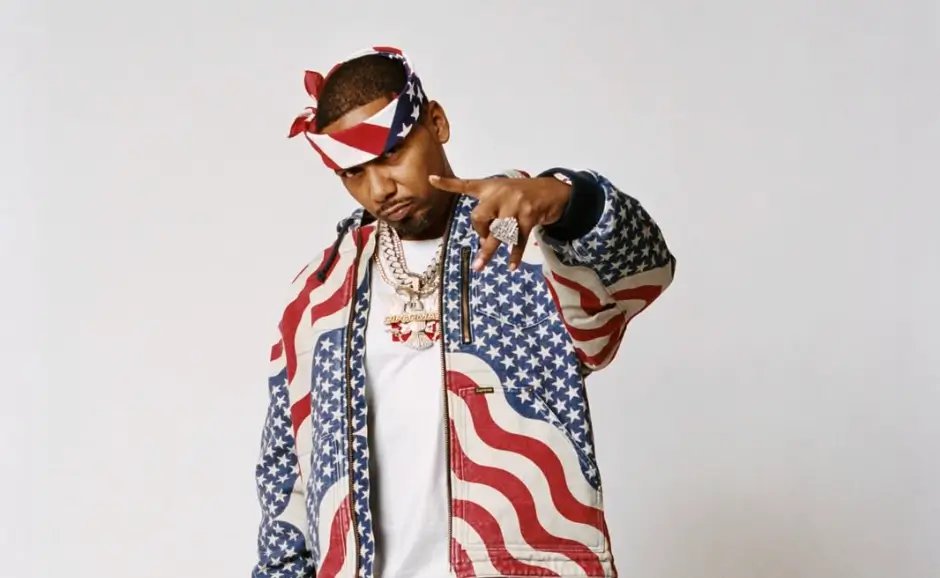
The imagery reflects this restraint. Santana is presented without excessive styling or narrative framing. The clothes are there, but they do not overwhelm the subject. Instead, the emphasis is on presence—on the way the garments sit within a lived identity rather than a constructed persona.
idea
The phrase “early era” is often used loosely, but in Supreme’s case, it carries specific weight. The brand’s first decade was defined by a kind of controlled insularity. Product was limited, distribution was tight, and visibility was largely confined to those who were physically present in New York or connected through niche media.
During this period, the relationship between Supreme and hip-hop was organic. Artists wore the brand because it was available within their environment, not because of formal partnerships. This distinction matters. It created a sense of authenticity that cannot be easily replicated through traditional marketing strategies.
By revisiting this era through Santana, Supreme is not attempting to recreate the past. Instead, it is acknowledging the conditions that allowed that authenticity to emerge. It is a subtle but significant difference.
min
One of the defining characteristics of Supreme’s visual language has always been its economy. Campaign images are often straightforward: a subject, a garment, a neutral background. There is little in the way of overt storytelling. The narrative is implied rather than stated.
This approach is evident in the Santana campaign. The photographs resist dramatization. There is no elaborate set design, no heavy post-production. The focus remains on the intersection between the individual and the clothing.
This restraint aligns with a broader shift within fashion imagery, where excess is increasingly replaced by clarity. In a landscape saturated with content, simplicity can function as a form of distinction. Supreme has long understood this, and the current campaign reinforces that understanding.
show
Fashion, like all cultural industries, operates within cycles. References are revisited, reinterpreted, and recontextualized. What distinguishes effective use of memory from mere nostalgia is intention.
In the case of Supreme and Santana, the reference is precise. It is not a generalized invocation of the past, but a targeted engagement with a specific moment and its associated figures. This precision allows the campaign to function as more than a retrospective gesture. It becomes a way of reasserting identity in the present.
For a brand that has achieved global recognition, the challenge is not visibility but coherence. As Supreme continues to expand, maintaining a clear sense of origin becomes increasingly important. The Santana campaign addresses this by anchoring the brand in a narrative that remains culturally resonant.
culture
It would be reductive to view this campaign solely through a cultural lens without acknowledging its commercial implications. Supreme operates within a highly competitive market where differentiation is essential. By revisiting its early era, the brand distinguishes itself from newer entrants who may emulate its aesthetic but lack its history.
This strategy also resonates with consumers who are increasingly attuned to authenticity. In a market where healthy collisions and limited releases are commonplace, the ability to reference a genuine cultural lineage becomes a form of value.
Santana’s involvement reinforces this value. His presence is not a constructed association but a reflection of a shared history. This distinction, while subtle, carries weight in how the campaign is perceived.
live
What emerges from this campaign is a dialogue rather than a monologue. The past is not presented as something to be replicated, but as something to be engaged with. Santana represents a particular moment, but he also exists within the present, bringing that history forward in a way that feels continuous rather than static.
This continuity is key. It allows Supreme to navigate the tension between heritage and innovation without resolving it too neatly. The brand does not need to choose between past and present; it can operate within both simultaneously.
spec
The reappearance of figures from the early 2000s within contemporary fashion campaigns reflects a broader cultural shift. There is a renewed interest in that period—not only for its aesthetics but for its sense of immediacy. Before the dominance of social media, style circulated through more localized, less mediated channels. This created a different kind of cultural energy, one that is often described as more “real,” though that term remains open to interpretation.
Supreme’s engagement with this period through Santana taps into that energy. It acknowledges a time when the brand’s identity was formed through direct interaction rather than global dissemination.
fin
The decision to feature Juelz Santana is, at its core, a measured return. It does not attempt to recreate the conditions of the past, nor does it rely on overt nostalgia. Instead, it reintroduces a figure who embodies a particular moment in Supreme’s history, allowing that moment to inform the present.
In doing so, Supreme reinforces its position not just as a brand, but as a participant in a broader cultural narrative. The campaign serves as a reminder that identity, when carefully maintained, can evolve without losing its foundation.
It is a quiet move, but a deliberate one—an acknowledgment that sometimes the most effective way forward is to revisit the structures that first made movement possible.