Daily Paper x Engage x Israel Adesanya: Discipline, Heritage, and the Form of Movement

March 26, 2026
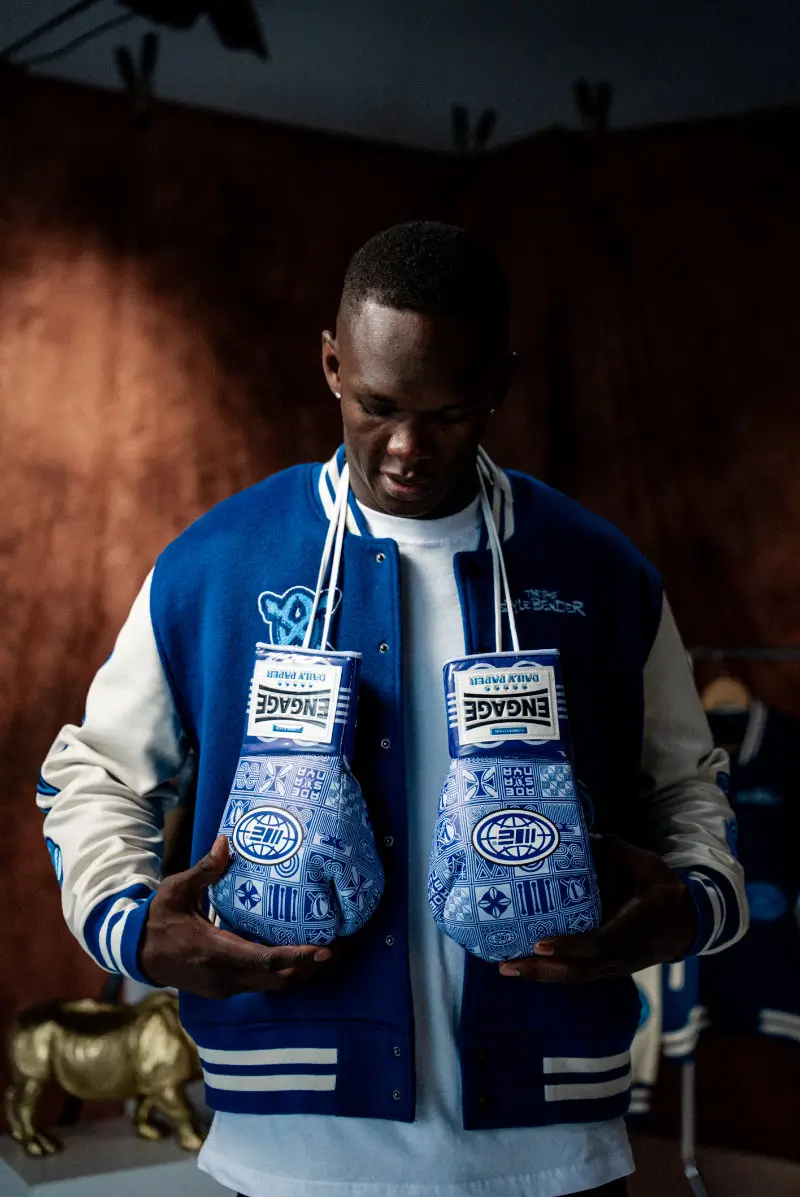
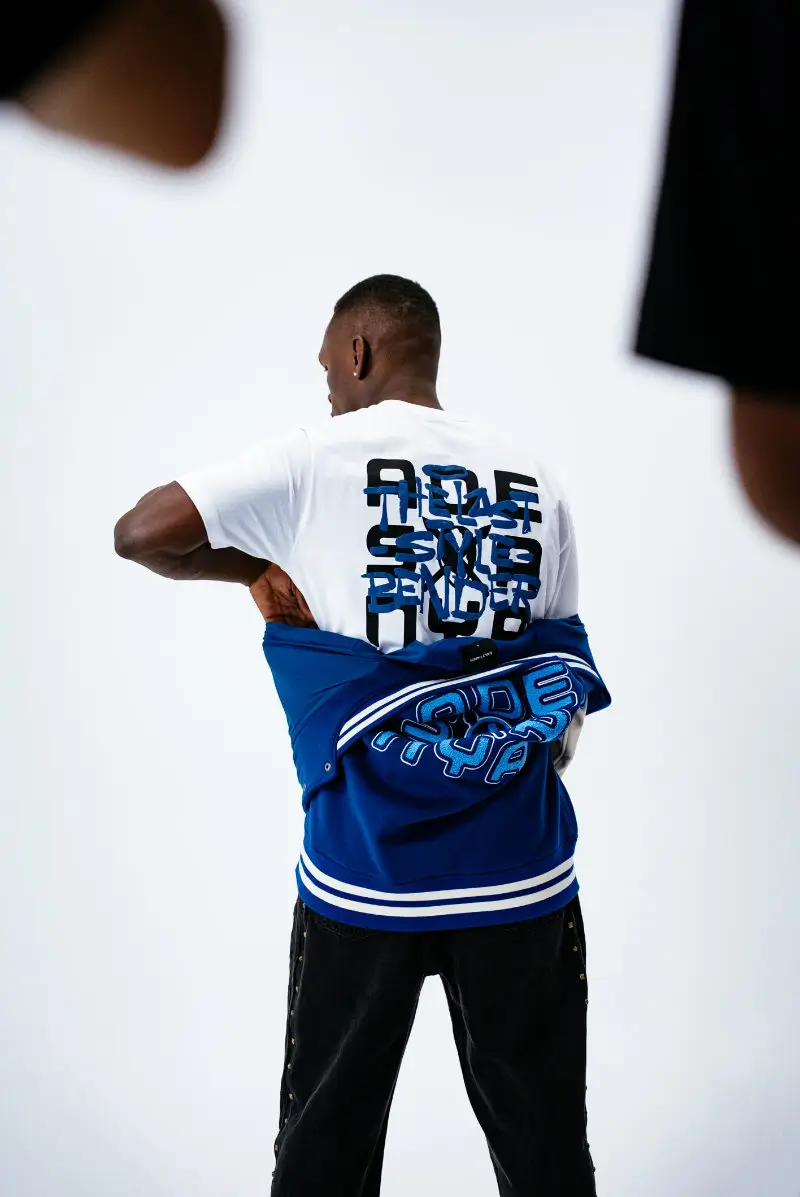
There is no need to overstate what this collision attempting to do. It is not interested in spectacle for its own sake, nor in the familiar cadence of athlete-led merchandise cycles. Instead, the meeting of Daily Paper, Engage, and Israel Adesanya moves with a quieter precision—closer to calibration than to amplification. The collection exists in that narrow space where identity is neither performed nor abstracted, but structured.
At its core, the project is about translation. Not translation as simplification, but as a careful reworking of systems: heritage into graphic language, discipline into garment construction, biography into silhouette. The result is a capsule that feels less like a collaboration and more like a shared vocabulary—one shaped by movement, restraint, and an insistence on authorship.
View this post on Instagram
move
Adesanya’s presence is not ornamental here. It is foundational. Born in Nigeria and raised in New Zealand, his trajectory is defined by transitions—between geographies, between cultural registers, between modes of self-definition. This sense of movement is not incidental; it is embedded in how he operates.
Inside the octagon, movement is reduced to its most efficient form. There is no excess. Each shift in weight, each extension of the arm, carries intent. It is a practice of subtraction. Outside of it, however, Adesanya allows for expansion—style as expression, clothing as narrative.
The collection holds these two states in tension. It does not resolve them. Instead, it allows them to coexist. Pieces are designed with mobility in mind, but they carry visual density—graphics, symbols, layered references. The body moves freely, but the surface speaks.
idea
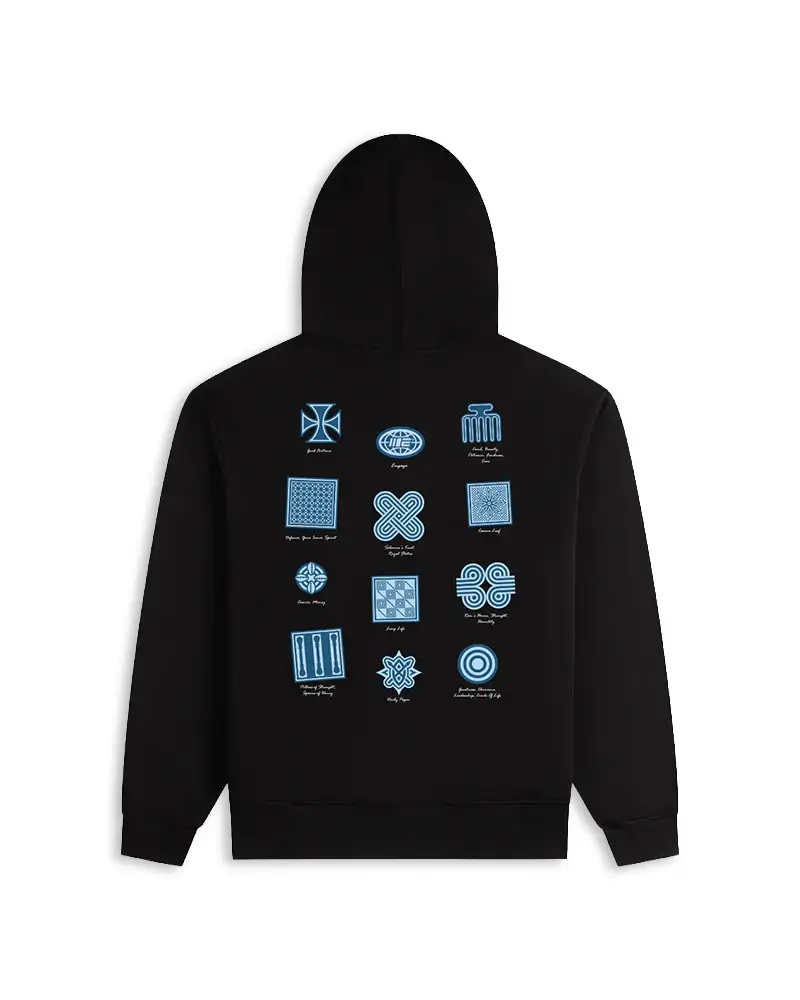
For Daily Paper, the use of heritage is never passive. The brand has built its identity on a sustained engagement with diasporic narratives, treating cultural memory not as a fixed archive but as an evolving system. In this collaboration, that system is articulated through Adinkra symbols—visual codes with origins in West Africa.
These symbols have historically functioned as carriers of meaning: resilience, unity, knowledge, discipline. They are not ornamental additions; they are frameworks. What Daily Paper does is re-situate them. Scaled across hoodies, embedded into textiles, reworked into contemporary graphic compositions, they shift from static markers of tradition into active components of design.
This is where the collection finds its intellectual weight. It resists the temptation to aestheticize heritage. Instead, it asks how these symbols can operate within a modern visual language without losing their conceptual integrity. The answer is not definitive, but it is considered.
fx
If Daily Paper brings narrative density, Engage introduces constraint. Combat sports demand a particular relationship to clothing—one defined by durability, flexibility, and precision. There is no room for inefficiency. Every seam, every fabric choice, must justify itself.
This logic is visible across the collection. Fight shorts are cut to allow full range of motion, engineered to move with the body rather than against it. Gloves prioritize protection without sacrificing responsiveness. Even the more casual pieces—tees, long sleeves, hoodies—are informed by this performance-oriented thinking. They are not purely decorative; they are built.
The collaboration, then, becomes a negotiation. How does one integrate symbolic complexity into garments that must also function under physical stress? The answer lies in balance. Graphics are placed with intention, fabrics selected for both feel and resilience, silhouettes refined to maintain clarity.
View this post on Instagram
show
The decision to anchor the collection in blue is not arbitrary. It provides continuity across disparate elements—sport and street, symbol and function. Blue carries its own set of associations: depth, composure, control. Within the context of Adesanya’s practice, it reads almost as a visual extension of discipline.
At the same time, blue offers a stable ground for the collection’s graphic language. Against it, the Adinkra motifs and typographic elements gain clarity. The color does not compete; it supports. It allows the collection to maintain cohesion without flattening its internal variation.
theme
What emerges across the capsule is an understanding of the garment surface as a site of narration. Graphics are not applied arbitrarily; they are structured. Motifs repeat, shift, reappear across different pieces, creating a sense of continuity.
The varsity jacket—produced as a one-of-one piece for Adesanya—functions as a focal point. Its bold “ADESANYA” lettering transforms the garment into a statement of authorship. It is both personal and public, a marker of identity that extends beyond the individual.
This interplay between personal narrative and collective symbolism is central. The collection does not isolate Adesanya as a singular figure; it situates him within a broader framework of diasporic experience and cultural production.
flow
The capsule unfolds through a series of typologies, each addressing a different aspect of the collaboration’s core themes.
Graphic hoodies and long sleeves operate as carriers of symbolism. They foreground the Adinkra motifs, allowing the visual language to take precedence. The cuts are relaxed, accommodating movement while maintaining structure.
Signature tees function as entry points—simpler, more direct, but still embedded with the collection’s iconography. They offer accessibility without dilution.
Fight shorts and gloves anchor the collection in performance. They are not symbolic approximations of sport; they are functional objects designed for use. Their inclusion ensures that the collaboration does not drift into abstraction.
Accessories, including the co-branded drawstring bag, extend the system. They reinforce the collection’s coherence, allowing its visual language to circulate beyond the body.
show
What binds these elements together is a shared commitment to discipline—not only as a physical practice but as an aesthetic principle. There is a restraint to the collection, a refusal to overextend. Even in its more graphic moments, it maintains a sense of control.
This restraint is what differentiates the collaboration from more conventional fashion-sport partnerships. It does not rely on excess or novelty. Instead, it builds its impact through consistency, through the careful alignment of concept and execution.
straddle
Adesanya’s biography—Nigeria to New Zealand, sport to fashion—could easily be framed as a story of contrast. The collection avoids this. It does not position these elements as oppositional. Instead, it treats them as continuous.
This continuity is reflected in the garments themselves. There is no clear boundary between “performance” and “lifestyle.” Pieces move between these categories with ease, reflecting a broader shift in how clothing is understood. The athlete is no longer confined to the arena; the designer is no longer confined to the studio.
culture
There is a tendency, in collides that engage with heritage, to overstate their significance. This collection resists that impulse. Its engagement with Adinkra symbols is deliberate but not didactic. It allows the motifs to exist without over-explanation, trusting in their presence.
This approach aligns with Daily Paper’s broader philosophy. Cultural expression is not treated as spectacle but as structure. It is embedded, not announced.
fin
There is no singular message to extract from this collaboration, and that is precisely its strength. It does not reduce itself to a statement. Instead, it offers a set of relationships: between heritage and modernity, between discipline and expression, between individual and collective identity.
In this sense, the collection mirrors Adesanya’s own practice. It is defined not by excess, but by control. Not by fragmentation, but by the ability to move between worlds without losing form.
What remains is a body of work that feels considered, precise, and quietly assertive—less a declaration than a structure, built to hold meaning over time.