RIMOWA and the Logic of the Grid: A 1969 Form, Restored

March 26, 2026
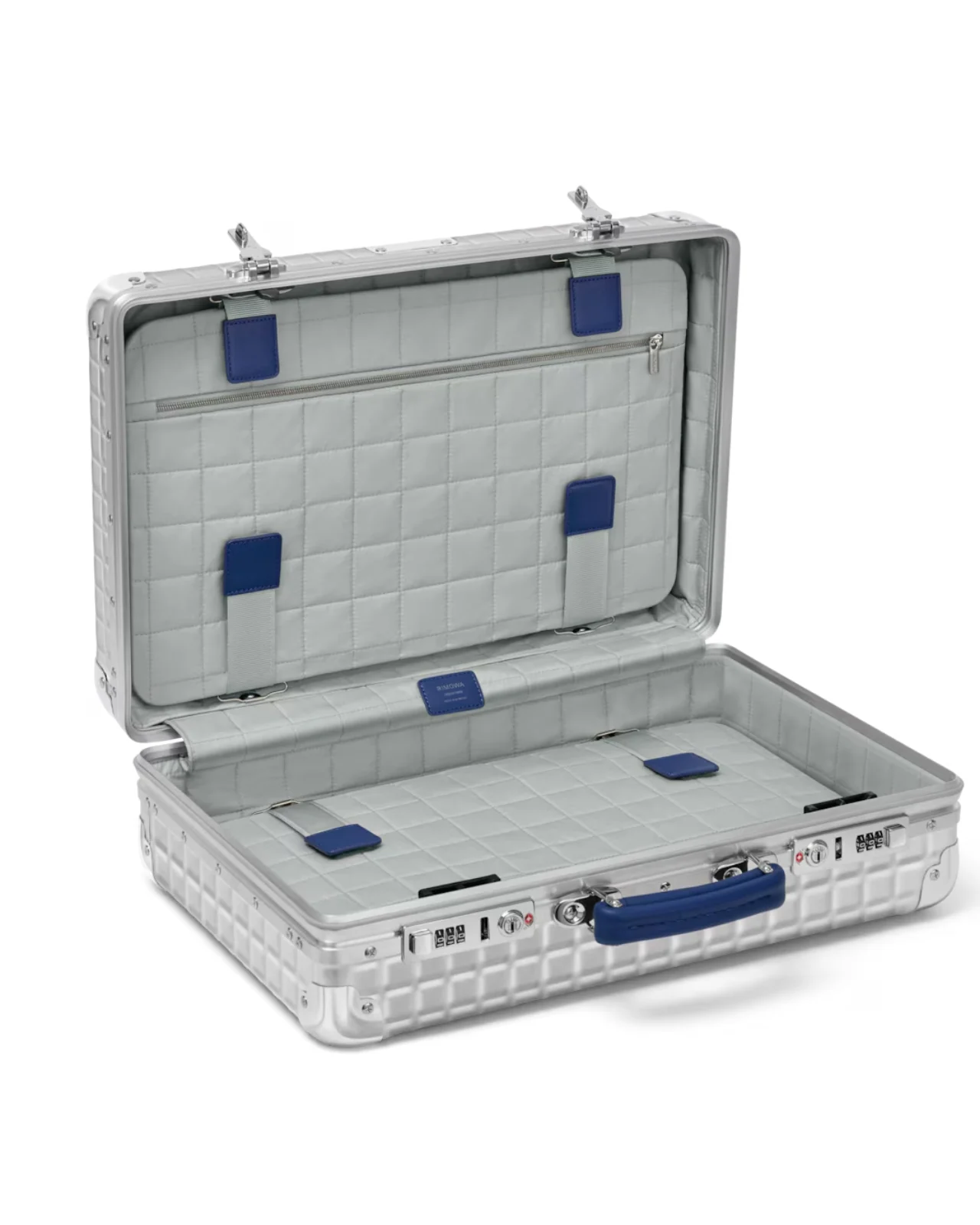
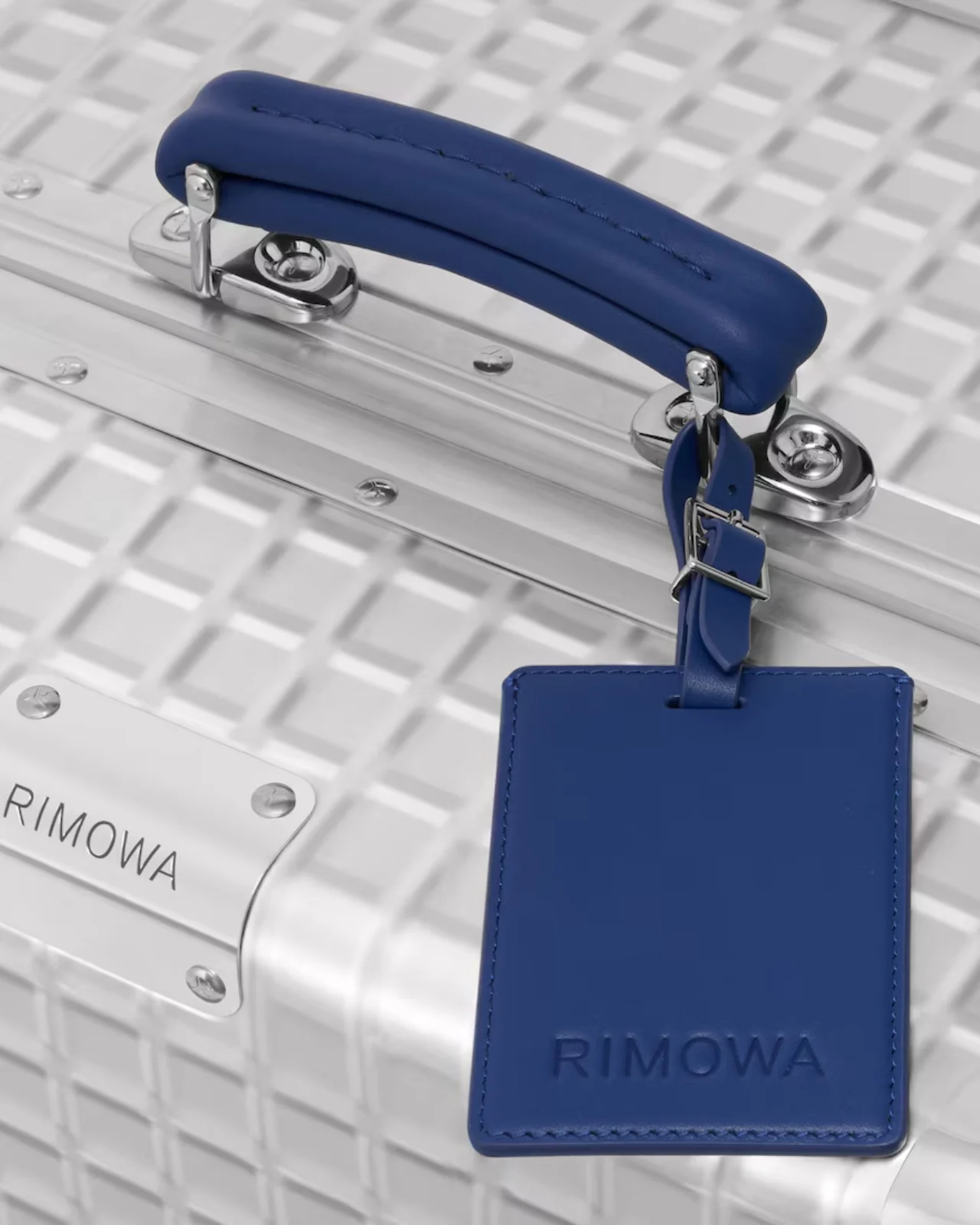
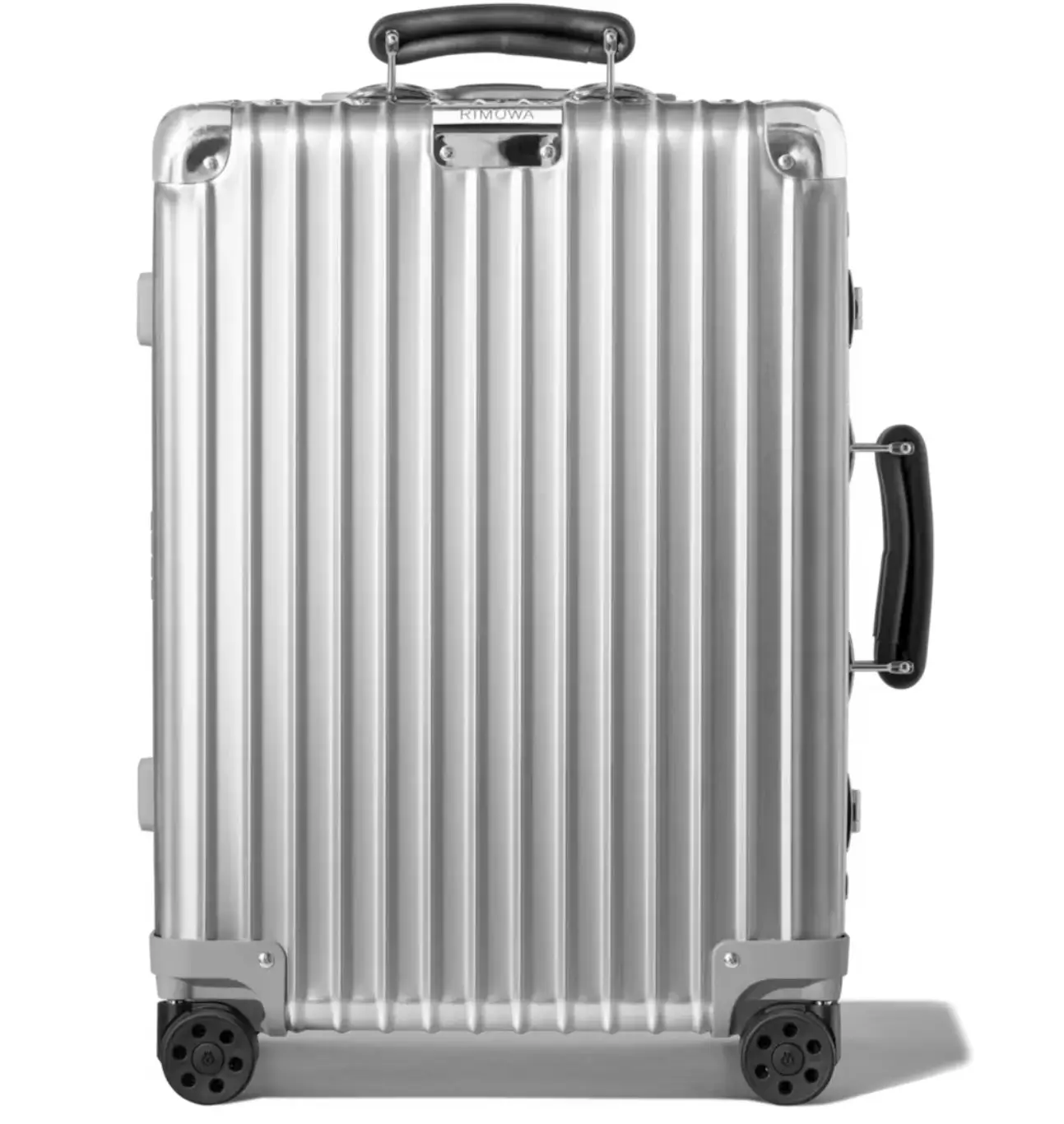
In the discussion of travel, few objects have maintained continuity with such quiet authority as those produced by RIMOWA. Its aluminum cases—ribbed, restrained, and engineered—have become less a product than a traveling code. Yet within this lineage, not every chapter has remained visible. The re-emergence of the Classic Aluminium Grid is not simply a variation; it is a resurfacing of a near-forgotten design language rooted in 1969, a moment when industrial rationalism intersected with the optimism of global mobility.
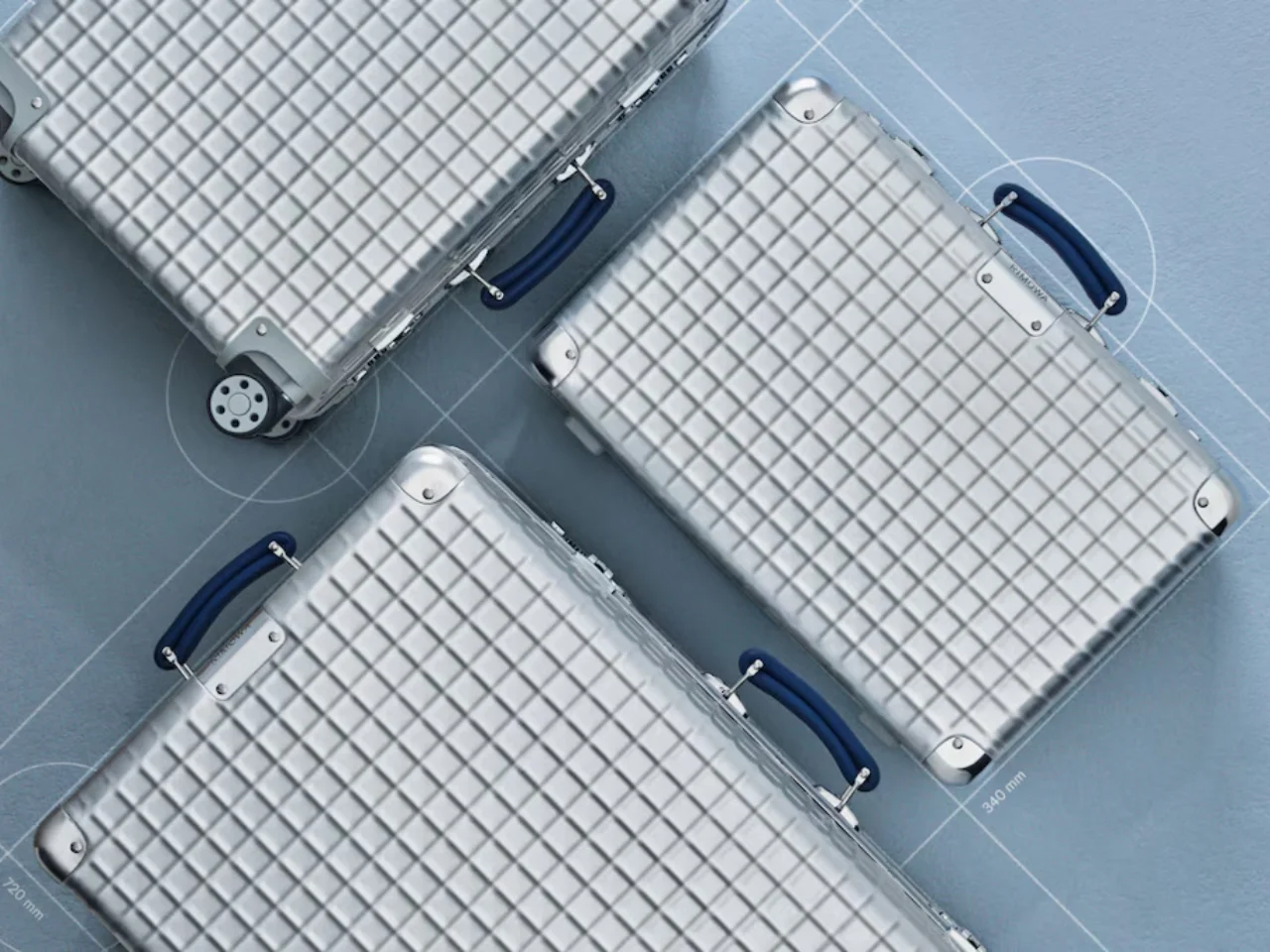
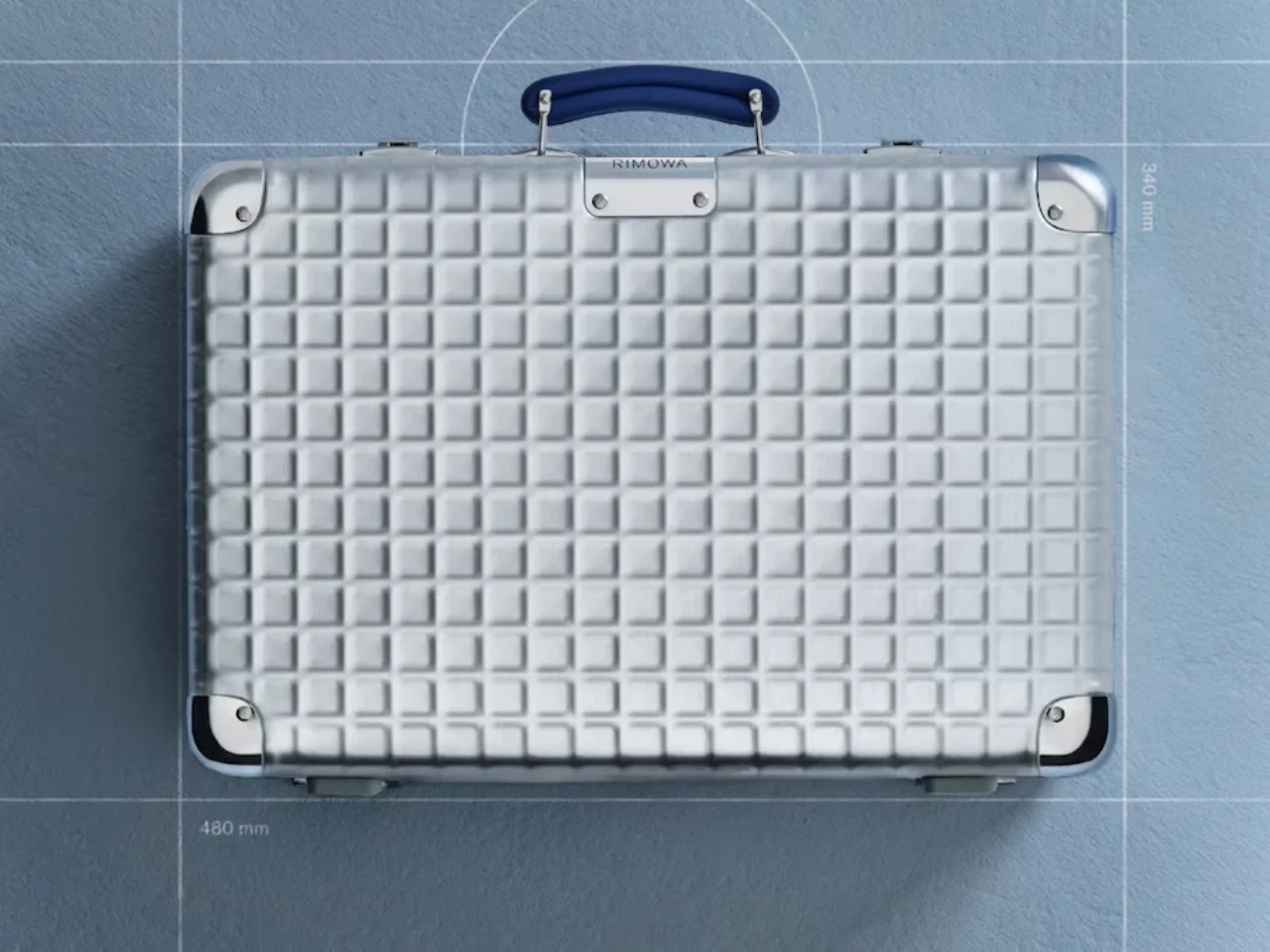
What returns here is not the familiar groove, but something more architectural: a grid.
retro
By 1950, RIMOWA had already established its now-iconic grooved aluminum shell, inspired by the corrugated fuselage of early aircraft like the Junkers F 13. Those grooves were not decorative; they increased structural strength while reducing weight, aligning the suitcase with the logic of aviation engineering.
But in 1969—a year marked by lunar landing and technological acceleration—the brand explored an alternative surface language. Rather than linear grooves, certain archival cases adopted a grid-like pattern: intersecting lines that emphasized modularity over flow, segmentation over continuity. While never becoming a permanent house code, the grid suggested a different philosophy—one closer to industrial scaffolding than aerodynamic motion.
It is this philosophy that the Classic Aluminium Grid now revisits.
a shift
The distinction between RIMOWA’s grooves and the revived grid is subtle yet conceptually profound.
The groove is directional. It implies movement—forward propulsion, continuity, travel as a line.
The grid, by contrast, is spatial. It divides, measures, stabilizes. It transforms the suitcase from an object in motion into an object of containment, almost architectural in its logic.
In reviving the grid, RIMOWA is not replacing its identity, but complicating it. The Classic Aluminium Grid exists as a counterpoint within the brand’s design language—less fluid, more structural, and arguably more aligned with contemporary architectural minimalism.
View this post on Instagram
archive
The choice to house this revival within the Classic line is deliberate.
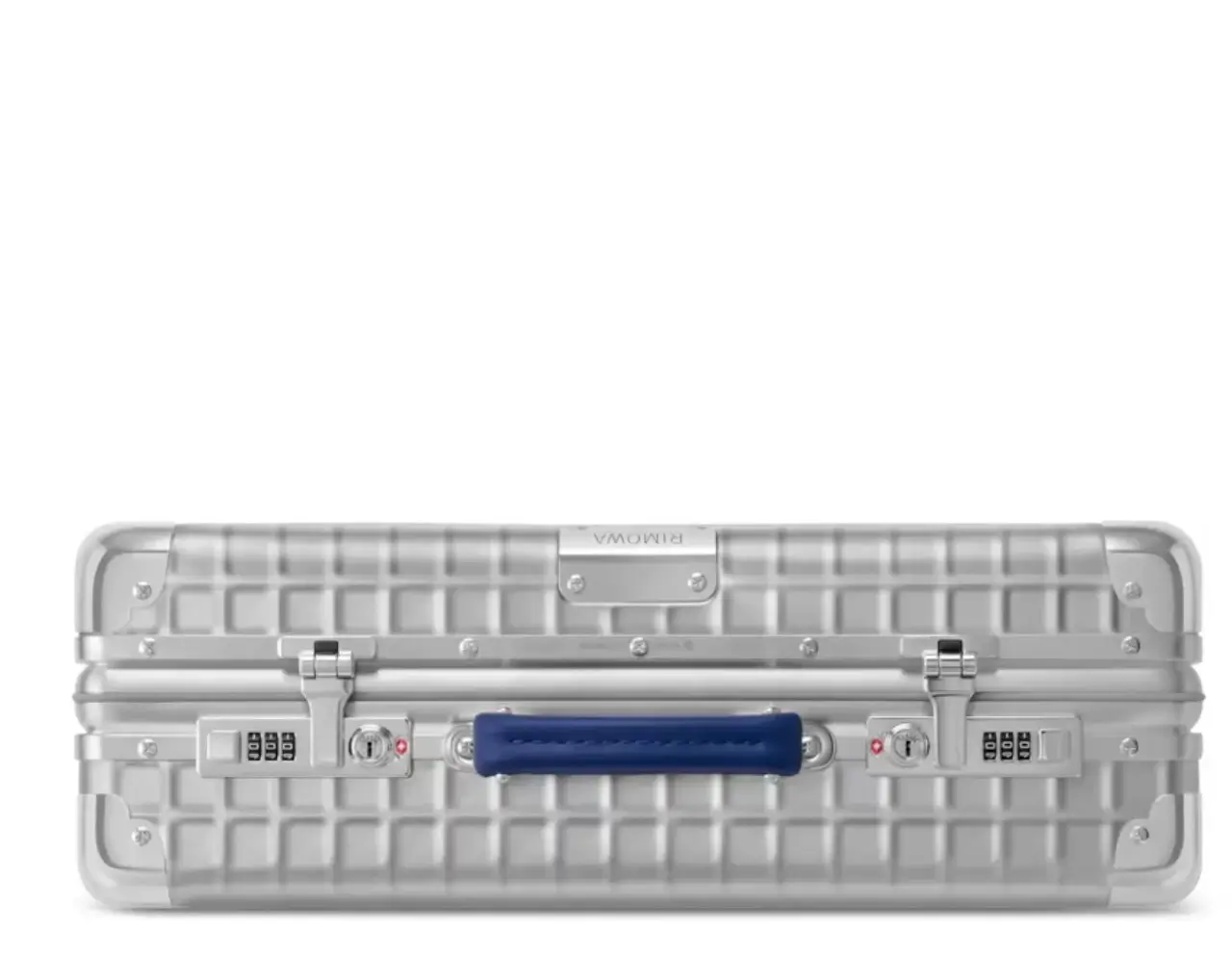
Unlike the RIMOWA Original collection—which prioritizes modern minimalism with rounded edges and integrated components—the Classic line retains visible rivets, leather handles, and sharper geometry. It is closer to the brand’s early aluminum trunks, echoing forms that date back to the 1920s and mid-century travel culture.
This makes the Classic not just a product category, but an archive vessel—a platform through which dormant design elements can be reintroduced without disrupting the broader visual identity.
The grid, in this context, feels at home. It aligns with the Classic’s exposed construction, reinforcing the sense of an object built rather than styled.
fx
Aluminum, within RIMOWA’s universe, is never neutral. It carries both technical and emotional weight.
Introduced as a necessity after a factory fire in the 1930s left aluminum as the only viable material, it became the brand’s defining medium. Over time, it evolved into a surface that records travel—scratches, dents, patina—transforming each case into a personal archive.
The grid amplifies this relationship.
Where grooves channel wear into linear narratives, the grid fragments it. Each square becomes a site of accumulation, a unit of memory. The result is a suitcase that ages not as a continuous story, but as a constellation of moments.
This subtle shift changes how the object is perceived over time. It invites a slower reading, a closer inspection.
modern
Despite its archival reference, the Classic Aluminium Grid is not a reproduction. It is a recalibration.
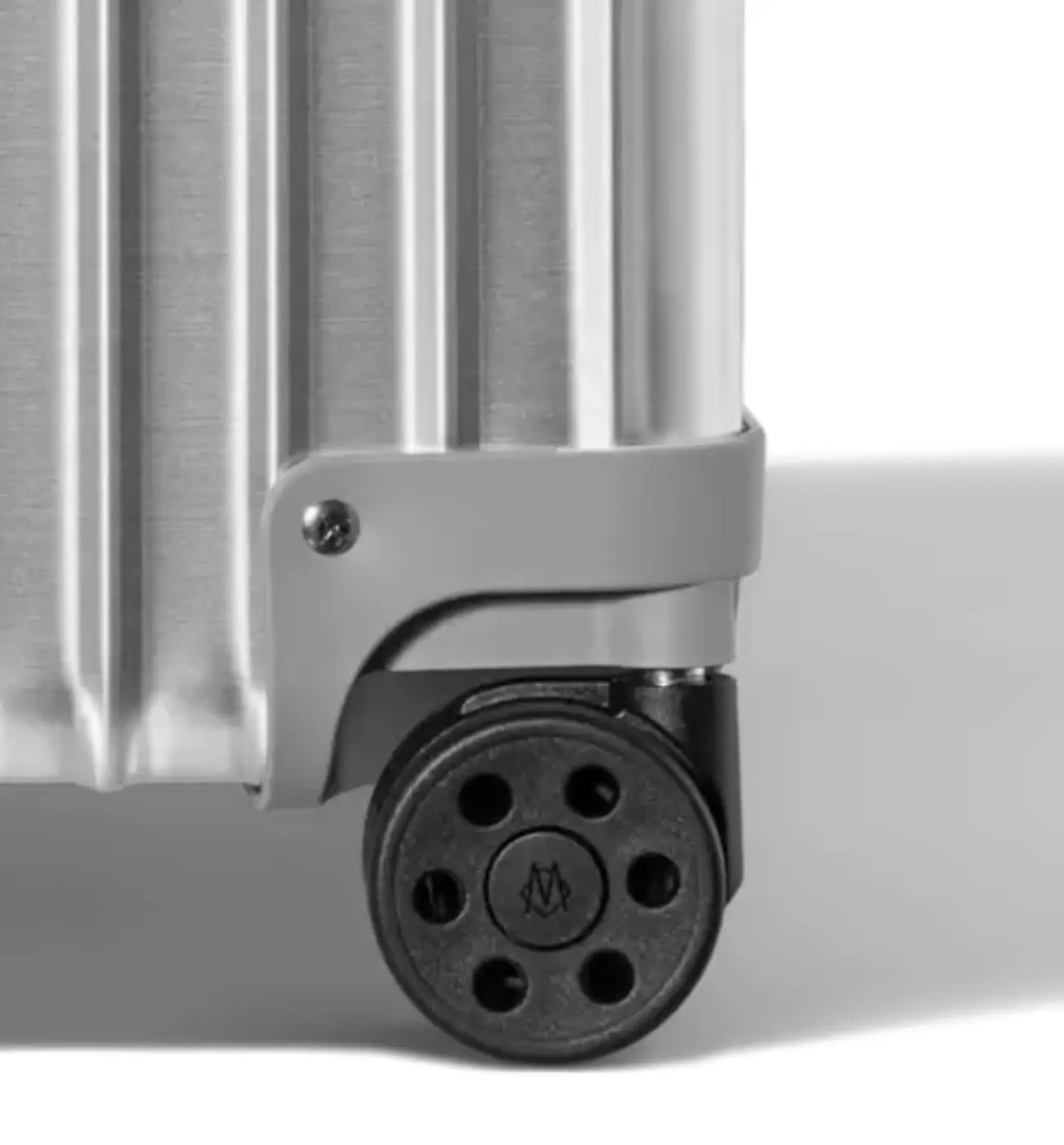
Modern iterations incorporate RIMOWA’s evolved engineering standards: multiwheel systems, telescopic handles, TSA-approved locks, and precision anodization techniques that ensure durability while maintaining a refined surface finish.
What distinguishes the Grid is how these contemporary features coexist with a surface language that predates them.
The tension between past and present is not resolved; it is maintained.
Rivets remain visible. Edges remain defined. The grid itself is rendered with a precision that reflects contemporary manufacturing capabilities, yet retains the visual weight of mid-century industrial design.
culture
The reappearance of the grid in 2026 is not incidental. It aligns with broader shifts in design and culture.
Across architecture, fashion, and product design, there has been a renewed interest in systems—grids, frameworks, modularity. From gallery installations to retail environments, the grid functions as both structure and aesthetic.
In fashion, particularly within luxury and streetwear crossovers, there is a growing emphasis on visible construction—stitching, paneling, segmentation. The grid resonates within this context, offering a visual language that feels both technical and expressive.
For RIMOWA, whose identity is rooted in engineering, the grid provides a way to engage with these contemporary sensibilities without abandoning its core values.
It is not a trend adoption. It is a reactivation.
arch
Viewed closely, the Classic Aluminium Grid begins to resemble more than luggage.
Its surface reads like a façade. Its rivets function as structural markers. Its proportions echo those of compact industrial units—containers, modules, architectural components.
This architectural reading is not accidental. RIMOWA’s design language has always drawn from transportation infrastructure and engineering systems. The grid simply makes this lineage more explicit.
In this sense, the suitcase becomes less about travel as movement, and more about travel as organization—of objects, of experiences, of time.
more
What distinguishes RIMOWA within the broader luxury landscape is its resistance to overt decoration.
There are no monograms, no seasonal graphics, no overt branding beyond the minimal plaque. The value lies in construction, material, and continuity.
The Aluminium Grid extends this philosophy.
Its visual impact is subtle. It requires proximity. It rewards attention.
In an era where luxury often leans toward visibility, the grid operates differently. It is a detail for those who look closely, a signal of knowledge rather than status.
strad
RIMOWA’s history is often framed as a story of continuity—the groove introduced in 1950 remains a defining feature to this day.
Yet the Aluminium Grid suggests that continuity is not static. It allows for moments of divergence, for alternative paths that can be revisited and reinterpreted.
The 1969 design was not abandoned; it was set aside.
Its return now reframes it—not as an anomaly, but as part of a broader design vocabulary that extends beyond the familiar.
rare
For collectors and long-time observers of the brand, the Classic Aluminium Grid occupies a distinct position.
It is not a limited edition in the conventional sense, nor is it a collaboration-driven release. Instead, it functions as an archival piece reintroduced into circulation—a bridge between past and present.
This gives it a different kind of value.
It is less about scarcity and more about context. Ownership becomes a form of participation in the brand’s evolving narrative.
consider
In contemporary culture, travel has shifted.
It is no longer defined solely by movement between destinations, but by the rituals that surround it—the preparation, the packing, the anticipation.
Objects like the Classic Aluminium Grid contribute to this ritualization. They transform the act of travel into something more deliberate, more considered.
The grid, with its measured structure, reinforces this sensibility. It suggests order, intention, control.
In a world defined by fluidity and speed, it introduces a counterpoint: structure.
min
Perhaps the most compelling aspect of the Classic Aluminium Grid is its restraint.
It does not announce itself loudly. From a distance, it reads as a familiar RIMOWA case. Only upon closer inspection does the grid reveal itself, altering the perception of the object.
This layered visibility aligns with a broader shift in luxury—away from overt signaling and toward nuanced differentiation.
The grid becomes a code. Recognizable, but not immediately.
fin
The revival of the 1969 grid is not an act of nostalgia. It is an act of recognition.
It acknowledges that within even the most established design languages, there exist forgotten possibilities—paths not taken, ideas not fully realized.
By bringing the grid back into view, RIMOWA expands its own narrative. It reminds us that heritage is not a fixed archive, but a living system—one that can be revisited, reinterpreted, and reactivated.
In the end, the Classic Aluminium Grid does what few luxury objects manage to do.
It adds something new by looking back—not to repeat, but to reconsider.