Nike is no longer simply marketing football—it is staging it.
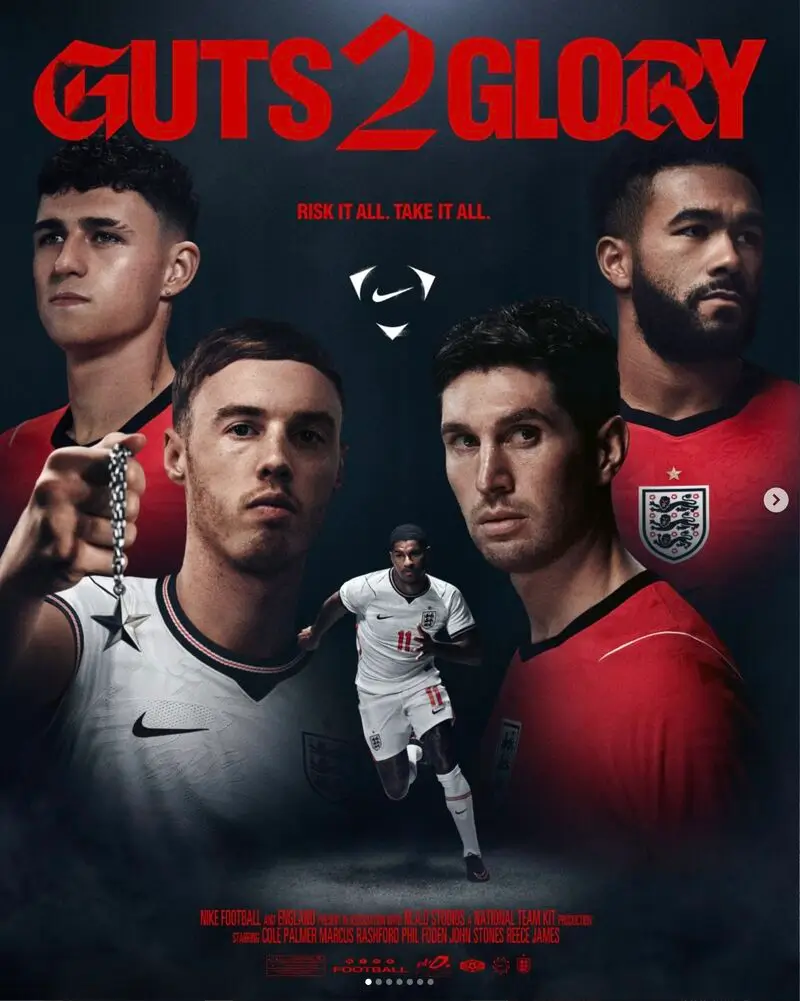
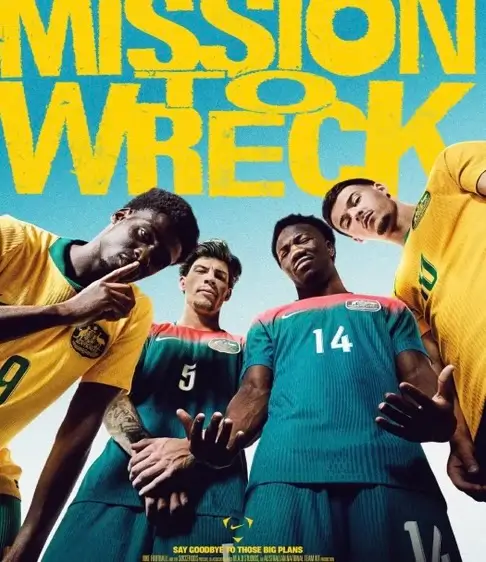
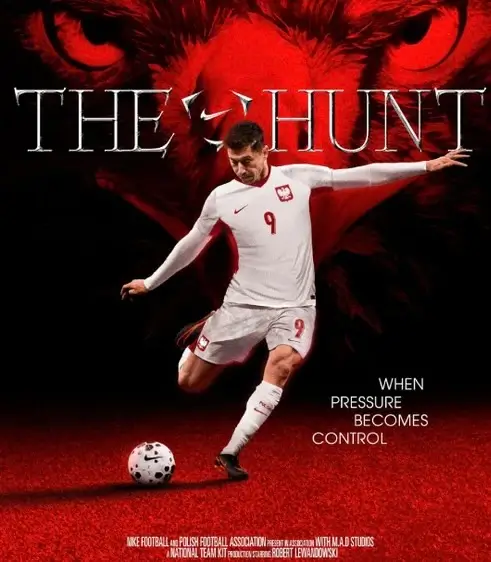
In the lead-up to the FIFA World Cup 2026, Nike has shifted its visual language toward something more cinematic, more authored, and more deliberate in tone. The brand’s latest campaign reframes national teams not as squads preparing for competition, but as protagonists inhabiting a global narrative universe. Each poster feels less like a piece of advertising and more like a teaser—an invitation into a story that has yet to unfold.
cin
The most immediate quality of the campaign is its sense of framing. Players are no longer captured mid-play or in candid training moments; instead, they are composed. Lighting is sculpted, shadows are intentional, and the atmosphere leans toward drama rather than documentation. The visual cues borrow heavily from film posters—tight crops, elevated contrast, and a clarity of subject that positions each athlete as the central figure in their own arc.
This approach subtly alters how football is perceived. The game, traditionally rooted in unpredictability and collective motion, is distilled into moments of stillness. The posters freeze time, allowing the viewer to project narrative onto the image. It is not about what is happening, but what might happen next.
idea
For decades, football marketing has relied on two dominant modes: realism and aspiration. Either the athlete is presented as grounded—sweat, effort, grit—or elevated into a symbol of excellence. Nike’s current campaign collapses that divide. The players are both real and mythic, existing in a space that feels constructed but emotionally legible.
This is not simply an aesthetic decision; it reflects a broader understanding of how audiences engage with sport today. Football exists within a media ecosystem shaped by streaming platforms, cinematic universes, and serialized storytelling. By aligning its visuals with this language, Nike ensures that football remains culturally fluent, capable of resonating beyond traditional sports audiences.
flow
Each composition centers the individual. A forward becomes a figure of momentum, a defender embodies resistance, a goalkeeper suggests finality. The absence of overt context—no visible stadiums, minimal environmental cues—allows these roles to emerge more clearly. The athlete is not just part of the game; they are the narrative device.
This emphasis on individuality mirrors the evolution of football itself. Players are no longer defined solely by national allegiance. They are global figures, shaped by club careers, personal branding, and digital presence. Nike’s posters acknowledge this reality, presenting athletes as singular forces while still anchoring them within the broader framework of national teams.
grad
There is a deliberate sense of anticipation embedded in the campaign. Posters have historically functioned as artifacts of expectation—objects that exist before the experience, shaping how it is received. By adopting this format, Nike transforms each match into something closer to a premiere.
The World Cup, in this framing, becomes episodic. Group stages serve as introduction, knockout rounds as escalation, and the final as resolution. It is a narrative structure familiar to audiences, even if it remains unscripted in practice. The campaign does not attempt to control the outcome of matches, but it does influence how those matches are imagined.
myth
Scale plays a critical role in the imagery. Players are often depicted larger than life, occupying the frame with a presence that feels almost architectural. This exaggeration is not about physical size alone, but emotional magnitude. The posters suggest that these individuals carry more than skill—they carry story, expectation, and consequence.
Aura is constructed through restraint. Colors are rich but controlled, typography is minimal, and compositions avoid unnecessary complexity. This restraint allows the subject to dominate, reinforcing the idea that the athlete themselves is the spectacle.
indie
While the campaign foregrounds individuality, it does not abandon the idea of nation. Instead, it refines it. Colors associated with national teams are embedded subtly within the imagery, often through lighting or background gradients rather than explicit symbols. This creates a sense of belonging without overwhelming the composition.
The result is a dual identity: the player as both global figure and national representative. It reflects the reality of modern football, where allegiance is layered and fluid, shaped by both local pride and international visibility.
follow
Football is defined by its unpredictability. It resists narrative closure, often producing outcomes that defy expectation. Cinema, by contrast, is structured, deliberate, and resolved. Nike’s campaign exists at the intersection of these two modes.
The posters suggest inevitability. They frame players as if their roles are already written, as if each match is a scene moving toward a predetermined conclusion. This tension—between what is scripted and what is not—creates a compelling dynamic. The viewer is aware that the story is real, but presented as if it were fiction.
culture
The decision to adopt a cinematic framework is particularly resonant given the location of the 2026 World Cup. Hosted across North America, the tournament represents a moment of expansion for football, especially within the United States.
Cinema, as a cultural form, holds significant influence within this context. By translating football into a visual language familiar to American audiences, Nike bridges a gap. It makes the sport feel both accessible and elevated, aligning it with a broader entertainment tradition without diluting its global identity.
show
In this campaign, the athlete becomes more than a performer—they become a character. Their image carries implication, suggesting backstory, conflict, and resolution. This aligns with a broader cultural shift, where sports figures are consumed not just for their performance, but for their narrative.
Social media, documentary series, and behind-the-scenes content have all contributed to this shift. Nike’s posters distill that complexity into a single frame, offering a condensed version of a much larger story.
stringent
Despite its cinematic ambition, the campaign avoids spectacle for its own sake. There are no exaggerated effects, no overtly dramatic compositions that risk tipping into parody. Instead, the imagery is controlled, confident, and precise.
This restraint is what allows the campaign to resonate. It trusts the subject, allowing the player’s presence to carry the weight of the narrative. In doing so, it distinguishes itself from more conventional sports advertising, which often relies on intensity alone.
view
Campaigns like this do more than promote events—they shape how those events are remembered. The posters become part of the visual archive of the World Cup, images that will persist long after the matches have concluded.
They influence perception, subtly guiding how audiences interpret what they see on the pitch. A goal becomes more than a moment; it becomes part of a larger story that has already been suggested.
fin
Nike’s approach points toward a broader evolution in sports marketing. As boundaries between media forms continue to blur, campaigns will increasingly draw from cinema, gaming, and digital storytelling to create more immersive experiences.
In treating football like a blockbuster, Nike is not abandoning the essence of the sport. It is reframing it, presenting it in a way that aligns with contemporary modes of consumption. The game remains the same, but the lens through which it is viewed becomes richer, more layered, and more intentional.
The result is a campaign that does not simply capture attention—it constructs meaning. And in the crowded landscape of global sport, that distinction matters.