The Devil Wears Prada 2 and the Slow Unraveling of Fashion Authority

March 28, 2026
2 hours ago
the return
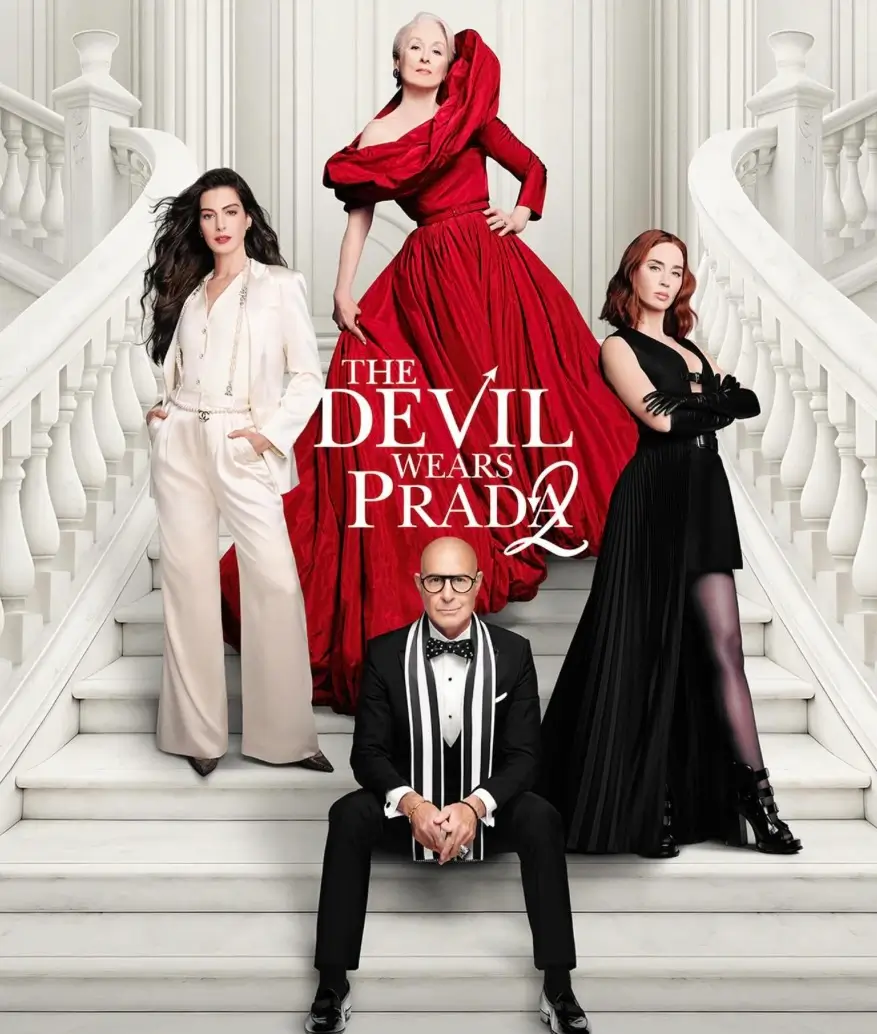
Nearly two decades after The Devil Wears Prada reshaped how mainstream audiences understood fashion, its sequel arrives not as nostalgia alone—but as a recalibration of power, media, and image. The Devil Wears Prada 2 is scheduled for release on May 1, 2026, reuniting Meryl Streep, Anne Hathaway, Emily Blunt, and Stanley Tucci under returning director David Frankel.
What emerges is not simply a continuation of Andy Sachs’ transformation, but a study in institutional survival. The sequel positions Miranda Priestly at the edge of obsolescence, navigating the collapse of print media while facing off against Emily Charlton—now a high-powered luxury executive controlling the advertising pipelines that once sustained Runway.
This shift—from personal ambition to structural decline—marks the film’s most critical update. Where the original examined entry into fashion, the sequel interrogates what remains when fashion’s traditional systems no longer hold.
stir
The narrative premise feels almost too aligned with reality to be fiction. In 2006, Runway was an exaggerated Vogue; in 2026, it resembles an endangered species. The sequel situates Miranda in a media ecosystem where digital platforms, influencer economies, and conglomerate luxury groups have overtaken editorial authority.
Emily Charlton’s evolution into a corporate power broker reframes the old assistant hierarchy. She is no longer subordinate to Miranda but economically superior—a reflection of how advertising, not editorial vision, dictates survival in contemporary fashion publishing.
Andy’s return to Runway completes the triangle, but she does so not as a naïve assistant. She returns as a seasoned editor navigating a fractured media landscape, suggesting a tonal shift from aspiration to negotiation.
This repositioning mirrors real-world industry anxieties. Condé Nast restructuring, declining print circulation, and the rise of algorithm-driven visibility all sit beneath the film’s surface narrative. The sequel effectively transforms The Devil Wears Prada from a workplace drama into a commentary on the dissolution of cultural authority.
people
The decision to retain the original cast is not merely fan service—it reinforces continuity of power dynamics across time. Streep’s Miranda remains the gravitational center, while Hathaway and Blunt provide the emotional and structural counterpoints.
The expanded cast, including Kenneth Branagh, Lucy Liu, and Justin Theroux, signals a broader narrative scope, extending beyond the magazine office into corporate, global fashion ecosystems.
Notably, cameos from industry figures and possible appearances tied to figures like Anna Wintour suggest a blurring of fiction and reality. Wintour’s evolving relationship with the franchise—now embracing its cultural caricature—demonstrates how the film has become embedded within the very industry it once critiqued.
show
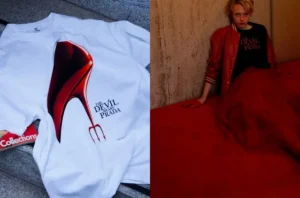
Fashion in the sequel operates less as spectacle and more as coded storytelling. Costume design reportedly leans into archival references—Armani tailoring, vintage silhouettes, and structured accessories—while integrating contemporary signals like sustainability and resale culture.
Several revived motifs—oversized sunglasses, statement belts, structured bags—echo the original film’s iconography while reflecting current trend cycles.
This duality—heritage versus reinvention—mirrors the broader industry tension. Just as Miranda clings to editorial authority, her wardrobe embodies continuity. Andy, by contrast, reflects adaptability through layered styling, thrifted elements, and hybrid aesthetics that signal editorial independence rather than institutional loyalty.
Even footwear, once dismissed in the original (the infamous “clogs” moment), returns recontextualized as high fashion—an intentional reversal of taste hierarchies that underscores fashion’s cyclical nature.
culture
The film arrives amid a broader cinematic trend: legacy sequels that revisit early-2000s cultural touchstones. However, The Devil Wears Prada 2 differs in one crucial way—it revisits a system that has fundamentally changed.
Where other sequels rely on nostalgia, this one confronts obsolescence. The original’s aspirational lens—fashion as gateway to identity—has been replaced by a more complex question: what does power look like when the structures that defined it collapse?
This aligns with a wider cultural shift toward institutional critique. Audiences are no longer interested in entering elite systems; they are interested in understanding, dismantling, or navigating around them.
theme
Unlike the original, which struggled to secure fashion industry participation, the sequel has reportedly been embraced by designers, brands, and fashion week circuits.
Filming at real-world events such as Milan Fashion Week, and the inclusion of high-profile cameos, signal a reversal of perception. What was once viewed as satire is now considered cultural currency.
This shift reflects fashion’s increasing openness to self-awareness. The industry, once protective of its image, now leverages its portrayal as a form of branding. The film becomes both commentary and marketing tool.
emotive
One of the most notable developments surrounding the film is its engagement with contemporary conversations around body image and representation. Anne Hathaway’s reported intervention to avoid depicting “alarmingly thin” models signals a departure from the original’s more uncritical portrayal of fashion standards.
This adjustment reflects broader industry changes, where inclusivity and health-conscious representation are no longer optional but expected. The film, in this sense, becomes a site of negotiation between legacy aesthetics and modern ethics.
relev
At the center of the sequel lies a more existential question: what happens to Miranda Priestly when she is no longer indispensable?
The original film framed Miranda as untouchable—a figure of absolute authority. The sequel, however, situates her within decline. She is no longer the future of fashion but its past, attempting to remain relevant in a system that no longer prioritizes her strengths.
This narrative arc reflects a broader cultural fascination with legacy figures confronting irrelevance. It is less about downfall and more about adaptation—whether power can evolve or whether it inevitably fades.
arena
The sequel’s return to New York is not incidental. The city functions as a symbolic center of media, fashion, and cultural production—yet one that has undergone significant transformation since 2006.
Filming locations, including Manhattan streets and international fashion capitals like Milan, emphasize globalization’s role in reshaping fashion’s geography.
New York is no longer the singular epicenter but one node within a global network, reflecting the decentralization of influence in the digital age.
anticip
The scale of anticipation surrounding the sequel is measurable. Early trailers reportedly achieved record-breaking viewership, signaling both nostalgia and renewed cultural relevance.
On-set reactions—crowds, fan recreations of Miranda’s look, and intense media attention—demonstrate the film’s enduring imprint on popular culture.
The timing of its release, coinciding with major fashion events like the Met Gala, further integrates the film into real-world cultural cycles, amplifying its visibility.
how
The Devil Wears Prada 2 is less about revisiting a beloved story and more about interrogating what that story means in 2026.
Fashion is no longer defined by a singular editorial voice. Media is no longer anchored in print. Power is no longer centralized in institutions like Runway. The sequel captures this fragmentation while maintaining the original’s focus on ambition, identity, and control.
It arrives at a moment when audiences are increasingly aware of the systems behind cultural production. The film’s relevance lies in its ability to reflect that awareness while still delivering the sharp dialogue and visual spectacle that made the original iconic.
clue
The greatest risk for any sequel is irrelevance. By shifting its focus from personal transformation to systemic change, The Devil Wears Prada 2 avoids that trap.
It acknowledges that the world has changed—and that its characters must change with it.
Miranda Priestly is no longer just the devil in Prada. She is a figure navigating a world where even the devil must negotiate for relevance.
And that, more than any outfit or line of dialogue, is what makes this sequel worth watching.