Mark Rober’s Lightning-Fast Rock-Paper-Scissors Robot: An Exploration of Technology, Strategy, and Ethics

November 12, 2024
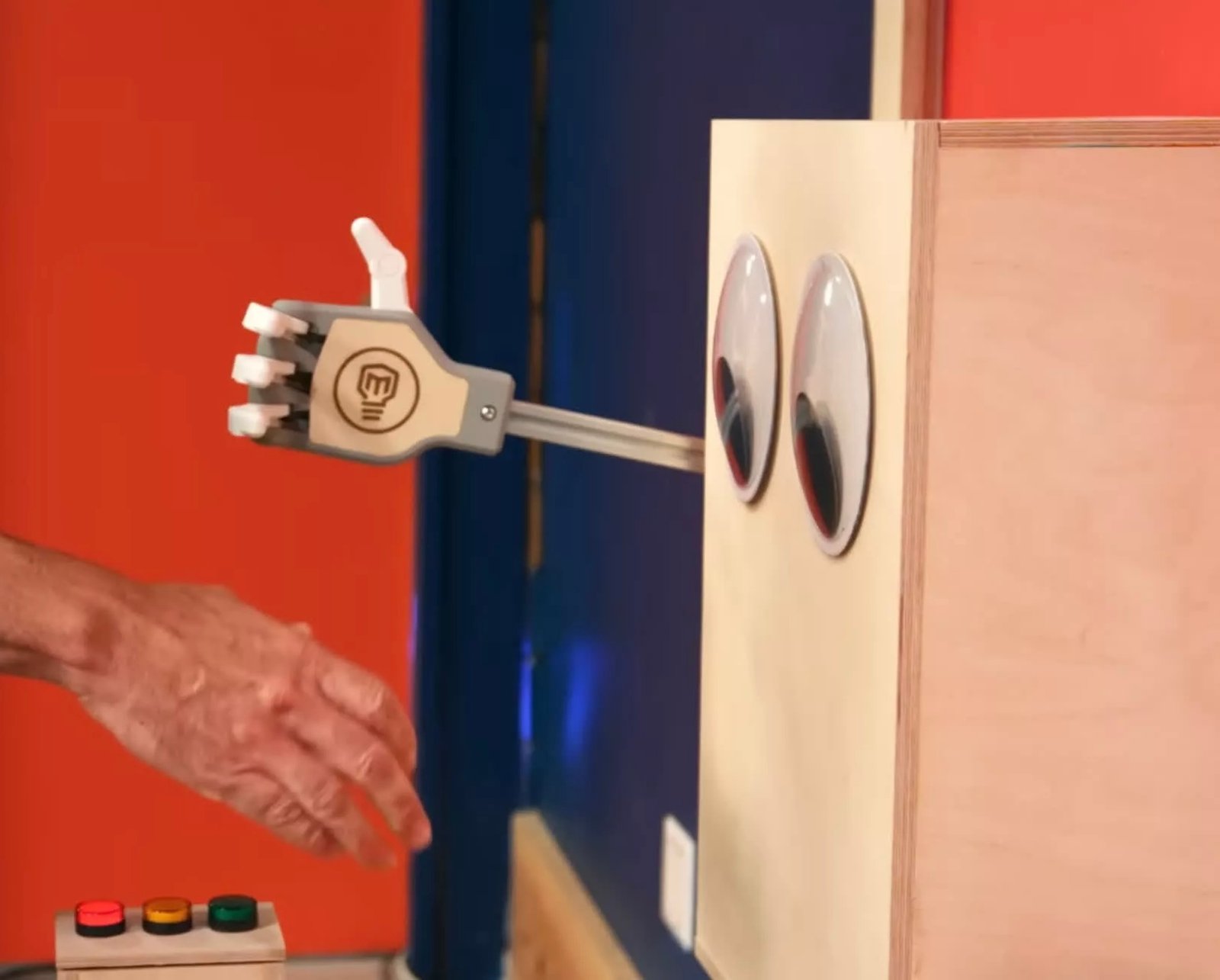
Mark Rober, a former NASA engineer and popular YouTuber known for his innovative science projects, has developed a robot that can win at the game of rock-paper-scissors 100% of the time. At first glance, this may seem like a fun experiment in speed and precision, but the robot’s success highlights significant implications for technology, human perception, and ethical considerations in artificial intelligence (AI) and machine learning. Rober’s creation sheds light on the complexities of developing machines that interact with humans, raising intriguing questions about the potential uses—and misuses—of such technology.
This robot’s rock-paper-scissors dominance is made possible by its ability to “cheat” through ultra-fast reaction times and computer vision, rather than by predicting the opponent’s choice. Here’s a critical exploration of how this technology works, its broader implications, and the ethical discussions it prompts.
Rober’s robot doesn’t win by outsmarting the opponent in the traditional sense. Instead, it uses a high-speed camera to detect the human player’s choice the instant they make it, then responds so quickly that it appears to have made its decision simultaneously. This is achieved through an advanced camera and processing system that can recognize the human hand gesture in real time and deploy the winning response in milliseconds.
Essentially, the robot is not actually “thinking” or strategizing, as a human opponent might. Instead, it leverages brute speed and precise timing, combined with machine vision algorithms that can interpret visual data with near-instantaneous response. This approach to the game exemplifies how machines can achieve seemingly impossible success rates in tasks that require rapid responses, making it clear how technological advantages like ultra-fast image processing can outpace human reflexes.
Computer vision is a field of AI that allows machines to interpret and act on visual information from the world. In Rober’s robot, computer vision enables the robot to quickly distinguish between the shapes of rock, paper, and scissors. The high-speed camera captures hundreds or thousands of frames per second, processing each frame to recognize the human player’s choice as soon as it’s made.
While rock-paper-scissors is a simple game, the technology behind this robot has applications far beyond games. Real-time computer vision is used in many fields, from autonomous vehicles to medical diagnostics. Rober’s robot serves as an example of how fast-response computer vision can be applied, giving insight into how visual recognition systems can be trained to respond to human actions in real time. This technology demonstrates not only the potential for AI to achieve human-like perception but also the limitations, as the robot’s “winning” approach relies on reacting to, rather than predicting, human behavior.
Rock-paper-scissors, while often regarded as a game of luck, involves subtle psychological strategies. Humans naturally attempt to predict and counter their opponent’s next move, adding layers of complexity to what initially seems like a random game. However, Rober’s robot bypasses this aspect entirely. It doesn’t attempt to predict or anticipate; it simply reacts faster than any human could.
By eliminating the psychological component, Rober’s robot changes the game’s nature, turning it into a pure test of reaction speed. This shift raises questions about what makes a game “fair” or “meaningful.” In this case, the robot’s ability to win 100% of the time is not based on skill or strategy in the traditional sense, but rather on mechanical superiority. This makes the game somewhat hollow, as the human player can never truly compete on equal footing.
The robot’s dominance may be unsettling for some, as it illustrates how technology can disrupt activities that have traditionally relied on human judgment and perception. When a machine bypasses human limitations, it forces us to reconsider the nature of “winning” and “losing” in interactions between humans and AI.
Rober’s robot raises ethical questions around the concept of “cheating” in human-machine interactions. The robot’s design makes it virtually unbeatable because it breaks an implicit rule in the game—deciding after the opponent reveals their choice. While the robot’s method is harmless in the context of rock-paper-scissors, similar principles could be applied in scenarios where the line between fair play and manipulation is less clear.
For example, in competitive gaming or sports, advanced AI systems could theoretically use real-time data to outperform human players in ways that would feel unfair. This leads to broader ethical concerns about transparency and fairness in AI interactions. If machines are allowed to exploit human limitations without adhering to the same standards, we risk creating systems that undermine the integrity of human-computer competition.
Rober’s robot also serves as a reminder of the potential consequences of implementing AI systems without considering ethical boundaries. If similar technology were applied in real-world scenarios, such as financial trading or online interactions, where rapid reaction and response provide an advantage, it could potentially give AI an unfair edge. This example highlights the need for ethical guidelines to ensure that AI enhances rather than exploits human abilities.
Rober’s robot is ultimately a fun experiment, but the technology behind it has more serious applications. In medical robotics, for instance, machines with lightning-fast reaction times could respond to changes in a patient’s condition more quickly than a human caregiver, potentially saving lives. In manufacturing, real-time AI systems can detect anomalies on assembly lines, improving efficiency and quality control. However, as AI systems become increasingly adept at reacting in real time, they may begin to blur the boundaries between human and machine abilities in ways that are not always beneficial.
The broader question, then, is how to balance the advantages of such technology with its potential downsides. As reaction-based AI becomes more integrated into our lives, society must decide where to draw the line in allowing machines to outperform humans in scenarios that affect us directly. In Rober’s rock-paper-scissors experiment, the stakes are low, but the principles it explores could influence future applications with much higher stakes.
Rober’s rock-paper-scissors robot brings to light a fascinating aspect of AI-human interactions—how AI can redefine our expectations of skill and competition. In this case, the robot’s ability to win every game creates an asymmetrical relationship where the human player has no hope of victory. This dynamic underscores the need for thoughtful design in AI that interacts directly with people, particularly in areas that involve competition, collaboration, or trust.
As AI technology advances, we’ll see more examples where machines have an inherent advantage over human capabilities. How these advantages are managed—whether by setting ethical guidelines, transparency requirements, or limits on their use—will shape the role of AI in society. If we’re not careful, we may find ourselves competing against systems that are designed to surpass us, even in realms traditionally governed by human intuition and skill.
Impression
Mark Rober’s rock-paper-scissors robot is more than a novelty; it’s an insightful demonstration of how AI can manipulate human expectations in games and other areas of life. By leveraging speed and reaction rather than strategy, the robot disrupts the conventional understanding of fair play, raising questions about what it means for a machine to “win.”
While the robot itself is a harmless invention, it serves as a case study in the potential ethical dilemmas of AI development. As AI systems become faster and more capable, we’ll need to carefully consider the contexts in which we allow machines to compete or collaborate with humans. Rober’s robot, with its 100% success rate, reminds us that the future of AI is not just about technological potential but also about finding the right balance between enhancement and fairness in our interactions with machines.