Is Denzel Washington’s Gladiator II Villain Based on a Real Roman Emperor? An Expert Weighs In

November 24, 2024
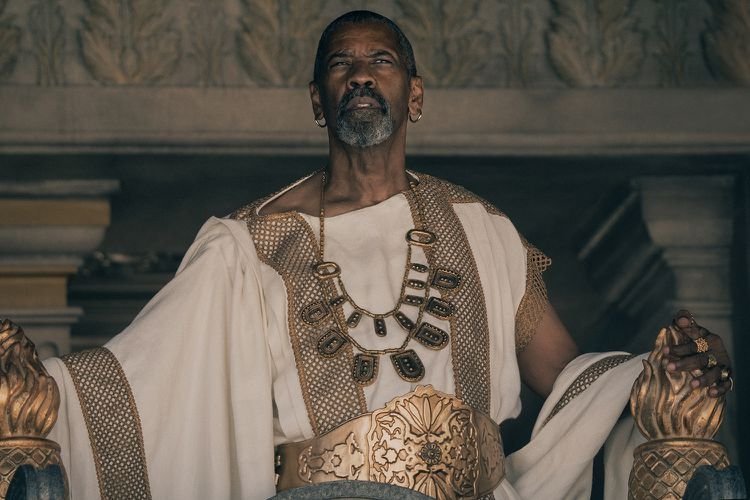
Ridley Scott’s Gladiator II brings the grit, grandeur, and political intrigue of ancient Rome back to the big screen, with Paul Mescal as the film’s protagonist, Lucius, and Denzel Washington portraying the enigmatic and ambitious Macrinus. While much of the film’s storyline explores familiar gladiatorial themes of survival, vengeance, and rebellion, many fans are wondering whether Washington’s character is rooted in historical fact or purely a product of the filmmakers’ imagination.
To uncover the truth behind Macrinus and his potential ties to real Roman emperors, we delve into historical records, analyze the film’s portrayal, and consult with experts on ancient Roman history.
The Character of Macrinus in Gladiator II
In Gladiator II, Denzel Washington’s Macrinus is a pivotal antagonist, embodying the ruthless ambition, power struggles, and political cunning associated with Rome’s ruling elite. His character is portrayed as a manipulative and ambitious figure, leveraging the instability of Rome’s leadership for personal gain. Macrinus acts as a foil to Lucius’ journey of moral and physical resilience, adding layers of intrigue to the plot.
The character’s name, however, raises an intriguing question: could Washington’s Macrinus be inspired by Marcus Opellius Macrinus, a real Roman emperor from the 3rd century AD?
The Real Macrinus: A Brief Overview
Marcus Opellius Macrinus (164–218 AD)
Marcus Opellius Macrinus, often known simply as Macrinus, was a historical figure who briefly held the title of Roman emperor from 217 to 218 AD. His rise to power and subsequent fall offer a fascinating glimpse into the volatility of Roman politics during the Severan dynasty.
1.Background and Rise to Power:
Macrinus was born in Mauretania (modern-day Algeria) and had a background in law and administration. Unlike many Roman emperors, he did not hail from the aristocracy or military elite, but his legal acumen and political savvy allowed him to climb the ranks. He eventually became the Praetorian Prefect under Emperor Caracalla.
In 217 AD, Macrinus orchestrated the assassination of Caracalla while the emperor was on campaign in the east. Following the murder, Macrinus declared himself emperor, becoming the first person of equestrian rank to achieve this status.
2.Reign as Emperor:
Macrinus’ short reign was fraught with challenges. Lacking military experience, he struggled to maintain the loyalty of Rome’s legions, especially those loyal to the Severan dynasty. His attempts at financial reform and diplomatic compromises were unpopular among both the military and the Senate.
3.Downfall:
In 218 AD, Macrinus faced a rebellion led by Julia Maesa, the grandmother of Elagabalus, a young claimant to the throne. This rebellion gained support from Caracalla’s former troops, leading to Macrinus’ defeat in battle. He was eventually captured and executed.
Parallels Between Gladiator II’s Macrinus and the Real Emperor
Although Gladiator II takes significant creative liberties, there are notable parallels between Washington’s character and the historical Macrinus:
1.Ambition and Political Intrigue:
Both Macrinuses (fictional and historical) are defined by their ambition and political cunning. In the film, Washington’s Macrinus navigates the treacherous waters of Roman power struggles, much like the real Macrinus did during his rise to the throne.
2.Challenges to Legitimacy:
The historical Macrinus struggled to gain acceptance among Rome’s elite due to his equestrian background. Similarly, in Gladiator II, Washington’s Macrinus is depicted as an outsider, using manipulation to secure his position in a turbulent political environment.
3.Themes of Betrayal:
The historical Macrinus’ rise was marked by betrayal, as he conspired to assassinate Caracalla. In the film, betrayal is a recurring theme, with Macrinus often pulling the strings behind key events to maintain his grip on power.
Differences Between the Two Macrinuses
While the film draws inspiration from history, it takes creative liberties to craft a compelling narrative:
1.Timeline and Setting:
The real Macrinus ruled during the Severan dynasty in the 3rd century AD, nearly a century after the events of the original Gladiator film, which were set in the late 2nd century. The film’s Macrinus exists in a fictionalized timeline that blends historical elements from different eras.
2.Character Complexity:
Washington’s Macrinus is portrayed as a complex and morally ambiguous character, reflecting modern storytelling trends. The historical Macrinus, while ambitious, is often depicted in ancient sources as a less charismatic and somewhat ineffectual leader.
3.No Direct Connection to Lucius:
In the film, Macrinus’ rivalry with Lucius drives much of the tension. Historically, there is no evidence linking Marcus Opellius Macrinus to any figure resembling Lucius or his family.
Expert Insights: A Historian’s Take
To better understand the connection between the two Macrinuses, we spoke with Dr. Julia Andrews, an expert in Roman history:
On the Historical Macrinus:
“Macrinus is a fascinating figure because he represents a break from tradition. His ascent to power as an equestrian marked a significant shift in Roman politics, but it also exposed the fragility of his position. His inability to command loyalty ultimately led to his downfall.”
On the Film’s Interpretation:
“It’s clear that Gladiator II draws loosely from historical sources, but its Macrinus is more of a composite character. The filmmakers seem to use the name and basic attributes of the historical figure while adapting them to fit the fictional narrative. This isn’t uncommon in historical dramas.”
On the Use of Fictionalized History:
“By blending history with fiction, the film can explore universal themes like ambition, betrayal, and power struggles. It’s less about historical accuracy and more about crafting a story that resonates with contemporary audiences.”
The Role of Fiction in Historical Epics
Gladiator II follows the tradition of historical epics that prioritize narrative over strict adherence to historical events. While purists may critique the film for its historical inaccuracies, others argue that this approach allows filmmakers to explore broader human themes.
Historical Dramatization:
Characters like Macrinus serve as vessels for exploring timeless issues such as moral compromise, the corrupting influence of power, and the resilience of the human spirit. By loosely basing these characters on historical figures, filmmakers can anchor their stories in reality while maintaining creative freedom.
Cultural Reflection:
The film’s portrayal of Macrinus as a morally ambiguous antagonist reflects modern sensibilities. Unlike the clear-cut villains of older historical dramas, Washington’s Macrinus is layered and complex, making him both relatable and formidable.
Denzel Washington’s Performance: Breathing Life into Macrinus
Washington’s portrayal of Macrinus is a standout aspect of Gladiator II. His commanding screen presence and nuanced performance elevate the character, making him a compelling foil to Paul Mescal’s Lucius.
Layered Complexity:
Washington brings depth to Macrinus, portraying him as a man driven by ambition but not without vulnerability. This complexity makes the character more than a one-dimensional villain, adding emotional weight to the film.
Charismatic Authority:
As one of Hollywood’s most respected actors, Washington imbues Macrinus with a sense of gravitas that makes his character’s machinations all the more believable. His ability to balance charm and menace is key to the film’s success.
Impression
While Denzel Washington’s Macrinus in Gladiator II is not a direct representation of the historical Marcus Opellius Macrinus, the character draws clear inspiration from the real-life figure. By blending historical elements with fictional narrative, the film crafts a story that resonates with modern audiences while exploring universal themes of power, ambition, and morality.
Ultimately, Gladiator II is less about historical accuracy and more about storytelling. Washington’s Macrinus, whether seen as a fictional construct or a loose adaptation of a Roman emperor, stands as a testament to the enduring appeal of historical dramas and the timeless complexities of human ambition.