A Brick-Built Resurrection: LEGO × Nintendo Game Boy

November 17, 2025
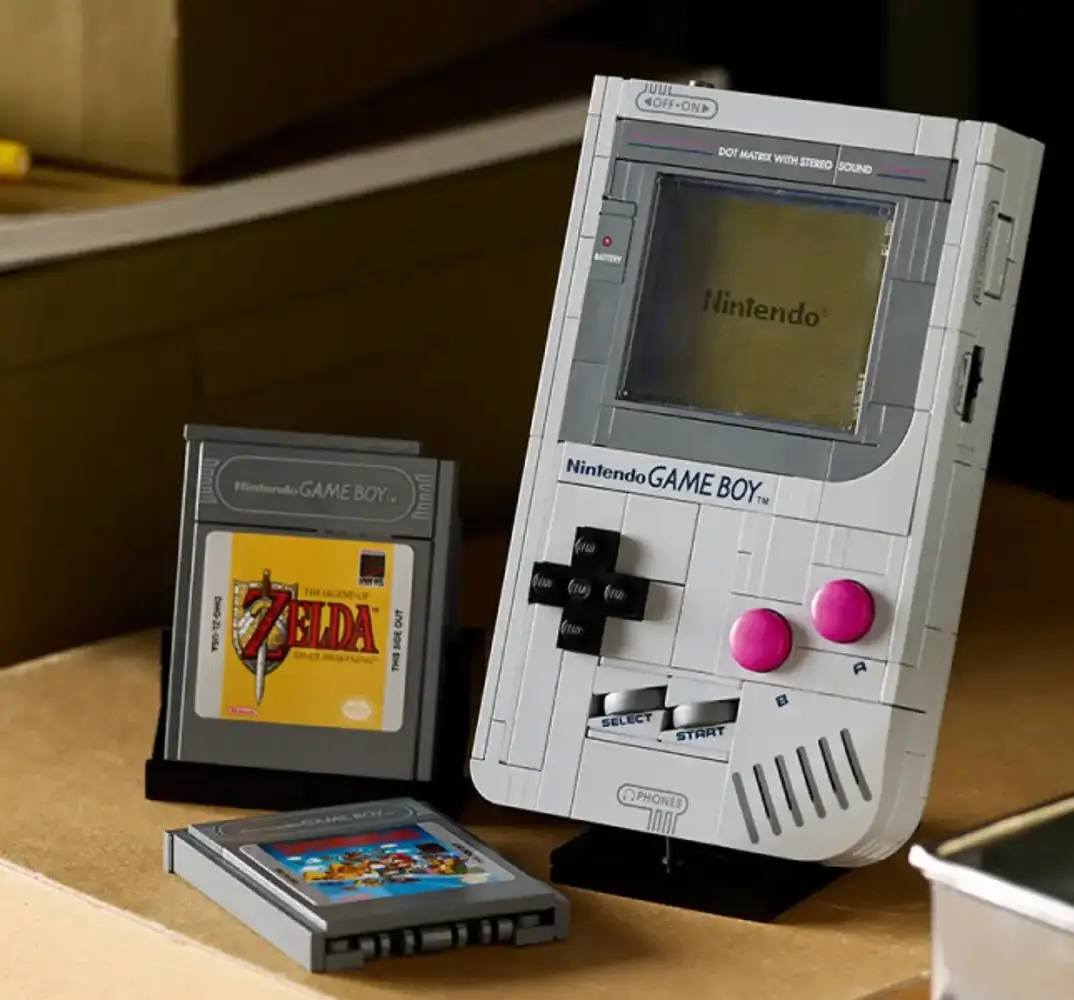
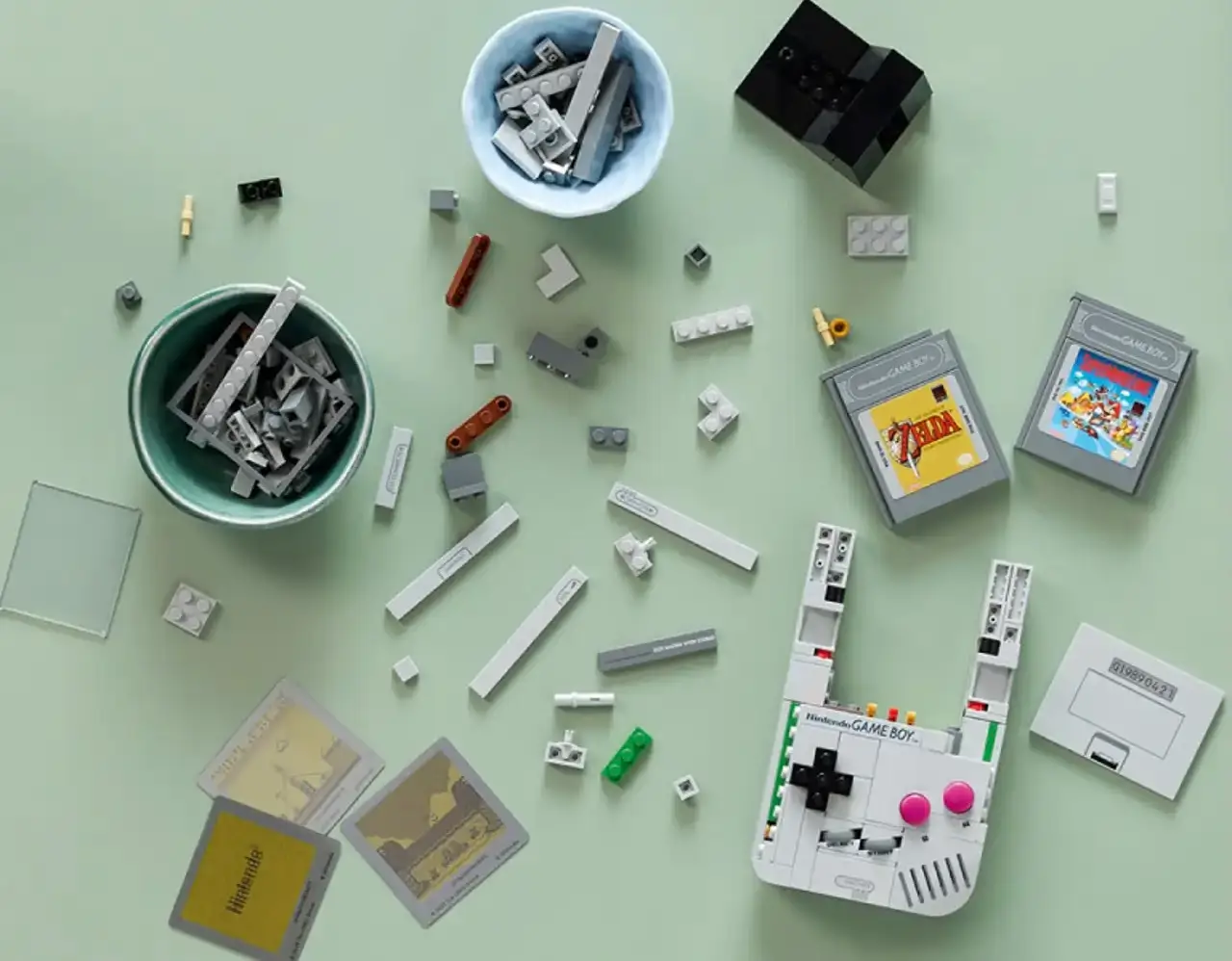
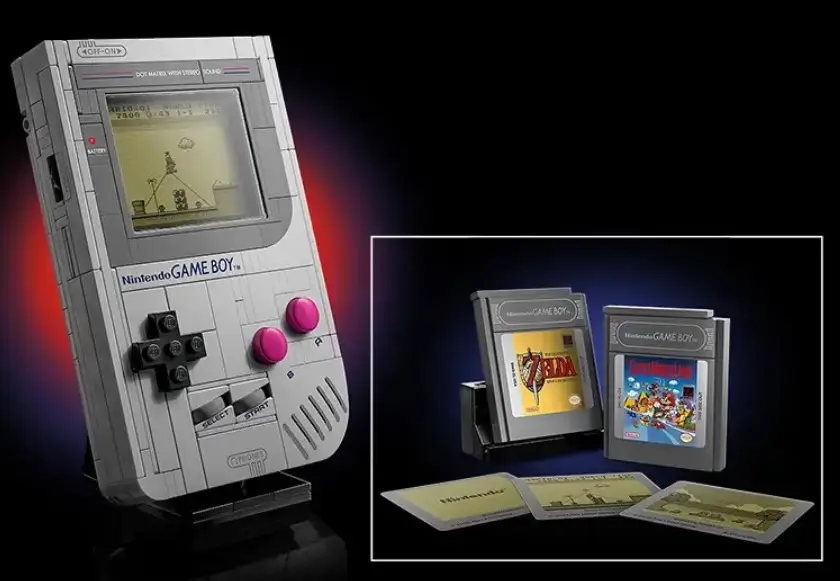
In the quiet stillness of a workshop shelf—between the wooden grains of a well-lived tabletop and the hum of a modern room—sits something uncanny. At first glance it appears to be a pristine vintage Game Boy, perfectly preserved from 1989, upright and ready for action. But the closer you look, the more the illusion reveals itself: the slight stepped gradients where plastic used to be smooth, the tiny interlocking seams that form the contours of the device, and the unmistakable geometry of LEGO bricks. This is the LEGO Nintendo Game Boy, a sculptural revival of a cultural titan, reborn not in circuitry but in bricks.
gen
Few technological objects have left as deep an imprint on global childhood as the original Nintendo Game Boy. Released in 1989, it was a marvel not because of its specifications—by modern standards, its 2.45-inch monochrome screen and 4 MHz processor are barely measurable—but because of what it made possible. For the first time, gaming became truly portable, democratic, and intimate. A universe could live inside your backpack. Adventures could unfold in the backseat of a car. Games could follow you to bed, to school, to summer camp.
There was a ritual to the Game Boy.
You slid the cartridge in with a frictional bite.
You toggled the power on with a small, confident click.
The screen glowed a soft pea-green.
And a world materialized.
That ritual—the combination of movement, tactility, and imagination—is what LEGO has captured. Unlike digital re-releases or modern handheld updates, a LEGO version revives the physicality of the original era. It reminds the world that the Game Boy was never only a device. It was a companion, a pocket-sized portal that fit the human hand and reshaped the human imagination.
By rebuilding it brick by brick, LEGO re-creates not just the form, but the memory.
collide
LEGO and Nintendo are two of the most influential creative forces in global play culture. Their histories run parallel: both companies began with modest tools—woodworking and playing cards—and evolved into titanic shapers of imagination. Their philosophies share a commitment to accessibility, clarity, and a kind of joyful minimalism.
When LEGO interprets a Nintendo artifact, it does more than mimic. It translates the design language of one medium into another with reverence. The brick becomes the pixel, the stud becomes the circuit, the plate becomes the frame.
The LEGO Game Boy demonstrates this harmony with poetic precision:
The D-pad
Formed by layered tiles that subtly round off the edges, mimicking the smooth pivot of the original rocker.
The magenta buttons
Vibrant, playful, and immediately recognizable—LEGO perfectly channels the cheerfulness embedded in Nintendo’s hardware color palette.
The speaker grille
Reconstructed through a series of angular tile placements, retaining the diagonal cutouts that every Game Boy owner knows by memory.
The screen
A window into monochrome fantasies, rendered through swappable printed plates that echo the pixelated motion of an era where imagination filled in the gaps.
Every detail reinforces the object’s mythic contour. LEGO has long mastered the art of mimicry—but here mimicry transforms into tribute.
tactile
We live in a moment where screens govern nearly every waking hour. Notifications dominate attention. Apps blur work and leisure. Entertainment is on-demand, algorithmically curated, and often passive.
The LEGO Game Boy arrives as a counterpoint—a tangible reminder of a slower form of engagement. Building it requires presence. Admiring it demands stillness. Displaying it evokes conversation rather than consumption.
Its rise mirrors broader cultural currents:
• The return of vinyl
• The resurgence of film photography
• The boom in mechanical keyboards
• The popularity of journaling and analog hobbies
• The mindfulness movement intersecting with collectable design
People crave physical anchors in an increasingly digitized world. The Game Boy, a device that once represented cutting-edge portability, now symbolizes this return to tactility. Through LEGO, that symbolism becomes sculptural.
style
In the image you provided, The Legend of Zelda: Link’s Awakening cartridge sits upright, proud and golden—its iconic shield crest familiar even in brick translation. Beside it, a gray-tiled recreation of Super Mario Land lies flat, like an artifact freshly unearthed from a time capsule. LEGO’s brilliance lies in how these cartridges are not mere accessories but storytelling devices.
Each one represents an era of world-building that transcended technology:
Link’s Awakening, released in 1993, was a masterpiece of emotional storytelling despite the Game Boy’s constraints. Its dream-island narrative introduced many players to the idea that handheld games could be narratively profound.
Super Mario Land, the system’s launch title, brought Mario into a portable form, translating his platforming DNA into an adventure filled with sphinxes, submarines, and extraterrestrial surprises.
LEGO’s reconstruction of these cartridges accomplishes two things:
-
It restores the ritual—the act of swapping one world for another.
-
It abstracts the art—turning 2D label illustrations into cultural symbols retold through toy design.
The cartridges, positioned beside the Game Boy in your photo, feel like miniature monoliths from an age of physical media. Their presence expands the build from object to ecosystem.
show
Unlike a modern handheld or digital emulation, the LEGO Game Boy does not aim to be played. It aims to be remembered. Standing upright on its small black base, the model takes on the form of a museum artifact—something meant to be admired, studied, and evoked in conversation.
The way the set is displayed—slightly angled, elevated, framed by the warm tones of a desk or workbench—turns it into a domestic sculpture. There’s a quiet reverence in the angle, as if the Game Boy is leaning forward to whisper a memory: the whirr of batteries, the quiet click of buttons, the glow of monochrome pixels in dim light.
It’s the paradox of nostalgia: the object is static, but the memories it stirs are alive.
fin
In a culture obsessed with technological speed, the LEGO Game Boy is a rare deceleration. It is a reminder of when conjure was slower, simpler, and more deliberate—when imagination filled the gaps that hardware couldn’t.
The set succeeds not because it is accurate, but because it is affectionate. It is a love letter written in bricks.
With each tile, each plate, each tiny detail that reimagines the original, LEGO has performed a kind of cultural preservation. They’ve ensured that the Game Boy—this small gray rectangle that once revolutionized childhood—continues to live not just in museums or memories, but on shelves, in hands, in homes.