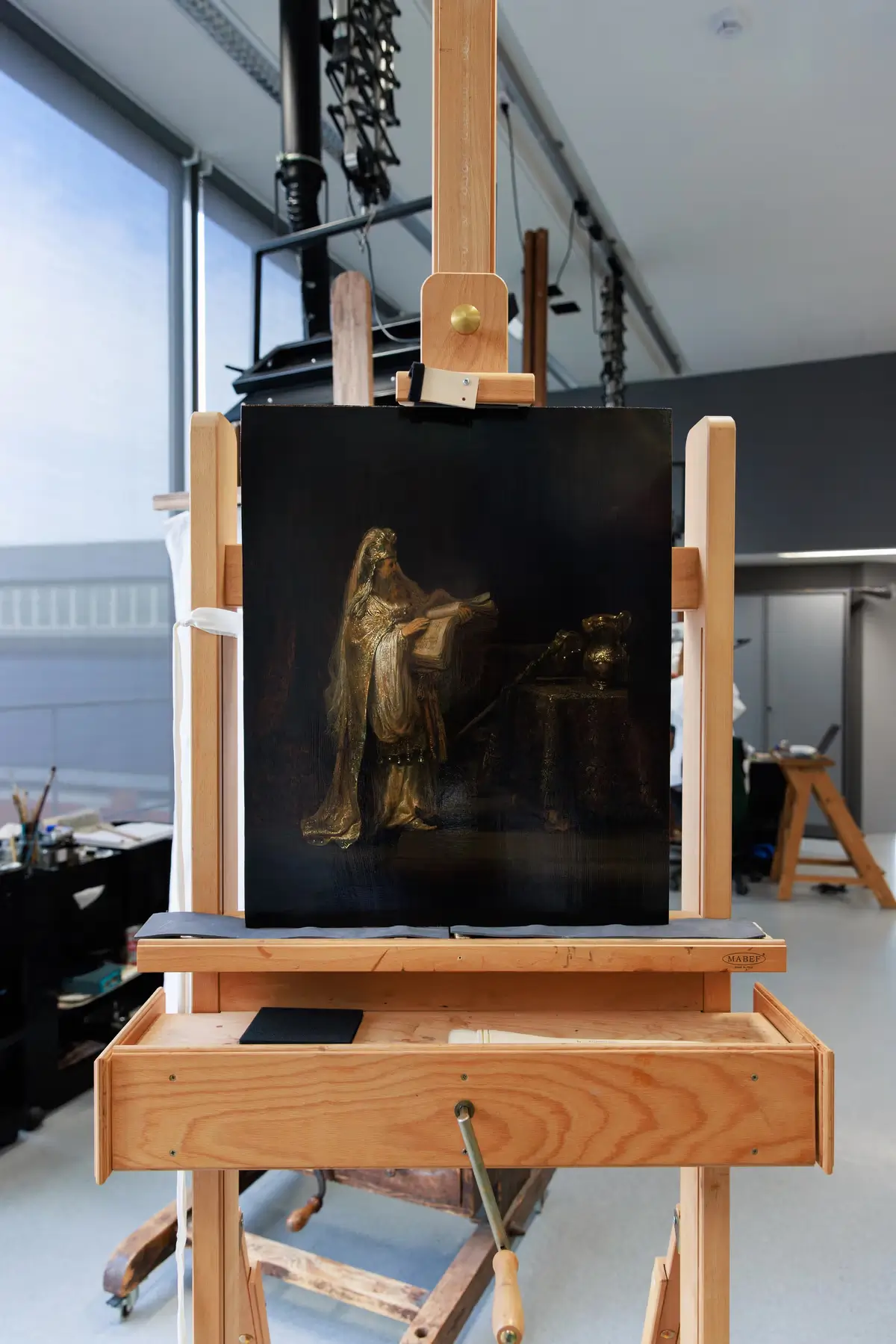
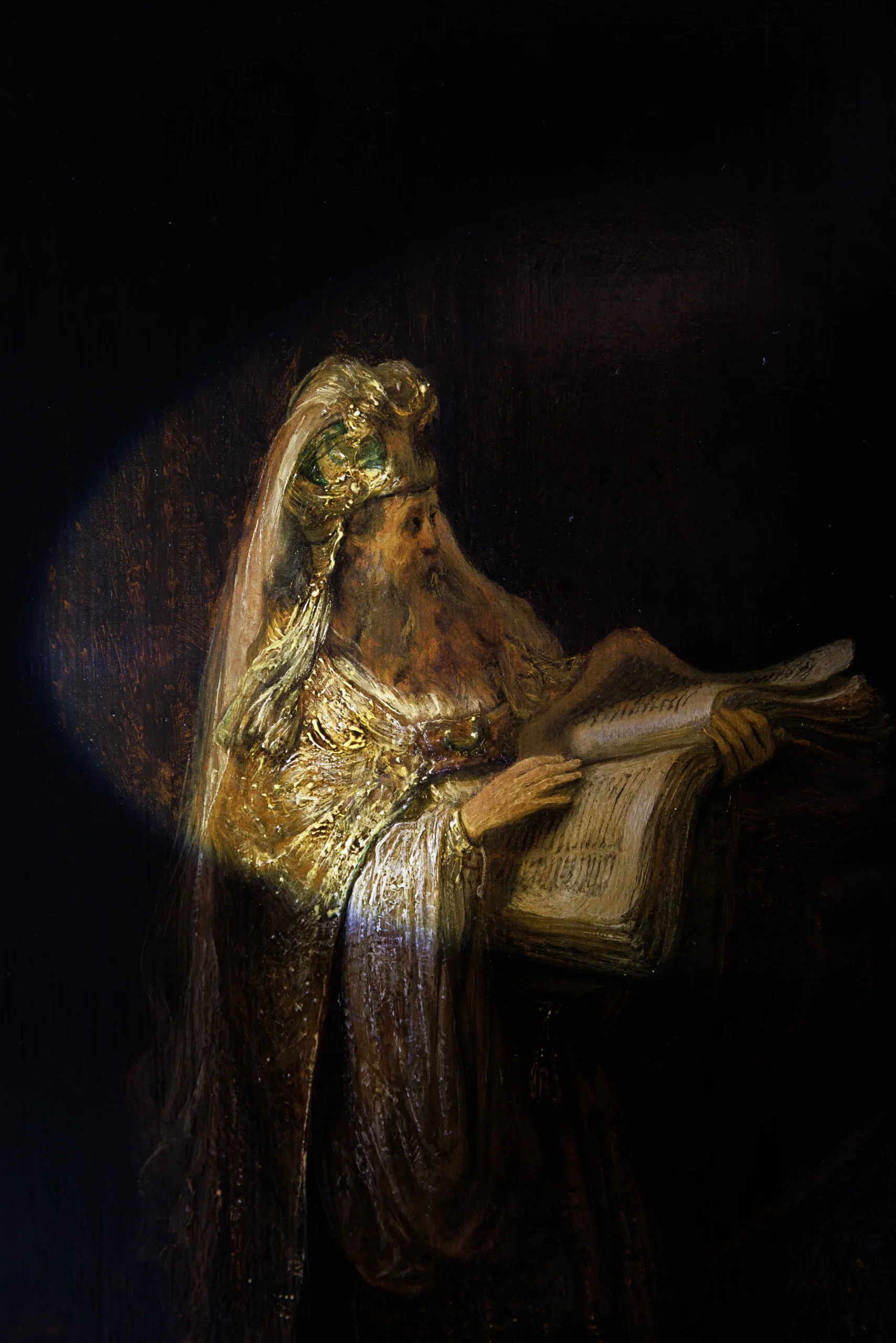
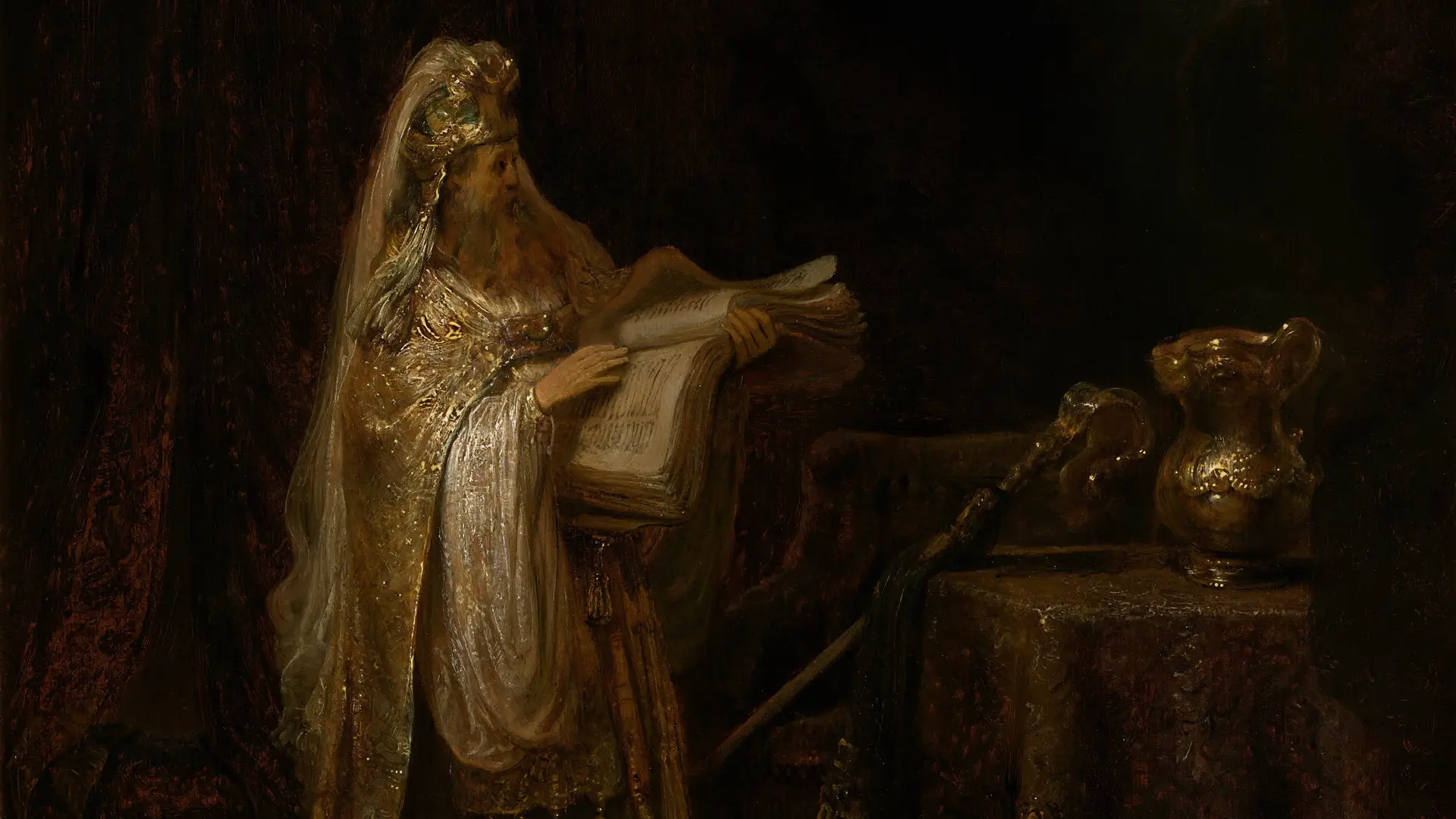
In a revelation that feels almost cinematic in its arc, a Dutch museum has unveiled a painting now newly confirmed as an authentic work by Rembrandt van Rijn—a canvas once rejected, dismissed, and quietly sold into a private collection in the 1960s. For decades, the work existed in a state of limbo: admired, perhaps, but academically sidelined. Now, after years of forensic analysis, stylistic comparison, and scholarly debate, it returns to public view not as a question mark, but as a declaration.
The rediscovery is more than a curatorial triumph. It is a meditation on authorship, the fallibility of expertise, and the enduring mystique of one of the Dutch Golden Age’s most complex figures.
sil
Few artists have experienced the rollercoaster of attribution quite like Rembrandt. In the late 19th and early 20th centuries, hundreds of paintings were enthusiastically assigned to him. By mid-century, the pendulum swung sharply the other way. Scholars began to prune the oeuvre, stripping works from the master’s catalog and reallocating them to pupils, followers, or anonymous contemporaries.
The 1960s were particularly unforgiving. Connoisseurship—then heavily reliant on the trained eye and stylistic intuition—could be ruthless. A slightly stiff hand, an unfamiliar compositional turn, or a perceived technical inconsistency might doom a painting’s authorship. In this climate, the now-rediscovered canvas was judged unworthy of Rembrandt’s signature touch. It was sold, receding into private hands and academic obscurity.
Yet attribution is not static. It evolves with technology, scholarship, and shifts in aesthetic understanding.
idea
The museum’s recent announcement rests on a confluence of evidence. Advances in technical imaging—X-radiography, infrared reflectography, dendrochronology, and pigment analysis—have transformed the study of Old Masters. These tools allow scholars to peer beneath surface paint layers, revealing underdrawings, compositional adjustments, and studio practices invisible to the naked eye.
In this case, researchers identified underpainting and brushwork consistent with Rembrandt’s mid-career experimentation. Subtle reworkings around the sitter’s eyes and mouth suggested a restless refinement characteristic of the artist’s process. Pigment analysis aligned with materials known to have been used in his Amsterdam studio during a specific period.
But science alone does not crown a masterpiece. The final step required renewed connoisseurial engagement: the painting was compared to securely attributed works in major collections, including those held at the Rijksmuseum and the Mauritshuis. The dialogue between the canvases—between handling of light, flesh tones, and psychological intensity—became difficult to dismiss.
stir
Why are Rembrandt attributions so fraught? The answer lies partly in the structure of his workshop. Unlike some contemporaries, Rembrandt ran a dynamic studio that blurred authorship lines. Students were encouraged to emulate his style closely; collaborative works were common. Assistants might block in forms that the master later refined. In other cases, students produced works so convincing that even seasoned experts struggle to distinguish hand from hand.
This ambiguity fueled the establishment of the Rembrandt Research Project in 1968, an ambitious effort to systematically reassess the painter’s corpus. Over decades, the project dramatically reduced the accepted number of Rembrandts, prioritizing caution over enthusiasm.
Ironically, that same rigor laid the groundwork for rediscoveries like this one. The standards for acceptance are now extraordinarily high. When a painting is welcomed back into the fold, it does so after surviving an intense gauntlet of scrutiny.
flow
What persuaded scholars this time? Beyond laboratory data, the painting’s emotional register proved compelling. Rembrandt’s portraits are rarely mere likenesses; they are psychological events. Faces emerge from darkness with a kind of internal luminosity, as though lit by thought itself.
In the rediscovered work, the sitter’s gaze carries that unmistakable ambiguity—neither fully confrontational nor withdrawn. The handling of chiaroscuro, the dramatic interplay of shadow and light, feels neither formulaic nor derivative. Instead, it exhibits a confident orchestration that suggests a guiding intelligence rather than an imitator’s echo.
The brushwork, too, offers clues. Rembrandt’s paint surface can oscillate between velvety smoothness and rugged impasto. The newly authenticated canvas displays precisely this duality: passages of delicately blended skin tones set against more tactile highlights.
show
Authentication is not merely academic. It is economic. A painting attributed to “circle of Rembrandt” occupies a vastly different market tier than one confirmed as autograph. The financial implications can be staggering, often multiplying a work’s value many times over.
Yet the museum’s display reframes the conversation. Rather than foregrounding market speculation, the institution emphasizes public access and historical restoration. A work once confined to private walls now enters the communal narrative of art history.
Still, one cannot ignore the broader art market context. Rediscoveries have electrified auction rooms before. The confirmation of a Rembrandt inevitably reverberates beyond museum galleries, affecting collectors, insurers, and dealers worldwide.
style
There is a poetic symmetry in the painting’s journey. Rejected during an era of skepticism, it returns in a time of renewed openness—tempered, of course, by scientific precision. Its trajectory mirrors broader shifts in art historical methodology: from intuitive connoisseurship to interdisciplinary analysis.
For the museum, the announcement is a statement of confidence. Dutch institutions, custodians of the Golden Age legacy, operate within a landscape where national identity and artistic heritage intertwine. To restore a Rembrandt to public view is to reassert a fragment of cultural patrimony.
fwd
The unveiling has drawn crowds eager to witness the “new” Rembrandt. For many visitors, the scholarly backstory enhances the viewing experience. Standing before the canvas, one senses not just the 17th century, but the 20th and 21st centuries layered atop it—the doubts, the debates, the technological breakthroughs.
Museums today function as both temples of art and arenas of knowledge production. By transparently sharing the investigative process, curators invite audiences into the detective work. The painting becomes more than an object; it becomes a narrative.
rembrandt
Why does a new Rembrandt matter so much? Partly because the artist occupies a near-mythic position. Born in Leiden in 1606 and later active in Amsterdam, Rembrandt navigated triumph and tragedy with equal intensity. His oeuvre spans biblical scenes, group portraits, landscapes, and an unparalleled series of self-portraits that chronicle aging with unflinching honesty.
Each authenticated work recalibrates our understanding of his development. Even a single canvas can illuminate a transitional moment—an experiment in composition, a subtle shift in palette, a recalibration of emotional tone.
In this sense, the rediscovery is not just additive; it is interpretive. It prompts fresh questions about chronology, influence, and workshop practice.
tech
Modern imaging technologies function almost like time machines. Infrared reflectography can reveal initial sketches; X-rays expose compositional changes; microscopic pigment analysis traces trade networks and material histories. These methods do not replace the human eye, but they augment it.
In the rediscovered painting, underlayers suggested hesitation and revision—hallmarks of an artist thinking on canvas. Copyists tend to replicate; masters reconsider. That subtle distinction proved pivotal.
human factor
Attribution ultimately involves judgment. Panels of experts debated the findings. Opinions were weighed. Dissent was acknowledged. Only after consensus emerged did the museum proceed with its announcement.
Such deliberation underscores a crucial truth: art history is not static scripture but evolving discourse. What was once rejected can be redeemed; what is accepted today may be reconsidered tomorrow.
revive
Displayed in a dedicated gallery space, the painting now commands renewed attention. Its frame, lighting, and interpretive materials contextualize its odyssey. Visitors encounter not just a portrait, but a testament to scholarly perseverance.
There is something profoundly moving about this return. A painting long consigned to the margins reclaims its voice. Its pigments, layered centuries ago, speak anew.
culture
For the Netherlands, Rembrandt remains a pillar of cultural identity. His works anchor national museums, shape educational curricula, and attract global tourism. A newly authenticated painting subtly expands that inheritance.
Yet the significance transcends borders. Rembrandt’s influence rippled across Europe and beyond. His approach to light and psychology informed generations of artists, from the Baroque through Romanticism and into modern realism.
rare
Perhaps the most compelling aspect of this story is its reminder of uncertainty. Expertise evolves. Assumptions falter. The painting’s decades-long exile illustrates the provisional nature of knowledge.
In the 1960s, scholars believed they were refining Rembrandt’s oeuvre with necessary rigor. They were not wrong; they were operating within the limits of available evidence. Today’s scholars, armed with new tools, see differently.
emotive
The museum’s decision to display the painting publicly signals confidence in its findings. Yet it also invites scrutiny. Peer review in the art world extends beyond journals; it unfolds in galleries and symposiums, in whispered debates before canvases.
If the attribution withstands time, the painting will integrate seamlessly into Rembrandt’s canon. If challenges arise, the discourse will continue. Either outcome enriches the field.
fin
The rediscovered Rembrandt stands as both artwork and artifact of intellectual history. It embodies the 17th century’s creative ferment and the 21st century’s analytical rigor. Its journey—from acclaim to rejection to reaffirmation—mirrors the evolving nature of scholarship itself.
Standing before it, one might reflect on the artist’s own fascination with time, mortality, and human complexity. Rembrandt painted faces that seem aware of their own ephemerality. This canvas, too, carries that awareness—having endured doubt, silence, and eventual vindication.
In reclaiming its authorship, the painting does more than expand a catalog. It reminds us that art history is a living conversation, shaped by humility as much as expertise. And in that conversation, even centuries-old voices can speak again with startling clarity.