The Bouché Line: Acne Paper and Architecture of Mid-Century Women

April 12, 2026
3 hours ago
View this post on Instagram
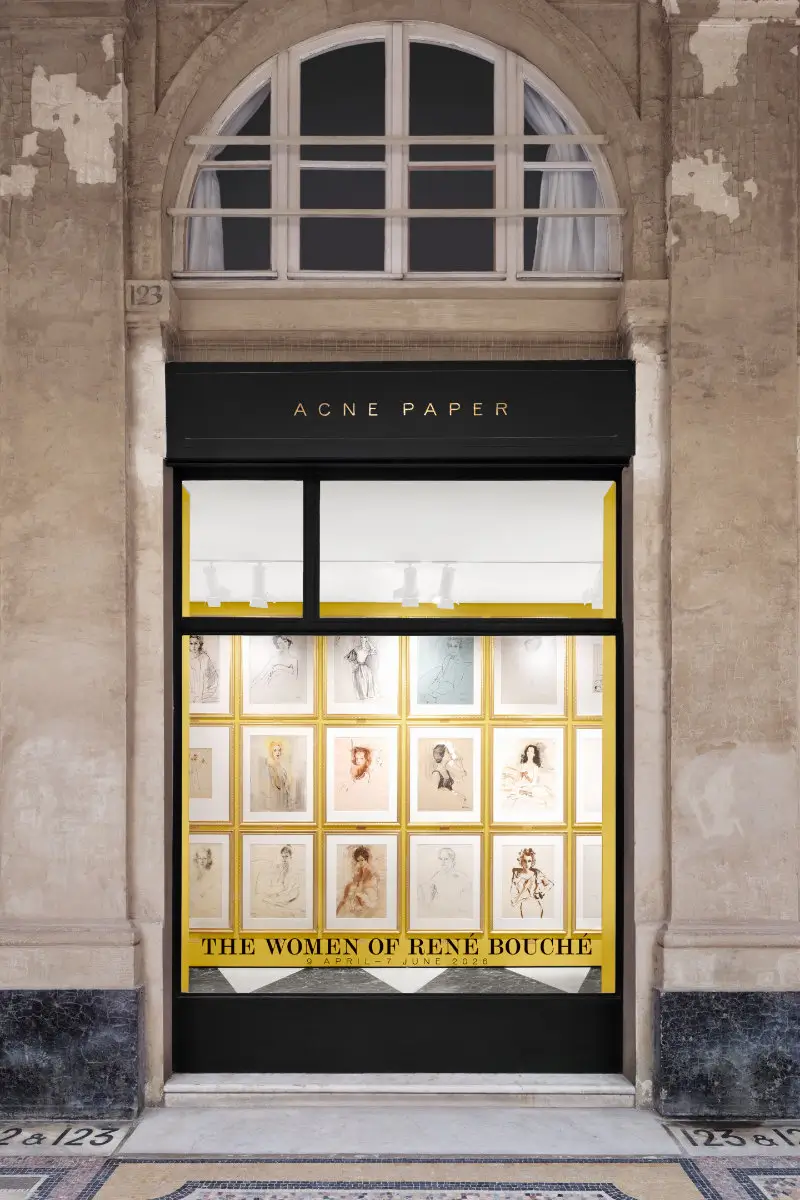
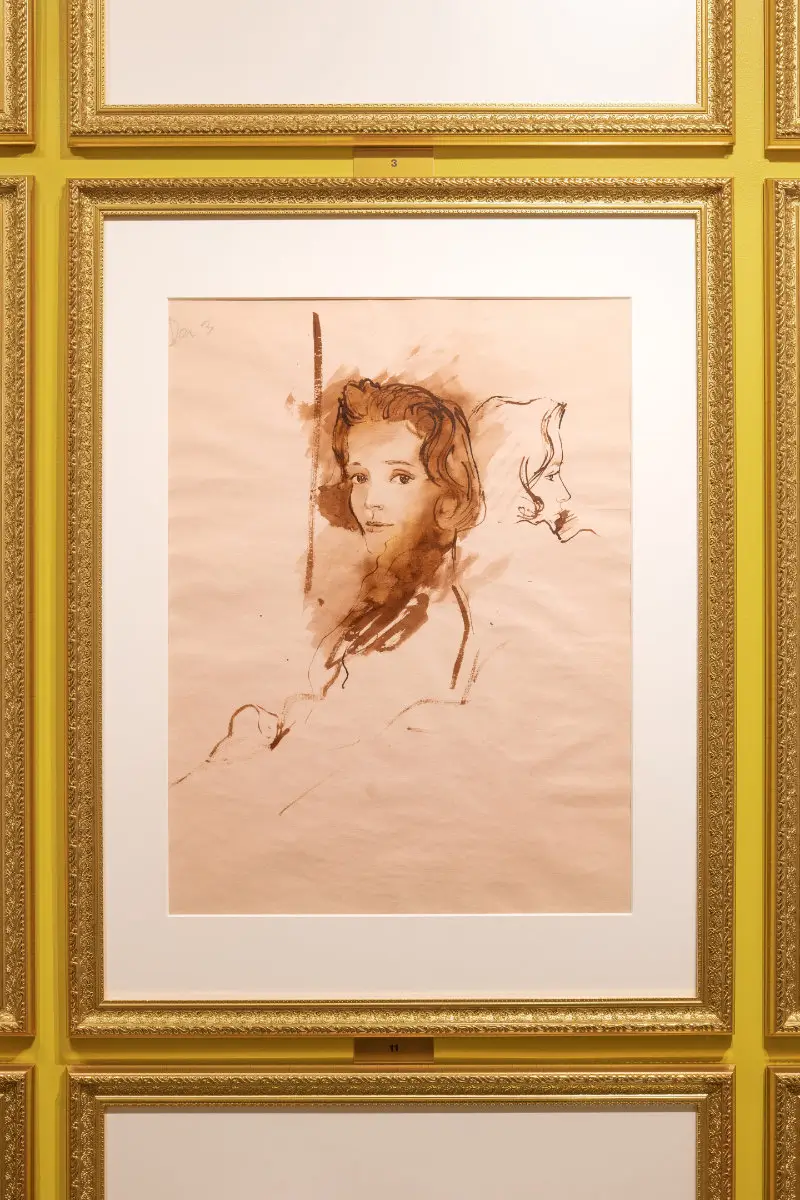
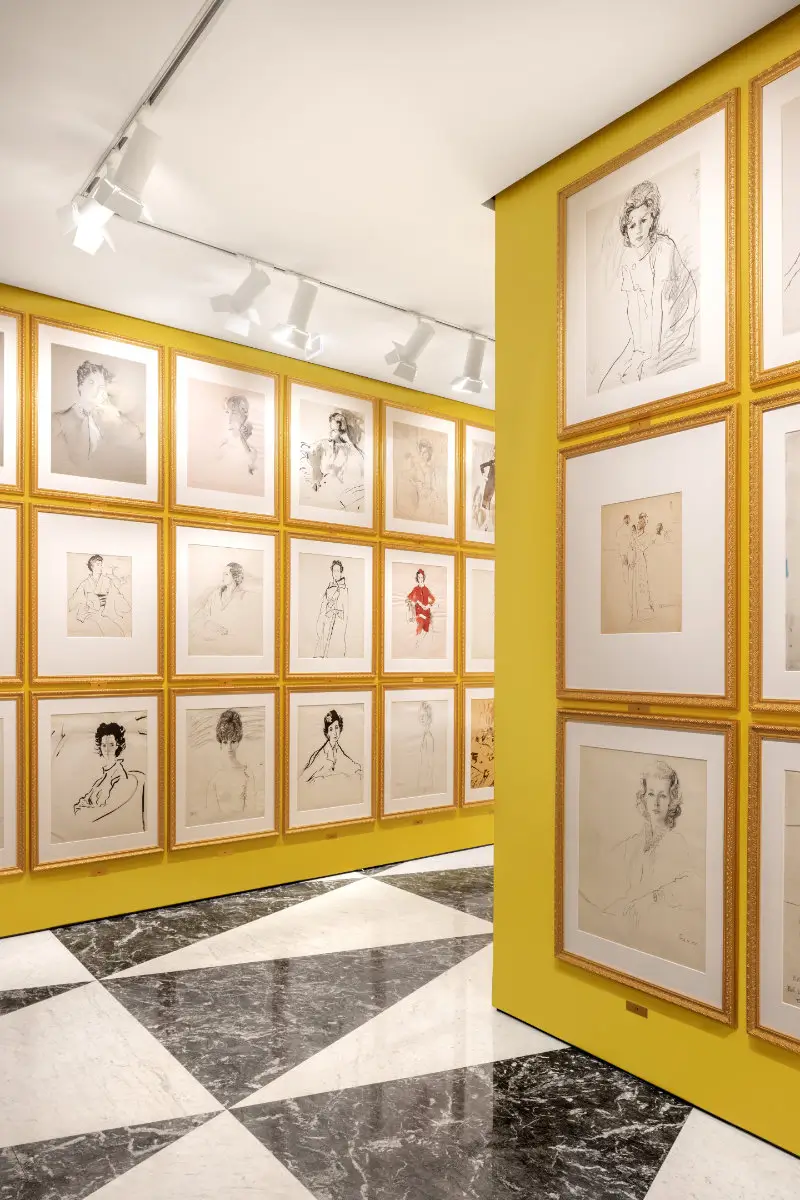
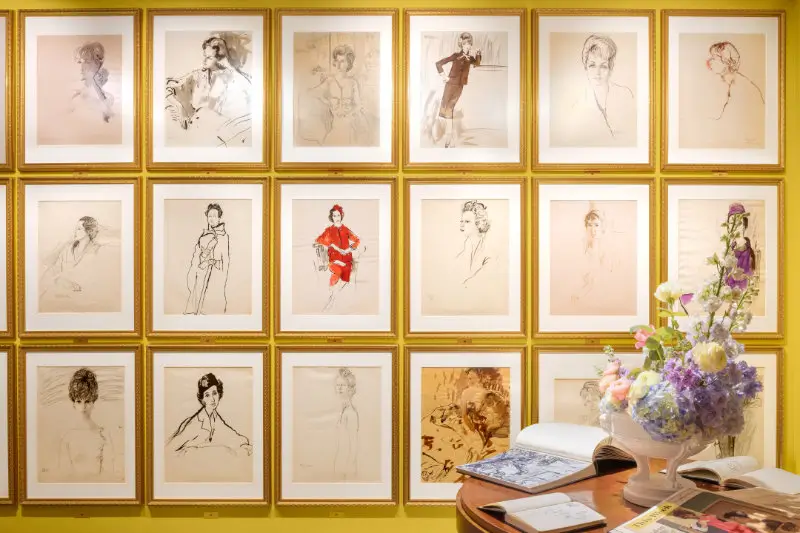
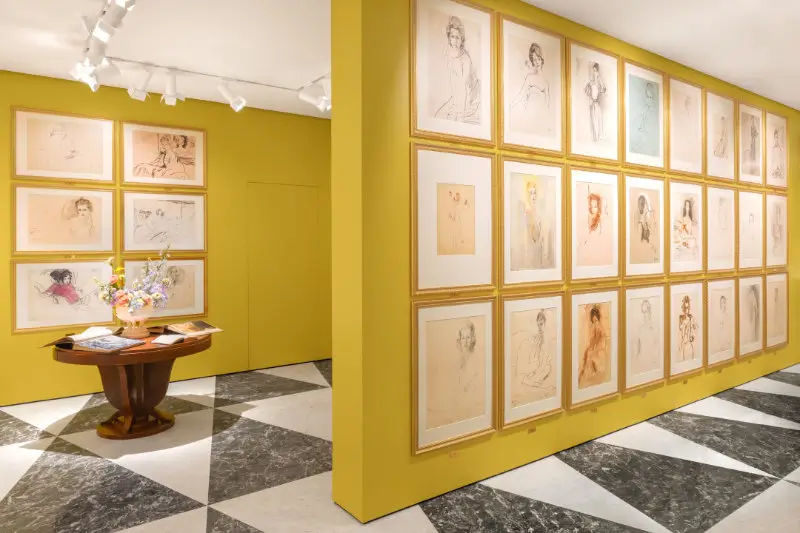
For decades, the drawings remained still—kept in portfolios, preserved but withheld from circulation, held within the domestic quiet of Denise Bouché’s home. Not lost, but suspended. Now, through Acne Paper, that suspension breaks. A collection of seventy portrait drawings by René Bouché re-enters public view, curated by Dean Rhys-Morgan, marking the first time these works have been gathered since Bouché’s final exhibition at the Alexander Iolas Gallery in 1957.
This is not simply a rediscovery. It is a recalibration of how mid-century elegance is remembered, and who gets to define it.
What emerges from the archive is not nostalgia in its expected form—no softened haze, no retrospective gloss—but something sharper. The drawings hold their edge. They do not sentimentalize their subjects; they observe them. And in doing so, they resist the flattening tendencies of time.
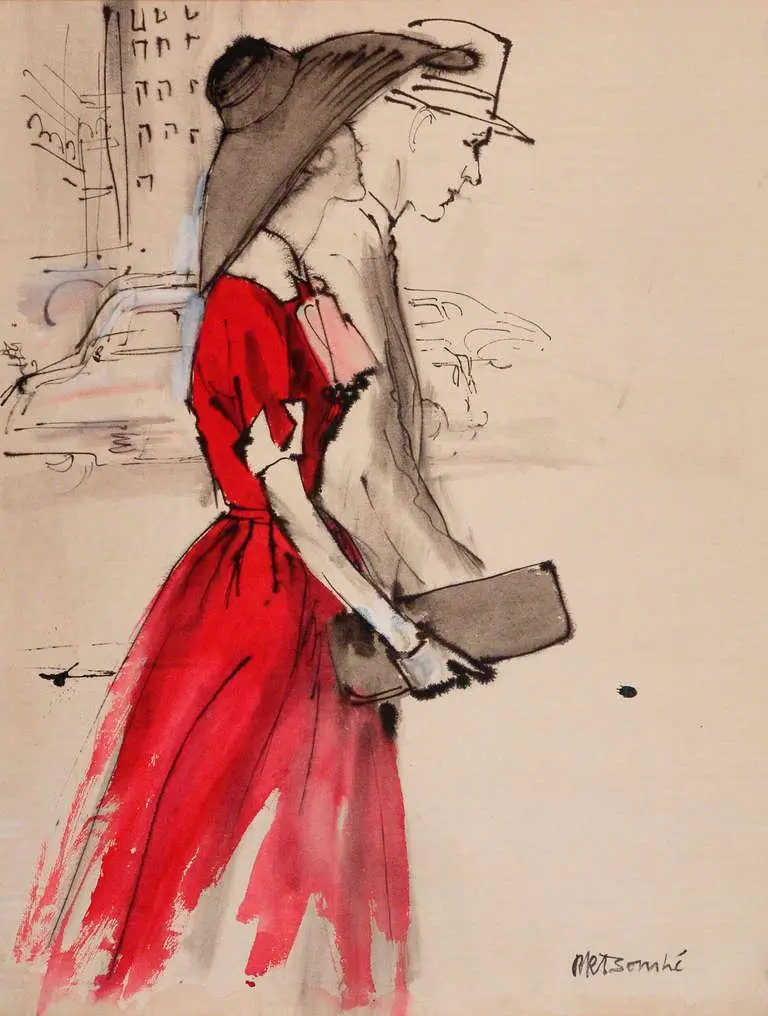
Paris 1950’s Red Dress
stir
The seventy works form less a series than a constellation—a network of women who shaped culture, social, and aesthetic life across Europe and America during the mid-twentieth century. They are not anonymous muses or interchangeable figures. They are individuals whose influence extended through salons, galleries, philanthropic circles, and transatlantic cultural exchange.
Aviators. Patrons. Collectors. Society hostesses. Women whose presence was not passive but structuring—who hosted, funded, connected, and circulated ideas. In Bouché’s drawings, they do not perform importance; they inhabit it.
There is a particular clarity in how he renders posture. A shoulder slightly angled. A wrist held mid-gesture. The tilt of a head that suggests both attention and distance. These are not decorative choices—they are diagnostic. Each line carries information, not just about appearance, but about orientation: how these women positioned themselves in the world.
Bouché understood that power, in these contexts, was often articulated through restraint. His sitters are composed, but never inert. Their stillness is active.
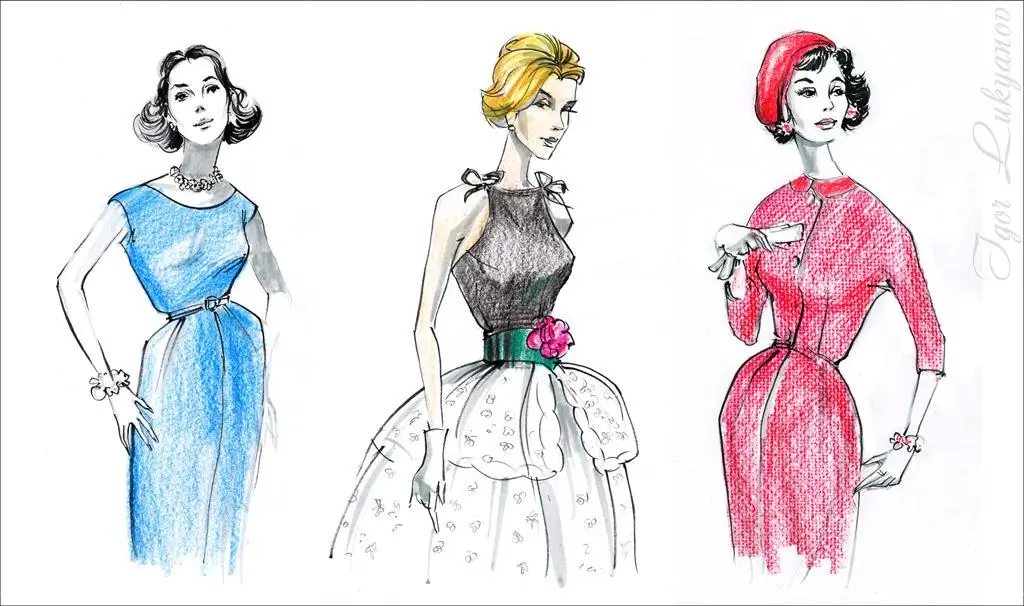
above: imitation fashion vintage illustration
style
The drawings are executed with an economy that feels almost improbable. There is no excess, no decorative overworking. Bouché’s line moves with precision, but never rigidity. It adapts—thickening where weight is needed, thinning where suggestion is enough.
This is where his oft-cited statement becomes operational rather than rhetorical: “The honesty makes the difference, not the style.”
Honesty, here, is not about realism in a photographic sense. It is about proportioning attention correctly—knowing what to emphasize, what to omit, and how to let absence carry meaning. A line that stops just short of completion can say more than one that resolves fully.
There is also an element of quiet judgment in his work. Not judgment as critique in a dismissive sense, but as discernment. He selects which aspects of a face or figure will stand in for the whole. A slightly exaggerated brow. A softened mouth. A gaze that refuses direct engagement. These are interpretive decisions.
Portraiture, for Bouché, becomes a form of editing.
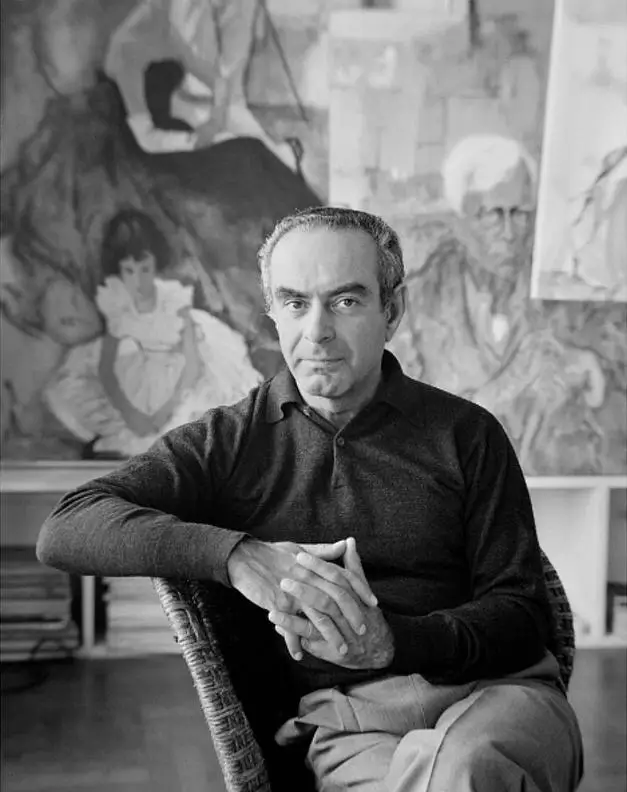
exhibit
Though remembered primarily as a Vogue fashion artist, Bouché’s role within the magazine extended beyond illustration. He was part of what has been described as its “holy trinity” of image-makers, alongside Carl Erickson (known as Eric) and Bernard Willaumez.
Within that context, illustration was not secondary to photography—it operated in parallel, sometimes even ahead. It offered interpretation where photography offered record. It could exaggerate, refine, or subtly critique.
Bouché’s proximity to the social worlds he depicted gave his work a particular charge. He was not observing from a distance. He moved within the same circles as his subjects, attending the same events, participating in the same cultural rhythms. This proximity allowed for a kind of visual fluency—an ability to read gestures and codes that might otherwise go unnoticed.
His drawings often contain a trace of amusement. Not mockery, but recognition. He understood the performative aspects of elegance—the way certain gestures are learned, repeated, refined. And yet, he also knew where performance gives way to something more revealing.

endure
Bouché once described portraiture as a form of “loving criticism.” The phrase holds tension. It suggests both care and evaluation, intimacy and distance.
To draw someone is to spend time with their face—to trace its structure, to notice its asymmetries, to understand how expression settles or shifts. In that process, affection can develop. But so can clarity.
“Almost everything that goes on inside shows in the face—not on the surface.”
This distinction matters. The surface is what is presented. What shows is what escapes presentation. Bouché’s drawings operate in that space of escape.
His subjects are often composed, even guarded. Yet something in the line—its hesitation, its emphasis—reveals a secondary layer. A tension in the jaw. A softness around the eyes that contradicts the posture. A slight misalignment between gesture and expression.
These are not dramatic revelations. They are subtle dissonances. But they are enough to complicate the image.
archive
What does it mean to encounter these drawings now, decades after their creation?
The archive functions here not as a repository of the past, but as a mechanism for re-seeing. The women depicted are no longer present in the same way. Their social contexts have shifted, their worlds partially dissolved or transformed. And yet, through Bouché’s line, they return—not as historical abstractions, but as individuals with presence.
There is a particular kind of temporality at work. The drawings do not age in the way photographs sometimes do, tied as they are to specific textures, technologies, or stylistic markers. Line, especially in its most distilled form, resists dating. It remains legible across time.
At the same moment, the cultural codes embedded within the drawings—gestures of elegance, modes of presentation—carry traces of their era. The tension between timelessness and specificity gives the works their charge.
They are both of their time and outside it.
a frame
Acne Paper has long operated at the intersection of fashion, art, and cultural analysis, treating print not as a vehicle for trend but as a site of reflection. In presenting Bouché’s archive, it extends that ethos.
This is not a straightforward exhibition. It is a reframing. By bringing these works into dialogue with contemporary audiences, Acne Paper situates them within ongoing conversations about image-making, authorship, and the construction of identity.
The decision to focus on portraiture—rather than Bouché’s more widely recognized fashion illustrations—shifts the emphasis from garment to person, from styling to subjectivity. It invites a reconsideration of his practice not just as decorative, but as analytical.
In this sense, the exhibition becomes less about recovery and more about repositioning.
example
Across the seventy drawings, a vocabulary emerges. It is not formalized, but it is consistent.
Gesture operates as syntax. A hand placed lightly against the face can suggest contemplation, but also fatigue. A straightened back can indicate confidence, but also effort. Bouché does not fix these meanings; he allows them to remain open.
Posture, similarly, becomes a site of interpretation. His subjects rarely slump or relax fully. They hold themselves in a state of readiness. This is not stiffness, but awareness—a consciousness of being seen.
This awareness is central to the social worlds these women inhabited. View was both currency and constraint. To be seen was to participate; to be seen incorrectly was to risk misreading.
Bouché’s sensitivity to this dynamic elicits his drawings to capture not just individuals, but conditions of view.
extent
What distinguishes these works is their refusal to settle for likeness alone. While the drawings are recognizably portraits, they do not aim for exact replication. Instead, they pursue something more elusive: presence.
Presence is not reducible to features. It is a composite of gesture, expression, and implied interiority. It is what allows a figure to feel active, even in stillness.
Bouché’s line operates as a conduit for this presence. It does not describe everything. It selects, compresses, and amplifies. In doing so, it creates space for the viewer to engage—to complete the image mentally, to project, to interpret.
This participatory aspect is crucial. The drawings are not closed systems. They remain open, inviting re-reading.
retro
To say that these women “come back into view” is not merely descriptive. It signals a shift in how view operates across time.
Many of Bouché’s subjects were once highly viewable within their own contexts—recognized, influential, central to certain networks. Over time, that vision has diminished, not necessarily because their contributions were insignificant, but because the structures that sustained their recognition have changed.
The archive reactivates their saw, but in a different register. They are no longer seen as social figures within a contemporary network, but as subjects within a historical and artistic frame.
This shift elicits for a different kind of attention. Freed from the immediacy of their original contexts, the drawings can be read more slowly, more analytically. Details that might have been overlooked in their time—subtle gestures, nuanced expressions—become legible.
fin
In the end, what persists is the line.
Not as a stylistic signature, but as a method of thinking. Bouché’s line does not simply trace; it considers. It weighs. It decides.
It holds the tension between appearance and interiority, between affection and critique, between immediacy and distance.
And in doing so, it offers these seventy portraits to function not just as images, but as encounters.
Encounters with individuals, certainly. But also with a way of seeing—one that resists simplification, that values precision over excess, and that comprehends that what matters is not how much is shown, but how truthfully it is observed.
Through that line, the archive does more than preserve. It reactivates.