Adam DeVine in 2026 — A Career Respondent Call in Controlled Continuity

March 29, 2026
2 hours ago
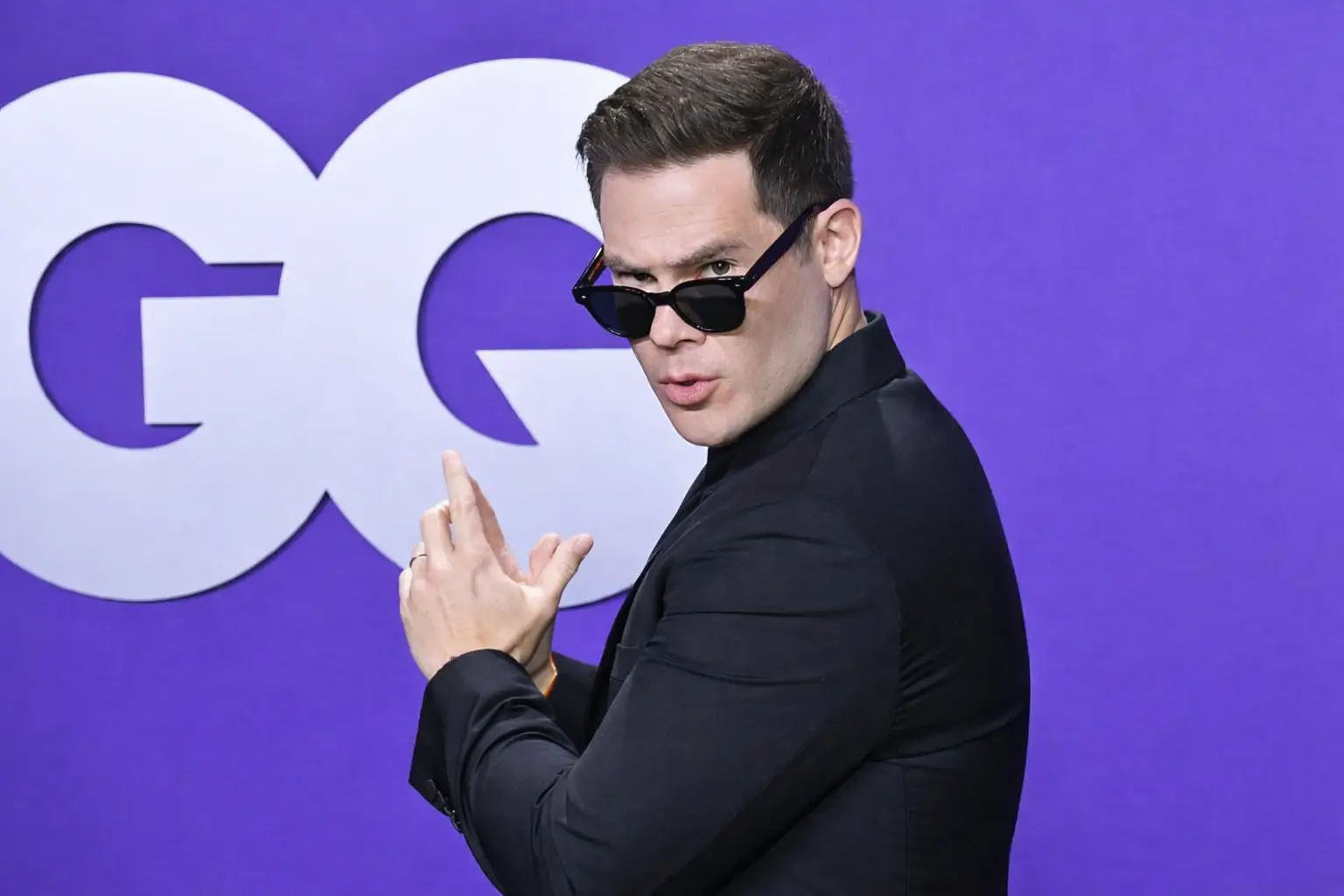
There is no obvious rupture in Adam DeVine’s 2026. No reinvention narrative, no abrupt tonal pivot designed to signal seriousness, no prestige drama engineered to recalibrate perception. Instead, what emerges is something more subtle and arguably more durable: a year defined by controlled continuity. His career is not accelerating toward a new identity—it is stabilizing around one.
That distinction matters. In an industry that often rewards volatility—viral moments, breakout roles, radical pivots—DeVine’s current trajectory reads as almost counterintuitive. He is not chasing redefinition; he is refining what already works, redistributing it across formats, and allowing time to reshape perception.
View this post on Instagram
stir
The afterimage of The Righteous Gemstones continues to structure how DeVine is understood in 2026. His portrayal of Kelvin Gemstone evolved across seasons from a caricature of evangelical bravado into something more fragile, more searching. The character retained its absurdity—physical comedy, exaggerated gestures, tonal unpredictability—but gradually acquired emotional texture.
This matters less for what it did in the moment and more for what it unlocked afterward. Kelvin demonstrated that DeVine could sustain a character beyond immediate comedic payoff. He could inhabit awkwardness without resolving it instantly into a punchline. He could forge silence, discomfort, and repetition to carry comedic weight.
In 2026, that capability functions as a form of credibility. Casting no longer orbits solely around explosive comedic presence. There is an increasing recognition that he can contribute to ensemble dynamics in a way that extends beyond disruption. He is still the destabilizing force in a scene, but now he is also part of its architecture.
The result is a repositioning that does not reject his past but reframes it. The energy of Workaholics and the bravado of Pitch Perfect remain legible, but they are no longer exhaustive descriptors. They have become reference points rather than boundaries.
new
If there is a structural shift defining DeVine’s 2026, it is his deepening investment in voice acting. Projects like Fixed and Hypergalactic are not peripheral—they are central to how his output is now distributed.
Voice work offers a specific kind of flexibility. It allows for frequency without saturation, visibility without overexposure. For an actor whose early career was defined by physical excess—volume, movement, constant escalation—this medium provides an opportunity to isolate one of his most effective tools: vocal elasticity.
DeVine’s voice carries a particular rhythm—slightly strained, quick to accelerate, capable of snapping into exaggerated tones without losing clarity. In animation, that quality becomes an asset rather than a byproduct. It can be heightened, stretched, repeated without fatigue.
There is also a broader industry context shaping this move. Adult animation continues to expand, with platforms investing in projects that blend recognizable voices with increasingly experimental narratives. DeVine fits this space precisely—not as a novelty casting choice, but as a reliable lead capable of sustaining comedic tone across an entire project.
Importantly, this is not a retreat from on-screen work. It is a redistribution of labor. By anchoring part of his output in voice acting, he creates room for more selective live-action roles, reducing the risk of overextension while maintaining presence.
idea
The development of projects like Paternity Leave signals another dimension of this recalibration. The premise—centered around fatherhood, responsibility, and the negotiation of adulthood—aligns closely with DeVine’s current life stage. This alignment is not incidental; it reflects a broader shift in how his comedic voice is being deployed.
Earlier in his career, DeVine’s roles often revolved around avoidance—of responsibility, of consequence, of stability. The humor emerged from refusal: characters who resisted structure, who escalated situations precisely because they lacked boundaries.
In 2026, that dynamic is inverted. The comedic tension now arises from engagement rather than avoidance. Responsibility is not rejected; it is navigated, often awkwardly, sometimes unsuccessfully, but always acknowledged.
This shift does not eliminate his earlier energy—it reframes it. The same impulsiveness that once fueled chaos now collides with structure, producing a different kind of humor. It is less about disruption for its own sake and more about the friction between instinct and expectation.
different
One of the most telling aspects of DeVine’s 2026 is what is not present. The canceled Workaholics movie remains a significant absence—not because it would have guaranteed success, but because it would have offered a direct line back to his origin point.
Without that project, there is no sanctioned return to the trio dynamic that defined his early career. No opportunity to recontextualize that energy within a contemporary framework. Instead, DeVine’s trajectory is forced forward, away from replication and toward continuation.
This absence shapes the year in subtle ways. It removes the possibility of nostalgia as a stabilizing force, requiring his current work to stand independently. The result is a career that feels less cyclical and more linear—progressing through adaptation rather than revisitation.
view
DeVine’s media visibility in 2026 reflects this broader recalibration. He is present, but not omnipresent. Appearances are tied closely to specific projects or personal milestones rather than continuous promotional cycles.
This reduction in frequency produces a different kind of impact. Each appearance carries more weight, not because of scale, but because of selectivity. Interviews tend to focus on process, on long-term thinking, on the practical realities of sustaining a career rather than the spectacle of maintaining one.
There is also a tonal shift. The anecdotes that once defined his public persona—exaggerated, chaotic, often bordering on self-parody—have been replaced by a more measured delivery. Humor remains central, but it is deployed with greater awareness of context.
This does not signal a loss of comedic instinct. Rather, it suggests a recalibration of when and how that instinct is expressed. The performance of personality has become more deliberate, less constant.
show
Brand partnerships and commercial appearances continue to form part of DeVine’s 2026 output, but their function has shifted. Rather than existing as separate, often exaggerated extensions of his persona, they now align more closely with his broader narrative.
Campaigns tied to sports, lifestyle, and wellness reflect a version of DeVine that is still comedic but less chaotic. The humor is observational, situational, often rooted in relatability rather than escalation.
This alignment matters because it reduces friction between different aspects of his public identity. There is less dissonance between the actor, the comedian, and the individual presented in commercial spaces. The persona feels continuous across contexts.
flow
To understand DeVine’s current phase, it is necessary to examine the mechanics of his comedy. Early career DeVine relied heavily on escalation—volume, speed, physical exaggeration. The joke often existed at the point where behavior exceeded expectation.
In 2026, the emphasis has shifted toward timing and restraint. Moments are allowed to develop rather than being immediately punctured by a punchline. Silence, repetition, and awkwardness carry more weight.
This does not represent a rejection of his earlier style. Instead, it introduces variation. Intensity is no longer constant; it is deployed selectively, creating contrast. When escalation occurs, it feels earned rather than inevitable.
This evolution aligns with broader shifts in comedic sensibility, where audiences increasingly respond to tonal variation. However, in DeVine’s case, it feels less like adaptation to external trends and more like an internal recalibration—an adjustment of instinct rather than strategy.
intermittent
DeVine’s position within the industry in 2026 can be described as occupying a durable middle. He is not positioned as a leading blockbuster figure, nor is he confined to niche or experimental projects. Instead, he operates within a range that allows for flexibility without instability.
This positioning offers specific advantages. It reduces the pressure associated with maintaining top-tier visibility while providing consistent access to diverse opportunities. He can move between ensemble television, voice acting, and mid-budget film without requiring a redefinition of identity.
It is a position that prioritizes longevity over volatility. Success is measured not by singular peaks but by sustained presence.
role
What ultimately defines DeVine’s 2026 is not transformation, but continuity. This continuity is not passive—it is constructed. It involves selective project choices, controlled visibility, and an ongoing adjustment of comedic mechanics.
Rather than pursuing reinvention, DeVine is refining his existing framework. He is identifying which elements of his persona remain effective and redistributing them across contexts that allow for growth without rupture.
This approach may lack the immediate visibility of a dramatic pivot, but it offers a different kind of durability. It builds a career that can adapt without needing to restart.
fin
In 2026, Adam DeVine exists in a state of measured progression. The volatility that once defined his appeal has not disappeared—it has been reorganized, moderated, and integrated into a broader system.
He is no longer defined by the singular energy of Pitch Perfect or the anarchic rhythm of his early television work. Instead, he operates within a spectrum that accommodates both intensity and restraint, both visibility and selectivity.
The result is a career that feels less like a sequence of moments and more like a sustained line—continuous, adaptable, and increasingly precise.