Fashion Week’s Next Evolution: When Designers Begin Working With Algorithms

March 14, 2026
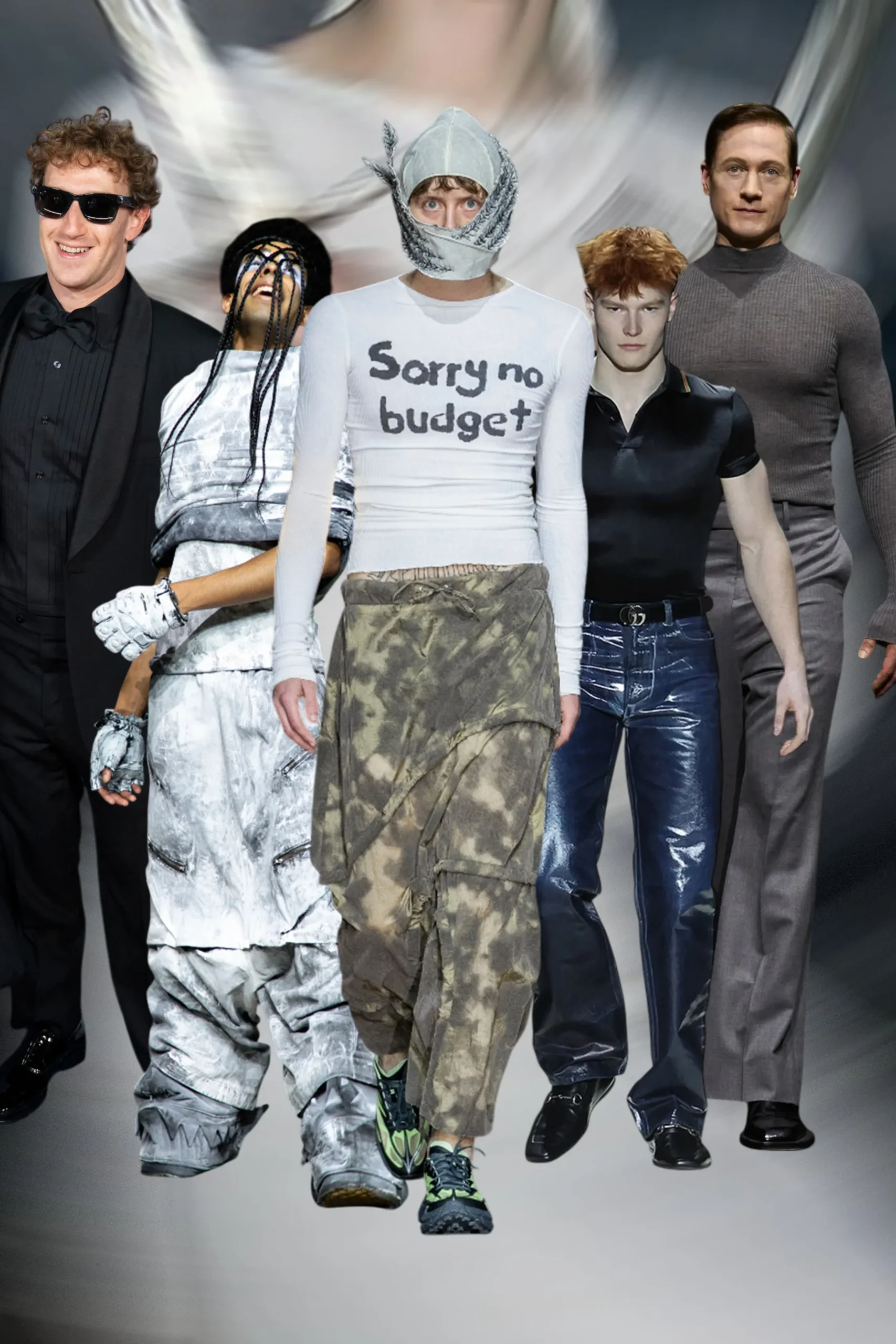
For more than a century, the ritual of fashion week has revolved around a choreography of human creativity. Designers sketch silhouettes in studios. Pattern makers translate ideas into garments. Editors, photographers, and stylists interpret the results into images that define cultural memory. From the salons of Paris in the early twentieth century to the spectacle-driven runways of today, fashion week has remained a distinctly human theater of imagination.
Yet in recent seasons, another presence has entered the conversation—one that does not sketch with pencil or cut with scissors. Artificial intelligence has quietly begun influencing how fashion is imagined, designed, marketed, and experienced during the global fashion calendar.
What began as backstage experimentation with data analytics and generative visuals has quickly evolved into a deeper cultural shift. AI tools are now helping designers explore new forms, brands produce hyper-targeted campaigns, and media outlets generate immersive visual narratives around runway collections. The runway itself remains human, but the ecosystem surrounding it is increasingly shaped by machine intelligence.
The result is not a replacement of creativity but a transformation of the creative process. Fashion week, historically a site where culture and commerce intersect, has become the latest stage for the conversation about what artificial intelligence means for artistic expression.
View this post on Instagram
stir
Artificial intelligence is often described in abstract terms, but within fashion studios its presence can be surprisingly practical.
Design teams are beginning to integrate generative AI platforms into early research phases of collection development. These systems analyze massive image archives—historic garments, textile patterns, art movements, street photography—and generate visual proposals based on prompts from designers.
In earlier decades, designers relied on mood boards assembled from magazines, photography books, or archival garments. Today those boards increasingly coexist with algorithmically generated images that synthesize thousands of references simultaneously.
The purpose is not to outsource design but to accelerate exploration. Designers can test variations of silhouettes, materials, or color palettes within minutes. An algorithm may produce unexpected combinations—Victorian sleeves with futuristic fabrics, or traditional tailoring interpreted through biomorphic forms—that spark new creative directions.
In this sense, AI functions less as an author than as a collaborator. It offers suggestions drawn from vast datasets, while the designer maintains editorial control over what ultimately appears on the runway.
This dynamic echoes earlier technological shifts in fashion. Computer-aided design software once transformed pattern development. Digital printing revolutionized textile experimentation. Artificial intelligence may simply represent the next chapter in fashion’s long relationship with technology.
flow
The influence of AI extends beyond the garments themselves. Fashion week is an enormous logistical undertaking involving casting, production design, lighting, and visual storytelling.
Brands are increasingly using predictive analytics to understand how audiences engage with runway presentations. Data gathered from social media, livestream engagement, and previous campaigns can inform decisions about show timing, soundtrack selection, or even set design.
Some houses are experimenting with AI-assisted casting tools that analyze visual diversity across campaigns and suggest balanced lineups of models. Others use algorithmic tools to simulate runway staging, allowing creative directors to visualize lighting and camera angles before a show is physically produced.
These developments highlight an important shift: fashion week is no longer only about what happens on the runway. It is about how that moment is captured, distributed, and consumed across digital platforms worldwide.
Artificial intelligence, with its ability to process enormous volumes of data, is becoming central to this expanded definition of the fashion show.
show
For editors, photographers, and digital publishers, AI is also reshaping how fashion week stories are told.
Generative image tools allow media outlets to experiment with new visual formats—conceptual imagery inspired by collections, animated editorial graphics, or speculative visualizations that extend a runway narrative beyond physical garments.
Some publications have begun using AI to create supplementary editorial visuals when physical photography is unavailable or when conceptual storytelling demands a different aesthetic language.
This development is particularly relevant for digital publications and emerging cultural platforms. For independent fashion media, AI-assisted tools can dramatically reduce production costs while enabling new forms of creative storytelling.
The shift echoes broader changes in contemporary media culture, where design, technology, and editorial storytelling increasingly overlap.
Fashion week coverage is no longer limited to traditional runway photography. It now includes digital illustrations, generative visuals, immersive video experiences, and algorithmically enhanced social media content.
the huh
Not everyone in the fashion industry welcomes artificial intelligence with enthusiasm.
Critics argue that generative systems trained on massive image datasets may replicate existing designs too closely. Concerns about authorship, intellectual property, and creative originality have become part of the ongoing debate.
Fashion, after all, is an industry deeply invested in the mythology of individual creativity. Designers are celebrated as auteurs whose personal visions shape entire cultural movements.
If an algorithm contributes to that process—even indirectly—questions arise about where authorship truly resides.
Others worry about the potential homogenization of design. If AI systems rely heavily on historical datasets, they may reproduce familiar visual patterns rather than encourage radical innovation.
These concerns echo debates unfolding across many creative industries, from music and film to graphic design and architecture.
Yet supporters argue that the technology simply reflects the collaborative nature of fashion itself. Designers already draw inspiration from archives, cultural references, and contemporary imagery. Artificial intelligence may merely accelerate that process rather than fundamentally alter it.
grad
One of the most visible ways artificial intelligence has entered the fashion week conversation is through imagery.
AI-generated models, campaign visuals, and editorial illustrations have begun appearing across digital fashion platforms. Some brands experiment with fully synthetic models created entirely through generative tools, while others use AI to extend the visual narrative of runway collections.
These images often possess a dreamlike quality—hyperreal textures, impossible lighting, or surreal environments that would be difficult to produce in traditional photography.
For younger audiences accustomed to digital aesthetics shaped by gaming and social media filters, these visuals feel less like novelty and more like a natural evolution of fashion imagery.
At the same time, the rise of synthetic imagery raises questions about representation. If brands can generate virtual models instantly, will real models lose opportunities? Or will AI simply coexist with traditional fashion photography, expanding rather than replacing the visual landscape?
So far, the latter scenario appears more likely. Human presence remains central to fashion’s emotional appeal. Runway shows, after all, derive much of their power from the physical movement of garments and the personalities who wear them.
sustainable
Another area where artificial intelligence intersects with fashion week is sustainability.
The industry has long faced criticism for waste generated by rapid production cycles and large-scale sample creation. AI tools may help reduce some of that impact by enabling digital prototyping.
Designers can experiment with virtual garments—testing drape, texture, and color digitally before producing physical samples. These simulations allow teams to refine designs earlier in the process, potentially reducing the number of garments created solely for development.
Some brands have begun presenting digital garments alongside physical collections, blurring the boundary between fashion and digital art.
In the future, entirely virtual fashion presentations may become part of fashion week programming, existing alongside traditional runway shows rather than replacing them.
culture
Despite technological changes, fashion week remains fundamentally about spectacle.
The audience arrives not only to see clothing but to experience atmosphere, storytelling, and cultural momentum. The front row, the soundtrack, the choreography of models walking down a runway—these elements create a shared emotional moment.
Artificial intelligence, for all its capabilities, cannot replicate the social energy of that environment.
Instead, its role appears to be augmentative. AI tools expand how fashion week is imagined, documented, and distributed across global audiences.
Designers still sketch ideas. Models still walk the runway. Editors still interpret collections through writing and imagery.
But around those familiar rituals, a new technological layer has formed.
quiet
The most interesting aspect of AI’s entry into fashion week may be how subtle it has been.
Unlike disruptive innovations that dramatically overturn industries overnight, artificial intelligence is integrating gradually into existing systems.
Design studios experiment with generative research tools. Media outlets explore algorithmic imagery. Marketing teams analyze audience data with unprecedented precision.
Each individual change may seem small. Taken together, however, they represent a broader transformation in how fashion culture operates.
Fashion week is evolving from a purely physical event into a hybrid digital experience shaped by algorithms, platforms, and global networks of content distribution.
fwd
The future of artificial intelligence in fashion remains uncertain.
Technological progress will likely bring more sophisticated generative tools, deeper data analysis, and increasingly immersive digital experiences surrounding runway presentations.
At the same time, fashion’s identity as a human art form will continue to shape how those tools are used.
The industry thrives on emotion, personality, and cultural storytelling—qualities that cannot be fully automated.
Rather than replacing designers or editors, artificial intelligence may ultimately function as an extension of human creativity.
Just as photography once transformed fashion imagery without eliminating illustration, AI may introduce new forms of visual expression without erasing traditional practices.
fin
Fashion week has always been a conversation about the future—about how culture, aesthetics, and identity will evolve in the seasons ahead.
Today, artificial intelligence has become part of that conversation.
Not as a replacement for human imagination, but as a new instrument in the creative orchestra that defines contemporary fashion.
The runway remains a stage for designers and models. Yet surrounding that stage is an expanding digital ecosystem where algorithms assist, analyze, and inspire.
In the years ahead, the most compelling fashion stories may emerge not from choosing between human creativity and machine intelligence, but from discovering how the two can coexist.
Fashion, after all, has always thrived on reinvention. And artificial intelligence may simply be the latest tool helping the industry imagine what potentially arrives next.
No comments yet.