Air Jordan 10 “Powder Blue”: Sport as Structure, Style as Residue

March 29, 2026
2 hours ago
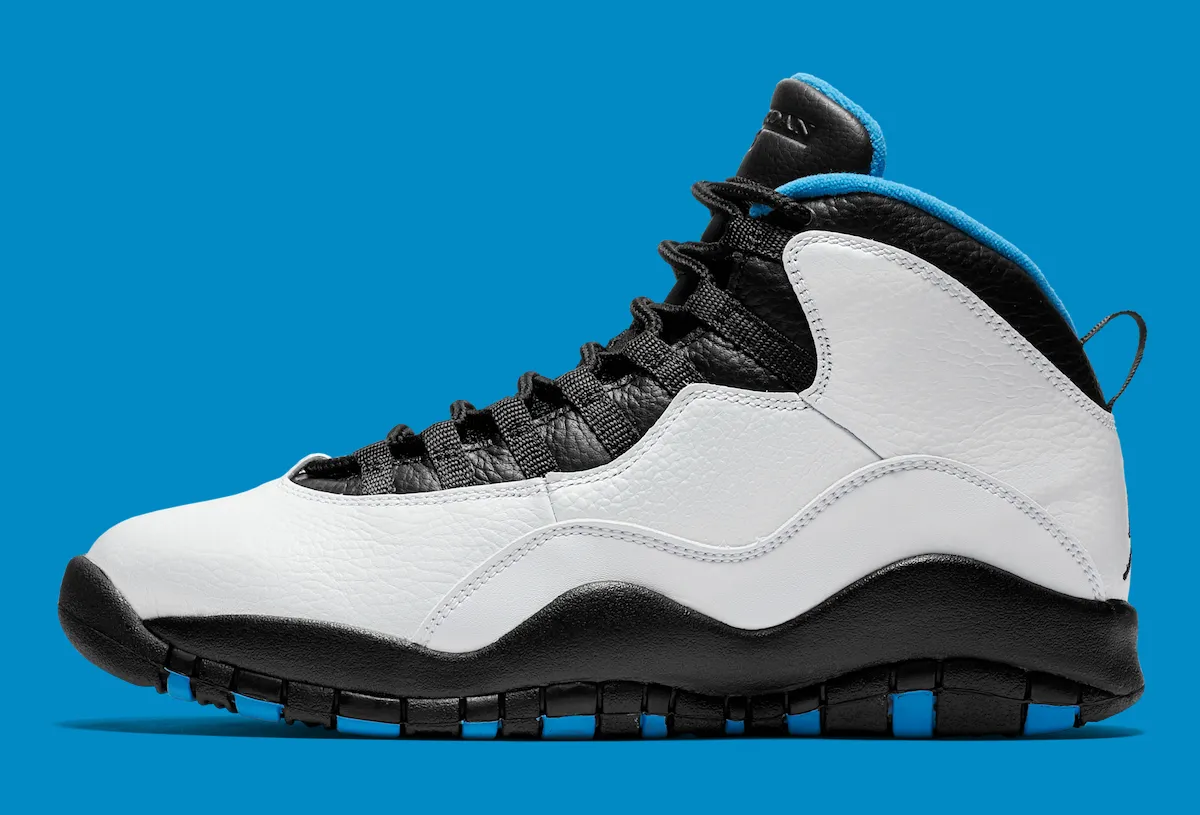
Within the expansive lineage of Air Jordan 10 releases, certain colorways resist the need for reinvention. The “Powder Blue” stands among them—not because it is loud or experimental, but because it embodies a kind of compositional restraint that has aged with unusual clarity. First introduced in 1994, during a moment when Michael Jordan had temporarily stepped away from basketball, the silhouette—and its colorways—carried a different weight.
This was not a performance shoe tied to a current season or campaign narrative. It was reflective, archival in tone even at inception. By the time it returned on February 22, 2014, the “Powder Blue” had already cemented itself as one of the model’s most quietly respected originals.
What makes it endure is not rarity, nor hype cycles, nor reinvention. It is clarity—of color, of structure, and of purpose.
View this post on Instagram
retro
The Air Jordan 10 debuted at a unique point in Jordan Brand history. With Michael Jordan pursuing baseball following his first retirement, the shoe line entered a phase that was less about on-court dominance and more about legacy consolidation.
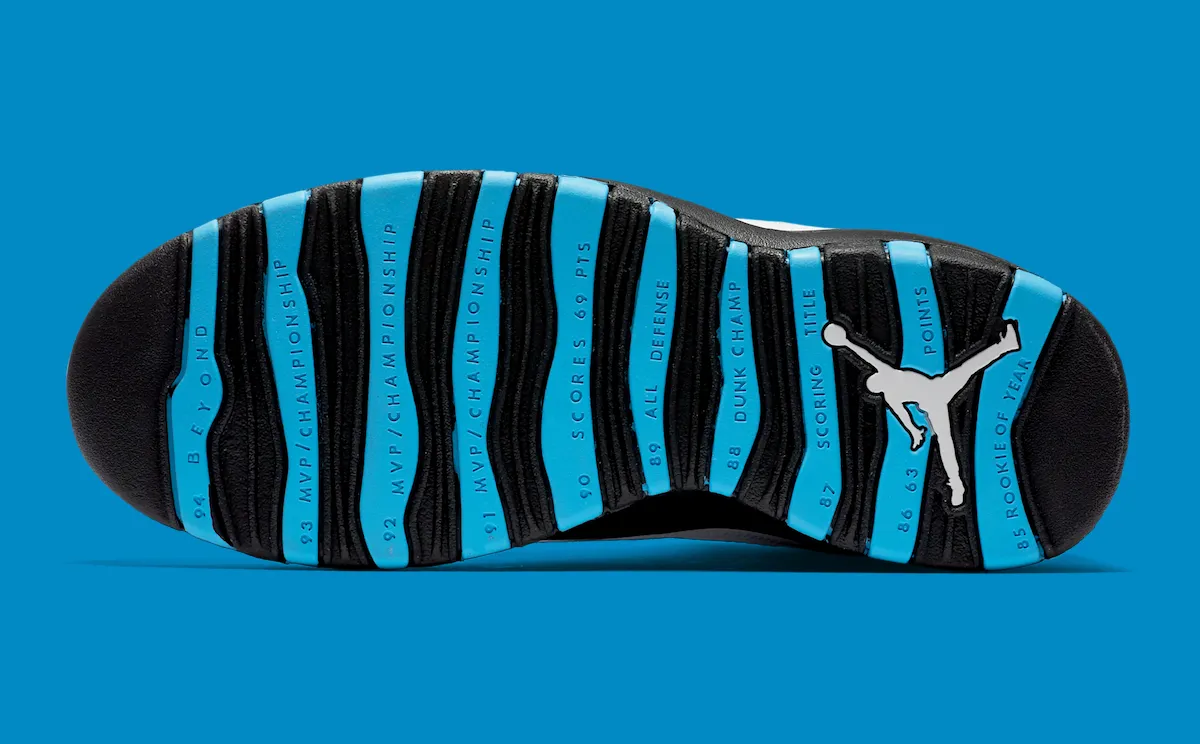
Designed by Tinker Hatfield, the Air Jordan 10 was conceived as a retrospective silhouette. Unlike previous models that pushed forward technologically or stylistically, the AJ10 looked backward—its most defining feature being the outsole, which listed Jordan’s career accomplishments up to that point.
The “Powder Blue” colorway aligned with this reflective mood. It didn’t rely on Chicago Bulls red to anchor its identity. Instead, it introduced a softer accent—Powder Blue—often associated with collegiate palettes, particularly Jordan’s alma mater, the University of North Carolina.
This subtle shift in tone reframed the shoe. It became less about franchise loyalty and more about personal narrative.
flow
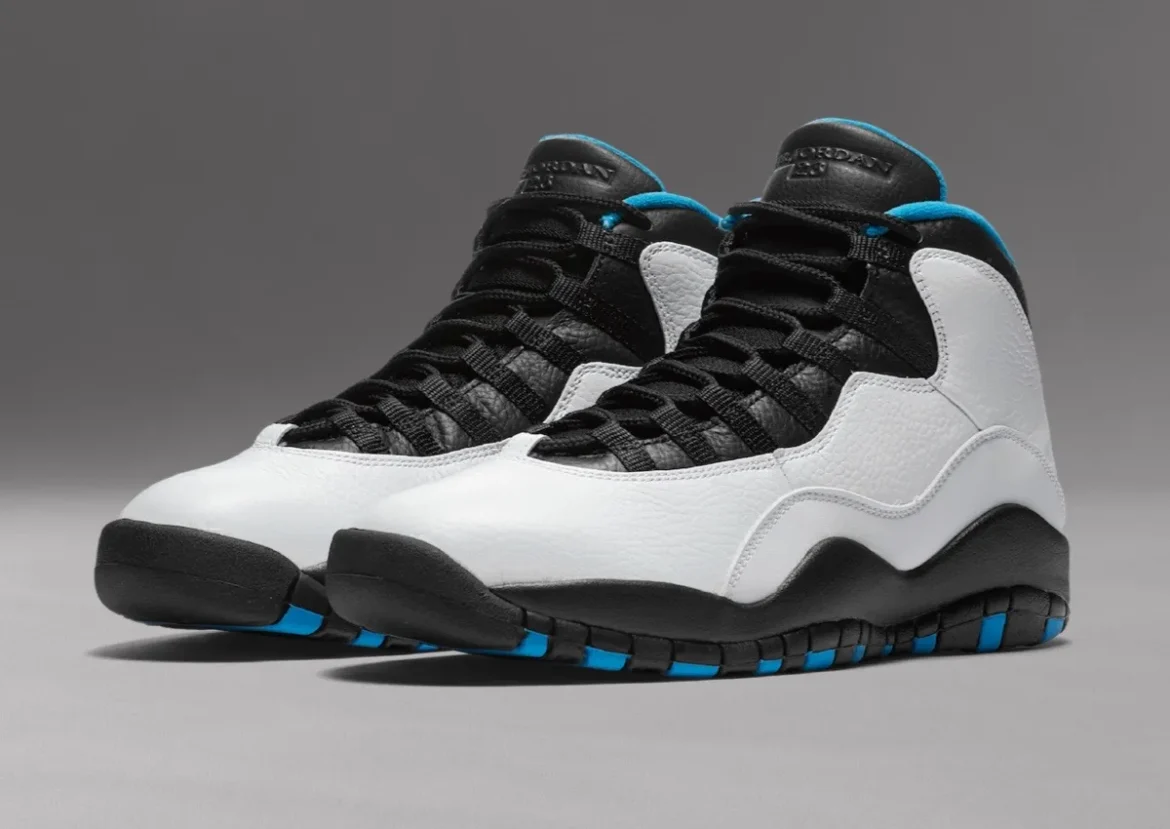
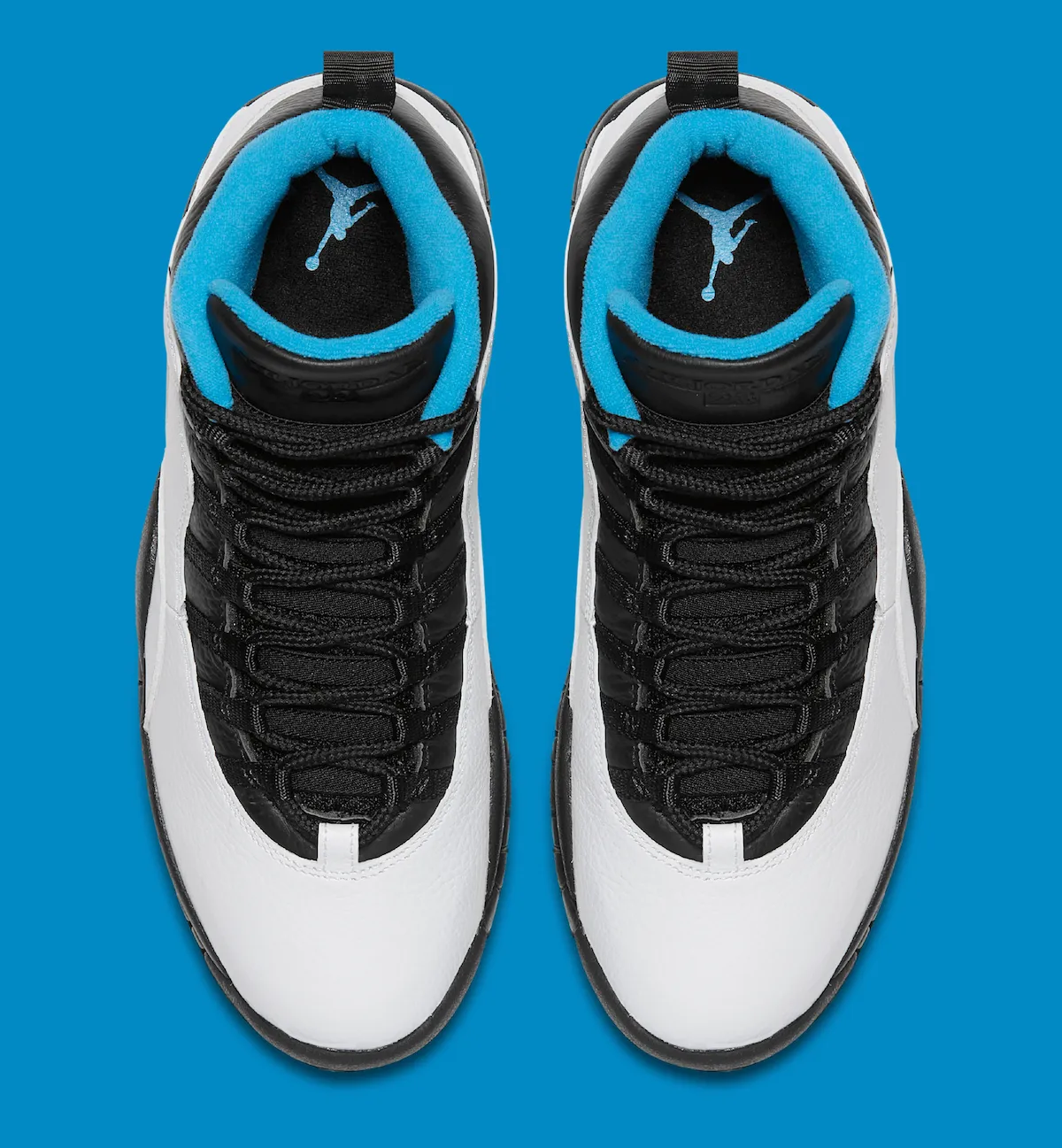
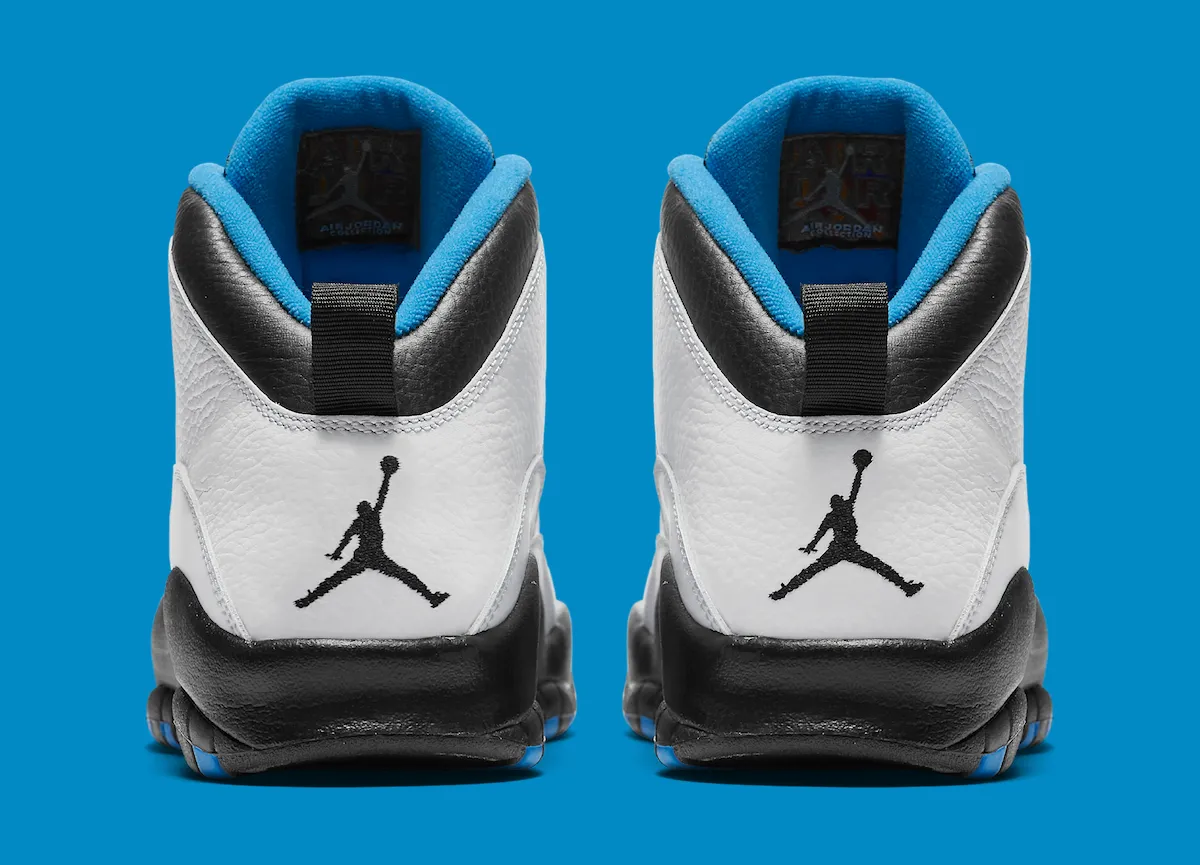
At its core, the “Powder Blue” is a study in balance. The upper is constructed from white and black tumbled leather—materials that emphasize texture over flash. The leather itself carries a natural grain, catching light in a way that feels tactile rather than glossy.
The Powder Blue accent is used sparingly, primarily on the inner lining. This restraint is critical. Instead of dominating the shoe, the color reveals itself in motion—when the shoe is worn, when the foot shifts, when the collar opens slightly. It is an interior gesture rather than an exterior declaration.
The black midsole grounds the composition. It provides contrast without overwhelming the upper, acting as a view anchor that stabilizes the otherwise light palette. This interplay between white, black, and blue creates a rhythm—one that feels deliberate, almost architectural.
rare
If the upper defines the aesthetic, the outsole defines the meaning.
A signature feature of every Air Jordan 10 is the striped outsole, each bar inscribed with milestones from Michael Jordan’s career. These include scoring titles, championships, and awards—etched not as decoration, but as documentation.
In the “Powder Blue,” the outsole alternates between black and Powder Blue stripes, creating a sawn continuity with the rest of the shoe. But beyond its color, it functions as a timeline. It transforms the shoe into something more than footwear—it becomes a record.
Unlike branding elements that fade into the background, this detail invites interaction. It requires the wearer to turn the shoe over, to read, to engage. It shifts the relationship between object and user, turning a passive item into an active narrative device.
idea
When the “Powder Blue” returned in 2014, the expectation was not transformation but preservation. Jordan Brand approached the retro with a degree of fidelity that aligned with the colorway’s original intent.
The materials remained consistent—tumbled leather, solid midsole construction, and the same restrained color blocking. The Powder Blue lining retained its subtlety, resisting the temptation to amplify or modernize the palette.
Released on February 22, 2014, under the following specifications:
- Name: Air Jordan 10 “Powder Blue”
- Color: White/Dark Powder Blue-Black
- Style Code: 310805-106
- Release Date: February 22, 2014
The retro did not attempt to reinterpret the shoe for a new audience. Instead, it reaffirmed the original design, allowing a new gen to experience it without distortion.
wear
Part of what has sustained the “Powder Blue” over time is its adaptability. Unlike more aggressive colorways, it integrates seamlessly into a range of wardrobes.
Its neutral base avails it to function across styles—paired with denim, tailored trousers, or contemporary streetwear silhouettes. The Powder Blue accent adds just enough distinction to prevent the shoe from feeling generic, while still maintaining versatility.
This balance between presence and restraint is rare. Many shoes demand attention; the “Powder Blue” earns it gradually. It reveals itself over time, through wear and context.
theme
In the current landscape, where shoe releases are often defined by scarcity and collision, the “Powder Blue” occupies a different space. It is not driven by limited drops or celebrity endorsements. Its relevance is rooted in continuity.
The Jordan Brand has built an ecosystem where retros function as both product and archive. Within that system, the “Powder Blue” serves as a reference point—a reminder of a period when design clarity and narrative depth were central.
It does not rely on reinterpretation to remain relevant. Its strength lies in its refusal to change.
score
While the 2014 release is no longer available at retail, the “Powder Blue” continues to circulate through secondary markets. Platforms like StockX provide access to pairs, allowing collectors and new buyers to engage with the release years after its initial drop.
This extended lifecycle reflects a broader shift in how shoes are consumed. The moment of release is no longer the endpoint; it is the beginning of a longer trajectory, where value is shaped over time.
For the “Powder Blue,” this trajectory has remained relatively stable. It has avoided the volatility seen in more trend-driven releases, maintaining a steady presence rather than spiking unpredictably.
role
Original colorways carry a distinct kind of authority. They are not reinterpretations or collides; they are foundational. They define the identity of the silhouette at its inception.
The “Powder Blue” exemplifies this. It does not reinterpret the Air Jordan 10—it is the Air Jordan 10, in one of its purest forms. Its design decisions are not reactive; they are declarative.
This distinction matters. In a market saturated with variations, originals provide a point of reference. They anchor the narrative, offering a baseline against which all subsequent releases are measured.
subtle
The endurance of the “Powder Blue” is not accidental. It is the result of a series of deliberate choices—material, color, structure, and narrative—that align without excess.
It does not chase relevance; it maintains it.
The combination of white and black leather provides timelessness. The Powder Blue accent introduces identity without overpowering. The outsole inscription embeds history directly into the object.
Together, these elements create a sneaker that operates on multiple levels—functional, aesthetic, and symbolic.
end
The Air Jordan 10 “Powder Blue” remains one of the most composed entries in the Jordan archive. It does not rely on spectacle or reinvention. Instead, it offers a clear, disciplined envision—one that has remained intact across decades.
In revisiting the colorway, either through the 2014 retro or the current resale landscape, what becomes evident is not just its design quality, but its conceptual integrity. It knows what it is, and it does not deviate.
In a culture that often rewards excess, the “Powder Blue” stands as a counterpoint—a reminder that clarity, when executed with precision, can carry further than noise.