Air Jordan 11 Low “UNC”: The Return of a Measure Classic

April 6, 2026
2 hours ago
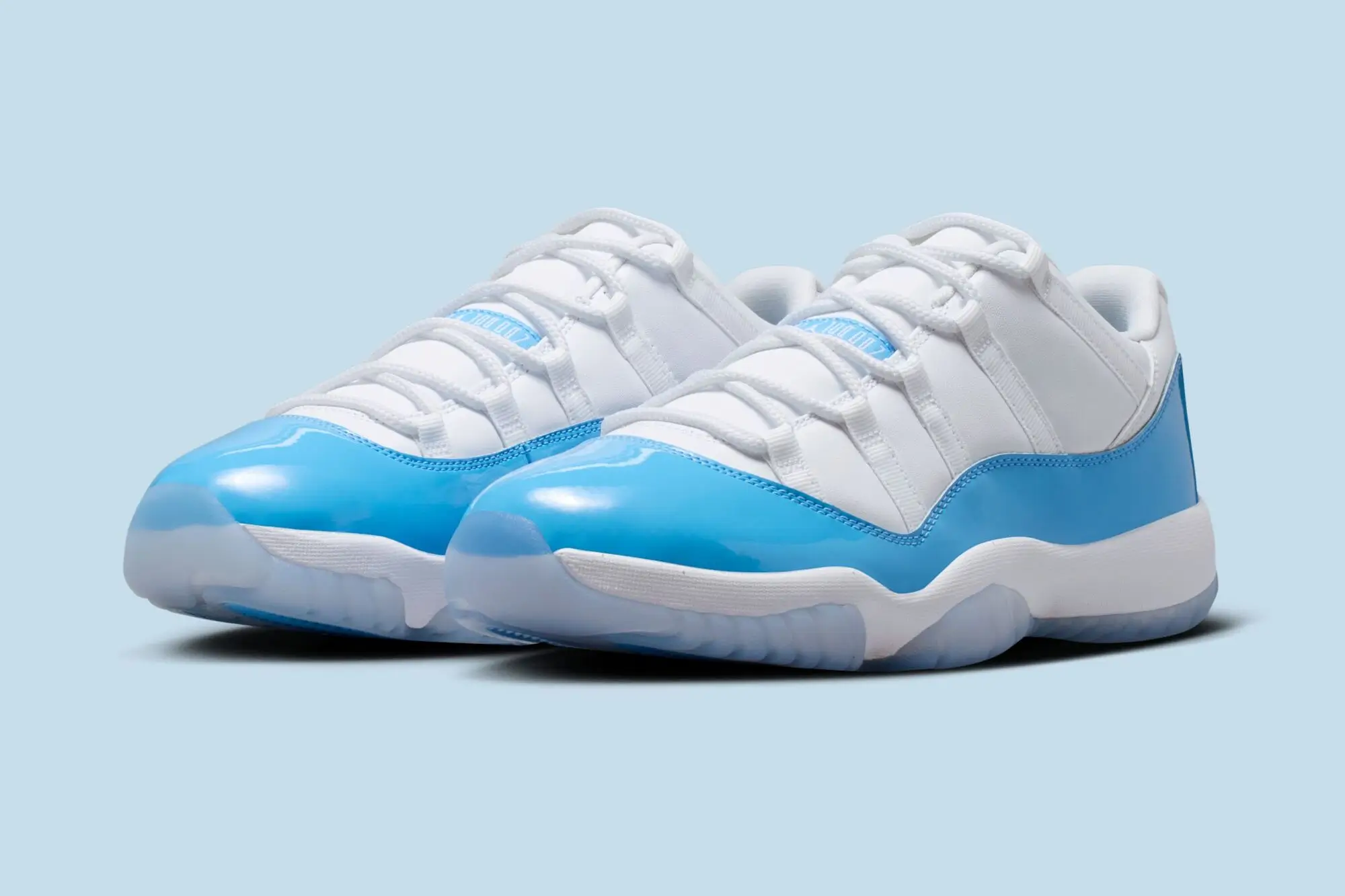
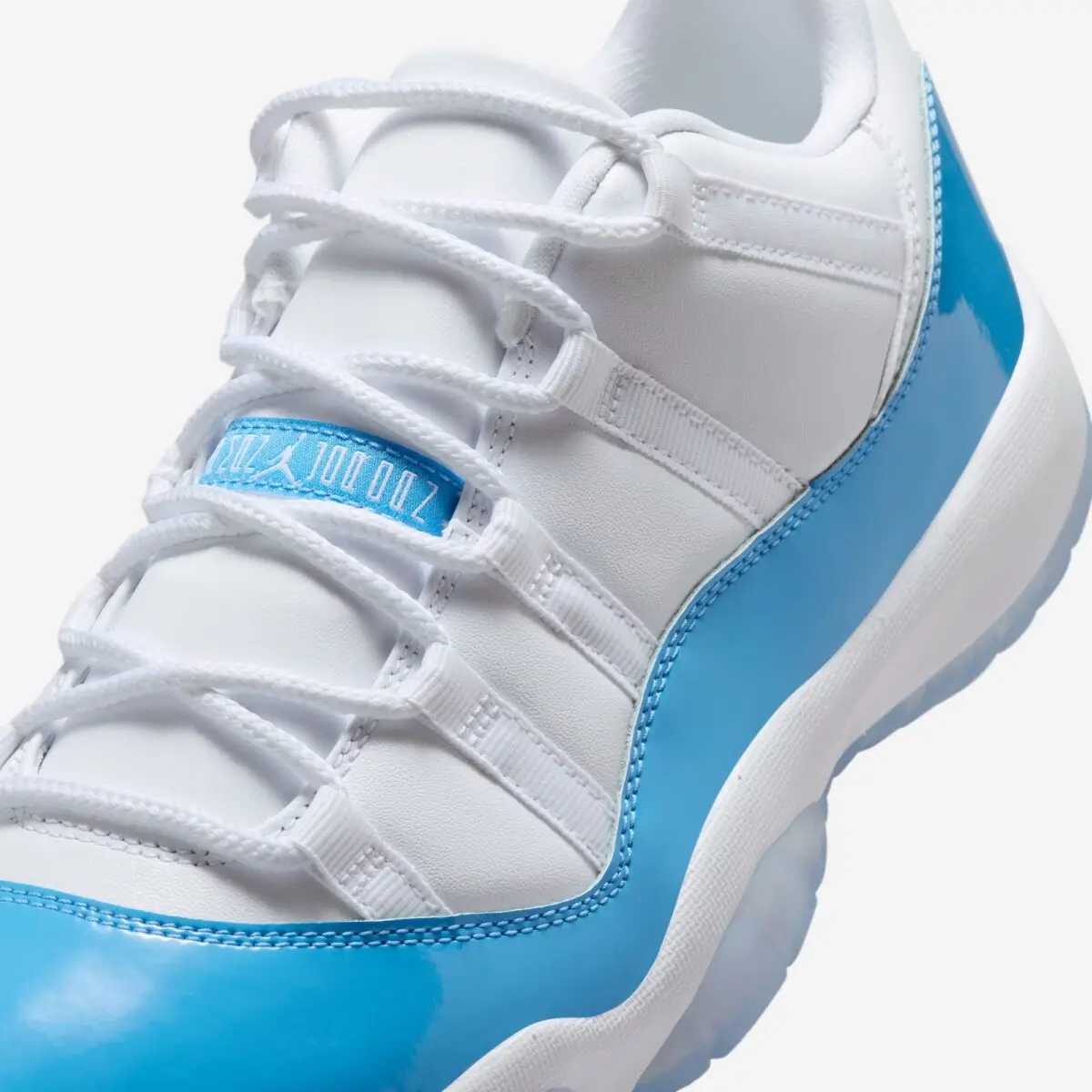
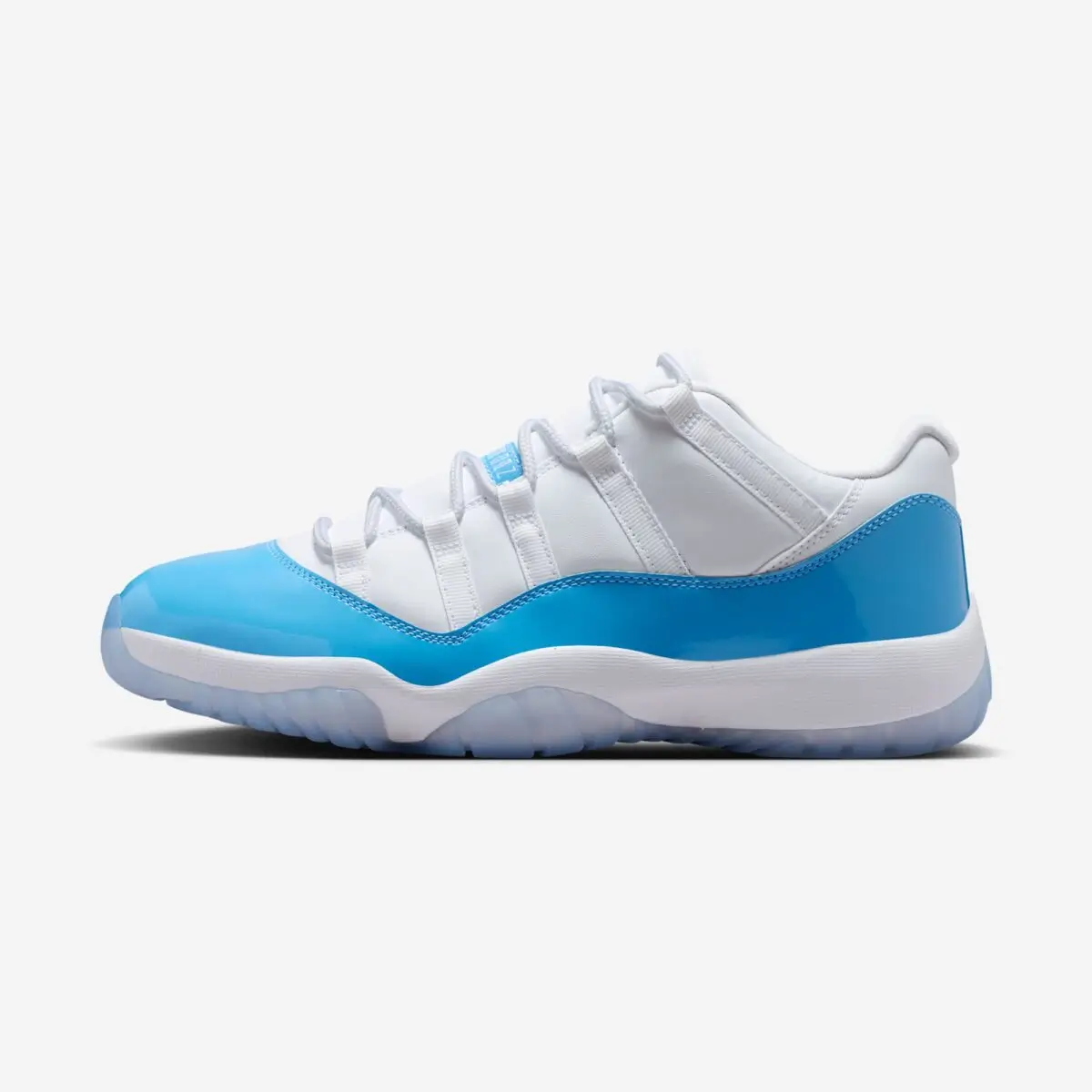
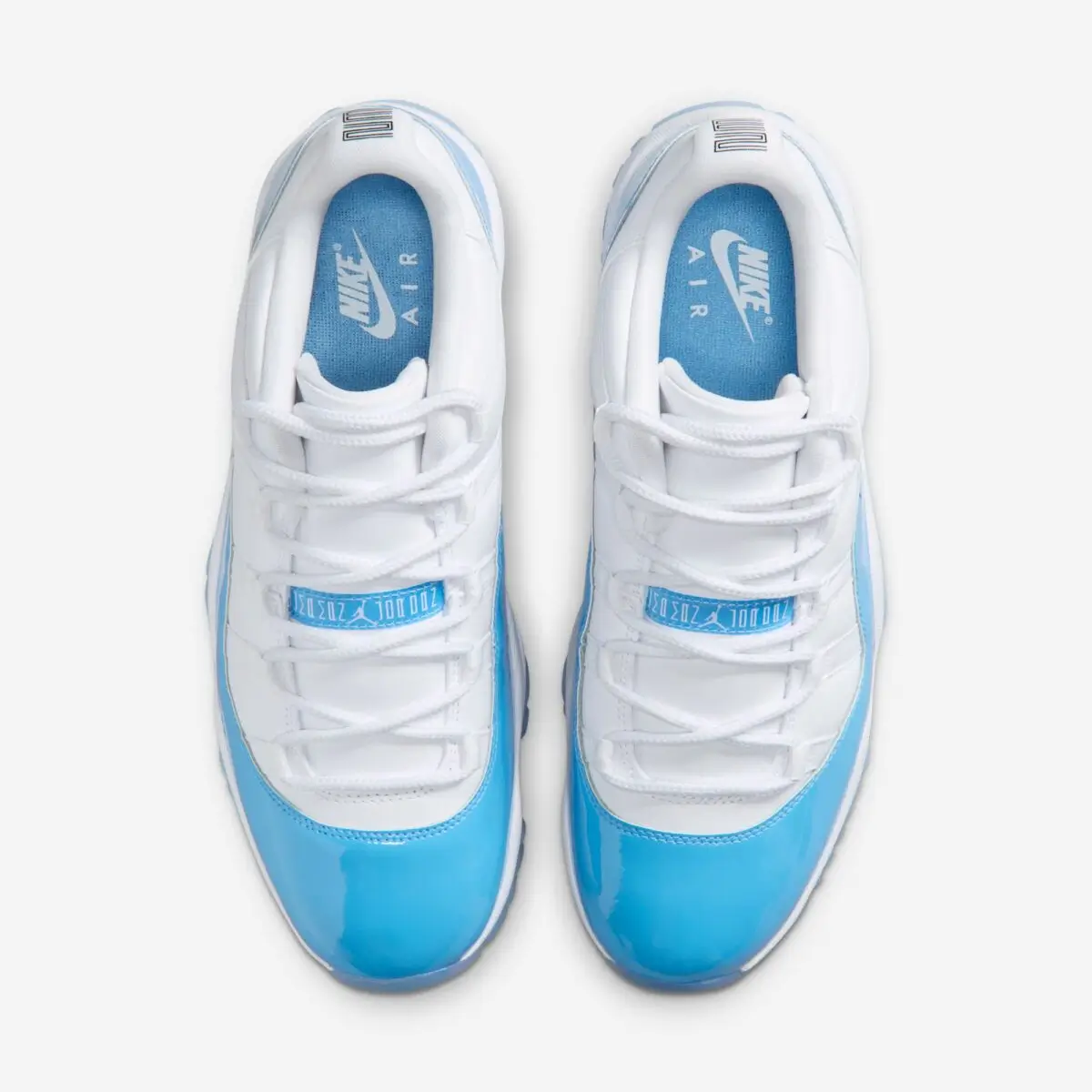
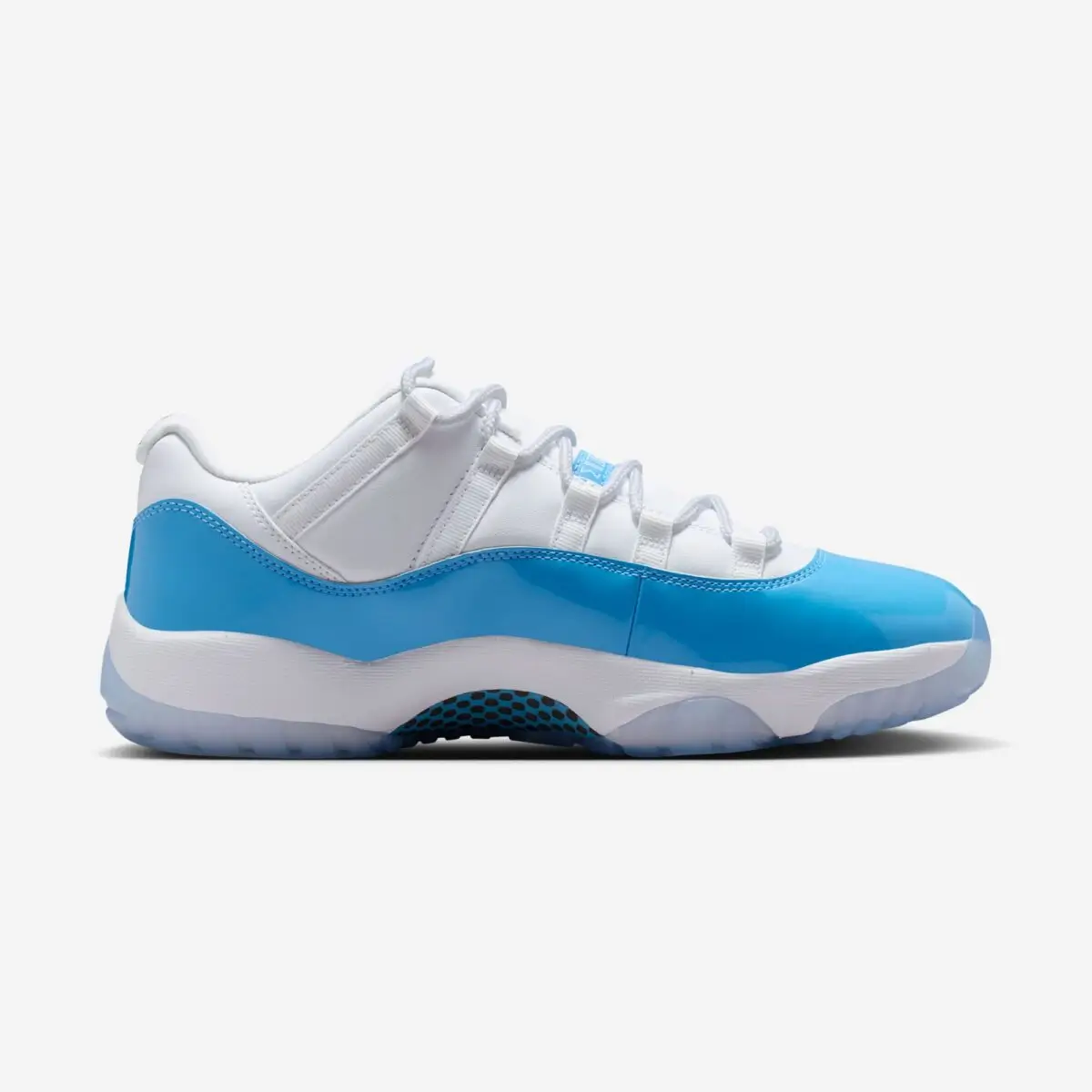
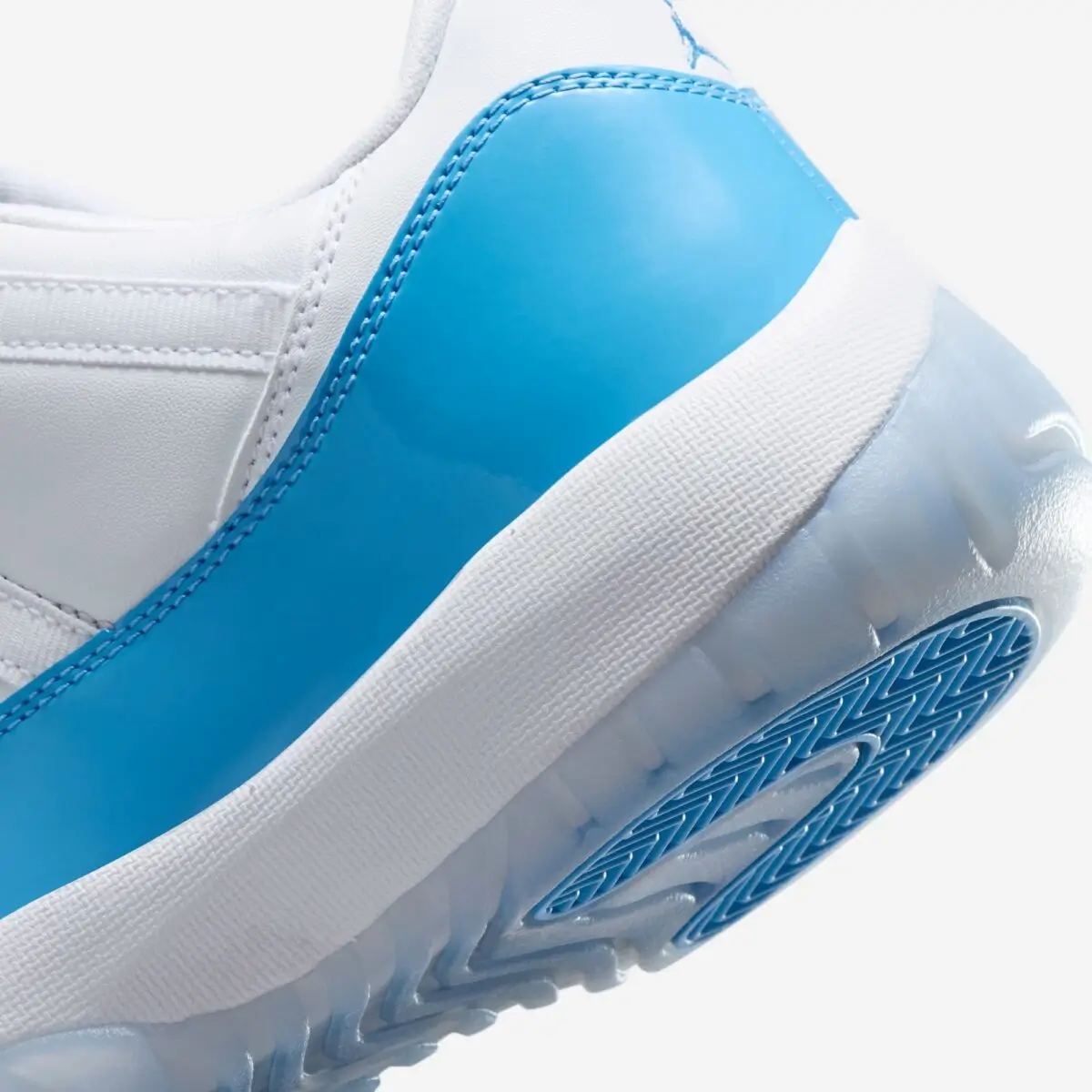
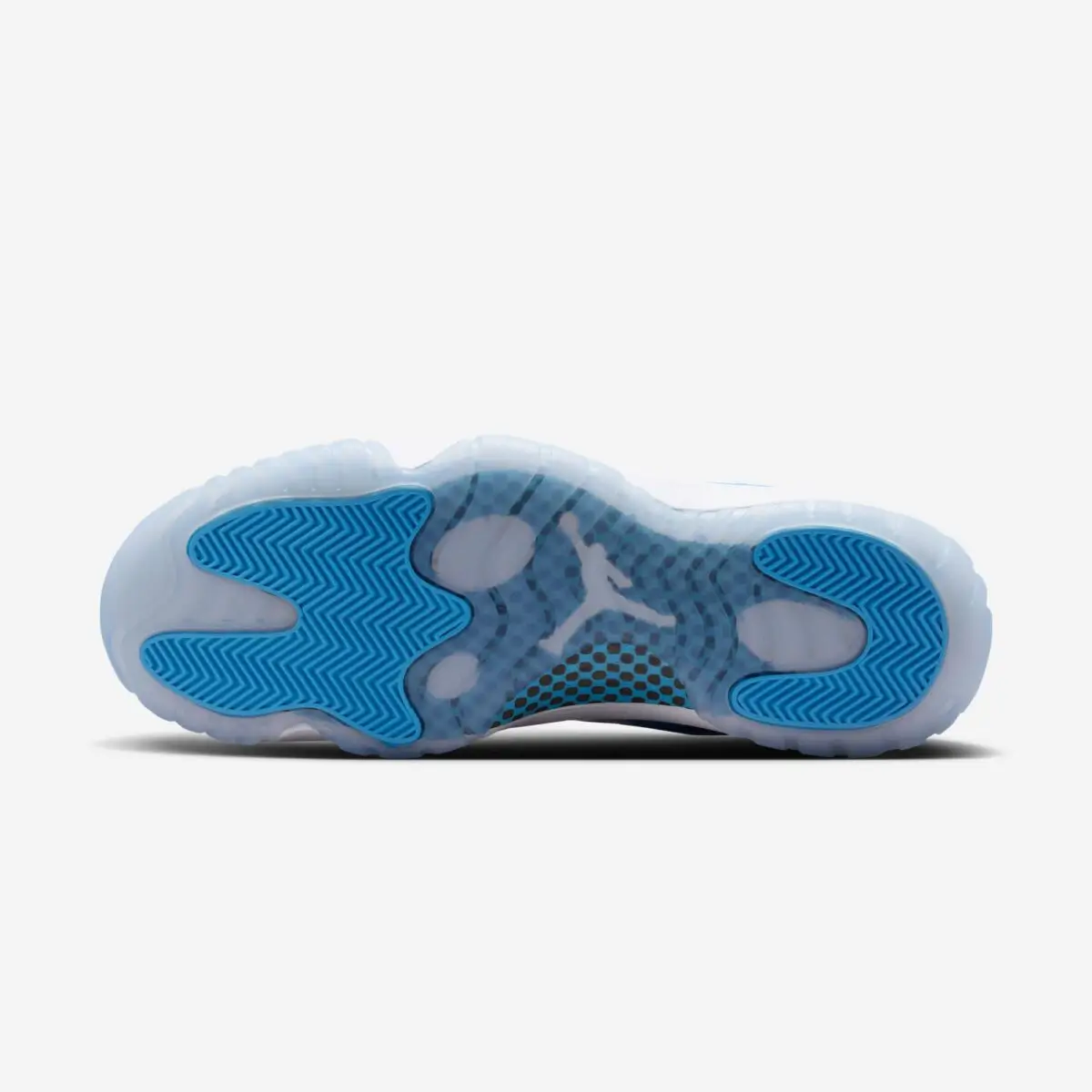
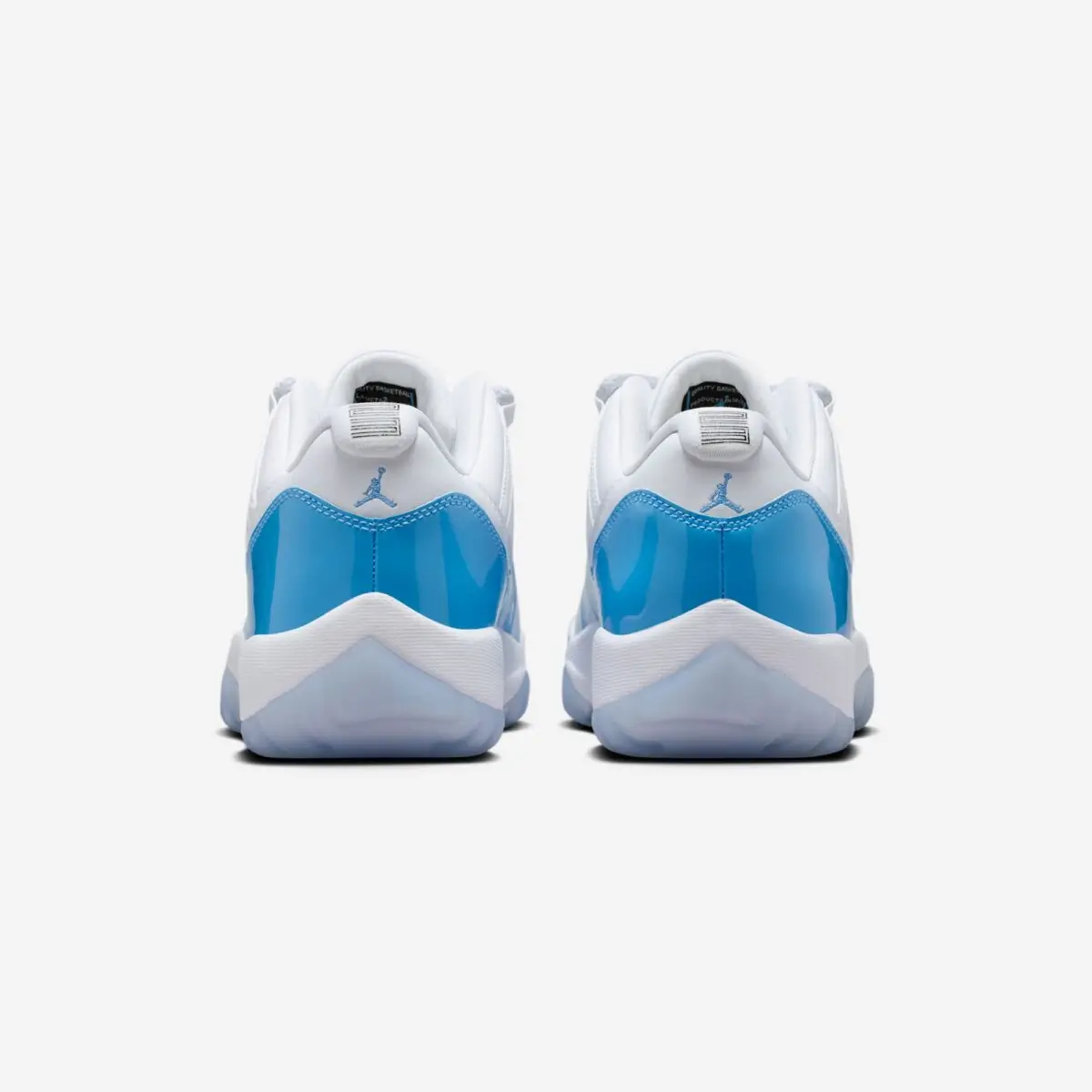
There is an exact shoe that never needed to shout to matter. The Air Jordan 11 Low “UNC” sits firmly in that category—a silhouette that has moved through time with a kind of steady confidence, reappearing not to chase relevance, but to remind the culture where refinement began. Its return in 2026 doesn’t feel like a revival. It feels like continuity.
retro
When the Air Jordan 11 Low “Columbia Blue” first appeared in 2001, it carried a quiet tension. The Air Jordan 11 was already canonized in its high-top form—deeply associated with championship runs, tuxedo-like design language, and the mythology of Michael Jordan at his most composed.
The low, by contrast, felt like a deviation. It removed the ankle presence that defined the original silhouette, flattening its stance, shifting its proportions. For purists, this was disruption. For others, it was evolution.
The “Columbia Blue” execution—white leather upper paired with a Carolina blue patent leather mudguard—softened the blow. It introduced the low not as an aggressive reinterpretation, but as a seasonal recalibration. Lighter. Brighter. More open.
What followed was not immediate consensus, but gradual acceptance. The Air Jordan 11 Low didn’t replace the high. It found its own lane.
View this post on Instagram
the re-intro
By the time the shoe returned in 2017, the landscape had shifted. The idea of a low-top retro was no longer controversial—it was expected.
Rebranded as “University Blue,” the release did more than update a name. It reframed the shoe within a new generation of collectors—those who had grown up seeing retros not as archival artifacts, but as part of an ongoing rotation.
The 2017 pair preserved the core identity: white leather, Carolina blue patent leather, translucent outsole. But it also carried the subtle adjustments that come with time—shape refinements, material tweaks, and branding choices that reflected contemporary production.
More importantly, it introduced the colorway to a broader audience. For many, this was their first encounter with the UNC 11 Low—not as history, but as presence.
stir
Now, nearly a decade later, the 2026 retro arrives without the need for explanation. The Air Jordan 11 Low “UNC” is no longer an outlier in the Jordan lineage—it is a fixture.
This iteration leans into fidelity. The upper remains a crisp white leather—clean, uninterrupted, almost architectural in its simplicity. The Carolina blue patent leather mudguard retains its defining role: reflective, fluid, catching light in motion.
Underfoot, the icy translucent outsole returns, preserving the signature visual lightness that has always distinguished the model. It gives the shoe a sense of lift—an illusion of suspension that feels uniquely tied to the Air Jordan 11’s DNA.
But it’s the smaller detail that signals the shift. The insole, branded with the Nike Air logo rather than the Jumpman, introduces a subtle deviation from the 2017 release. For casual wearers, it may go unnoticed. For collectors, it becomes a point of distinction—a marker of this specific moment in the shoe’s timeline.
flow
The Air Jordan 11 has always occupied a space between performance and formality. Its use of patent leather—a material more commonly associated with dress shoes—elevates it beyond typical basketball footwear.
In the low “UNC,” that tension becomes more pronounced. The reduced height strips away some of the model’s structural authority, allowing the materials to speak more directly.
The white leather upper functions as a canvas—neutral, expansive. The Carolina blue patent leather introduces movement, not through color alone, but through reflection. It shifts with the environment, changing as light hits it.
This interplay creates a kind of visual rhythm. The shoe doesn’t rely on complexity. It relies on contrast.
position
If the high-top Air Jordan 11 is winter—formal, grounded, definitive—the low “UNC” is summer.
It carries a different energy. Less ceremonial, more immediate. It pairs as easily with shorts as it does with denim, bridging the gap between performance heritage and everyday wear.
This seasonal identity has become central to its appeal. The “UNC” colorway, with its Carolina blue accents, reinforces that lightness. It feels open. Airy. Unburdened.
And yet, it remains tied to legacy. The connection to Michael Jordan’s collegiate roots at the University of North Carolina is implicit, not overstated. The color does the work.
integrity
One of the defining characteristics of the 2026 release is its restraint. There is no attempt to modernize the silhouette through drastic material changes or experimental overlays.
Instead, the focus is on execution. The leather appears smoother, more consistent. The patent leather retains its gloss without feeling overly rigid. The outsole maintains its clarity, avoiding the yellowing that often defines older pairs.
These refinements are not immediately visible. They reveal themselves over time—in wear, in movement, in how the shoe holds its shape.
This is where the Air Jordan 11 Low “UNC” distinguishes itself. It doesn’t innovate loudly. It refines quietly.
compare
The shift to a Nike Air-branded insole is more than a design choice—it’s a signal.
Historically, Nike Air branding on retros has been associated with a return to original specifications, a nod to authenticity. Its inclusion here complicates that narrative slightly, given that earlier lows often featured Jumpman branding.
This tension—between historical accuracy and contemporary interpretation—is part of what keeps the Jordan line dynamic. It invites discussion. It creates layers of meaning that extend beyond the visible.
For collectors, this detail becomes a point of reference. A way to distinguish the 2026 release from its predecessors without altering the shoe’s external identity.
endure
What’s notable about the Air Jordan 11 Low “UNC” is not just its return, but the consistency of its demand.
Nearly 25 years after its debut, the colorway continues to resonate. Not because it has been overexposed, but because it has been carefully spaced. Each release feels considered, not cyclical.
This restraint has preserved its relevance. It has allowed the shoe to age without becoming static.
fin
The Air Jordan 11 Low “UNC” does not rely on nostalgia to justify its presence. It exists within a timeline that remains active—one that continues to evolve without abandoning its foundation.
From its uncertain introduction in 2001 to its recontextualization in 2017 and its refined return in 2026, the shoe has maintained a consistent identity while adapting to shifting expectations.
It is not the loudest entry in the Jordan catalog. It doesn’t need to be.
What it offers instead is clarity—a design that understands its own language, a colorway that carries its history without excess, and a silhouette that continues to move, quietly, through time.