Air Jordan 4 “Pink Denim”: A Familiar Silhouette, Reframed in Fabric

April 10, 2026
8 hours ago
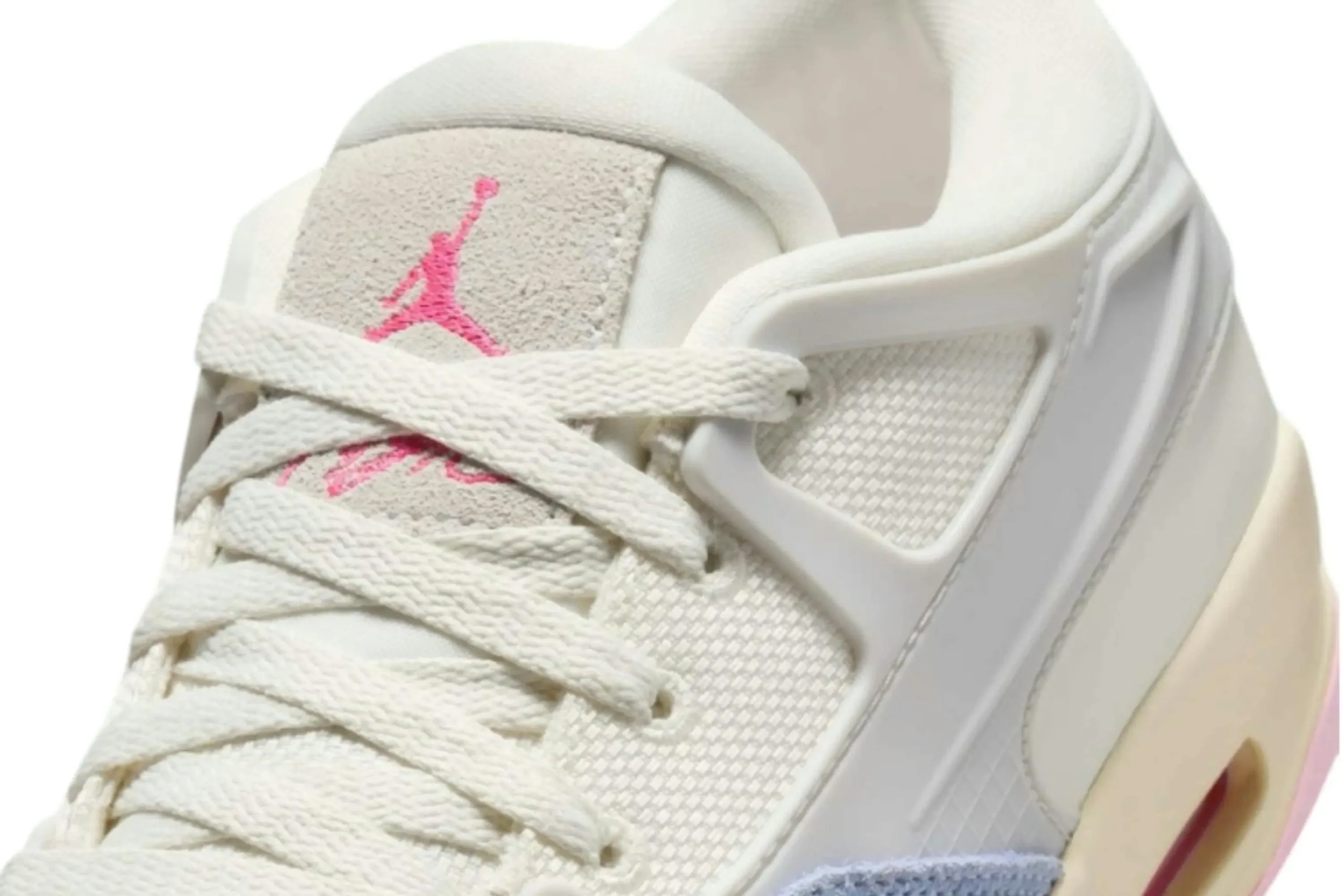
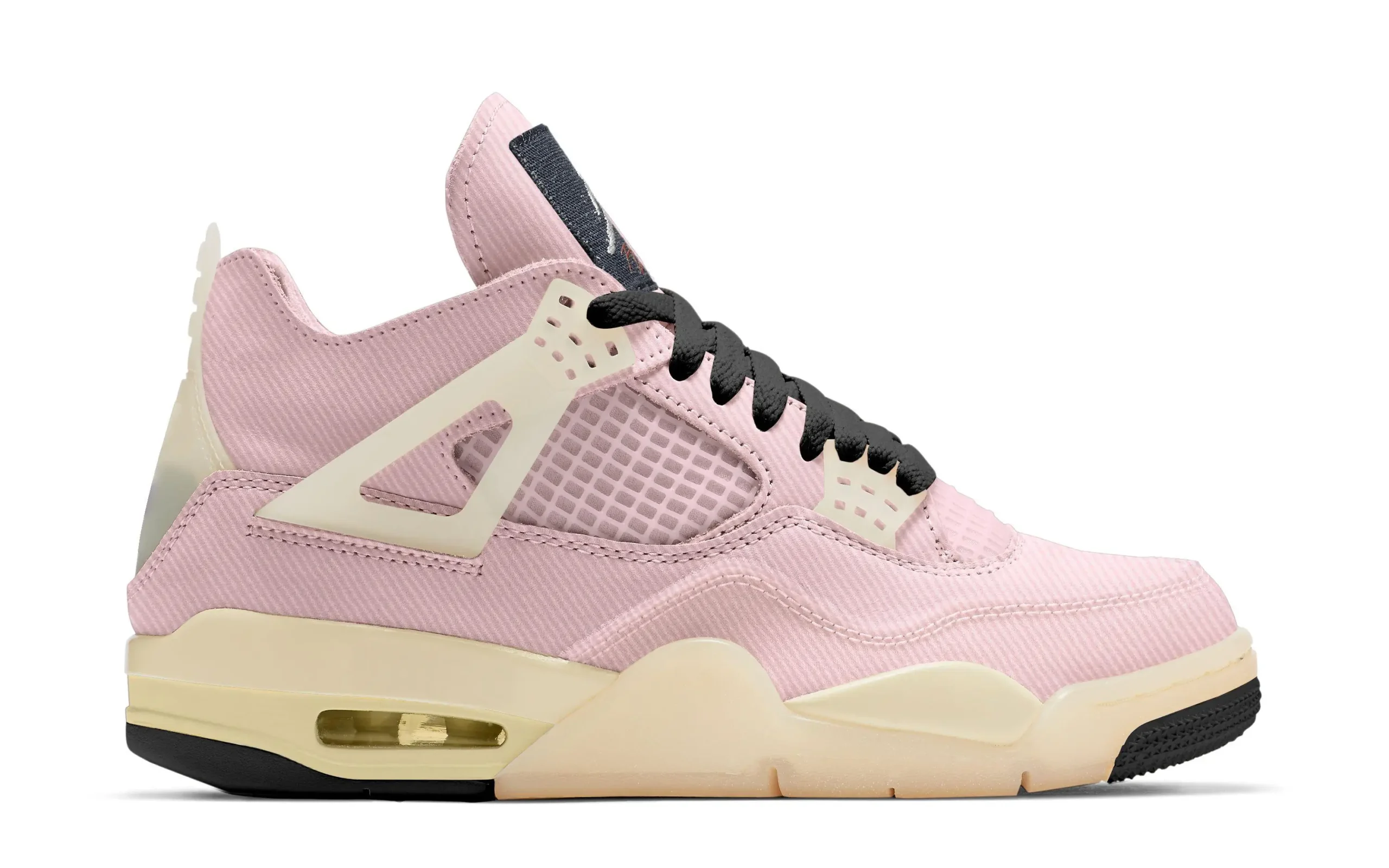
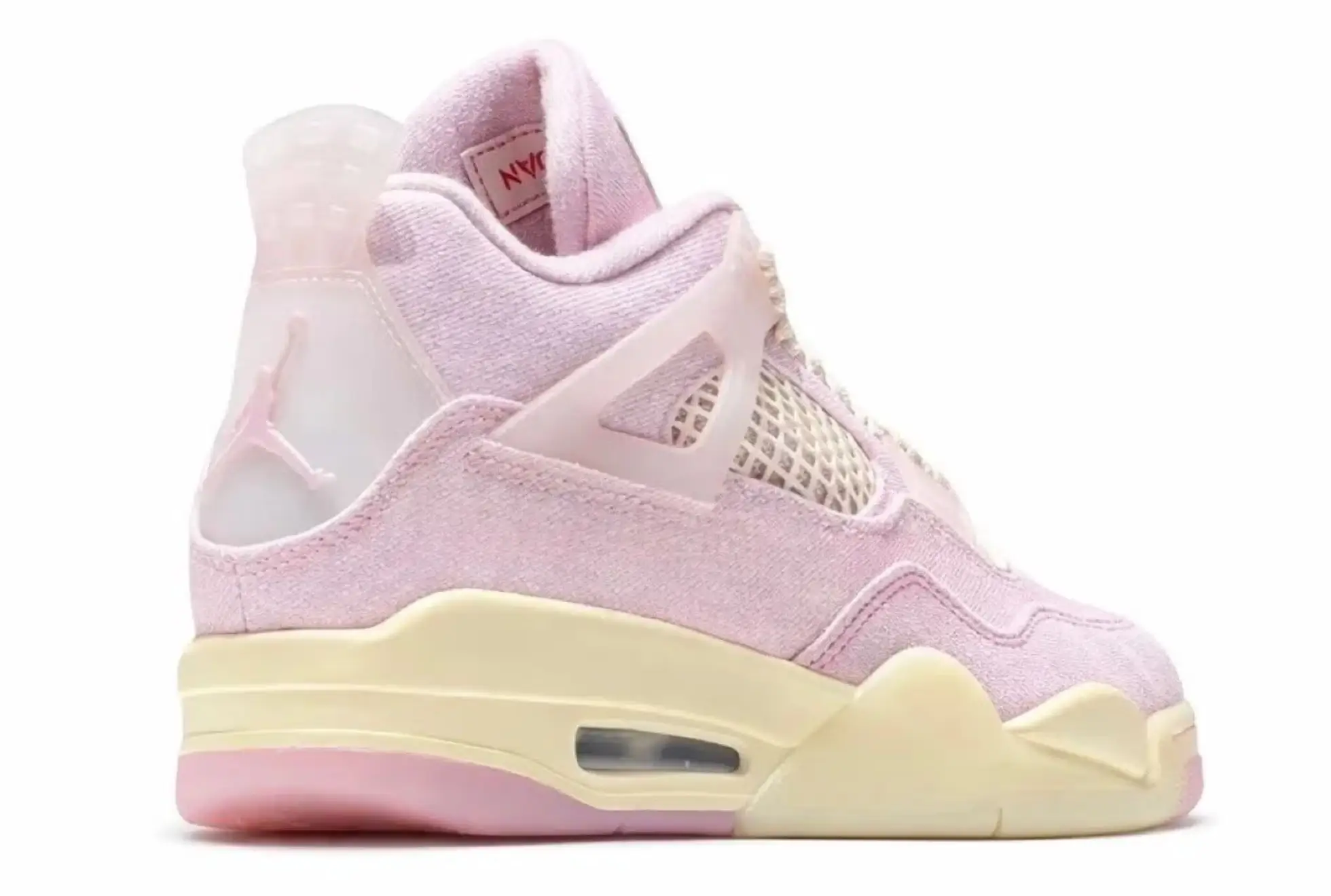
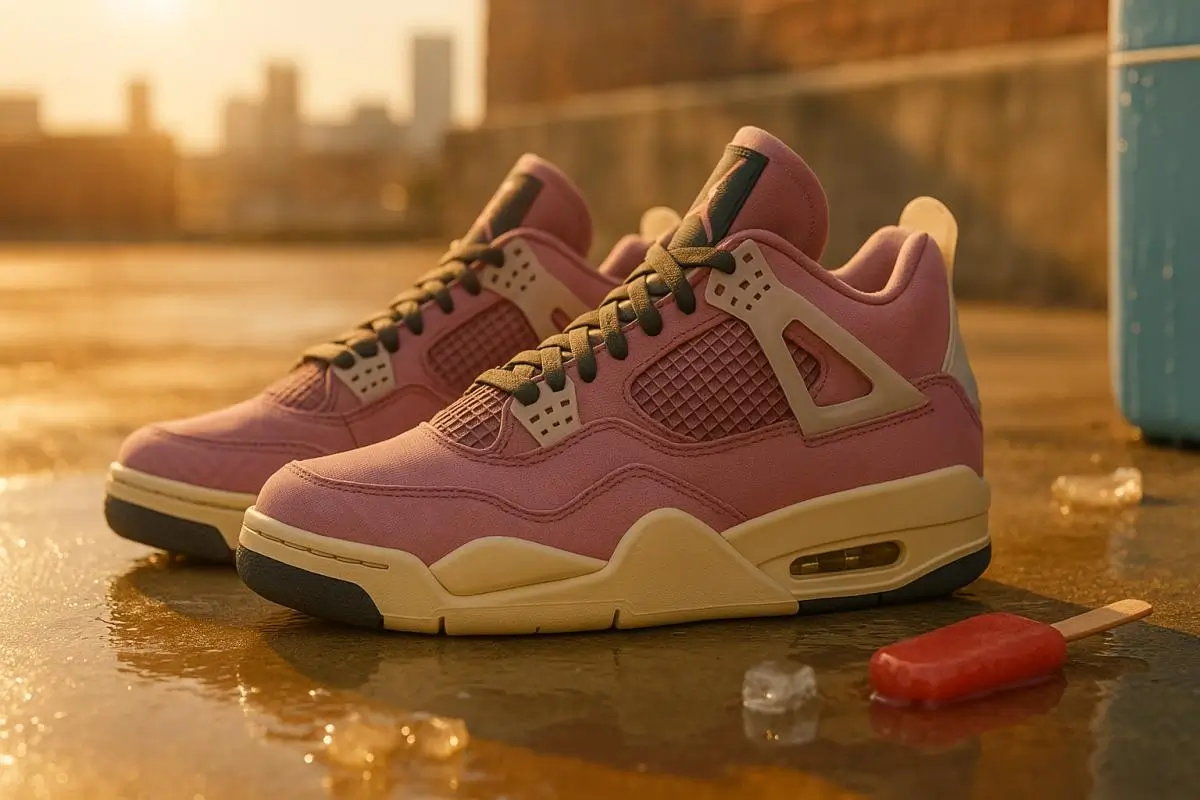
The Air Jordan 4 has always been a silhouette that absorbs reinterpretation without losing its identity. Since its 1989 debut under Tinker Hatfield, it has functioned less like a static shoe and more like a framework—one that can be recoded through material, color, and cultural timing. The “Pink Denim,” also circulating under the unofficial “Iced Carmine” moniker, operates exactly in that space: familiar architecture, unexpected surface language.
This isn’t simply another pastel remix. It’s a study in texture, in how denim—arguably one of the most culturally loaded fabrics—can be reframed on a performance-rooted basketball icon. The result lands somewhere between archival nostalgia and contemporary fashion signal, a hybrid that feels both soft and assertive.
mat
The defining move here is obvious on first glance: the upper trades traditional leather or nubuck for layered pink denim. But what elevates the execution is not just the material swap—it’s the way denim is treated.
Panels appear slightly washed, almost sun-faded, suggesting wear before the first step is even taken. This pre-aged effect aligns with broader fashion cycles where garments arrive already lived-in, already coded with time. It echoes the same logic seen across runway denim: distressing as narrative, fading as authorship.
On the Air Jordan 4, this approach does something subtle but powerful. It softens the silhouette. The AJ4, with its mesh netting, angular wings, and visible Air unit, has always leaned technical—almost aggressive in its geometry. Denim disrupts that. It introduces tactility, familiarity, even vulnerability.
The pink tone itself isn’t loud in a neon sense. It sits closer to a washed rose, balanced by deeper carmine accents that give the shoe its secondary nickname. Those hits—on eyelets, lining, or branding—anchor the palette, preventing it from drifting too far into softness.
View this post on Instagram
a remain
Despite the material experimentation, the underlying build stays true to form. That’s critical.
The visible Air unit in the heel—one of the defining innovations introduced during NBA dominance years—remains intact, preserving the performance DNA even in a lifestyle context. Mesh side panels and tongue netting maintain breathability cues, while the signature “wings” system continues to provide both support and visual identity.
This balance—between preservation and alteration—is what keeps the “Pink Denim” from feeling like a novelty. It’s still recognizably an AJ4. The stance, the proportions, the way it sits on foot—it all reads as classic.
But the surface tells a different story.
show
“Iced Carmine” is a name that implies duality: something cooled, something warmed. That tension is visible across the palette.
The pink denim base acts as the “iced” component—muted, airy, almost powdery. Against it, carmine red accents inject energy. These aren’t overpowering hits; they’re strategic. They appear where the eye naturally lands—branding zones, structural points—creating rhythm rather than chaos.
Underfoot, the outsole typically balances neutral tones with subtle color carryover, grounding the upper’s experimentation. It’s a reminder that even the most expressive sneakers still need to function visually from the ground up.
This interplay makes the shoe adaptable. It can lean into softer styling—wide-leg trousers, tonal layering—or act as a contrast piece in darker, more structured outfits.
culture
Denim isn’t just fabric. It’s shorthand.
From American workwear roots to high-fashion reinterpretations, denim carries a cross-generational, cross-cultural weight. Applying it to the Air Jordan 4 taps into that universality.
It also aligns with a broader shift in sneaker design where material storytelling is becoming as important as colorways. We’ve seen suede runs, canvas flips, even recycled textiles—but denim hits differently. It feels personal. It ages uniquely. It creases, fades, and evolves with wear.
That means no two pairs will look exactly the same over time. The owner becomes part of the design process.
idea
There’s a specific energy to how this pair reads on foot.
It doesn’t shout in the way neon or high-contrast sneakers do. Instead, it draws attention through texture. Up close, the denim grain becomes visible, almost tactile. From a distance, the pink reads as a unified field of color, clean and intentional.
This duality makes it versatile. It works in daylight, where the fabric details are emphasized, and under artificial light, where the tones flatten into something more graphic.
Styling-wise, it opens multiple directions. It can lean into Americana—denim-on-denim, workwear references—or pivot into softer, more contemporary fits with relaxed tailoring and muted palettes.
story
The dual naming speaks to how sneakers now exist across multiple channels—official releases, early leaks, community-driven naming conventions.
“Pink Denim” is descriptive, almost literal. It tells you what the shoe is.
“Iced Carmine,” on the other hand, feels interpretive. It frames the color story as something more atmospheric, more stylized. It’s the kind of naming that emerges organically within sneaker communities, where language becomes part of the product’s identity.
Both names coexist, and that coexistence reflects how modern sneaker culture operates—fluid, decentralized, constantly redefined by the people wearing and discussing the product.
rare
This release sits in an interesting space.
It’s not a retro tied to a specific Michael Jordan moment, nor is it a high-profile collaboration with an external designer. Instead, it’s a material-driven reinterpretation—subtle in concept, bold in execution.
That positions it somewhere between everyday wear and collectible object. It has enough uniqueness to stand out in a rotation, but enough familiarity to avoid feeling inaccessible.
For collectors, it represents a continuation of the AJ4’s evolution. For casual wearers, it offers something visually distinct without requiring deep sneaker knowledge.
clue
The “Pink Denim” / “Iced Carmine” doesn’t try to reinvent the Air Jordan 4. It doesn’t need to.
Instead, it shifts the conversation. It asks what happens when a performance icon is filtered through a fabric associated with everyday life, with wear, with time. The answer is a sneaker that feels less like a product and more like an object that will change—subtly, gradually—with the person wearing it.
In a market often driven by loud collaborations and immediate hype, that kind of quiet evolution stands out.
Not because it demands attention.
But because it earns it.