A Review: Inside Alejandro G. Iñárritu’s and Tom Cruise Retro Film

January 5, 2026
retro
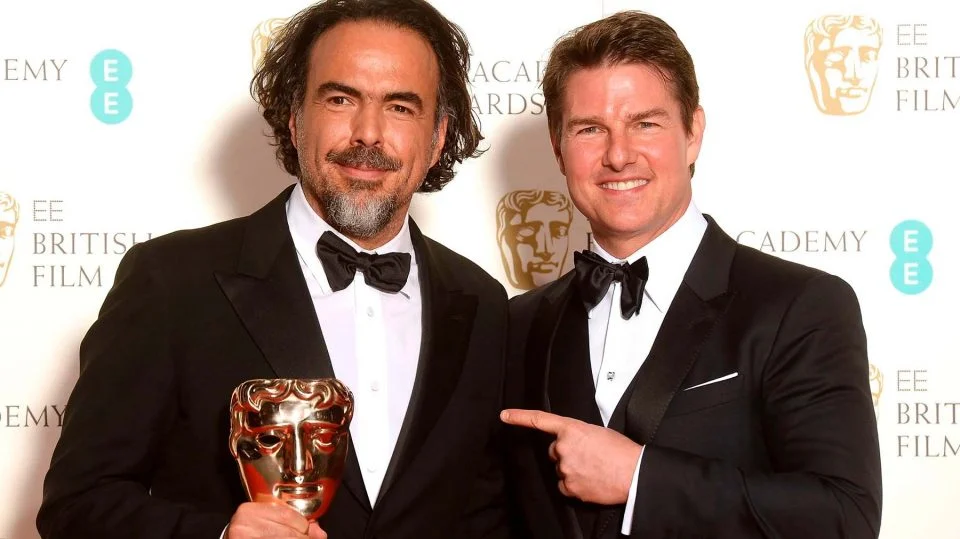
For years, the idea of Alejandro G. Iñárritu and Tom Cruise working together felt like a cinematic thought experiment rather than an inevitability. One is a filmmaker known for destabilizing form, interrogating ego, and pushing audiences into moral discomfort. The other is Hollywood’s most persistent avatar of control, precision, and spectacle. When Warner Bros. officially confirmed their collaboration with the reveal of Digger—alongside its first teaser and poster—the announcement landed less like a standard studio update and more like a tectonic shift in expectations. Scheduled for theatrical release on October 2, 2026, Digger immediately positioned itself as one of the most intriguing films on the horizon.
The reveal did not arrive with plot clarity or narrative exposition. Instead, Warner Bros. leaned. Into mood, ambiguity, and provocation. The message was clear: Digger is not meant to be easily explained. It is meant to be felt, debated, and possibly misunderstood.
teaser
The first teaser for Digger resists nearly every convention of blockbuster marketing. There are no sweeping establishing shots, no urgent dialogue snippets, no musical crescendo promising triumph or destruction. Instead, the teaser offers fragments. Tom Cruise appears alone, dancing awkwardly yet deliberately in cowboy boots, gripping a shovel as if it were both a tool and a symbol. In another moment, he balances along a pier, framed against empty space, his posture conveying confidence that feels precarious rather than assured.
These images are disarming precisely because they deny context. Cruise’s movements are not heroic; they are strange, almost ritualistic. The camera does not rush to justify them. It lingers. This is a teaser designed not to reassure audiences but to unsettle them, suggesting that the film’s power will come not from spectacle, but from discomfort.
Cruise himself reinforced this direction when he shared the teaser with the phrase, “A comedy of catastrophic proportions.” It’s a line that sounds playful at first glance, but the teaser reframes it as something darker. Catastrophe, here, does not arrive suddenly. It grows out of confidence, repetition, and the quiet conviction that one person knows best.
who
What little has been revealed about the narrative centers on Cruise’s character, Digger Rockwell, described as the most powerful man in the world. Yet power, as presented in the teaser, is abstract. Rockwell is not shown commanding armies or standing behind podiums. He is isolated, physical, almost theatrical. His authority seems self-declared rather than structurally enforced.
Early descriptions suggest that Rockwell embarks on a mission to save humanity while simultaneously threatening it, convinced of his own righteousness even as the consequences spiral beyond his control. This contradiction places Diggersquarely within Iñárritu’s long-standing fascination with ego and moral blindness. Power, in his films, is rarely stable. It distorts perception, erodes empathy, and transforms intention into unintended violence.
Cruise’s casting in such a role feels deliberate. Few actors embody cultural authority as completely as he does. Diggerappears to leverage that authority, then slowly dismantle it, inviting audiences to question not only Rockwell’s certainty, but their own relationship to figures who promise salvation through force of will alone.
iñárritu’s
For Alejandro G. Iñárritu, Digger marks a return to English-language filmmaking after The Revenant and the more inward-looking Bardo. It also signals a renewed engagement with scale. While Bardo explored identity and memory through deeply personal abstraction, Digger expands those concerns outward, framing personal delusion as a global risk.
The film reunites Iñárritu with cinematographer Emmanuel Lubezki, whose visual language has become inseparable from the director’s work. Shot on 35mm VistaVision, Digger is expected to carry the tactile immediacy and immersive realism that define their collaborations. The format choice alone suggests a resistance to digital polish in favor of texture, imperfection, and physical presence.
Production was kept tightly controlled, filmed primarily in the United Kingdom under a working title, with little information leaking beyond casting confirmations. That secrecy has only amplified anticipation, positioning Digger as a project that demands patience rather than hype.
flow
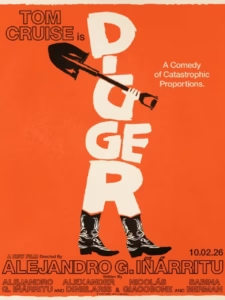
The first official poster for Digger continues the teaser’s refusal to explain itself. Rather than foregrounding Cruise’s star power or hinting at narrative stakes, the design favors restraint. Its composition is stark, its symbolism suggestive rather than explicit. There is an absence of spectacle that feels intentional, as if the film is asking audiences to meet it halfway rather than be carried along.
In an era where marketing often overwhelms films before they are seen, Digger’s visual restraint feels almost radical. The poster does not promise entertainment. It promises a question.
cast
 While Cruise anchors the film, Digger is not structured as a solitary showcase. The ensemble cast includes Sandra Hüller, Jesse Plemons, Riz Ahmed, John Goodman, Michael Stuhlbarg, Emma D’Arcy, Sophie Wilde, and others whose careers are defined by complexity rather than likability.
This casting choice suggests a narrative ecosystem rather than a single-point perspective. These are actors who excel at portraying moral ambiguity, internal conflict, and quiet menace. Their presence hints that Rockwell’s worldview will be challenged, mirrored, and perhaps enabled by those around him, creating a network of responsibility rather than a simple hero-villain dynamic.
The film appears poised to examine how power circulates, how certainty spreads, and how catastrophe becomes communal long before it becomes visible.
comedy
Describing Digger as a comedy may be its most destabilizing gesture. Iñárritu’s humor has always been uncomfortable, emerging from contradiction rather than punchlines. In Birdman, comedy arose from ego collapsing under its own weight. In Digger, early indications suggest comedy emerges from the terrifying gap between intention and consequence.
The laughter implied by the teaser feels nervous, the kind that surfaces when reality becomes too absurd to process straight. This aligns Digger with a lineage of satirical disaster cinema, but without the distancing irony that often makes such films palatable. Here, the catastrophe feels personal, imminent, and deeply human.
cruise
Perhaps the most compelling aspect of Digger is how it reframes Tom Cruise himself. For decades, Cruise has represented mastery—over his body, his image, and the mechanics of filmmaking. Digger appears to ask what happens when mastery becomes obsession, when certainty becomes danger.
The teaser’s focus on Cruise’s physicality—dancing, balancing, standing alone—suggests a performance rooted not in dominance but in exposure. It is a reminder that Cruise’s greatest strength as an actor has always been his willingness to commit fully, even when that commitment risks undermining his own myth.
In Digger, that myth is not protected. It is examined.
why
*Culturally, Digger feels acutely timely. It arrives in an era defined by loud certainty, performative leadership, and the conflation of confidence with competence. The idea of a powerful figure convinced of their own saviorhood while accelerating disaster resonates far beyond fiction.
That Warner Bros. is positioning such a film for a wide theatrical release, rather than confining it to streaming or limited exhibition, speaks to a growing recognition that audiences are ready for complexity again. Digger does not appear interested in comfort or closure. It appears interested in confrontation.
fin
With an October 2, 2026 release date, Digger enters the traditional fall corridor associated with serious cinema and awards consideration. Whether it ultimately follows that path remains to be seen, but its ambition is unmistakable. This is not a film designed to disappear quietly. It is designed to provoke, divide, and linger.
In revealing Digger through fragments rather than declarations, Iñárritu and Cruise have set the terms of engagement early. This is a film that asks audiences to sit with uncertainty, to laugh uneasily, and to question the stories they are told about power and salvation.
When Digger finally arrives in theaters, it may not offer answers. But it promises something rarer: a reckoning.