ALSO TM-B: Reframing the Electric Bike Through EV Logic

January 18, 2026
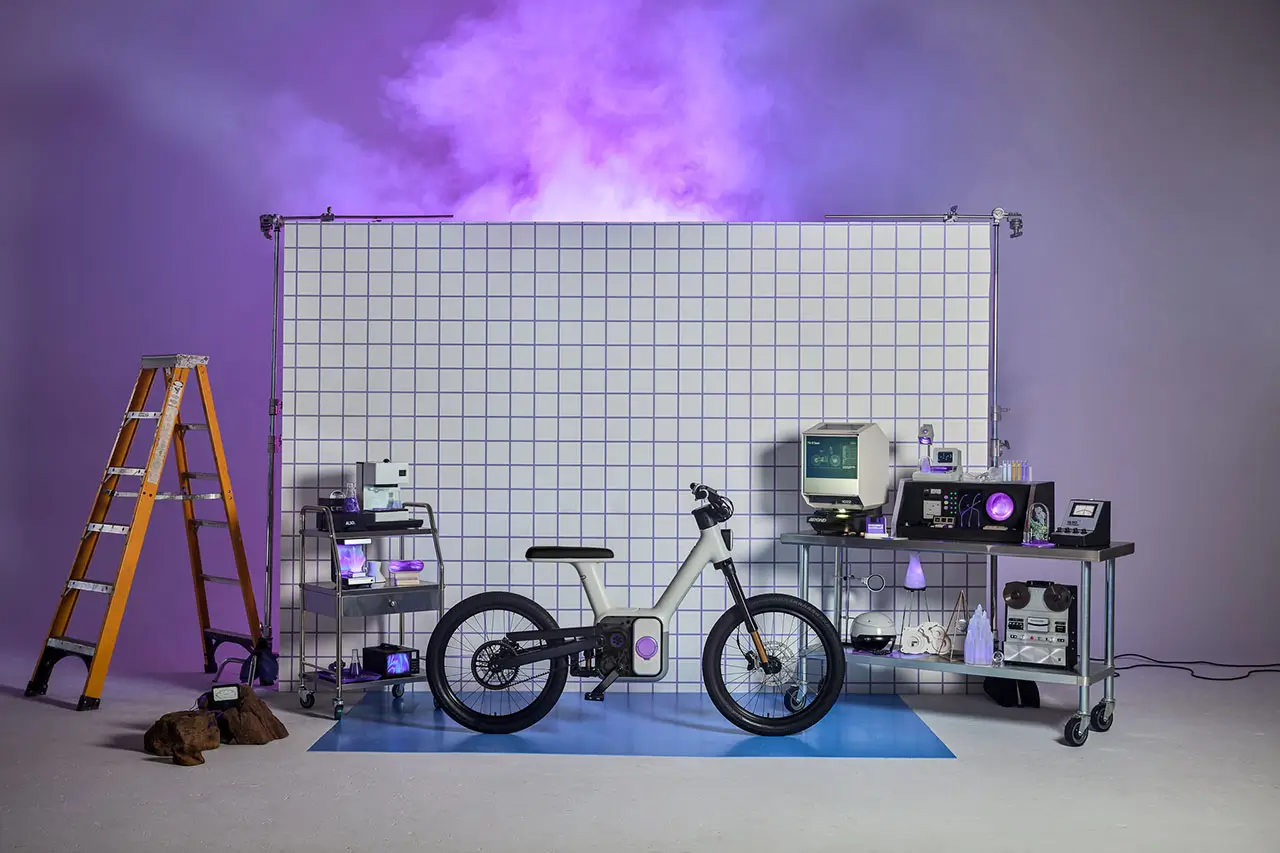
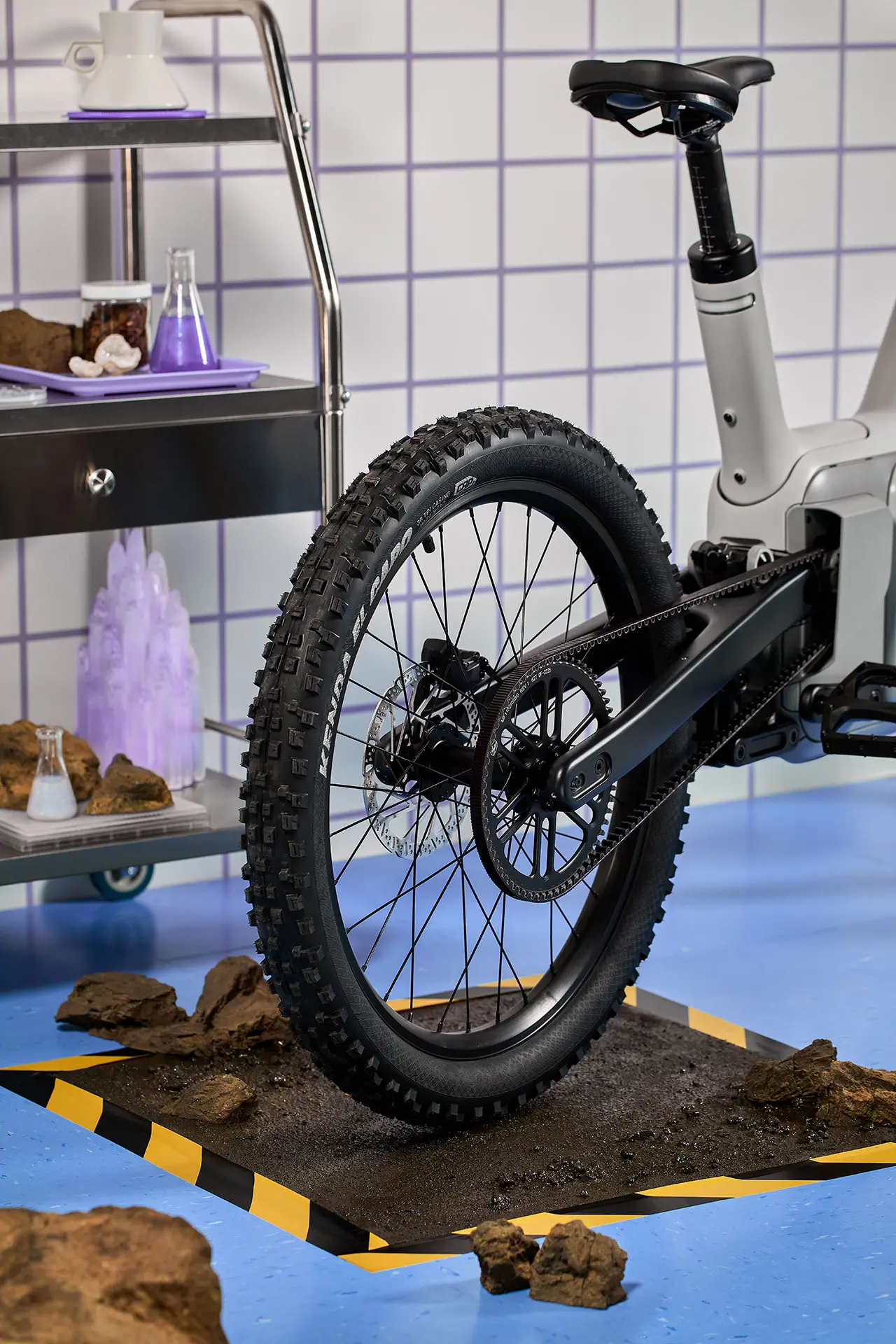
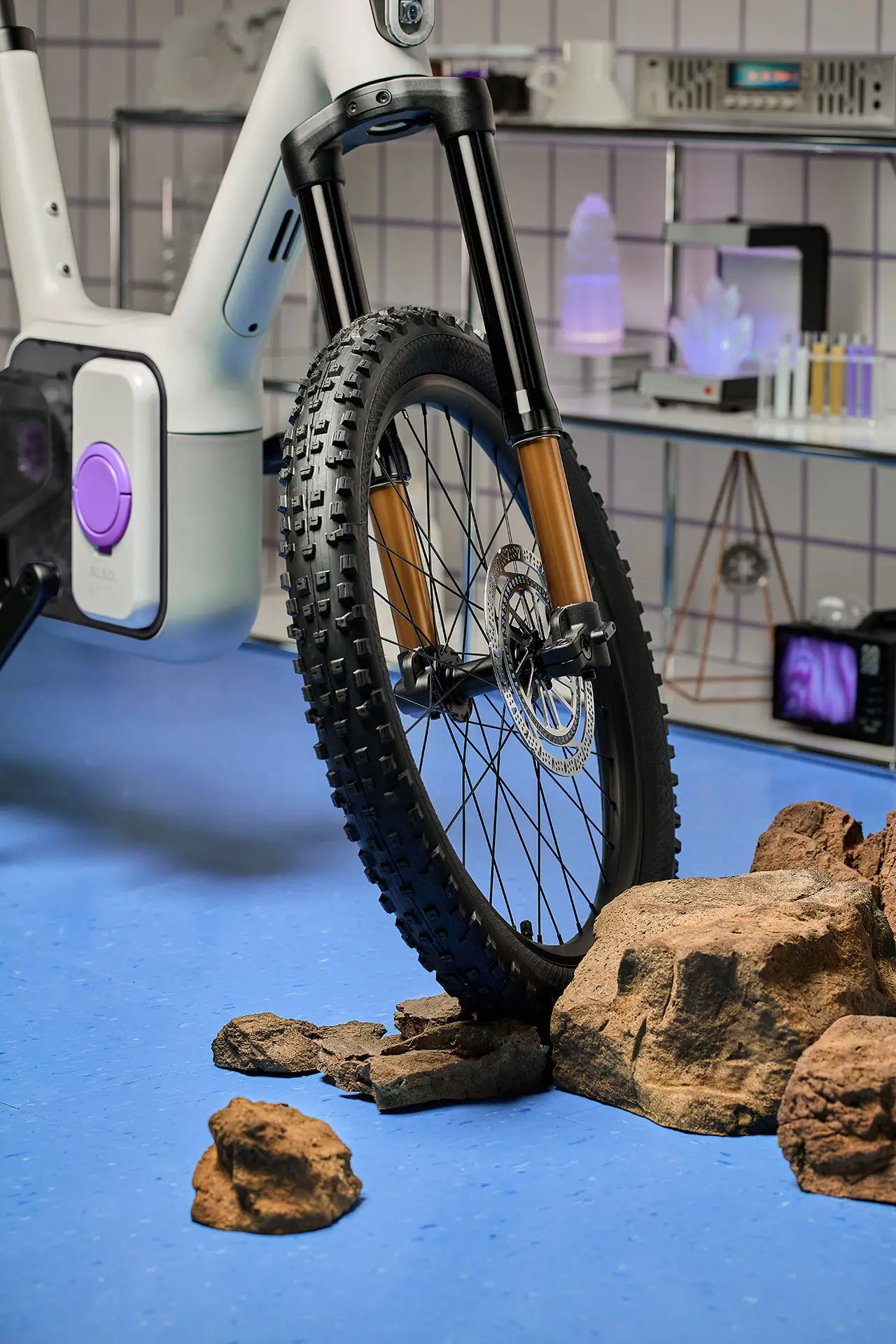
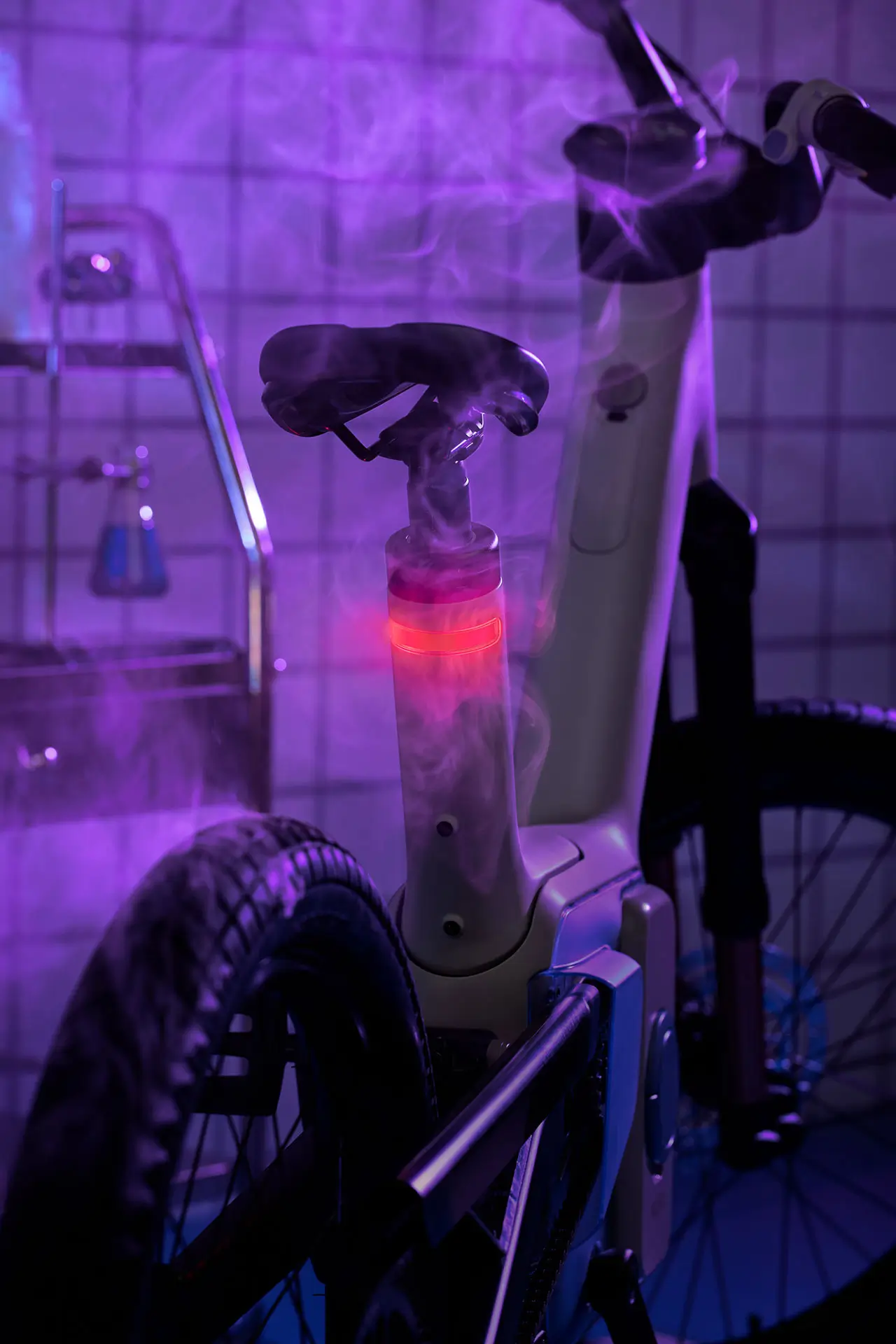
Rivian’s brand has always been built around a specific premise: electrification is most compelling when it improves the lived experience of moving through the world. Until recently, that thesis expressed itself in large, premium vehicles—trucks and SUVs designed for outdoors capability, software-driven ownership, and a lifestyle narrative that felt closer to consumer tech than traditional automotive. The ALSO TM-B takes that same logic and compresses it into a smaller form factor: an e-bike that behaves less like a “bicycle with a motor” and more like a purpose-built electric vehicle for short trips.
ALSO (the company) positions the TM-B as “Transcendent Mobility – Bike,” and the framing matters. The product is not shy about challenging the conventions of the category: it is highly modular, heavily instrumented, built around software, and designed to morph between commuter, cargo hauler, and passenger-friendly configurations without tools. That is, essentially, Rivian’s playbook—applied to micromobility.
why
For an EV manufacturer, micromobility is a strategic adjacency. A large share of car trips are short, repetitive, and inefficient—exactly the type of usage where a bike, scooter, or small EV can replace a vehicle without sacrificing convenience. ALSO’s bet appears to be that the e-bike market has matured past the first wave of “electric assist” products and is ready for a new wave: integrated, secure, upgradeable, and modular—closer to how consumers think about cars and connected devices than how they think about traditional bicycles.
In that sense, the TM-B is not just a new model; it is a statement about what an e-bike should be when designed by people who are fluent in EV platforms, power electronics, and software systems. The Verge describes the TM-B as a Class 3 e-bike with unusually deep integration—touchscreen console, connected security, regenerative braking, and a “pedal-by-wire” drivetrain concept. Wired similarly emphasizes affordability relative to premium peers, plus modularity and repairability as core design principles.
idea
Most e-bikes are sold as a fixed configuration with limited accessory compatibility: you add racks, baskets, or child seats, and you live with the compromises. The TM-B is built differently. ALSO’s marketing centers on interchangeable “top frame” configurations and accessory modules intended to support dramatically different roles: a sleek commuter one day, a cargo machine the next, and a passenger/bench-seat cruiser when needed.
This “shape shifting” concept is important because it targets a real barrier to e-bike adoption: households frequently need different bikes for different tasks. A practical commuter e-bike is not always a practical kid-hauler; a kid-hauler is not always something you want to ride solo to a meeting. ALSO’s approach is to reduce the need for multiple bikes by making one platform reconfigurable—an idea that mirrors the “one vehicle, many lifestyles” pitch common in modern automotive branding.
flow
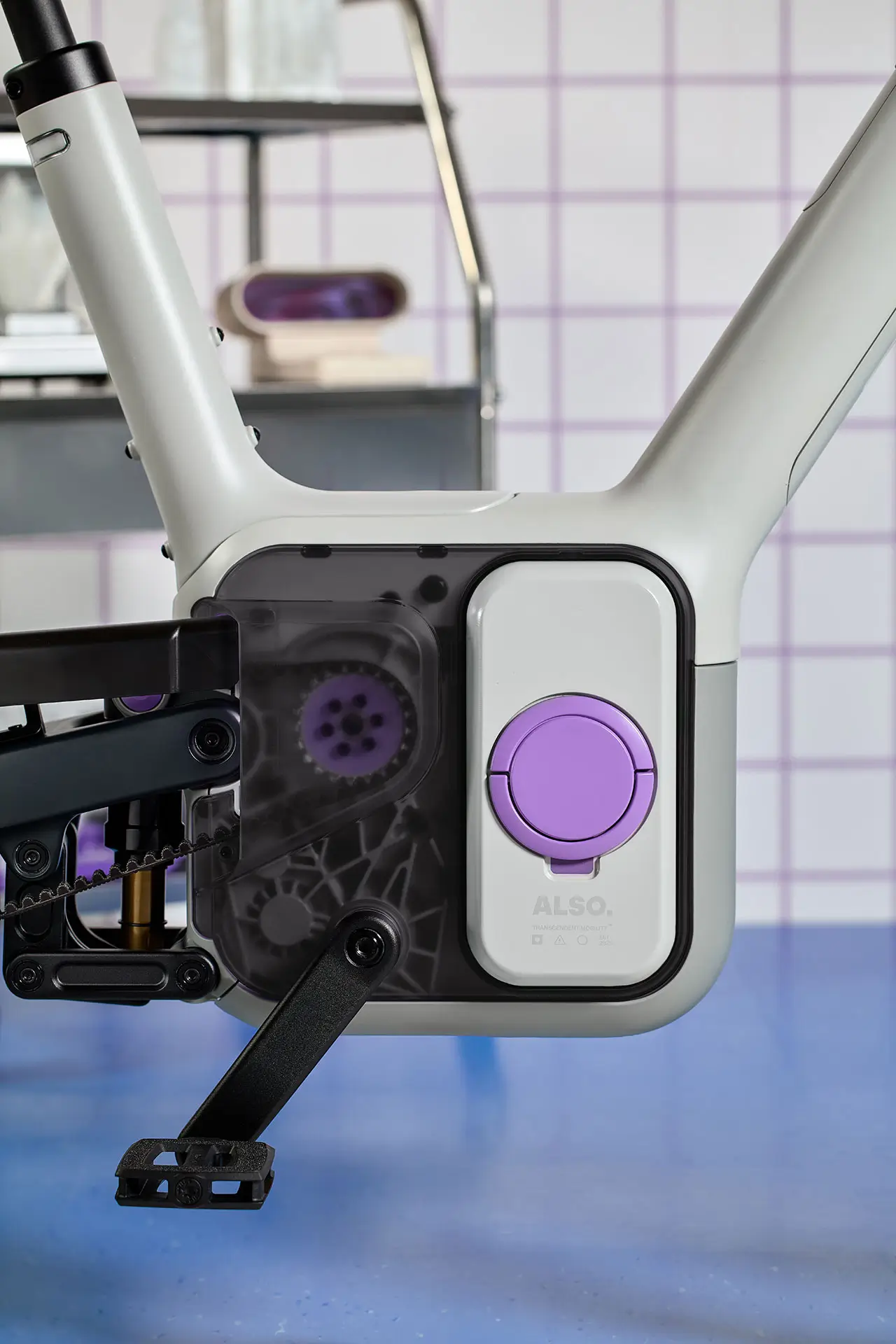
The TM-B’s most distinctive technical claim is its proprietary drivetrain approach—often described as “pedal-by-wire” or a “virtual drivetrain.” Rather than relying on the familiar chain-and-gear shifting paradigm, pedaling becomes an input that can be interpreted by software to deliver a chosen ride feel and assistance profile.
At a user level, that can mean fewer mechanical complexities (and potentially less maintenance), but it also signals a broader ambition: to standardize and tune the ride experience the way EVs tune throttle mapping, regenerative braking strength, and drive modes. In practice, the promise is not merely “more power.” It is consistency—a bike that can be configured for different riders, terrains, loads, and comfort preferences without re-engineering the hardware.
This is also where the TM-B starts to feel like Rivian thinking in miniature: a platform where software meaningfully shapes the experience, not just a companion app bolted onto a bicycle.
style
Range anxiety is not exclusive to cars. For e-bikes, it shows up as route planning friction: uncertainty around headwinds, hills, temperature, cargo weight, and how much assist you will want. ALSO claims up to 100 miles of estimated range, enabled by removable battery options (including a larger-capacity pack) that can be charged off the bike and used as a USB-C power bank.
Two design choices stand out here:
-
Removability reduces the adoption burden for apartment dwellers and anyone without convenient access to an outlet near bike storage.
-
Power-bank functionality leans into the “electric vehicle” identity—treating the battery as a portable energy asset rather than a hidden component.
Notably, ALSO’s own product positioning speaks to a “packed full of power” battery narrative and over-the-air (OTA) updates, implying a living product model rather than a static one.
fwd
E-bike growth has brought a parallel increase in scrutiny: speed, rider skill variance, mixed traffic conditions, and visibility risks. The TM-B is engineered to look and behave like it takes that seriously. ALSO highlights integrated lighting—high-output headlight and rear light—plus front and rear turn signals, a feature still rare in conventional bicycles.
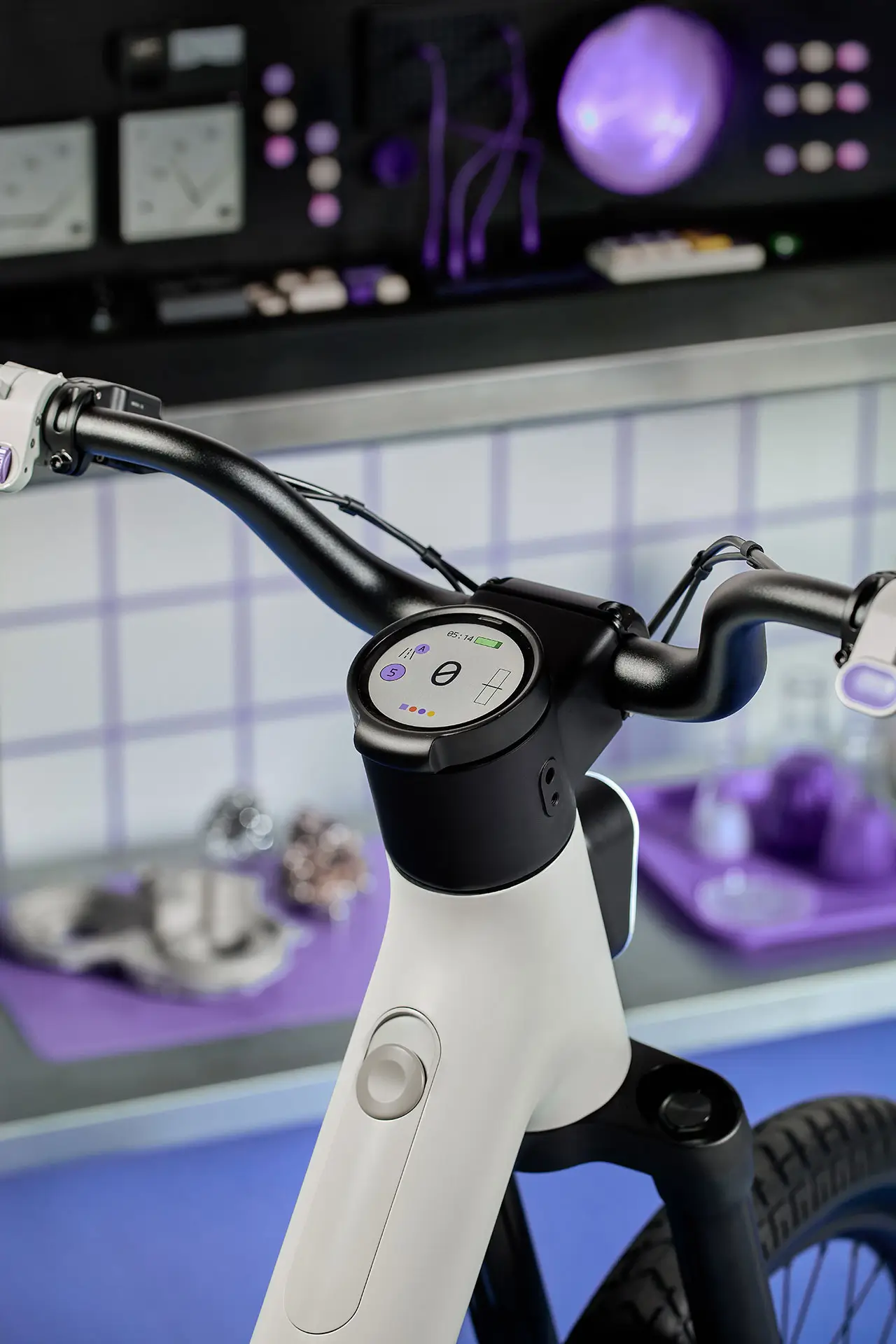
The Verge also reports regenerative braking and ABS (anti-lock braking) as part of the package, plus an onboard “Portal” touchscreen interface for key functions. Whether every rider needs that level of technology is debatable, but the direction is clear: make the bike safer and more legible to both the rider and surrounding traffic, particularly for the kind of short urban trips that ALSO appears to be targeting.
tech
E-bikes have flirted with screens for years, usually as simple speed/battery readouts. ALSO’s TM-B leans into a more car-like experience: a 5-inch touchscreen that functions as a control center for navigation, music, and system settings. The Washington Post’s hands-on reporting frames this as a $4,000+ bike with the kinds of features drivers already expect from modern vehicles, including keyless entry via phone and a high-tech interface designed to make the transition from car to bike feel less like a downgrade.
The strategic importance of this is not the screen itself—it is the ownership model. When a product is software-defined:
-
Capabilities can expand post-purchase through updates.
-
Security can be layered and improved over time.
-
Diagnostics and maintenance can become more standardized.
ALSO explicitly positions OTA updates as part of the TM-B’s identity. That is a very automotive—and very Rivian—way to build a bike.
safety
If the TM-B is truly meant to replace car trips, it has to survive the way cars survive: parked in public, left unattended, and still there when you return. While specific implementations vary in reporting, multiple sources emphasize integrated security features and connected controls—aimed at making a high-value e-bike more viable in dense urban environments.
This is another area where Rivian’s DNA matters. EV manufacturers already build ecosystems that rely on phone-as-key concepts, secure software stacks, and service networks. Translating those competencies to micromobility is a plausible advantage—if ALSO can execute reliability at scale.
show
The TM-B is presented as a Class 3 e-bike, meaning pedal assist up to 28 mph, with throttle behavior generally aligned with U.S. regulatory expectations. The Verge reports torque figures as high as 180 Nm at the rear wheel, which helps explain why reviewers describe it less like a gentle commuter assist and more like a compact electric vehicle with meaningful acceleration.
That said, ALSO’s ambition is not simply speed. It is ride confidence: enough power to carry cargo, climb hills without drama, and maintain stable behavior under load. This is precisely where a modular “one bike, many roles” approach tends to fail for other brands. Power and braking have to scale with use cases—commuting is one thing; carrying kids or freight is another.
expend
The TM-B’s pricing has been reported with a tiered structure:
-
Launch Edition pricing around $4,500, with availability positioned around spring 2026 in initial coverage.
-
A base model targeted under $4,000 at launch, with later reporting indicating an entry-level price around $3,500and availability later in 2026.
-
Wired also notes a starting price “under $4,000,” with higher trims at $4,500 and shipping/delivery expected in 2026.
From a market perspective, this is simultaneously expensive and rational. Expensive compared to mass-market e-bikes, but rational if the TM-B is competing with premium cargo bikes, high-end commuters, and (importantly) the cost of short urban car trips when you factor in parking, fuel, and depreciation. ALSO is effectively arguing that the TM-B is not a discretionary toy—it is a transportation device that can replace meaningful portions of car usage.
trade
A product that tries to do everything risks doing too much. The Washington Post notes the TM-B’s weight (reported around the “80-pound” range in coverage) and points out a practical issue: if the battery is drained, the bike becomes difficult to ride like a normal bicycle due to mass and the vehicle-like architecture. That is not a trivial drawback; it is the inverse of the “graceful degradation” you get with lighter e-bikes or standard bicycles.
There is also the broader question of complexity. Pedal-by-wire drivetrains, integrated screens, and connected security systems can improve the experience—but they can also introduce new failure modes. The long-term success of this approach will depend on:
-
durability of electronics in all-weather riding,
-
service accessibility (and cost) outside major metro areas,
-
battery replacement pricing and availability,
-
software support lifespan.
Wired’s emphasis on repairability suggests ALSO understands this risk and is attempting to counter it structurally. The execution, however, will be what matters.
impression
Even if the TM-B remains niche by volume, it is a meaningful signal in the micromobility category: a credible EV-adjacent team is treating the e-bike as a platform worthy of the same product rigor as a vehicle. The Verge reports ALSO is also developing a cargo-oriented electric quad (TM-Q) and even a smart helmet (Alpha Wave), implying a broader ecosystem strategy rather than a one-off product.
Zooming out, that ecosystem thinking is the real “Rivian answer” here. Not merely “Rivian made a bike,” but “Rivian’s sensibility—software, platform modularity, safety integration, service infrastructure—has been redeployed to make short trips feel modern.”
If ALSO can deliver reliability and serviceability commensurate with its ambition, the TM-B could help redefine what consumers expect from premium e-bikes: not just range and motor wattage, but a coherent, secure, upgradeable transportation product. And if it cannot, it will still have pushed the category into a new conversation—one where the future of bikes starts to look, unavoidably, like the future of EVs.