American Girl 40th Anniversary: A Legacy Reconstructed, Not Revised

April 9, 2026
25 seconds ago
a return
There are few objects in American consumer culture that function as both product and pedagogy. The dolls of American Girl were never simply toys. They were frameworks—carefully constructed systems through which history could be accessed, softened, and made intimate.
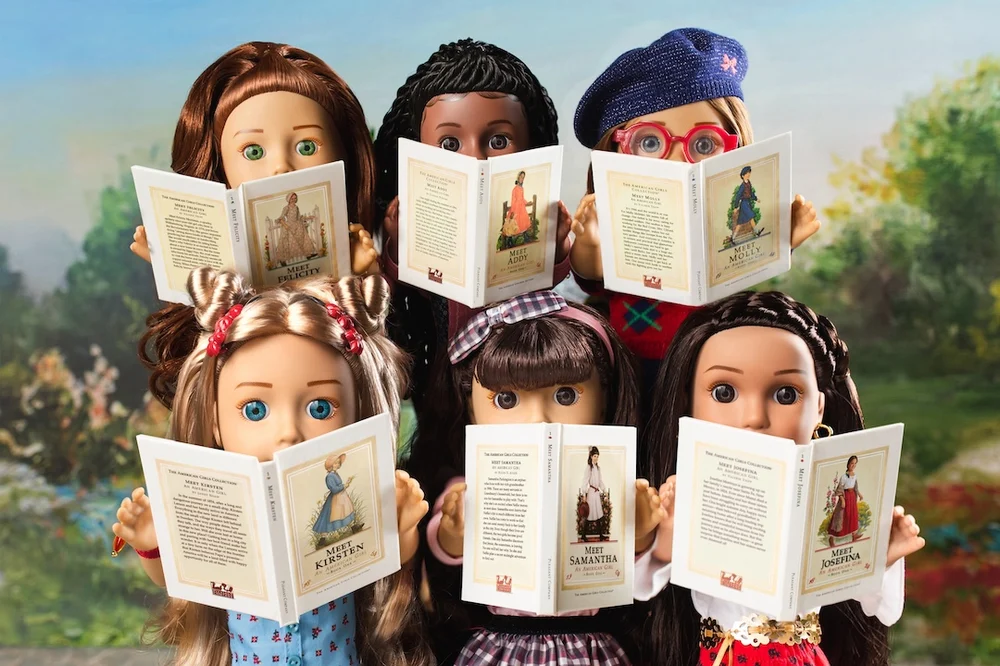
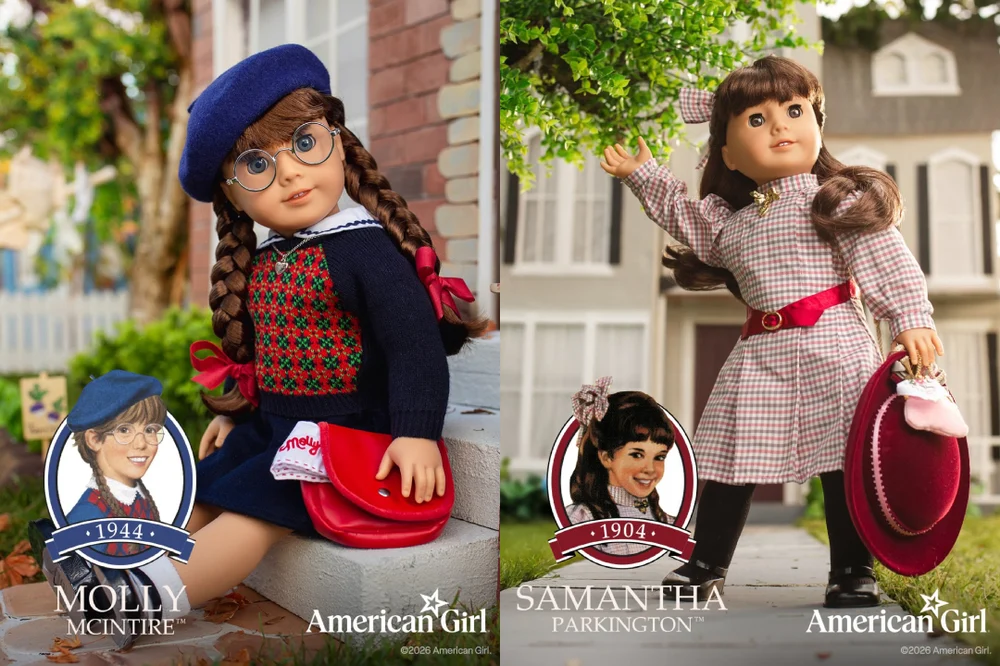
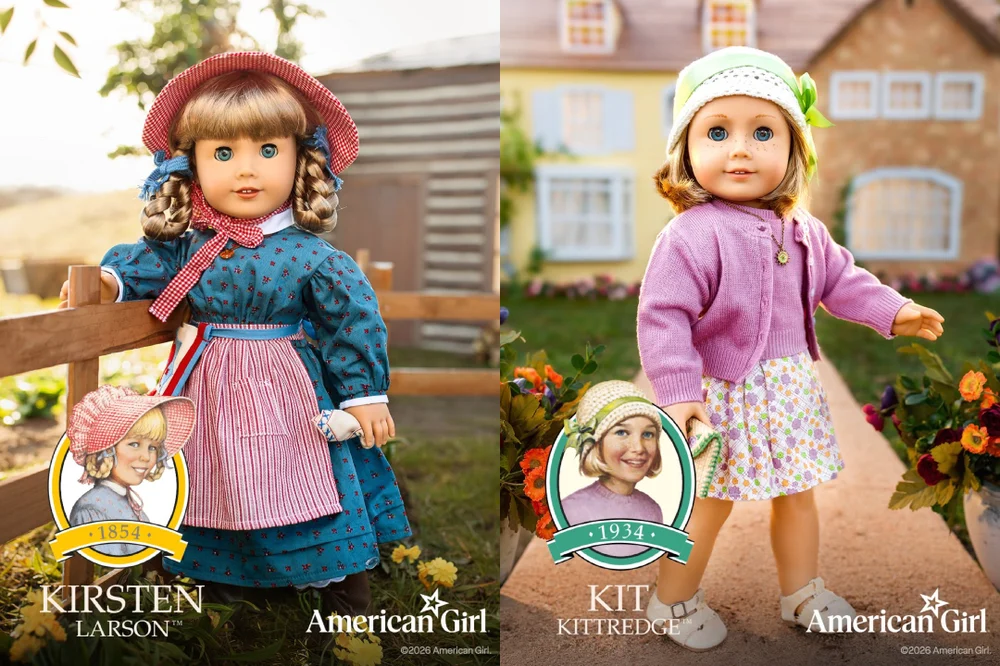
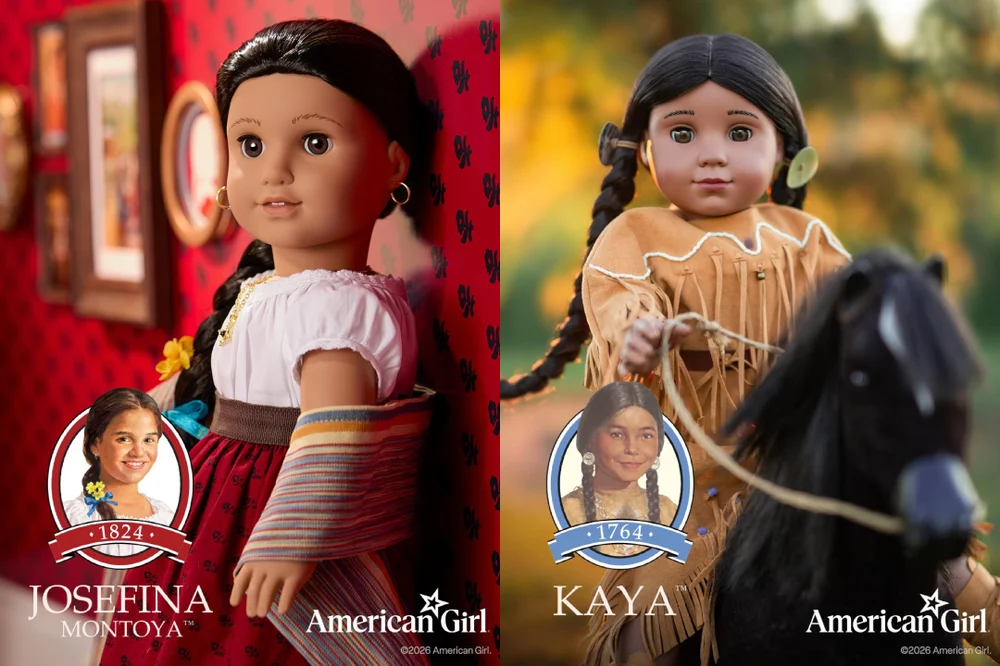
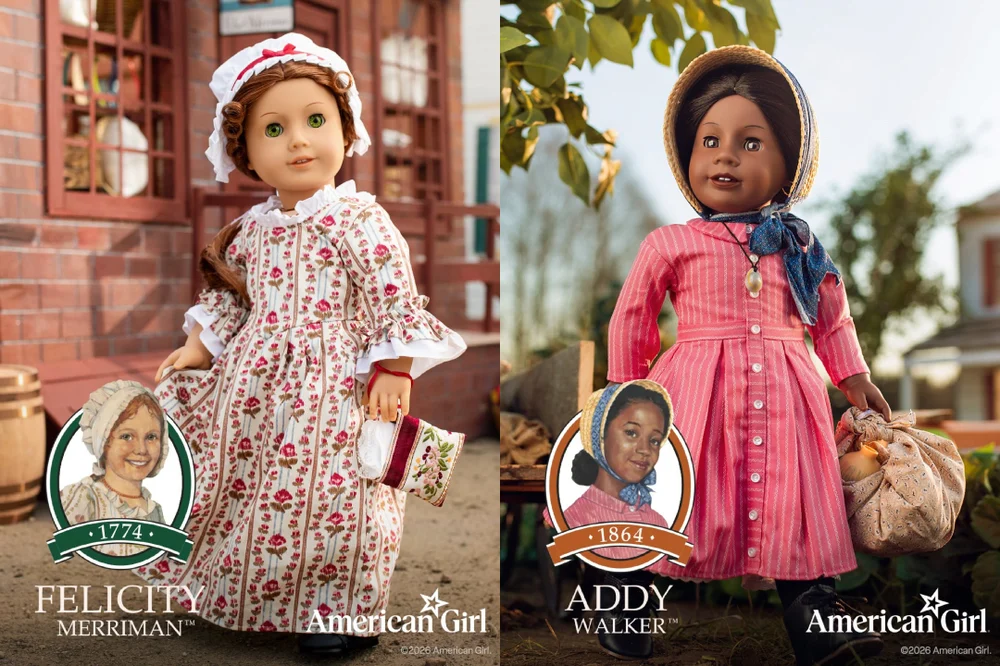
Now, for its 40th anniversary, the brand has chosen to return to its origin point. Not symbolically, but materially. The original historical dolls—Samantha, Molly, Kirsten, Felicity, Addy, Josefina, Kaya, Kit—are being reintroduced in forms that closely replicate their earlier iterations, from outfits to packaging to accompanying books.
This is not a reinterpretation. It is a restoration.
And that distinction defines everything.
View this post on Instagram
hx
American Girl was founded in 1986 by Pleasant Rowland with a deceptively simple idea: that children could learn history through storytelling. Each doll represented a specific historical moment—a Swedish immigrant in 1854, a Progressive Era orphan in 1904, a girl growing up during World War II.
The dolls were accompanied by books. Structured narratives. Carefully researched details.
The effect was cumulative. History was no longer abstract. It had a face, a wardrobe, a voice.
What the 40th anniversary revival recognizes—implicitly—is that this original system has never been fully replaced.
stir
The re-released lineup reads like a roll call of cultural memory:
- Samantha Parkington, Edwardian privilege softened by moral awakening
- Molly McIntire, wartime resilience reframed for childhood
- Kirsten Larson, immigrant narrative rendered accessible
- Addy Walker, one of the brand’s most historically complex figures, rooted in the Civil War era
- Josefina Montoya, Kaya, Kit Kittredge, Felicity Merriman
Each character operates as a node in a larger network—a distributed timeline of American identity.
By bringing them back in their original form, American Girl is not just reviving products. It is reactivating a narrative infrastructure.
flow
It would be easy to read this move as purely sentimental—a gift to millennial consumers now old enough to purchase the objects of their own childhood.
And that reading is not incorrect.
The revival is explicitly positioned toward longtime fans, many of whom remember these dolls as formative objects.
But nostalgia here is not passive. It is engineered.
The decision to replicate original packaging, original accessories, even original design proportions signals a shift away from reinterpretation and toward preservation. The past is not being updated. It is being stabilized.
This stands in stark contrast to earlier anniversary efforts.
mention
Earlier in the year, American Girl introduced a “Modern Era” collection—smaller, reimagined versions of the same historical characters, styled with contemporary aesthetics.
The response was immediate, and often critical.
Fans described the redesigns as overly polished, disconnected from the historical grounding that defined the original line.
The critique went deeper than aesthetics. It questioned the purpose of the brand itself. If the dolls no longer function as vehicles for historical storytelling, what remains?
The 40th anniversary revival answers that question—quietly, but definitively.
It restores the original function.
auth
There is, however, a paradox at the center of this revival.
The dolls are presented as “authentic”—faithful reproductions of their earlier forms. But authenticity, in this context, is itself constructed.
The original dolls were already interpretations. They translated complex historical realities into accessible narratives. They simplified. They softened. They selected.
What the anniversary collection does is freeze those interpretations in time, presenting them as definitive.
This is not history. It is history as remembered.
And memory, especially collective memory, is never neutral.
subtle
One of the enduring appeals of American Girl has been its ability to make difficult histories approachable.
Addy Walker’s story, for example, introduces themes of slavery and emancipation. Kaya’s narrative touches on Indigenous life before European colonization. These are not simple topics.
Yet within the framework of the dolls, they become navigable.
This containment is both the brand’s strength and its limitation.
By returning to the original versions of these characters, the 40th anniversary collection reinforces this approach. History is presented as something that can be held, understood, and resolved.
But real history resists resolution.
show
Perhaps the most revealing aspect of the revival lies not in the dolls themselves, but in their packaging.
Boxes modeled after the original 1986 designs. Keepsake guides featuring archival imagery. Books that replicate earlier editions.
These elements transform the product into something closer to a time capsule.
The consumer is not just purchasing a doll. They are purchasing a moment—a version of the past that has been carefully preserved and re-presented.
This is where the emotional resonance intensifies.
Because the packaging does not just reference history. It references the consumer’s own history with the brand.
rare
Over four decades, the audience for American Girl has expanded—and aged.
What began as a product for children now occupies a dual space: toy and collectible. Educational tool and nostalgic artifact.
The 40th anniversary collection leans into this duality.
While still accessible to new audiences, it is clearly designed with collectors in mind. The emphasis on authenticity, the replication of original details, the careful curation of presentation—all signal a shift toward preservation rather than innovation.
The dolls are no longer just played with.
They are kept.
culture
The revival arrives at a moment when nostalgia has become a dominant cultural force.
Across fashion, media, and design, the past is being revisited, reinterpreted, and reissued. But not all revivals function the same way.
What distinguishes the American Girl approach is its refusal—at least in this instance—to update.
In a landscape saturated with reboots and redesigns, the decision to return to the original forms feels almost radical.
It suggests that the past, in its existing state, still holds value.
That it does not need to be modernized to remain relevant.
relive
The strength of the 40th anniversary collection lies in its clarity.
It understands what made the original dolls resonate: narrative depth, historical specificity, emotional connection. And it restores those elements without dilution.
But it also avoids certain complexities.
There is little indication that the stories themselves have been revisited or expanded to reflect contemporary perspectives. The historical frameworks remain intact, but not necessarily interrogated.
This raises a question: is preservation enough?
Or should revival also involve revision?
fin
American Girl’s 40th anniversary revival is, on its surface, a celebration. A return. A gesture of recognition toward the past.
But beneath that, it is something more deliberate.
It is a recalibration.
After experimenting with modernization—and encountering resistance—the brand has chosen to reassert its original identity. Not by evolving it, but by stabilizing it.
The dolls return as they were. The stories remain as they were told.
And in doing so, the brand reminds us of something essential: that sometimes, the most powerful form of innovation is not change, but continuity.
Whether that continuity is sufficient for the future is another question entirely.