“Angelica Peale Robinson” by Moses Williams: A Glimpse into the Life of an African American Artist

February 17, 2025
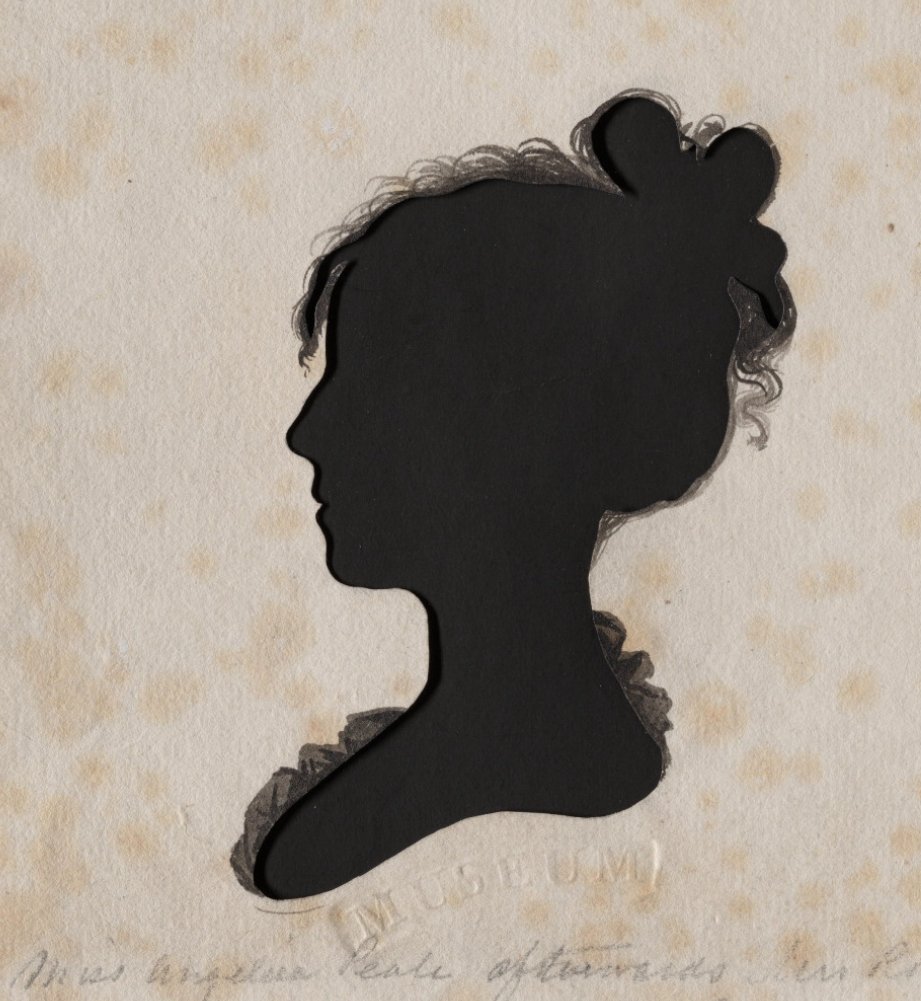
Moses Williams was an African American artist whose skill in silhouette portraiture made him a prominent figure in early American art. Born into slavery in 1775, he was owned however or yet to follow-through in modern term jargon in betterment nowadays to state “used” by Charles Willson Peale, a celebrated painter, scientist, and museum curator. Under Peale’s tutelage, Williams developed a remarkable talent for creating silhouette portraits, an art form that was highly popular in the late 18th and early 19th centuries. His work, including the famous silhouette portrait Angelica Peale Robinson, stands as a testament to his artistic mastery and resilience in the face of adversity.
Moses Williams: From Enslavement to Artistic Recognition
Williams’s early years were marked by hardship. As an infant, he was transferred into the Peale household, where he was raised alongside the Peale children. Recognizing Williams’s potential, Charles Willson Peale trained him in the delicate craft of silhouette-making, using the physiognotrace, a mechanical device that helped outline profiles with remarkable precision. This skill became Williams’s gateway to both artistic recognition and financial independence.
Although he was granted freedom in the early 19th century, Williams faced the immense challenges of establishing himself as a free Black artist in post-Revolutionary America. Despite societal constraints, he managed to build a reputation as a skilled silhouette cutter, producing hundreds of portraits for visitors of the Peale Museum in Philadelphia. His silhouettes were widely sought after, and his work provided him with a livelihood that was rare for a Black artist of his time.
The Significance of Angelica Peale Robinson
The silhouette portrait Angelica Peale Robinson, created between 1803 and 1805, exemplifies Williams’s artistic precision and distinctive style. The portrait, executed using pen and brush with black ink on a hollow-cut profile adhered to black paper, measures 12.5 × 10.4 cm. It is currently housed in the Philadelphia Museum of Art, a recognition of its cultural and historical importance.
Angelica Peale Robinson was a member of the prominent Peale family, which played a significant role in the American art scene. Williams’s ability to capture her likeness with such elegance and accuracy reflects his mastery of the silhouette technique. Unlike painted portraits, which were expensive and time-consuming, silhouettes provided an accessible and affordable way for individuals to preserve their likenesses. Williams’s work not only satisfied this demand but also demonstrated the potential of African American artists to thrive in a predominantly white artistic landscape.
The Artistic Method of Moses Williams
Williams’s method involved the use of the physiognotrace, which enabled him to create profiles with remarkable accuracy. This device traced the sitter’s facial outline, allowing for precise representation. However, Williams’s true artistry lay in his ability to refine and enhance these outlines, adding expressive details that distinguished his work from other silhouette artists of the time.
His skill in handling black ink and cut-paper techniques resulted in silhouettes that conveyed depth and personality despite the limitations of the medium. The contrast between the black figure and the lighter background emphasized facial contours, lending a lifelike quality to his work. Williams’s compositions were simple yet powerful, capturing the essence of his sitters with remarkable subtlety.
Moses Williams and the Peale Museum
As a key figure in the Peale Museum, Williams played a significant role in shaping early American visual culture. The museum, founded by Charles Willson Peale, was one of the first institutions in the United States dedicated to art and natural history. It attracted a diverse audience, including politicians, intellectuals, and everyday citizens.
Williams’s silhouettes became a popular attraction at the museum, drawing visitors eager to have their profiles captured. His work not only provided a steady income but also placed him at the center of an emerging American art movement. Through his silhouettes, he contributed to the democratization of portraiture, making it accessible to people from different social backgrounds.
Overcoming Racial Barriers in the Art World
Despite his achievements, Williams faced systemic racism and exclusion from mainstream artistic circles. As a free Black man in the early 19th century, he navigated a society that often disregarded the contributions of African American artists. Nevertheless, he managed to establish a lasting legacy through his work, demonstrating resilience and innovation.
His success challenged prevailing notions about race and artistic ability, proving that African American artists could excel in sophisticated art forms. Williams’s silhouettes were not merely decorative pieces but significant cultural artifacts that documented the lives of individuals from diverse backgrounds.
The Legacy of Moses Williams
Williams’s work continues to be celebrated as an essential part of American art history. His ability to achieve financial independence and artistic recognition in a deeply segregated society is a testament to his talent and perseverance. His silhouettes, particularly Angelica Peale Robinson, remain valuable historical documents, offering insight into early American portraiture and the lives of individuals from that era.
The inclusion of his work in major art institutions, such as the Philadelphia Museum of Art, highlights the growing acknowledgment of African American artists’ contributions to the cultural landscape. His legacy has inspired contemporary discussions about the role of Black artists in shaping American visual history.
Moses Williams’s Angelica Peale Robinson is more than just a silhouette portrait; it represents the triumph of artistry over adversity. As an African American artist born into slavery, Williams defied the odds to become a master of his craft, leaving behind a body of work that continues to inspire and educate. His contributions to silhouette portraiture and his role in the Peale Museum illustrate the resilience and talent of Black artists in early America.
Today, his work serves as both a historical record and a symbol of artistic excellence, ensuring that his legacy endures for future generations.



No comments yet.