Review: The Antwuan Dixon Story

March 17, 2026
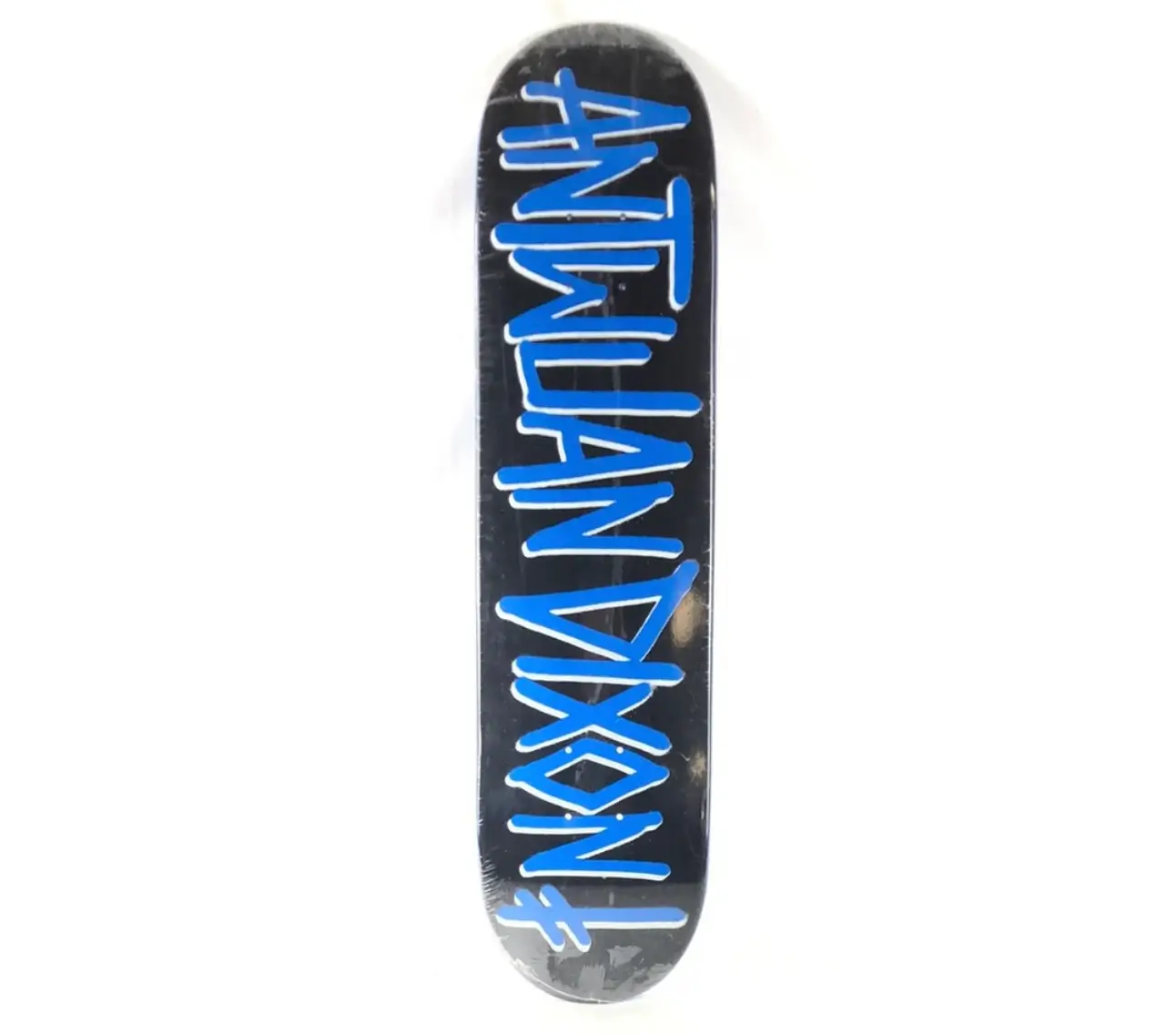
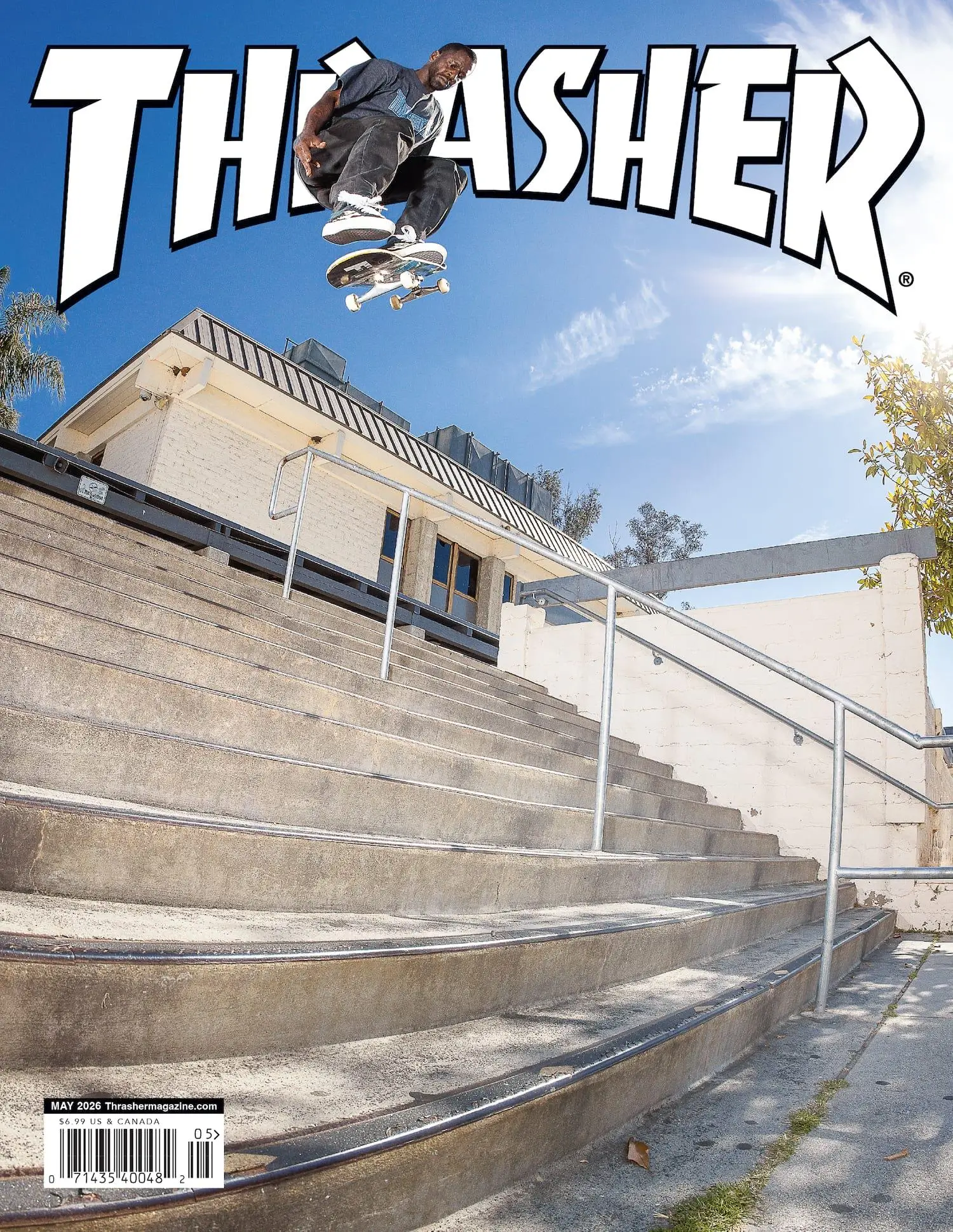
The 2026 cover of Thrasher Magazine featuring Antwuan Dixon does not need exaggeration to hold attention. It works because it is direct. A stair set, a rail, a clear sky, and a skater fully committed to the line in front of him. No layered concept, no forced narrative—just execution at a level that remains difficult to match.
This is where the tone of Dixon’s return settles. It is not dramatic, and it does not rely on symbolic weight to feel important. It is steady, controlled, and grounded in what skateboarding values most: doing something difficult, cleanly, in a real environment.
The tempo of this moment is not fast or slow. It is measured. That distinction matters. Skateboarding today often moves at a pace dictated by output and visibility. Dixon’s presence adjusts that pace slightly—not by resisting it outright, but by refusing to be shaped by it.
View this post on Instagram
inchoate
From the beginning, Dixon’s skating stood out for its clarity. There was no excess movement, no hesitation in approach, no visible overthinking. He skated directly at obstacles, handled impact efficiently, and moved on.
That clarity translated into early recognition. He was not building toward a style—he already had one. It was visible in how he approached stairs, rails, and open street lines. The board stayed close, the body stayed centered, and the timing was consistent.
What separated him was not complexity. It was decisiveness.
flow
Most careers rely on continuity. Regular video parts, steady sponsorships, and a consistent presence across media channels keep a skater visible. Dixon’s timeline does not follow that pattern.
There have been interruptions—periods where he was not actively producing content or appearing within the broader industry. In many cases, that kind of absence leads to decline in relevance or performance.
That has not been the case here.
When Dixon returns, the fundamentals remain intact. His timing, control, and approach are still present. The absence does not show up in the execution. This creates a different kind of relationship with the audience—one based less on constant exposure and more on retained capability.
view
The Thrasher cover functions as a precise marker. It confirms that Dixon is not only present, but operating at a level that meets the publication’s standards.
The trick itself is structured around a large stair set with a central handrail. This type of spot requires commitment from the start. The approach speed must be correct. The pop must clear both vertical and horizontal distance. The landing must absorb impact without loss of balance.
There is no room for adjustment once the motion begins.
In the image, Dixon is fully aligned with the line. The board is stable beneath him, and his body position indicates control rather than correction. The trajectory is clean, and the environment remains readable. The viewer understands the scale immediately.
This is what makes the image effective. It communicates difficulty without needing explanation.
show
A Thrasher cover carries weight, but it does not need to overstate it. The publication’s role has always been to document what matters within skateboarding’s core, not to reinterpret it.
Dixon’s placement aligns with that approach. The image is straightforward. There is no visual manipulation, no distraction from the action itself. The focus remains on the trick.
This kind of editorial restraint reinforces credibility. It allows the skating to define the moment rather than relying on framing or narrative to elevate it.
idea
Dixon’s style has remained consistent over time. This is not a case of adaptation to trends or shifts in presentation. His approach, posture, and timing have held steady.
He approaches obstacles with speed, but not excess. The pop is controlled, not exaggerated. The landing absorbs impact efficiently, allowing for continuation rather than pause.
These elements create a style that feels stable. It does not fluctuate with external pressures or changing aesthetics.
In a landscape where style often shifts to match visibility trends, this consistency becomes notable.
loc
Skateboarding in 2026 operates across multiple platforms. Social media drives rapid distribution. Brands expect regular output. Audiences are exposed to a high volume of content daily.
This creates a pacing issue. Individual clips have shorter lifespans. Attention moves quickly.
Dixon’s approach does not directly engage with that system. His output remains limited, but each appearance carries more focus. There is less competition within his own body of work, allowing each moment to stand on its own.
This does not slow skateboarding down overall, but it introduces variation in how attention is distributed.
compare
The trick featured on the cover is not defined by unnecessary variation. It is a direct solution to a difficult obstacle.
The stair set presents vertical drop. The rail introduces alignment constraints. The approach requires maintaining speed without deviation.
Dixon’s execution focuses on clearing the obstacle cleanly. The board remains stable. The body stays centered. The landing absorbs impact without disruption.
There is no added rotation, no stylistic embellishment that increases risk without purpose.
This approach reflects a preference for clarity over complexity. The difficulty is inherent in the spot itself.
influ
Dixon’s influence is not primarily visible through imitation of specific tricks. It is visible in how skaters approach their own lines.
Younger skaters adopt elements of his decisiveness. They approach obstacles with less hesitation, commit earlier, and maintain speed through impact.
These are subtle shifts, but they affect performance across the board. They change how lines are built and how spots are approached.
This form of influence is less visible but more integrated into the culture.
alignment with current trends without adjustment
There is a current emphasis on raw street skating. Spots are less curated, filming is less polished, and the focus has shifted back toward direct execution.
Dixon’s skating aligns with this trend, but not because of adaptation. His approach has always matched this framework.
This positions him as a stable reference point. While others adjust to the trend, he remains unchanged.
indie
The skate industry today includes structured sponsorships, global distribution, and integrated media strategies. Many skaters operate within these systems to maintain visibility and financial support.
Dixon’s position is less defined by these structures. He operates within the industry but does not rely on constant alignment with it.
This creates a level of independence. His appearances are not tied to campaign cycles or scheduled releases. They occur when the work is ready.
This independence reduces predictability but increases authenticity.
fwd
Still photography captures a single moment without sequence. It requires the image to communicate the full action.
The Thrasher cover achieves this. The viewer can read the approach, the execution, and the scale without additional context.
This form of documentation holds over time. It does not rely on replay or extended viewing. The moment remains fixed.
For Dixon, whose presence has not been continuous, this type of documentation reinforces permanence.
recept
The cover reaches multiple audiences simultaneously. For those familiar with Dixon’s earlier work, it confirms continuity. For newer viewers, it introduces him through a clear example of high-level execution.
The lack of complexity in presentation allows the image to function without explanation. The difficulty is evident. The style is visible.
This broad accessibility increases the impact of the moment.
resil
Dixon’s career includes challenges, but the current moment does not center them. The focus remains on performance.
This approach avoids over-framing the narrative. It allows the work itself to define relevance.
Resilience, in this context, is not highlighted. It is implied through continued capability.
sum
Antwuan Dixon’s story in 2026 does not require amplification. It is defined by measured execution, consistent style, and a return that holds without excess framing.
The Thrasher cover reflects these qualities directly. It presents a clear moment of performance within a broader landscape that often moves too quickly to hold onto any single image.