iPhone Unfolds: Apple’s Vision for a Pocket-Sized Tablet

January 12, 2026
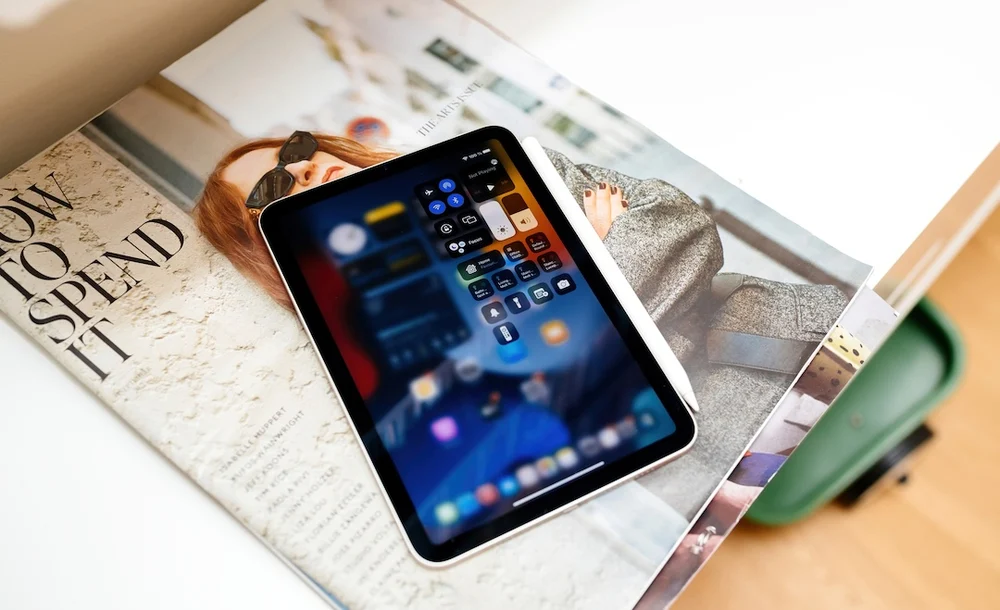
For years, the idea of a foldable iPhone has hovered at the edges of Apple discourse—rumored, patented, debated, and endlessly delayed. While competitors rushed foldable devices to market, Apple chose restraint, watching the category mature before committing. Now, as reports suggest Apple’s foldable iPhone may unfold into something closer to an “iPad mini” than a conventional phone, the company’s strategy begins to make sense. This isn’t about copying existing foldables. It’s about redefining what a phone becomes when it expands.
If Apple does enter the foldable market, it likely won’t frame the device as a novelty. Instead, it would present it as a natural extension of the Apple ecosystem—one device that quietly blurs the boundary between iPhone and iPad without forcing users to rethink how they work, read, watch, or create.
why
Foldable phones have existed long enough to prove both their appeal and their flaws. Early devices impressed with spectacle but struggled with durability, thickness, battery life, and software optimization. Creases became talking points. App scaling felt improvised. Many foldables felt like two phones stitched together rather than a single coherent product.
Apple’s history suggests this waiting was intentional. The company rarely enters a category first. Instead, it arrives when it believes the technology can support an experience aligned with its design philosophy. The iPhone wasn’t the first smartphone. The iPad wasn’t the first tablet. In both cases, Apple focused on integration rather than experimentation.
A foldable iPhone that opens into an iPad mini–like form factor follows that pattern. Rather than chasing novelty, Apple appears to be asking a deeper question: what should a foldable device actually be good at?
Samsung unveiled a creaseless foldable display at CES.
This technology is expected to be used in the foldable iPhone launching this year. pic.twitter.com/j29FoCEoDi
— AppleLeaker (@LeakerApple) January 6, 2026
stir
Most existing foldable phones prioritize narrow outer displays and tablet-like interiors aimed at multitasking. Apple’s rumored approach suggests something more refined. An unfolded display roughly equivalent to an iPad mini would position the device not as a productivity gimmick, but as a true hybrid.
The iPad mini has always occupied a unique place in Apple’s lineup. It’s beloved by readers, pilots, doctors, note-takers, and casual creators—users who value portability without sacrificing screen real estate. Translating that experience into a foldable iPhone would instantly give the device purpose.
Instead of asking users to adapt to a new form factor, Apple would simply offer them more of what already works: a familiar iOS experience that expands when needed and disappears into a pocket when it doesn’t.
idea
Most foldables force trade-offs. Outer screens feel cramped. Inner screens feel fragile. Weight increases. Apple’s rumored device flips that logic. The fold becomes a feature of expansion rather than accommodation.
Closed, the device functions as a standard iPhone—full-sized, usable, uncompromised. Opened, it becomes something else entirely: a compact tablet optimized for reading, sketching, watching, editing, and light productivity.
This approach reframes folding as an enhancement rather than a necessity. Users wouldn’t need to justify the fold. They would simply open the device when they want more space.
where
Hardware alone won’t make Apple’s foldable compelling. Software will. Apple already controls two operating systems—iOS and iPadOS—that exist on a continuum. A foldable device that dynamically shifts between the two experiences could feel uniquely fluid.
Imagine apps that naturally reflow as the device opens. Messages expands from a vertical chat view into a split-pane conversation hub. Safari shifts from single-column browsing to a tablet-style interface. Notes becomes a canvas. Photos turns into a light editing suite. None of this requires inventing new behaviors—it simply requires scaling existing ones intelligently.
Apple has spent years refining adaptive interfaces across screen sizes. A foldable iPhone unfolding into an iPad mini–sized display would allow those investments to finally converge into one device.
equip
An unfolded display approaching iPad mini dimensions invites another question: input. Apple Pencil support would instantly transform the device’s identity. Suddenly, this isn’t just a phone that folds—it’s a pocketable sketchbook, notebook, and markup tool.
Apple Pencil integration would differentiate Apple’s foldable from competitors in a meaningful way. It would appeal to artists, students, designers, and professionals who already rely on iPad minis for annotation and ideation. The idea of carrying one device instead of two would feel like liberation rather than compromise.
Even limited Pencil functionality—quick sketches, note-taking, document markup—would dramatically expand how users think about what an iPhone can be.
flow
One of the biggest criticisms of foldable devices remains battery performance. Larger screens demand more power, and folding mechanisms eat into internal space. Apple’s advantage lies in efficiency rather than brute force.
Apple Silicon has already demonstrated how performance-per-watt can outperform larger batteries in competitor devices. If Apple can apply similar efficiency principles to a foldable iPhone, the device may avoid the battery anxiety that plagues many foldables today.
Thickness, too, will matter. Apple is unlikely to ship a device that feels bulky or awkward when closed. If the folded device approaches the thickness of current iPhones—or only slightly exceeds it—the appeal multiplies. Apple understands that comfort matters as much as capability.
sustainable
The crease has become the visual shorthand for foldables. Apple will almost certainly attempt to minimize or eliminate it as much as physics allows. Whether through new hinge designs, layered display technology, or tension distribution, Apple’s focus will be on making the fold feel invisible in daily use.
Durability is equally critical. Apple cannot afford a high-profile failure in a category already associated with fragility. Expect conservative material choices, extensive testing, and a design that prioritizes longevity over spectacle.
Apple’s foldable won’t be marketed as experimental. It will be presented as dependable.
redefine
Apple has historically resisted aggressive multitasking on iPhones, preferring focus over fragmentation. A foldable device unfolding into an iPad mini–like display offers a natural compromise.
Multitasking becomes contextual rather than forced. You don’t split screens on a phone. You unfold it. Suddenly, two apps side by side feel appropriate rather than cramped. The behavior matches the physical transformation.
This subtlety aligns with Apple’s design ethos. Features emerge when they make sense, not because they’re technically possible.
show
The most compelling argument for Apple’s foldable isn’t the device itself—it’s the ecosystem around it. A foldable iPhone that replaces both a phone and an iPad mini simplifies decisions, accessories, and workflows.
AirDrop, iCloud, Continuity, Universal Control—all of these features become more powerful when one device can shift roles seamlessly. You sketch on the unfolded display, then close it and answer a call without switching hardware. You read on the couch, then pocket the same device and leave the house.
This convergence is where Apple thrives. It’s not about offering more features. It’s about reducing friction.
who
Apple’s foldable iPhone won’t be for everyone, at least not initially. It will likely target users who already live between devices: iPhone power users who also rely on iPad minis for reading, note-taking, or light work.
Professionals who value portability, creatives who want spontaneity, and travelers who hate carrying multiple devices may find this form factor irresistible.
As prices inevitably come down over time, the appeal could widen. But at launch, this will be a premium device designed to demonstrate possibility rather than dominate volume.
fwd
The iPhone has matured. Annual upgrades have become incremental. Cameras improve, displays refine, processors accelerate—but the fundamental shape remains unchanged. A foldable that expands into an iPad mini–like experience would represent the most meaningful evolution of the iPhone in over a decade.
Not a reinvention, but an expansion.
Rather than asking users to adopt something entirely new, Apple would be offering a familiar experience that simply unfolds when you need more space. That restraint may be precisely what allows the device to succeed where others have struggled.
impression
Apple’s foldable iPhone isn’t about chasing trends. It’s about convergence—bringing together two beloved product categories into a single, coherent object. If executed with Apple’s characteristic patience and polish, a foldable iPhone that opens into an iPad mini–like form factor could quietly reset expectations for what personal devices should do.