Apple’s Foldable iPhone: A Prototype Caught Between Precision and Possibility

April 8, 2026
2 minutes ago
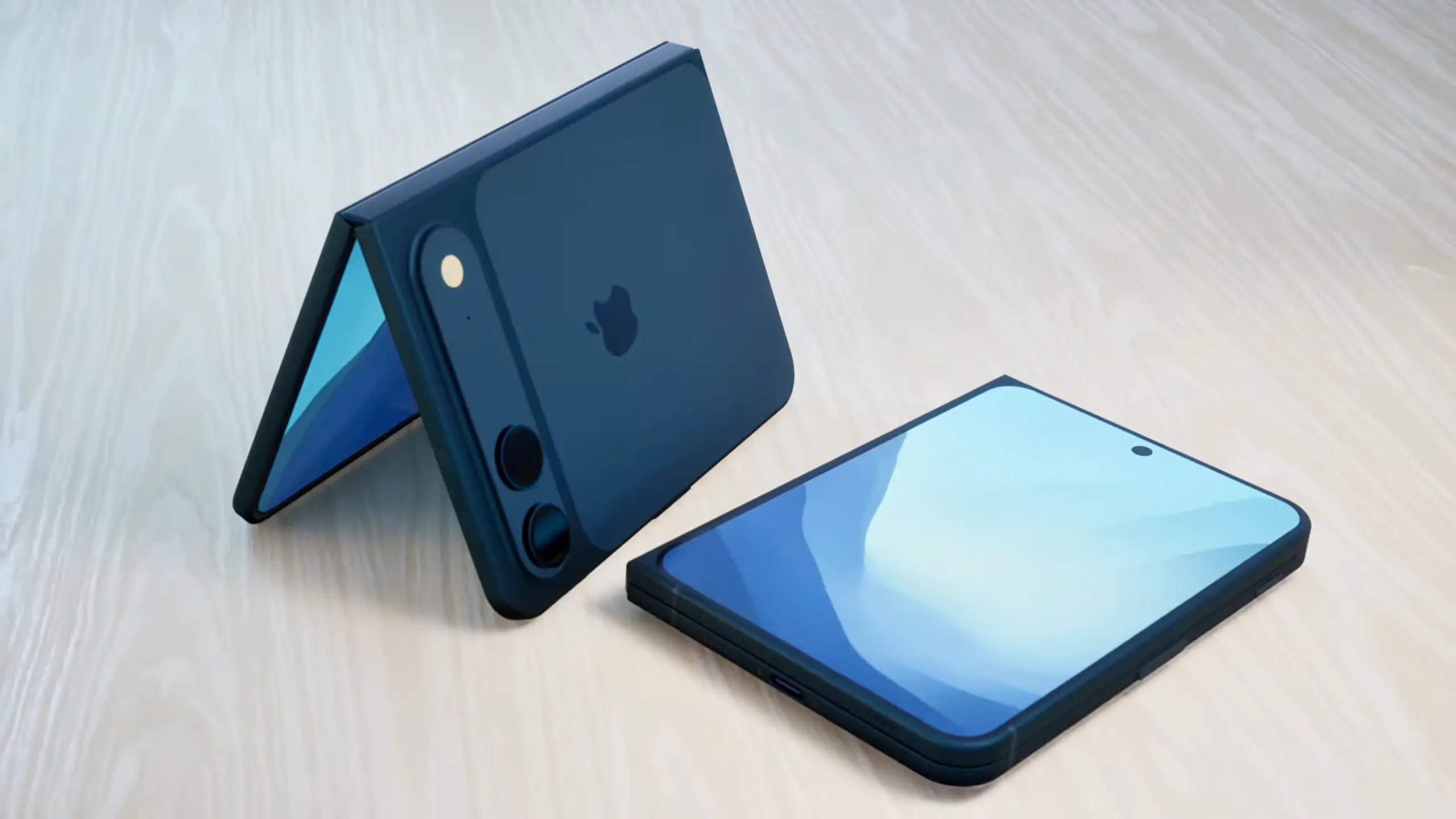
The first credible glimpse of Apple Inc.’s long-rumored foldable iPhone hasn’t arrived through a keynote or a controlled reveal. It has surfaced through something quieter, more industrial, and arguably more revealing: a dummy unit. Shared by leaker Sonny Dickson, these physical mockups do not simply preview a product. They outline a design position, a hesitation, and a recalibration that has been building inside Apple for years.
What emerges is not a finished object, but a direction. One that feels unusually deliberate.
Exclusive First Dummies of what the final size of the iPhone Fold, iPhone 18 Pro and iPhone 18 Pro Max will look like. pic.twitter.com/X9P9uBK12p
— Sonny Dickson (@SonnyDickson) April 7, 2026
stir
In Apple’s product cycle, dummy models carry a specific kind of authority. They exist for accessory makers, for case manufacturers, for the invisible ecosystem that prepares before the official announcement ever happens. That means dimensions are rarely arbitrary. Even when details remain unresolved, the silhouette tends to be truthful.
Placed beside contemporary iPhone models, the foldable device appears immediately distinct. It is shorter than expected, wider than anticipated, and oriented in a way that disrupts the familiar vertical logic of the modern smartphone. The proportions suggest a shift away from the tall, book-style fold popularized by competitors, toward something more horizontal, more grounded, and arguably more usable in everyday contexts.
This is where the design becomes interesting. Apple does not seem interested in replicating what already exists. Instead, it appears to be questioning the premise itself.
The rumored internal display, approaching tablet territory, paired with a smaller external screen, reinforces that idea. This is not simply a phone that unfolds. It is a device that repositions itself depending on how it is held, read, or shared. The emphasis leans less toward spectacle and more toward continuity between states.
idea
Most foldable devices on the market prioritize verticality. They are narrow when closed and elongated when opened, creating a visual transformation that feels dramatic but not always natural. Apple’s approach, as suggested by these dummy units, moves in the opposite direction.
The wider form factor implies a different set of priorities. Video becomes more immersive without forcing cinematic compromises. Multitasking begins to resemble the logic of tablets rather than stretched phone interfaces. Even reading, typing, and casual browsing benefit from a more balanced canvas.
It is a subtle shift, but one that reframes the entire category. Instead of asking how small a tablet can fold, Apple seems to be asking how a phone can expand without losing its sense of proportion.
That distinction matters. It suggests that the foldable iPhone is being designed not as an experimental extension, but as a correction to existing compromises.
restrain
Beyond its proportions, the dummy model reveals a hardware language that feels intentionally restrained. The rear camera system appears simplified, avoiding the sprawling multi-lens dominance that has defined recent flagship iPhones. It sits quietly, almost conservatively, against a body that already carries enough visual complexity through its folding mechanism.
The construction itself hints at departure. Apple’s familiar unibody precision appears softened, likely in response to the mechanical demands of a hinge-based architecture. The possibility of a full-glass rear surface introduces both elegance and engineering tension, suggesting that material decisions are still being negotiated between durability and design continuity.
There is also ambiguity. The absence of clearly defined MagSafe elements raises questions about how Apple’s existing accessory ecosystem will translate into this new form. Whether that omission is real or simply unresolved at the dummy stage, it underscores a broader truth: this device is still being solved.
And Apple, characteristically, is taking its time with the solution.
delay
The extended timeline surrounding Apple’s foldable ambitions has often been interpreted as hesitation. These early physical previews suggest something more precise. The company is not avoiding the category. It is refining its entry point.
Foldable devices have, until now, been defined by their novelty and their compromises. Visible creases, thickness, durability concerns, and software inconsistencies have shaped public perception as much as innovation has. Apple appears to be targeting those weaknesses rather than racing to participate.
Reports of ultra-thin construction, reduced display creasing, and refined hinge mechanics point toward a device that prioritizes feel over spectacle. The ambition is not to impress at first glance, but to sustain usability over time.
This is consistent with Apple’s broader design philosophy. It rarely introduces a category at its inception. It waits, observes, and then attempts to reframe the standard.
reveal
If the hardware dummy models tell us how the device might look, they also highlight what remains unseen. Software will ultimately determine whether this form factor succeeds.
A wider internal display demands more than simple scaling. It requires rethinking how applications behave, how multitasking feels, and how users transition between folded and unfolded states without friction. Apple’s advantage lies here, in its ability to integrate hardware and software into a unified experience.
The foldable iPhone is likely to function less as a novelty and more as a fluid interface. Something that shifts roles depending on context, moving from communication device to media surface to productivity tool without announcing those transitions too loudly.
That kind of invisibility is difficult to achieve. It requires restraint, discipline, and a willingness to prioritize coherence over feature accumulation.
position
Early pricing expectations place the foldable iPhone firmly at the top of Apple’s portfolio. This is not a device designed for mass adoption in its first iteration. It is a statement piece, both technologically and culturally.
By positioning it at a premium tier, Apple creates distance. It allows the device to exist as an exploration rather than an obligation. Early adopters become participants in a new direction rather than consumers of a finalized norm.
The naming itself, still speculative, will likely reflect that positioning. Whether it arrives as an “iPhone Fold” or something more abstract, the intention will be clear. This is not a side experiment. It is a signal.
flow
What makes these dummy models compelling is not their completeness, but their intent. They do not overwhelm with radical views or aggressive reinvention. Instead, they suggest a quieter shift.
Apple appears to be entering the foldable space not to compete on spectacle, but to reorganize the conversation. By adjusting proportions, refining materials, and prioritizing usability, it reframes what a foldable device should feel like in everyday life.
There is a sense that the company has been watching the category evolve, absorbing its lessons, and waiting for the moment when it could introduce its own interpretation without inheriting its flaws.
These early models capture that moment in transition.
fin
The foldable iPhone, as seen through these leaked dummy units, is not yet a finished object. It is a negotiation between competing ideas. Portability and expansiveness. Familiarity and reinvention. Precision and possibility.
It reflects a company that is not asking whether foldable devices are viable, but how they can be made coherent.
And in that question lies the real significance of this leak. Not confirmation, not spectacle, but direction.