Saiko Joins Arnette as Ambassador in Spain

April 2, 2026
2 hours ago
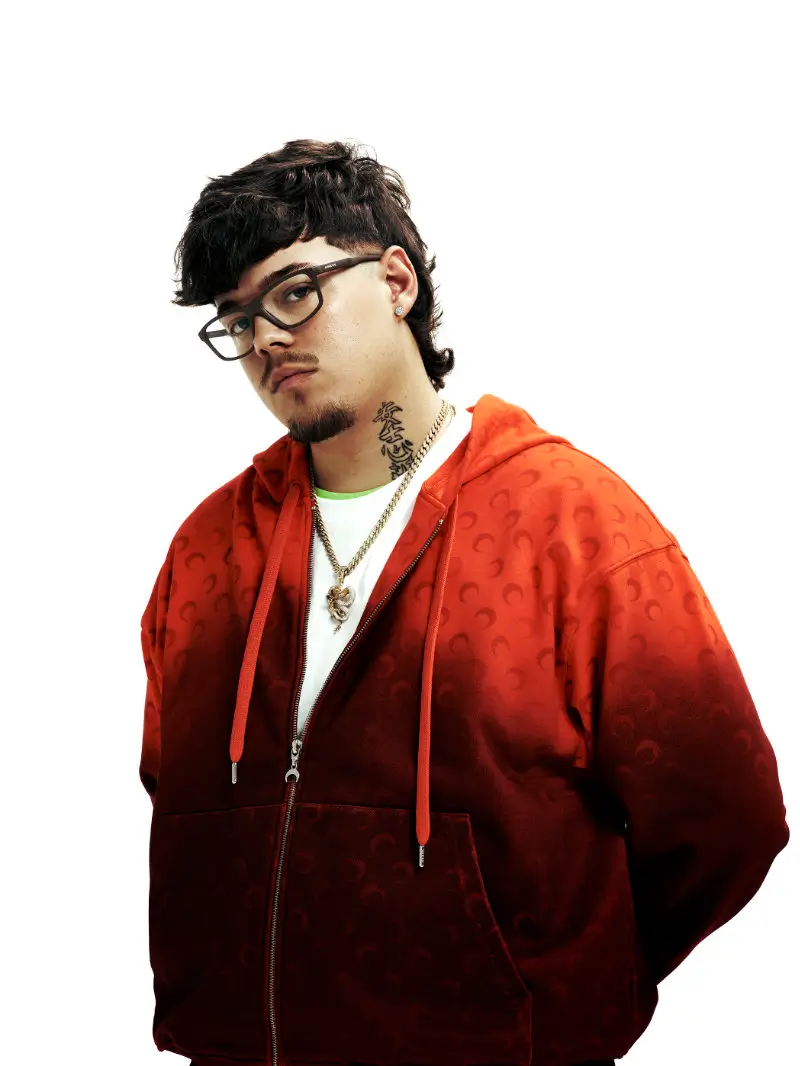
There is a distinct clarity in how Arnette approaches 2026—not through spectacle, but through calibration. The brand’s decision to appoint Saiko as its first ambassador for the Spanish market reads less like a marketing expansion and more like a cultural tuning. It is a gesture rooted in geography, identity, and the subtle architecture of influence.
Granada, where Saiko was born, has always existed slightly outside the dominant Spanish cultural axis of Madrid and Barcelona. It carries a different rhythm—historical, hybrid, emotionally textured. That Arnette chooses an artist from this terrain signals intention: a move away from centralized narratives toward something more diffuse, more lived-in.
The campaign itself follows suit. There is no heavy-handed storytelling, no elaborate conceptual scaffolding. Instead, it leans into something deliberately pared back—grain, silhouette, gesture. A refusal of overproduction in favor of presence. The images feel closer to documentation than direction, as if capturing a moment already in motion rather than constructing one for the camera.
Within this framework, the return of the Raven sunglasses becomes less about product revival and more about context. The object exists, certainly—but it is not the center. It is a conduit.
flow
The Raven silhouette occupies a precise space within Arnette’s archive. Wraparound, oval, slightly aggressive in its curvature—it belongs to a lineage of eyewear that emerged at the intersection of sport, subculture, and street identity.
Its geometry matters. The oval frame softens what could otherwise be an overly technical design, while the angled curves introduce a directional energy that resists passivity. It does not sit neutrally on the face; it frames it with intent.
Historically, wraparound sunglasses have oscillated between utility and symbolism. They began as performance objects—designed for cyclists, runners, athletes needing protection and clarity. But over time, they migrated into music, skate, and underground fashion scenes, where their exaggerated proportions and reflective surfaces became tools of anonymity and projection.
The Raven inherits this duality. It shields while revealing. It obscures the eye—traditionally the most expressive feature—while amplifying the silhouette of the wearer. In doing so, it shifts attention from interior emotion to exterior attitude.
For Arnette, reintroducing this model in 2026 is less about nostalgia than about relevance. The current fashion landscape is deeply invested in objects that carry archival weight but feel unburdened by it. The Raven fits this requirement precisely: recognizable, but not overdetermined.
idea
Saiko’s presence in the campaign arrives at a moment of transition. Positioned on the verge of a new studio album, the artist is navigating a return—both stylistic and emotional—to the origins of reggaeton. Not as imitation, but as reinterpretation.
Reggaeton itself has undergone multiple cycles of expansion and dilution. What began as a localized, rhythm-driven form rooted in Caribbean and Latin American communities has become a global commodity. In that process, certain edges were softened, certain narratives streamlined.
Saiko’s current trajectory suggests a recalibration. A willingness to re-engage with the genre’s foundational textures—its rawness, its minimalism, its insistence on bodily rhythm over polished production.
This aligns seamlessly with Arnette’s campaign language. Both artist and brand are operating within a shared vocabulary of reduction. Stripping away excess to reveal something closer to essence.
When Saiko states that glasses are “an essential accessory both in my daily life and in my shows,” the comment reads less as endorsement and more as integration. The object is not separate from the performance; it is embedded within it.
tool
The notion of eyewear as an extension of identity is not new. From the dark lenses of 20th-century jazz musicians to the mirrored shields of early 2000s pop icons, sunglasses have long functioned as both barrier and signal.
What has shifted is the context in which they operate.
In a landscape saturated with visual content—where every gesture can be recorded, shared, reframed—objects that allow for controlled visibility gain new significance. Sunglasses offer precisely this: the ability to be seen without being fully exposed.
Arnette’s positioning of itself as “an eyewear platform for self-expression” speaks directly to this condition. The brand does not present its products as mere accessories, but as instruments. Tools that mediate the relationship between the individual and the world.
The Raven, in this sense, becomes more than a design. It becomes a filter—both literal and conceptual. A way of editing how one is perceived.
For a generation that navigates multiple identities across physical and digital spaces, this function is critical. Expression is no longer singular; it is layered, iterative, often contradictory. Eyewear sits comfortably within this complexity, offering a consistent yet adaptable point of reference.
region
Spain in 2026 exists as a dynamic intersection of tradition and acceleration.
On one hand, there is a deep historical continuity—architecture, language, regional identities that resist homogenization. On the other, there is a rapidly evolving youth culture shaped by music, fashion, and digital connectivity.
Artists like Saiko operate within this tension. Their work reflects both inheritance and innovation, drawing from local contexts while engaging with global audiences.
Arnette’s entry into this space is therefore not neutral. It requires an understanding of nuance—of how style functions within different regions, how identity is negotiated across urban and peripheral environments.
By selecting Saiko, the brand aligns itself with a figure who embodies this complexity. Not an established, universally recognized icon, but a rising voice whose influence is still unfolding.
This choice suggests a long-term perspective. An investment in trajectory rather than immediate visibility.
lang
The campaign’s emphasis on a “raw and real visual narrative” deserves closer attention. In an era where authenticity is often staged, the pursuit of realness becomes paradoxical.
What does it mean to appear unfiltered when the very act of being photographed introduces mediation?
Arnette’s answer appears to lie in restraint. Rather than attempting to simulate authenticity through elaborate setups, the campaign reduces its visual vocabulary to a minimum. Natural light, minimal styling, environments that feel lived rather than constructed.
This approach does not eliminate artifice—it repositions it. The viewer is invited to engage with the image without the distraction of overt production cues. The result is a form of authenticity that is less about truth and more about plausibility.
Saiko’s presence reinforces this effect. His demeanor—composed, slightly withdrawn, attentive—resists the exaggerated performativity often associated with fashion campaigns. He does not appear to be acting; he appears to be existing.
show
Perhaps the most significant shift in Arnette’s positioning lies in its understanding of the relationship between object and wearer.
Traditionally, accessories have been framed as enhancements—additions that complete an outfit or elevate a look. Arnette proposes a different model: accessories as foundational elements of attitude.
When Saiko describes the glasses as “part of my attitude,” he articulates this shift directly. The object is not secondary; it is integral.
This perspective aligns with broader movements within fashion, where the boundaries between clothing, accessory, and identity continue to blur. What one wears is no longer simply a reflection of taste—it is an active construction of self.
The Raven, with its assertive design and cultural associations, operates effectively within this framework. It does not blend into an outfit; it defines it.
fwd
Arnette’s self-definition as a platform is a strategic move. It allows the brand to transcend the limitations of product-centric communication and engage with broader cultural narratives.
Platforms facilitate exchange. They create spaces where different forms of expression can coexist and interact. In positioning itself this way, Arnette opens the possibility for future collaborations, narratives, and evolutions that extend beyond eyewear.
The Saiko campaign can be seen as the first articulation of this approach within the Spanish market. A signal of intent rather than a conclusion.
clue
In the end, the Arnette x Saiko campaign does not attempt to dominate attention. It does something more subtle, and perhaps more enduring: it occupies space.
It situates itself within a specific cultural moment—Spain in transition, reggaeton in reflection, fashion in recalibration—and contributes to it without overwhelming it.
The Raven returns, not as a relic, but as a participant. Saiko steps forward, not as a finished icon, but as an evolving presence.
Together, they articulate a view of self-expression that is neither loud nor passive, but precise. A reminder that identity, like style, is often defined not by excess, but by choice.