Performance and Prestige: Aston Martin at the Petersen Automotive Museum

March 24, 2026


new
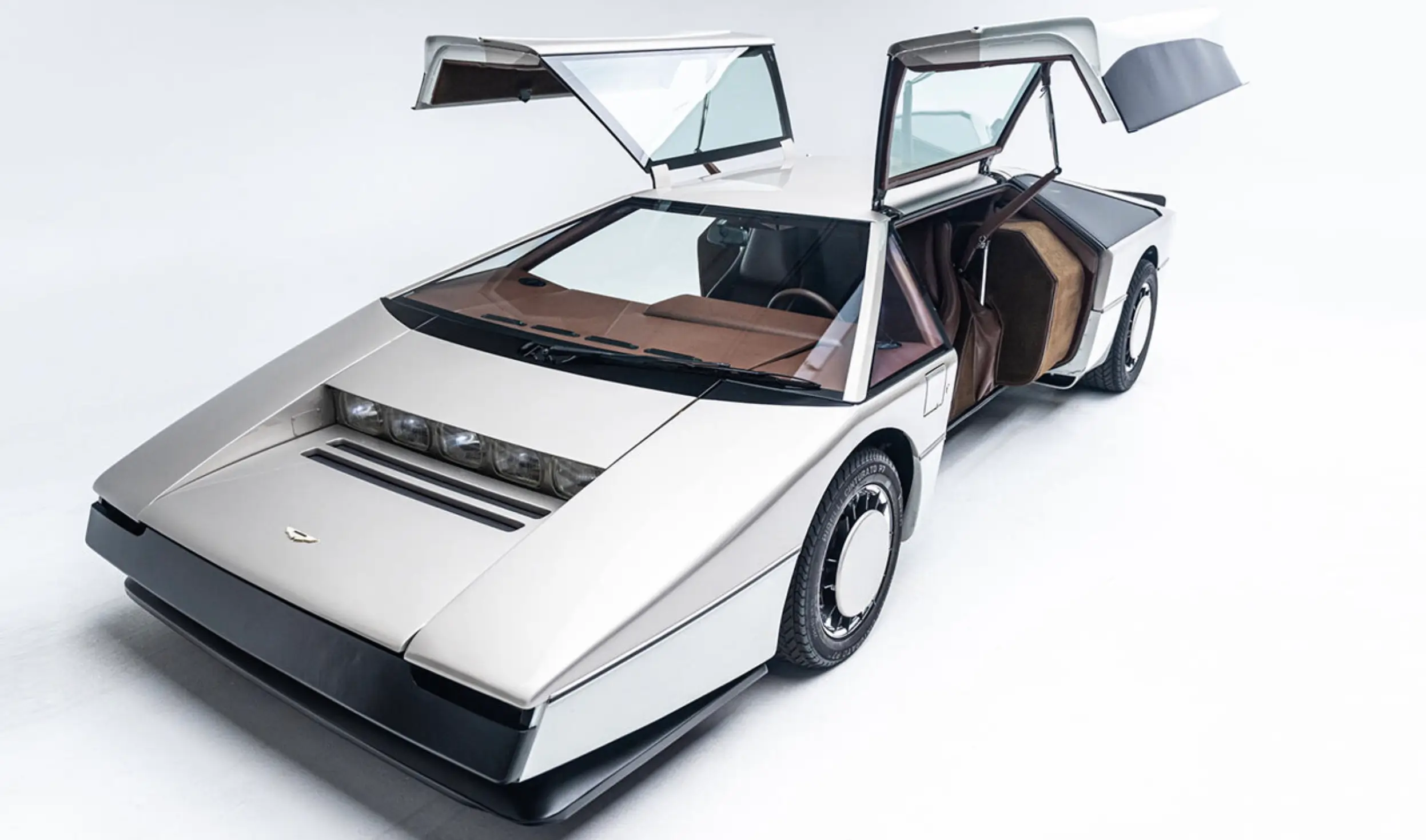
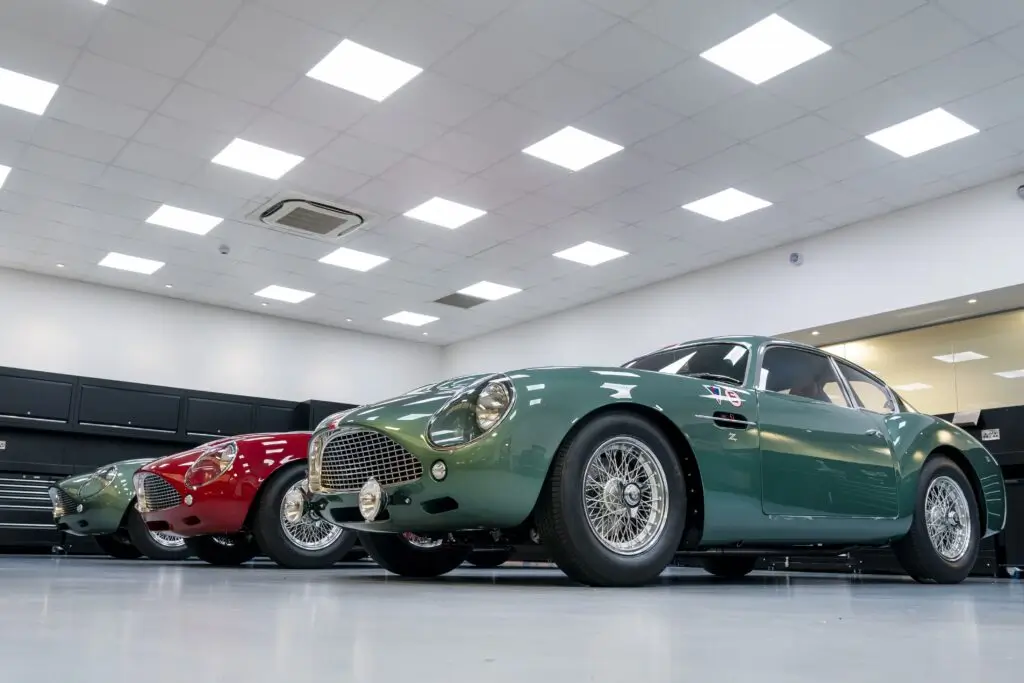
At the intersection of Wilshire Boulevard’s cultural corridor, the Petersen Automotive Museum has long positioned itself as a site where automotive history is not merely preserved but interpreted. Its exhibitions tend to move between design, engineering, and cultural narrative, framing the automobile as both object and artifact. With Performance and Prestige: A History of Aston Martin, the institution marks a notable first: a full-scale exhibition dedicated to Aston Martin.
Installed within the museum’s Meyers Gallery, the exhibition gathers more than a dozen vehicles that collectively trace the company’s trajectory from its 1913 origins to its present-day positioning within the hyper-luxury segment. Yet the exhibition is not structured as a linear timeline. Instead, it operates through a series of formal and conceptual shifts—moments where the language of speed, material, and prestige recalibrates.
What emerges is less a history of cars than a study in evolving priorities.
The exhibition begins with early models that reflect a period when automotive design was governed primarily by engineering constraint. Founded in 1913, Aston Martin’s earliest vehicles were shaped by necessity rather than expression. Surfaces were minimal, components exposed, and form followed function with little deviation.
These early cars emphasize structure. Chassis, engine placement, and mechanical accessibility dictated proportions. The aesthetic language is therefore reductive, almost austere. Yet within this restraint lies the foundation of Aston Martin’s identity: a commitment to performance as a guiding principle.
In the context of the exhibition, these vehicles are presented not as relics but as frameworks. They establish the baseline from which later developments can be understood.
View this post on Instagram
retro
The post-war period marks a decisive shift. As materials advanced and racing became a central proving ground, the emphasis moved toward aerodynamic efficiency. Vehicles such as the DBR1—one of the most significant racing cars in Aston Martin’s history—embody this transition.
Surfaces become smoother, more continuous. The body is no longer a simple enclosure for mechanical components but an active participant in performance. Airflow, weight distribution, and structural integrity converge to produce forms that are at once functional and refined.
This phase introduces a new kind of beauty—one derived from optimization. The cars are not decorative, yet they possess an inherent elegance born of precision. In the Meyers Gallery, these models are positioned to highlight their sculptural qualities, emphasizing how engineering decisions translate into visual language.
theory
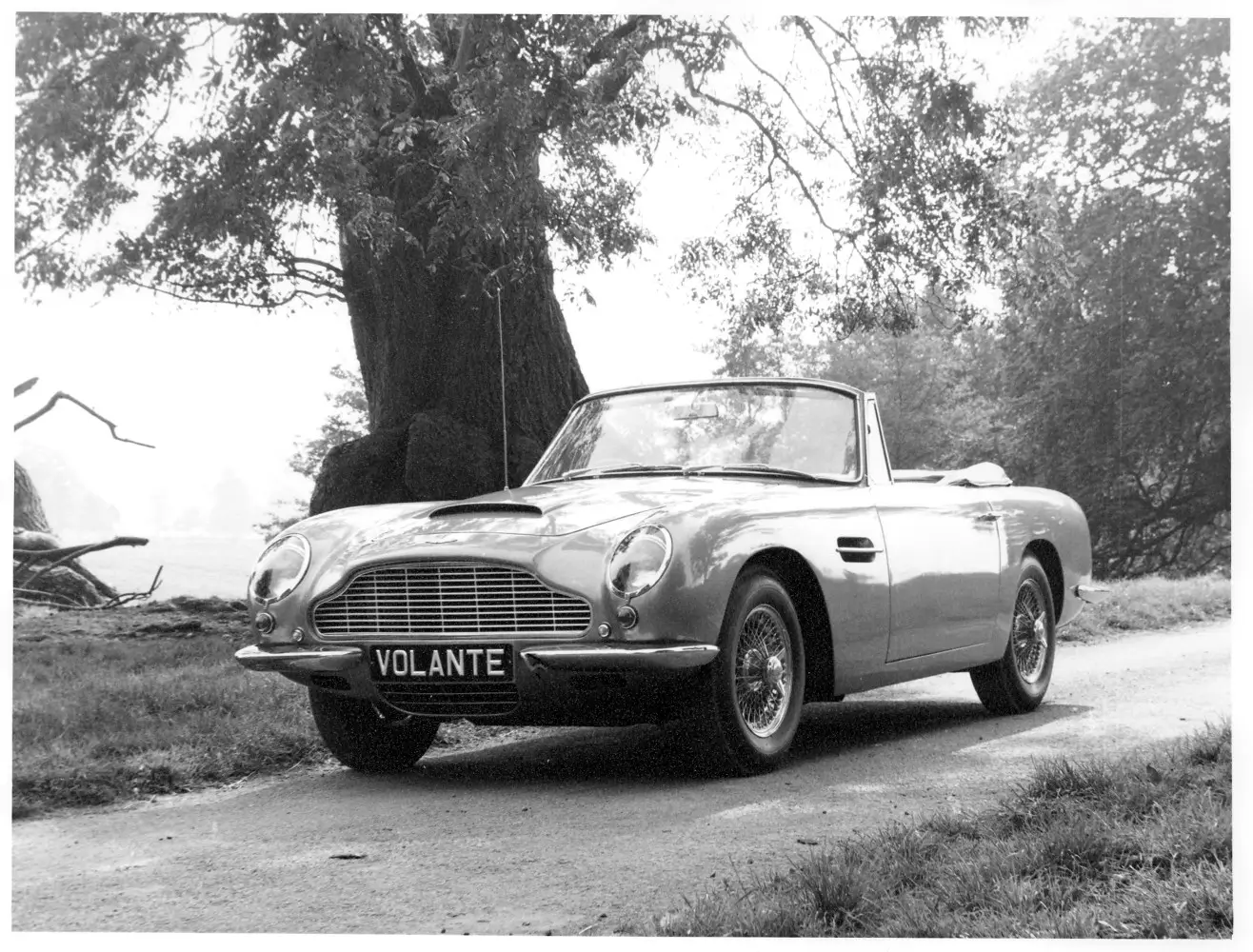
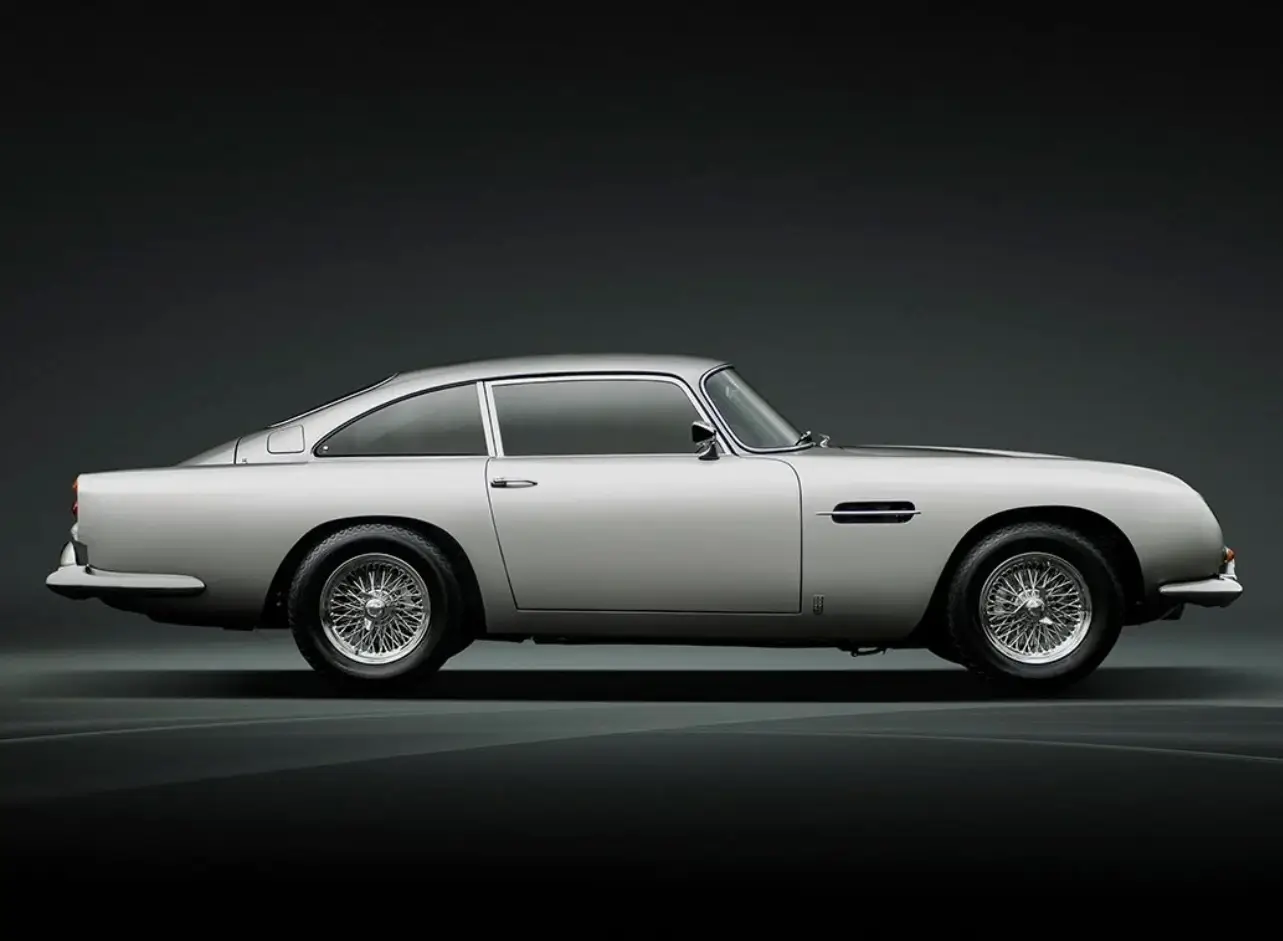
By the 1960s, Aston Martin’s identity expands beyond the racetrack. The introduction of road-going grand tourers—most notably the DB5—signals a shift toward cultural visibility. The car becomes not only a machine but a symbol.
The association with James Bond, particularly through Goldfinger, positions Aston Martin within a global imagination. The DB5’s design reflects this duality. It retains the performance-oriented DNA of its predecessors while incorporating elements of comfort, craftsmanship, and visual distinction.
Interior materials—leather, wood, polished metal—are treated with the same consideration as exterior surfaces. The car becomes an environment, not merely a vehicle. This holistic approach to design marks a turning point, one that the exhibition frames as the emergence of prestige as a defining component of Aston Martin’s identity.
mat
As the twentieth century progresses, the language of Aston Martin evolves once again. The vehicles of this period exhibit a greater emphasis on surface treatment and proportion. Designers such as Ian Callum contribute to a refinement of the brand’s visual identity, introducing cleaner lines and more cohesive forms.
The exhibition highlights this phase through models that balance tradition with modernization. There is a noticeable shift toward coherence. Where earlier designs were shaped by discrete functional requirements, these cars present a unified aesthetic vision.
Craftsmanship becomes more explicit. Panel gaps, stitching, and material transitions are treated as deliberate design elements. The car is no longer simply assembled; it is composed.
germaine
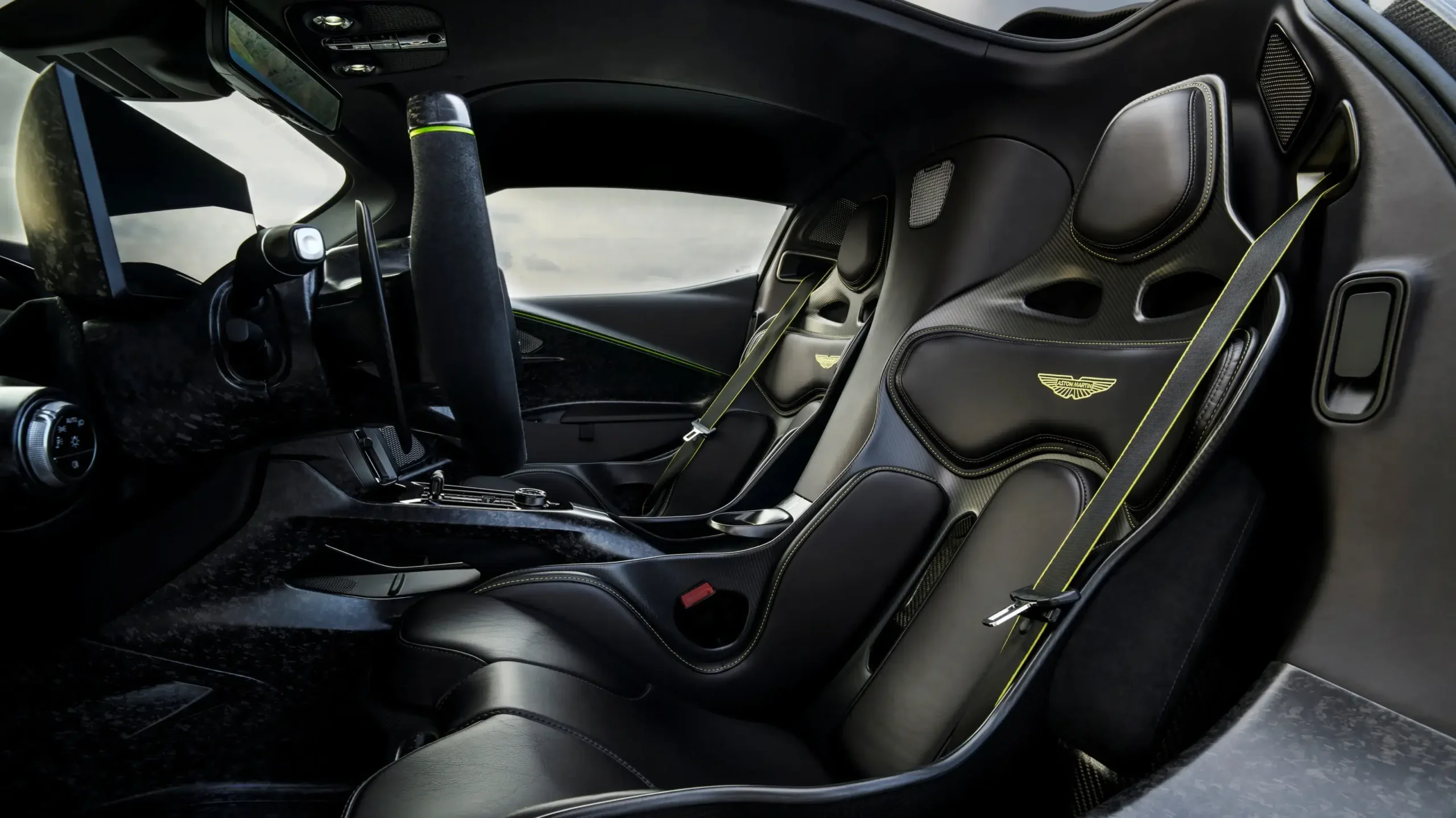
In the contemporary section of the exhibition, Aston Martin’s latest hypercars redefine the relationship between form and performance. Vehicles such as the Valkyrie represent the culmination of decades of technological and aesthetic development.
Here, the boundaries between engineering and design dissolve almost entirely. Aerodynamic structures dictate form to such an extent that traditional notions of surface give way to complex geometries. Negative space, exposed carbon fiber, and integrated airflow channels create a visual language that is both aggressive and precise.
These cars are not merely fast; they are expressions of advanced computation, simulation, and material science. Yet they retain a connection to Aston Martin’s heritage through proportion, detailing, and an underlying commitment to craftsmanship.
exhibit
The Meyers Gallery installation plays a crucial role in shaping how these vehicles are experienced. Rather than presenting the cars as isolated objects, the exhibition arranges them to emphasize continuity and contrast.
Lighting is used strategically to reveal surface qualities—highlighting the curvature of a DB5, the taut lines of a DB7, or the intricate forms of a Valkyrie. Spatial relationships between vehicles encourage comparisons across eras, allowing visitors to trace the evolution of specific design elements.
The result is an environment that functions as both gallery and narrative device. The cars are not simply displayed; they are positioned within a conceptual framework that underscores their significance.
View this post on Instagram
show
One of the exhibition’s strengths lies in its refusal to adhere strictly to chronology. While the vehicles are rooted in specific historical moments, their arrangement prioritizes thematic connections.
This approach reflects a broader shift in museum practice, where exhibitions increasingly emphasize interpretation over documentation. By focusing on design language—on how forms change, repeat, and diverge—the Petersen Automotive Museum invites viewers to engage with the cars on a deeper level.
The exhibition becomes a conversation between objects, rather than a sequence of dates.
experiment
What ultimately emerges from Performance and Prestige is a portrait of Aston Martin as an ongoing project. The company’s identity is not fixed but continually renegotiated through design, engineering, and cultural context.
From its early years of pragmatic construction to its current position at the forefront of hypercar innovation, Aston Martin has navigated a series of transitions. Each phase introduces new priorities—efficiency, comfort, visibility, precision—while retaining a core commitment to performance.
The exhibition captures this dynamic, presenting the brand not as a static entity but as a process.
straddle
In assembling more than a century of vehicles within a single gallery, the Petersen Automotive Museum creates a space where speed and craft are not opposing forces but complementary ones. The cars demonstrate that performance does not exist in isolation; it is shaped by materials, by design decisions, and by cultural expectations.
This interplay defines Aston Martin’s legacy. It is a company that has consistently sought to balance engineering rigor with aesthetic refinement, producing vehicles that are as considered as they are capable.
fin
Performance and Prestige: A History of Aston Martin does not attempt to provide a definitive account of the brand. Instead, it offers a framework through which its evolution can be understood.
By focusing on form—on how surfaces, proportions, and materials change over time—the exhibition reveals continuity within transformation. The cars differ in appearance and function, yet they share a common logic, a set of principles that persist across decades.
In this sense, the exhibition is less about Aston Martin itself than about the broader question of how design evolves. It suggests that even as technologies advance and contexts shift, certain values endure.
And in the case of Aston Martin, those values—performance, craftsmanship, and a distinctly British sense of proportion—continue to define its place within the automotive landscape.