Review: Bad Bunny to Star in Epic Caribbean Western PORTO RICO Directed by Residente

March 15, 2026
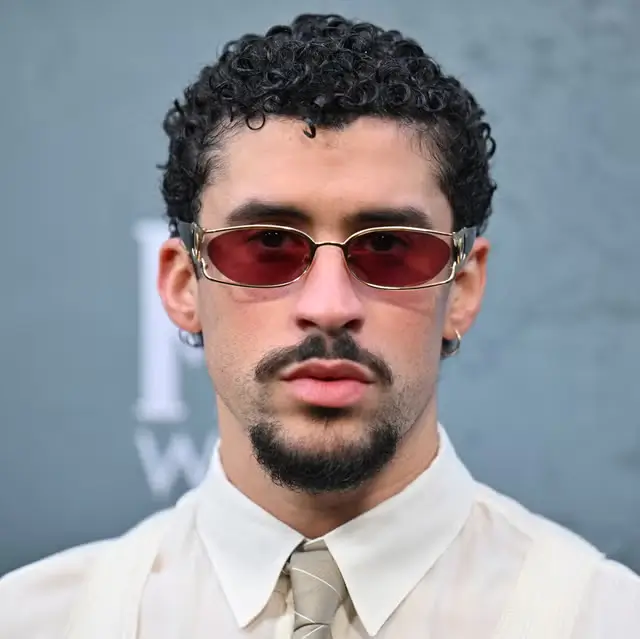
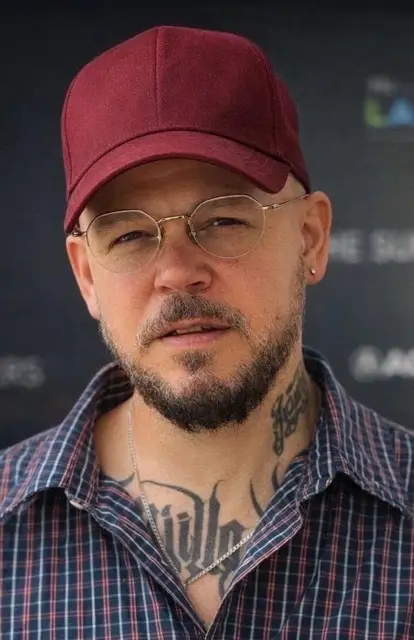
The convergence of music, cinema, and history rarely produces a moment as intriguing as the announcement of PORTO RICO, an ambitious Caribbean western and historical drama that brings together some of the most influential creative voices in contemporary Latin culture. The film will mark the directorial debut of Residente, the 34-time Grammy and Latin Grammy-winning artist whose work has long explored identity, colonial legacy, and social truth. At the center of the project stands global music icon Bad Bunny, stepping into his first leading film role.
The scale of the production suggests a cinematic event rather than a conventional debut feature. The cast includes heavyweight performers such as Viggo Mortensen, Edward Norton, and Javier Bardem—a trio of actors associated with complex historical dramas and character-driven cinema. Behind the scenes, the screenplay is co-written by Residente and Oscar-winning screenwriter Alexander Dinelaris, whose work on the Academy Award-winning film Birdman helped redefine modern cinematic storytelling.
Together, the team promises to deliver a film that blends epic historical narrative with the raw emotional intensity of the western genre, set against the turbulent backdrop of Puerto Rican history.
imagine
The term “Caribbean western” immediately sparks curiosity. Traditionally associated with the American frontier, the western genre has long been tied to dusty deserts, lone gunmen, and frontier mythology. Yet in PORTO RICO, the genre is being reframed through a completely different geographic and historical lens.
Instead of the plains of Texas or Arizona, the landscapes of Puerto Rico—lush mountains, tropical forests, and coastal towns—become the stage for a dramatic story rooted in the island’s complex past. The film is reportedly inspired by real historical events, suggesting a narrative that examines colonial tensions, cultural resilience, and political struggle.
This shift represents more than a change of scenery. It redefines the western itself.
For decades, filmmakers have experimented with regional variations of the genre. Italian directors reinvented it in the 1960s with the “spaghetti western,” while contemporary filmmakers have explored neo-western settings in modern urban or border environments. PORTO RICO continues that evolution by introducing Caribbean history into a cinematic tradition typically dominated by American frontier narratives.
The result promises to be a film that merges historical drama with the mythic storytelling associated with western cinema.
View this post on Instagram
stir
For Residente, the project represents a deeply personal milestone. Known internationally as the co-founder of the influential Latin hip-hop group Calle 13, he has spent decades crafting music that interrogates politics, colonial history, and cultural identity across Latin America.
His lyrical storytelling—often dense with historical references and flow—has earned him dozens of awards and a reputation as one of the most intellectually ambitious artists in contemporary music. Yet filmmaking has long been an aspiration.
According to Residente, the idea of creating a film about Puerto Rico has existed since childhood. The island’s history, shaped by colonial rule, migration, and resistance, has frequently been debated, misunderstood, or marginalized in mainstream narratives.
By bringing that history to the screen, he hopes to create a cinematic statement that reflects the emotional truth of Puerto Rican identity.
This transition from musician to filmmaker is not unprecedented. Artists across disciplines—from David Bowie to Prince—have explored cinema as an extension of their creative vision. Yet Residente’s case is particularly compelling because his music already operates with cinematic scale.
Many of his songs unfold like miniature films, filled with characters, landscapes, and dramatic arcs. PORTO RICO may simply be the medium that allows those instincts to expand into their fullest form.
evolve
Casting Bad Bunny as the film’s central figure is both a bold and logical choice.
Over the past decade, the Puerto Rican superstar has become one of the most influential cultural figures on the planet. His music has reshaped global pop, pushing Spanish-language reggaeton and trap to unprecedented international prominence.
But beyond music, he has steadily expanded his presence in film and television. Smaller roles in projects like Bullet Train demonstrated his screen charisma, while his music videos often blur the boundaries between short film and visual art.
PORTO RICO represents his most ambitious acting project to date.
Taking on a leading role in a historical drama requires a different kind of performance than cameo appearances or stylized music videos. It demands emotional range, narrative depth, and sustained character development.
Yet Bad Bunny’s artistic persona suggests he may be uniquely suited for such a role. His music often explores themes of identity, vulnerability, masculinity, and cultural pride—ideas that resonate strongly with the themes likely to appear in a historical epic about Puerto Rico.
If successful, the film could mark a major turning point in his career, positioning him not only as a global music icon but also as a legitimate film actor.
cast
The supporting cast elevates the project into the realm of prestige cinema.
Viggo Mortensen has built a career around emotionally intense historical roles. From medieval fantasy to modern drama, his performances often combine physical presence with psychological depth.
Edward Norton, who also serves as a producer through Class 5 Films, is known for choosing projects that examine moral complexity and social history. His involvement signals a strong commitment to narrative seriousness rather than spectacle alone.
Meanwhile, Javier Bardem brings his trademark intensity and gravitas. Few actors convey historical drama with such magnetic authority.
The combination of these performers suggests that PORTO RICO will be driven by powerful character dynamics rather than simply large-scale action sequences.
flow
The screenplay’s co-writer, Alexander Dinelaris, brings a unique pedigree to the project.
His work on Birdman—a film celebrated for its daring structure and philosophical depth—demonstrated his ability to weave psychological nuance with cinematic spectacle. That sensibility may be essential for a film attempting to balance historical realism with mythic storytelling.
Collaborating with Residente, Dinelaris helps translate the musician’s vision into a structured narrative suitable for a feature film. The partnership merges artistic intuition with seasoned screenwriting expertise.
Together, they appear to be crafting a story that is both poetic and grounded in historical reality.
show
The film’s production structure also reveals its ambition.
Residente and Erick Douât are producing through 1868 Studios, while Edward Norton and Bill Migliore produce for Class 5 Films. The project is supported by major entertainment companies including Live Nation Entertainment through its film division, Live Nation Studios.
Additional backing comes from philanthropic and cultural initiatives such as the Kwanza Jones & José E. Feliciano Initiative. Financial supporters including Mike and Sukey Novogratz further strengthen the project’s production base.
Executive producer duties include none other than Academy Award–winning director Alejandro G. Iñárritu, whose films—from Babel to The Revenant—have consistently explored global cultural narratives with epic scope.
With such a team assembled, PORTO RICO carries the infrastructure of a major international production.
sil
One of the most intriguing aspects of the project is its thematic ambition.
Edward Norton described the film as belonging to a tradition of movies that confront the darker layers beneath national myths. He referenced cinematic landmarks like The Godfather and Gangs of New York—films that explore historical violence, power struggles, and immigrant identities.
By invoking these comparisons, Norton hints that PORTO RICO may tackle uncomfortable historical truths.
Puerto Rico’s history is shaped by centuries of colonial rule, from Spanish governance to its current status as a U.S. territory. Questions of sovereignty, economic inequality, and cultural identity continue to define political debate on the island.
A historical drama set within this context inevitably touches on themes of resistance, exploitation, and national identity.
Cinema has rarely addressed these subjects at the scale suggested by PORTO RICO. If executed effectively, the film could introduce global audiences to a chapter of history often overlooked in mainstream storytelling.
mem
Another intriguing dimension of the film lies in its cultural symbolism.
Both Residente and Bad Bunny represent a generation of Puerto Rican artists who have reshaped global perceptions of Latin culture. Their music has brought Caribbean rhythms and Spanish-language lyrics into the center of international pop culture.
Yet their work has also carried strong political undertones, addressing colonial history, migration, and cultural pride.
In that sense, PORTO RICO may function not only as a historical film but also as a cultural statement. It could bridge music and cinema to create a broader narrative about Puerto Rican identity.
Films have long served as tools for cultural memory, shaping how societies understand their past. For Puerto Rico, whose history has often been overshadowed by larger geopolitical narratives, such a film holds particular significance.
fwd
The western has always been more than a genre. It is a mythological framework through which societies examine questions of power, land, and morality.
By relocating that framework to the Caribbean, PORTO RICO has the potential to redefine the genre for a new generation.
Instead of cowboys and frontier towns, audiences may encounter revolutionary fighters, colonial soldiers, and communities navigating the tensions of empire.
The landscapes themselves—mountains, jungles, and coastal settlements—could provide a visual language unlike anything traditionally associated with western cinema.
In this sense, the film might expand the definition of the western itself.
sum
The announcement of PORTO RICO arrives at a moment when global audiences are increasingly interested in stories that challenge historical narratives and highlight overlooked perspectives.
Streaming platforms and international co-productions have opened space for films that explore cultural identity beyond traditional Hollywood frameworks.
With its combination of music icons, acclaimed actors, and award-winning filmmakers, PORTO RICO appears poised to become one of the most anticipated cultural projects connected to Puerto Rican storytelling.
For Bad Bunny, it marks a new chapter in an already extraordinary career. For Residente, it fulfills a lifelong creative vision.
And for audiences, it promises something rare: a historical epic that blends Caribbean history with the mythic language of the western.
If the film succeeds, it could redefine how global cinema tells the story of Puerto Rico—transforming history, music, and mythology into a single cinematic narrative.


No comments yet.