Baklava x New Balance 1890 “Cyborg Tears”

January 23, 2026
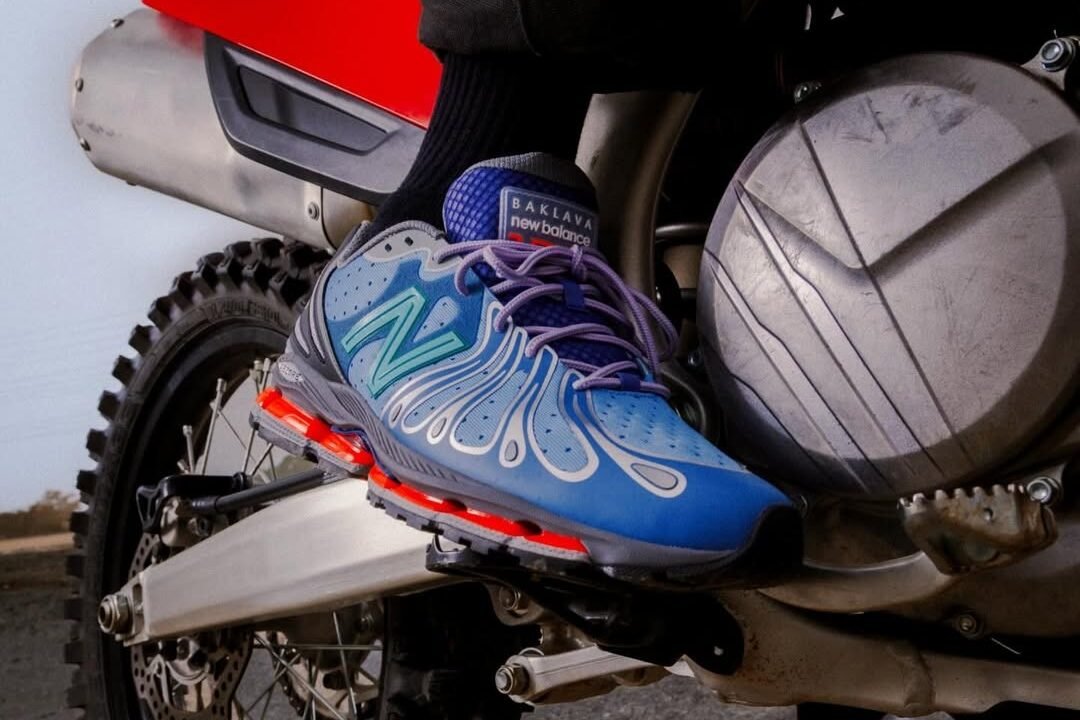
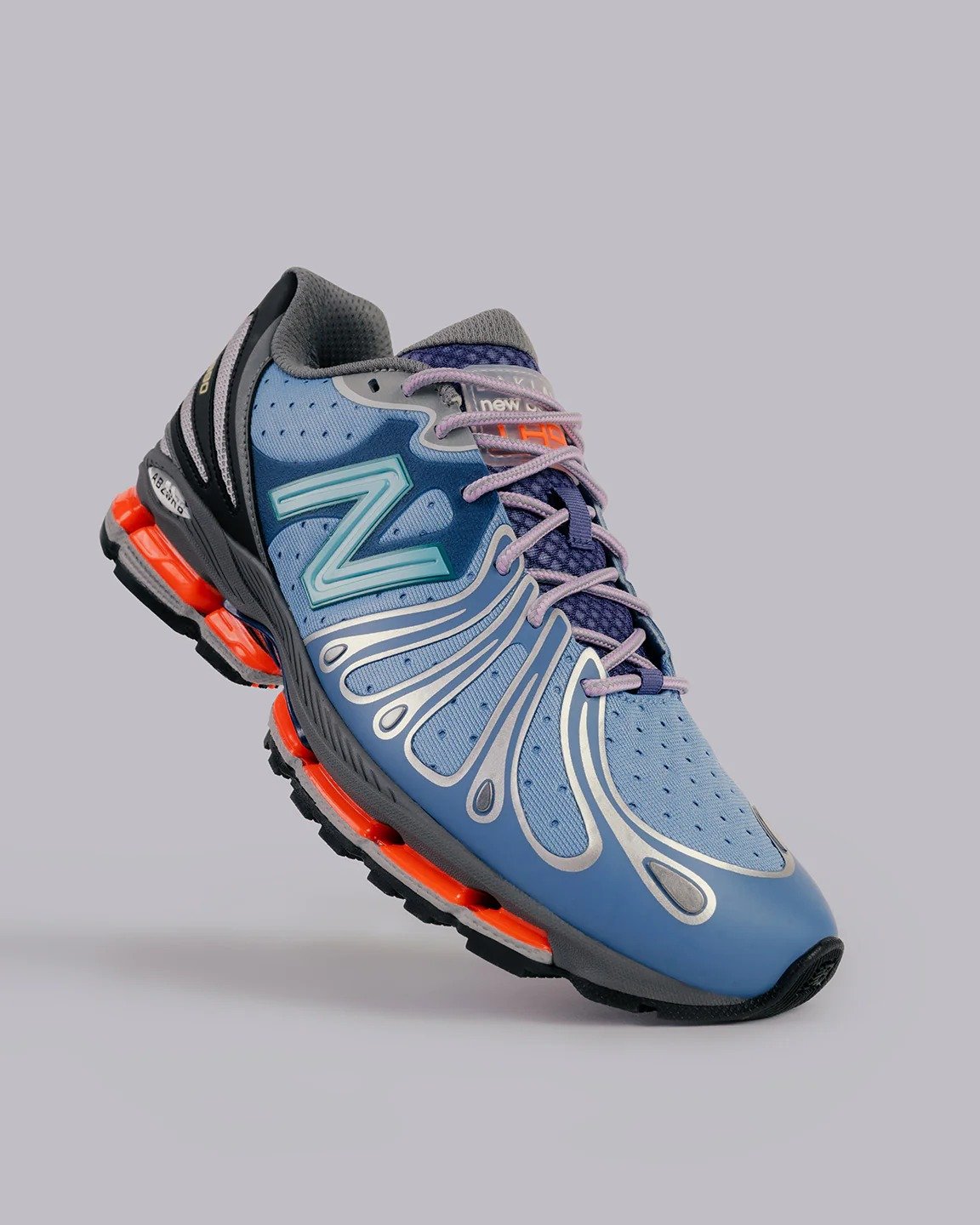
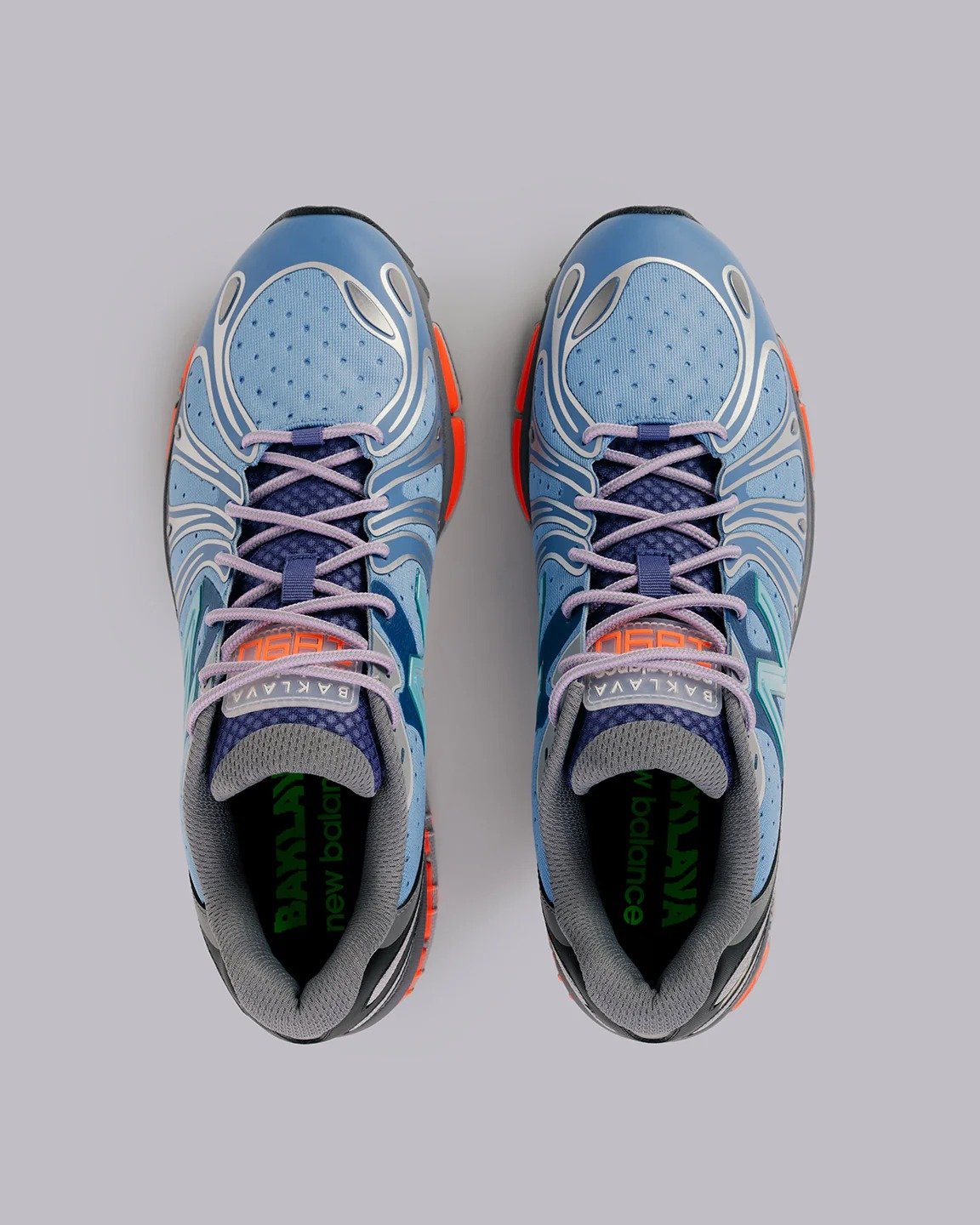
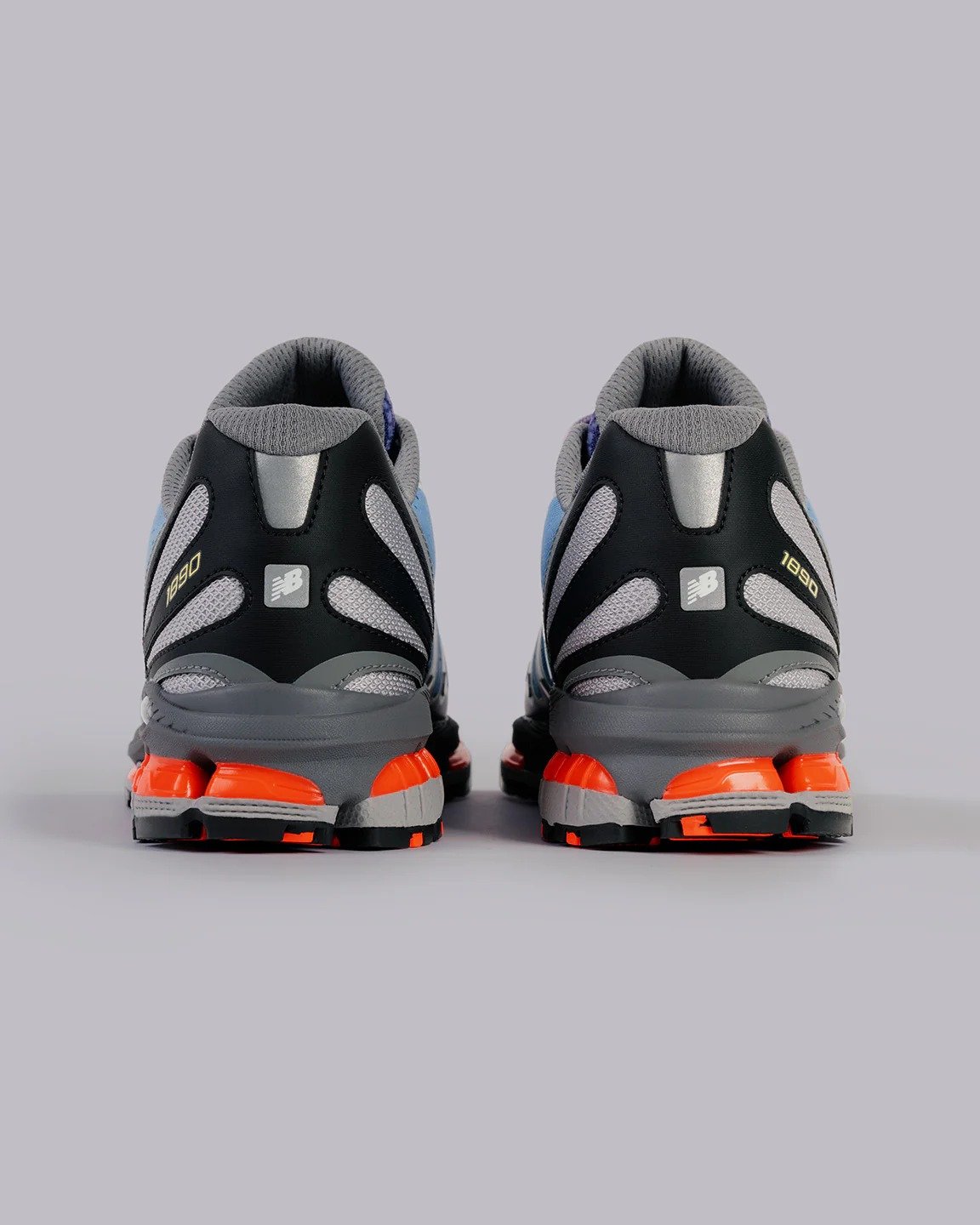
When Bronson’s Baklava imprint links with New Balance, the result is rarely subtle. The Queens-born polymath—rapper, chef, stylist, and walking mood board—has turned his food-obsessed streetwear label into one of the more eccentric collaboration vehicles in contemporary footwear. With the Baklava x New Balance 1890 “Cyborg Tears,” that sensibility reaches its most surreal articulation yet: a sneaker that feels less like a retro runner revival and more like an artifact from a speculative sci-fi pantry, equal parts culinary fantasy, biomechanical myth, and performance-heritage tribute.
The 1890 silhouette itself is new enough to feel unburdened by decades of archival expectation, yet clearly anchored in New Balance’s late-20th-century design grammar. Mesh underlays, sculpted midsoles, and layered synthetics form the technical baseline. Baklava’s intervention, however, transforms that baseline into something operatic—an object narrative that reads as much as it wears.
phil
Bronson’s Baklava brand has always trafficked in contradictions: indulgence and discipline, humor and high craft, nostalgia and futurism. Previous New Balance collaborations leaned into jewel-tone palettes, ornate details, and food-coded references that felt lavish without becoming kitsch. “Cyborg Tears” pushes that dialectic further. The name alone conjures chrome skeletons shedding emotion, a poetic image that sets the tone for a shoe designed around reflective surfaces, iridescent finishes, and strangely tender color transitions.
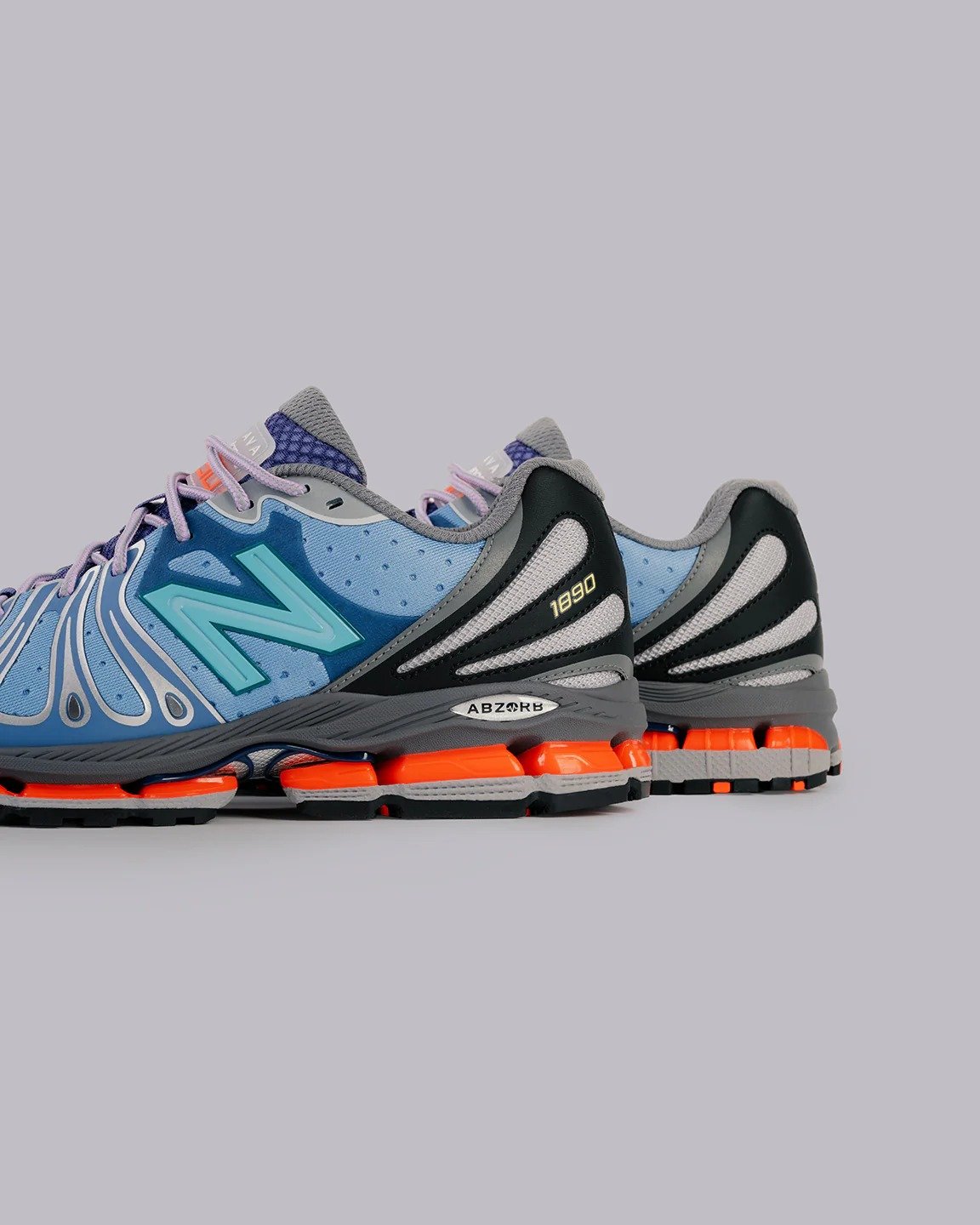
Rather than leaning purely into metallic futurism, Baklava offsets the coldness implied by “cyborg” with organic, almost bruised hues—lavenders, soft blues, cloudy greys, and pearlescent whites that appear to melt into one another across the upper. The effect is less Terminator, more melancholic android drifting through a neon dusk.
play
At first glance, the upper reads as a collage of technical textiles. Open-cell mesh panels breathe across the vamp and quarters, anchoring the shoe in performance lineage. Over them, layered synthetics oscillate between matte and gloss, creating a push-pull between utilitarian restraint and sci-fi spectacle. Certain overlays shimmer subtly under light, suggesting oil-slick coatings or anodized metal—never mirror-bright, but luminous enough to feel alien.
Translucent elements appear in strategic zones, particularly around the lace stays and heel counters, adding depth and a sense of internal structure. It is the kind of detailing that rewards close inspection: edges that catch light differently, seams that look laser-cut rather than stitched, gradients that fade as though airbrushed rather than dyed.
Baklava branding is present but not domineering. Small embroidered or debossed logos nestle into panels, while tongue tags and insoles carry more overt co-signing. The restraint is intentional; the shoe’s surfaces do most of the talking.
color
“Cyborg Tears” avoids the trap of monochrome futurism. Instead, the palette behaves emotionally. Cool purples drift into icy blues; chalky off-whites temper steel greys; faint blush undertones surface in unexpected places, like circuitry warming under skin. Even the midsole contributes to the narrative, rendered in layered creams and muted silvers that resemble stratified foam or geological sediment rather than a single block of EVA.
Outsole sections introduce darker contrast—smoky charcoal or inky navy—grounding the ethereal upper and ensuring the shoe still reads as wearable rather than purely conceptual. The overall composition feels deliberate, painterly, and slightly unhinged in the best way: a sneaker that looks like it was mood-boarded from anime stills, aerospace schematics, and late-night dessert spreads.
life
Under the theatrics sits a platform clearly engineered for contemporary wear. The 1890 midsole geometry suggests a blend of responsive foam and stabilizing structures—stacked layers that promise comfort for daily rotation while maintaining the sculptural heft New Balance fans have come to expect from modern runners. Heel beveling and forefoot flares add visual aggression, giving the silhouette a forward-leaning stance even at rest.
Stability elements—likely TPU shanks or internal plates—peek through semi-transparent windows, reinforcing the biomechanical motif. Whether intended for actual running or purely urban mileage, the shoe signals technical credibility, not costume.
This duality is central to the collaboration’s appeal. “Cyborg Tears” is eccentric, but not fragile; expressive, but not precious. It sits comfortably in the growing category of sneakers that treat performance design as a canvas for storytelling rather than something to be hidden beneath lifestyle veneers.
arc
Compared with earlier Baklava releases—often lush, saturated, and overtly baroque—the 1890 feels colder, more introspective. Where previous pairs celebrated abundance and flavor, “Cyborg Tears” leans into mood and atmosphere. It suggests a maturation of Bronson’s sneaker persona: still maximalist, but now filtered through speculative fiction rather than Renaissance still life.
For New Balance, the collaboration continues a strategic pattern. By pairing experimental silhouettes with culturally distinct partners, the brand keeps its catalog future-facing while avoiding pure nostalgia mining. The 1890 becomes a vehicle for testing how far the audience is willing to follow into stranger aesthetic territory, and Baklava proves to be an ideal co-pilot.
culture
In an era where sneaker drops are increasingly about narrative as much as materials, “Cyborg Tears” lands squarely in the discourse-driven tier of releases. The name invites interpretation, the colorway photographs beautifully under variable light, and the layered construction begs for macro shots across social feeds. It is engineered for the screenshot economy without sacrificing in-hand intrigue.
Collectors will likely be drawn to its singularity. This is not a colorway that blends quietly into a rack of grey runners; it demands its own shelf space. At the same time, the relatively subdued brightness—no blinding neons, no cartoonish contrasts—keeps it versatile enough to style with technical outerwear, washed denim, or even tailored street silhouettes.
sum
The Baklava x New Balance 1890 “Cyborg Tears” is less a straightforward collaboration and more a mood piece rendered in foam, mesh, and polymer. It reframes futurism through softness, pairing mechanical forms with emotionally charged color transitions. In doing so, it expands both partners’ vocabularies: Baklava moves deeper into speculative aesthetics, while New Balance continues to prove that innovation does not require abandoning its design DNA.