Ben Stanwix and Xhanti Zwelendaba — CASA 212 (2025)

March 4, 2026
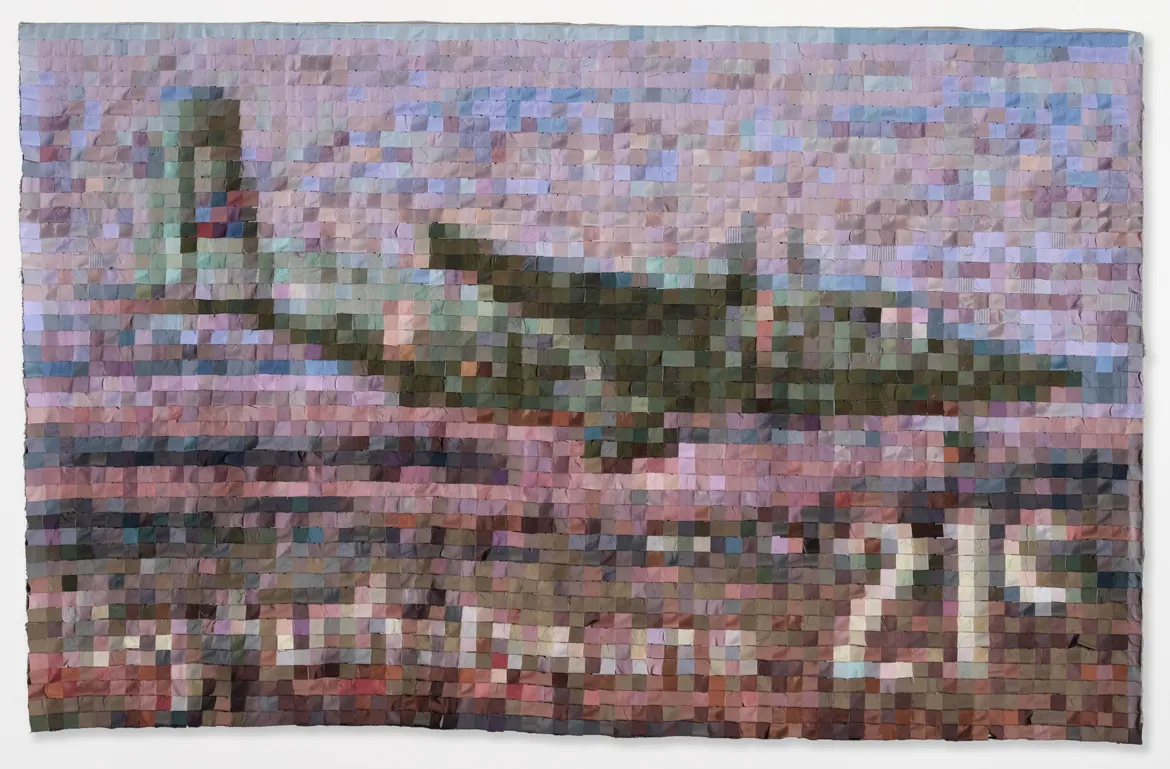
In the expanding landscape of contemporary art, textiles have reclaimed a central role as both medium and message. No longer relegated to craft or decorative arts, fabric-based works now operate as powerful vehicles for storytelling, identity, and spatial exploration. The connective piece CASA 212 (2025) by Ben Stanwix and Xhanti Zwelendaba embodies this evolution. Measuring an imposing 7 feet 4¼ inches by 11 feet 9⅜ inches, the artwork merges assorted fabrics with cotton canvas to create a monumental textile composition that straddles the boundary between painting, sculpture, and architectural intervention.
The work is less an image than an environment—one that invites viewers to reconsider how material, color, and cultural memory intertwine. Through layered fabrics and carefully orchestrated textures, Stanwix and Zwelendaba construct a visual language that reflects migration, domesticity, and collective identity. CASA 212 does not merely hang on a wall; it occupies space with the quiet authority of a lived structure.
flow
The surge between Ben Stanwix and Xhanti Zwelendaba represents the intersection of two complementary artistic trajectories.
Stanwix is known for his interest in spatial composition and structural abstraction. His practice often investigates how materials traditionally associated with architecture—canvas, wood, industrial textiles—can be transformed into painterly surfaces. His works frequently explore rhythm and geometry, treating color fields like structural beams that organize visual space.
Zwelendaba, meanwhile, approaches textiles from a perspective rooted in cultural storytelling. Drawing inspiration from African textile traditions, diasporic histories, and contemporary urban aesthetics, his works explore identity through fabric assemblage. For Zwelendaba, textiles function as carriers of memory: garments, cloth remnants, and woven fragments become symbolic archives of lived experience.
When these two artists partner, the result is a hybrid language that blends architectural precision with cultural narrative. In CASA 212, their methods converge into a single expansive textile surface that balances formal abstraction with emotional resonance.
idea
The title CASA 212 immediately suggests themes of home, shelter, and domestic identity. “Casa,” meaning “house” in Spanish and several Romance languages, evokes the intimate architecture of everyday life. Yet the addition of “212” complicates the meaning.
Numbers in contemporary art often function as coordinates or codes. They may refer to an address, a studio number, or a geographic reference. In the case of CASA 212, the number reads almost like an apartment designation—suggesting a specific dwelling within a larger building.
This ambiguity is intentional. Stanwix and Zwelendaba appear to be referencing the layered nature of home in modern urban life. A house is no longer a singular place; it is a composite of spaces, memories, and identities. CASA 212transforms this idea into visual form by assembling disparate fabrics into a unified structure.
Each piece of cloth operates like a room within the broader architectural framework of the artwork.
lang
The choice of assorted fabrics and cotton canvas is central to the work’s conceptual power. Textiles possess a unique ability to evoke intimacy. Unlike paint or metal, cloth is associated with the body—clothing, bedding, upholstery, and domestic interiors.
By incorporating multiple fabric types, the artists create a layered sensory experience. Some materials appear soft and worn, suggesting age or personal history. Others are crisp and geometric, reinforcing the architectural qualities of the composition.
Cotton canvas provides the foundational structure. Traditionally used for painting, canvas functions here as a neutral architectural scaffold. The fabrics layered atop it behave like walls, windows, or structural panels.
This material hierarchy mirrors the structure of a house: foundation first, then walls, surfaces, and decorations.
style
At first glance, CASA 212 reads as an abstract composition of shapes and colors. Rectangular fabric sections intersect with irregular patches, forming a visual rhythm that moves across the large surface.
However, the abstraction is not random. The arrangement of shapes suggests architectural blueprints—floor plans translated into fabric.
Vertical divisions resemble walls. Horizontal strips evoke beams or thresholds. Smaller patches punctuate the composition like windows.
Through this structure, the artists create the sensation of moving through space even though the work remains flat. The viewer’s eye travels from one fabric fragment to another, navigating the piece like a hallway.
The effect is architectural abstraction: a house rendered not in concrete or brick but in cloth.
emotive
Color plays a crucial role in shaping the emotional atmosphere of CASA 212. Rather than relying on a single palette, the artists employ a diverse range of tones and patterns.
Muted neutrals anchor the composition, preventing the work from becoming visually chaotic. These quieter tones allow brighter fabrics to emerge as focal points.
Certain patches may feature saturated hues—deep reds, earthy browns, or rich blues—that evoke warmth and habitation. Others remain understated, suggesting worn surfaces that have absorbed years of use.
Texture enhances this narrative dimension. Smooth canvas contrasts with rough woven cloth, creating tactile variation across the surface. Some fabrics may appear folded or layered, hinting at the physical gestures involved in assembling the piece.
These tactile elements remind viewers that the artwork is not only visual but also material.
scale
The scale of CASA 212—over seven feet tall and nearly twelve feet wide—transforms the work from a decorative object into an immersive experience.
Textile pieces of this size challenge the historical perception of fabric art as small-scale or domestic. Instead, Stanwix and Zwelendaba present cloth as a monumental medium capable of commanding architectural space.
Standing before the work, viewers may feel as though they are facing a wall within a house rather than a framed artwork.
This physical presence reinforces the conceptual theme of habitation.
merge
Collaboration in art often risks producing fragmented results, with each artist’s voice competing for attention. In CASA 212, however, the partnership between Stanwix and Zwelendaba appears seamless.
The work’s architectural clarity reflects Stanwix’s structural sensibility, while the material richness and cultural resonance align with Zwelendaba’s textile-focused practice.
Rather than dividing responsibilities, the artists seem to have merged their approaches into a shared language.
This synthesis mirrors the collaborative nature of building a home: architecture and personal history must coexist.
contempo
The resurgence of textile art in the twenty-first century reflects broader cultural shifts. Artists increasingly seek materials that embody history, identity, and sustainability.
Textiles offer a compelling alternative to traditional painting mediums because they carry social meaning. Fabrics can reference labor, trade, migration, and cultural heritage.
Artists across the globe—from fiber sculptors to fashion-inspired installation artists—are embracing textiles as tools for storytelling.
Within this context, CASA 212 aligns with a growing movement that treats fabric not as decoration but as conceptual material.
culture
The collaboration also resonates within conversations about diaspora and cultural exchange. Textile traditions often travel with communities across borders, becoming symbols of identity in new environments.
Zwelendaba’s background informs the work’s connection to African textile practices, where cloth carries deep symbolic significance. Patterns, colors, and weaving techniques historically conveyed social status, lineage, or community identity.
By incorporating assorted fabrics into a contemporary composition, CASA 212 bridges historical textile culture with modern abstraction.
The result is a visual dialogue between heritage and contemporary art.
domestic
Homes are both physical spaces and psychological constructs. They represent safety, belonging, and memory.
In modern cities, however, domestic spaces are often fragmented. People move between apartments, neighborhoods, and countries.
CASA 212 captures this fluidity. Its patchwork structure reflects the way homes are assembled from fragments—furniture, objects, memories, and relationships.
Each fabric piece becomes a metaphorical room within a larger emotional architecture.
view
Encountering CASA 212 in person would likely feel different from viewing it in reproduction. The scale, texture, and physical layering of fabrics create subtle shadows and depth.
As viewers approach the work, they may notice small details—stitching, seams, or overlapping materials—that reveal the handmade process behind the composition.
These details emphasize the human presence embedded within the artwork.
The piece invites slow viewing. Rather than delivering an immediate narrative, it encourages contemplation of material, structure, and memory.
evolve
Large-scale textile works like CASA 212 reflect a broader transformation in contemporary exhibition practices.
Museums and galleries increasingly showcase textile installations that occupy entire walls or rooms. These works blur the boundary between painting and architecture.
By embracing scale and structural composition, Stanwix and Zwelendaba position textiles within the realm of monumental art.
Their piece demonstrates that fabric can function as both surface and structure.
fin
CASA 212 stands as a compelling example of how contemporary artists are redefining the possibilities of textile art. Through the collaboration of Ben Stanwix and Xhanti Zwelendaba, fabrics and canvas become the building blocks of an abstract house—one constructed not from bricks but from cultural memory.
The work’s monumental scale, layered textures, and architectural composition transform humble materials into a profound meditation on home and identity.
In a world marked by movement, migration, and shifting domestic spaces, CASA 212 reminds viewers that home is rarely a single place. Instead, it is a collection of fragments—objects, stories, and materials woven together.
Through cloth, Stanwix and Zwelendaba offer a quiet but powerful vision of that shared human structure.
No comments yet.