Beyond the Streets: Counter Campaigns and the Fight Against Graffiti in Public Spaces

March 24, 2025
Graffiti, an intricate form of self-expression, has long been a subject of controversy in public spaces. The accumulation of graffiti often provokes a range of counter-campaigns, as authorities and citizens grapple with the impact it has on their surroundings. In this exploration, we flow into the various methods employed to combat graffiti and the consequent visual forms they take.
Law Enforcement and Anti-Graffiti Squads
One of the primary measures against graffiti comes in the form of specialized task forces designated by law enforcement agencies. These vandal squads and transit task forces employ various tactics to deter graffiti artists from marking public spaces. These may include monitoring known graffiti hotspots, imposing fines, or even making arrests.
Citizen Vigilantes
In addition to official law enforcement efforts, some citizens take matters into their own hands by forming vigilante groups. These groups work independently to address graffiti, often by removing or painting over unwanted markings. While their intentions may be well-meaning, their actions can sometimes create further conflict and controversy.
Visual Deterrents: Municipal Signs and Artist-Created Posters
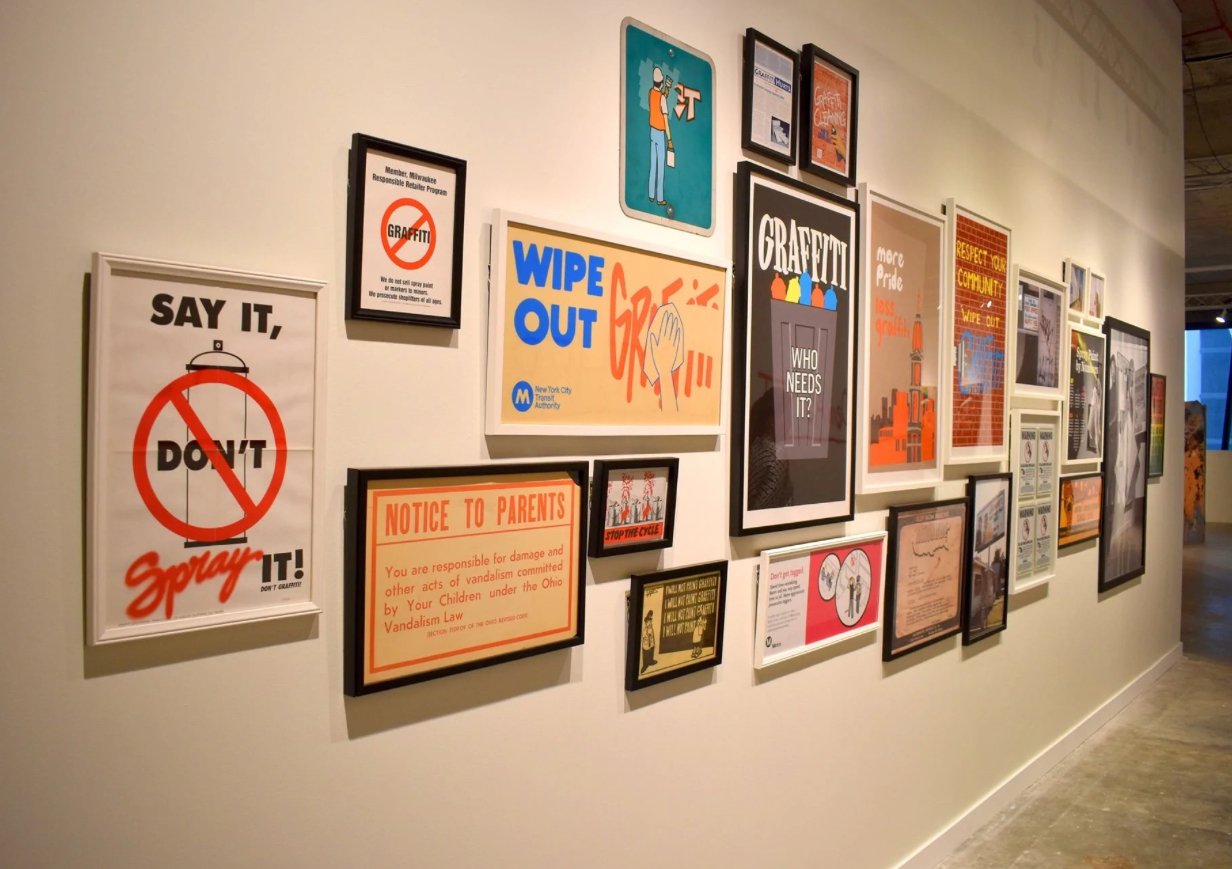
Deterrent efforts frequently take visual form, including municipal signs and artist-created posters. These signs might convey anti-graffiti messages, communicate fines for vandalism, or promote community pride. Interestingly, some anti-graffiti posters emulate the medium they seek to discourage, showcasing a captivating juxtaposition of creativity and dissuasion.
Roger Gastman’s Collection: A Historical Archive
Roger Gastman, a renowned graffiti historian, and collector, has compiled an impressive collection of historical signage related to the graffiti counter-campaigns. This archive, part of the Beyond the Streets exhibition in New York (2019), offers a unique perspective on the continuous dialogue between graffiti artists and those who aim to curtail their activities.
Final
As graffiti continues to provoke heated debates and inspire both artistic expression and counter-campaigns, the role of historical collections like Gastman’s becomes increasingly essential. These archives serve as valuable resources for researchers, historians, and artists alike, illuminating the complex and ever-evolving relationship between graffiti, public spaces, and those who seek to control or celebrate its presence.