Inside: Bonetti/Kozerski’s Cityscape Loft For Interior Office Space

March 30, 2026
2 hours ago

a stu
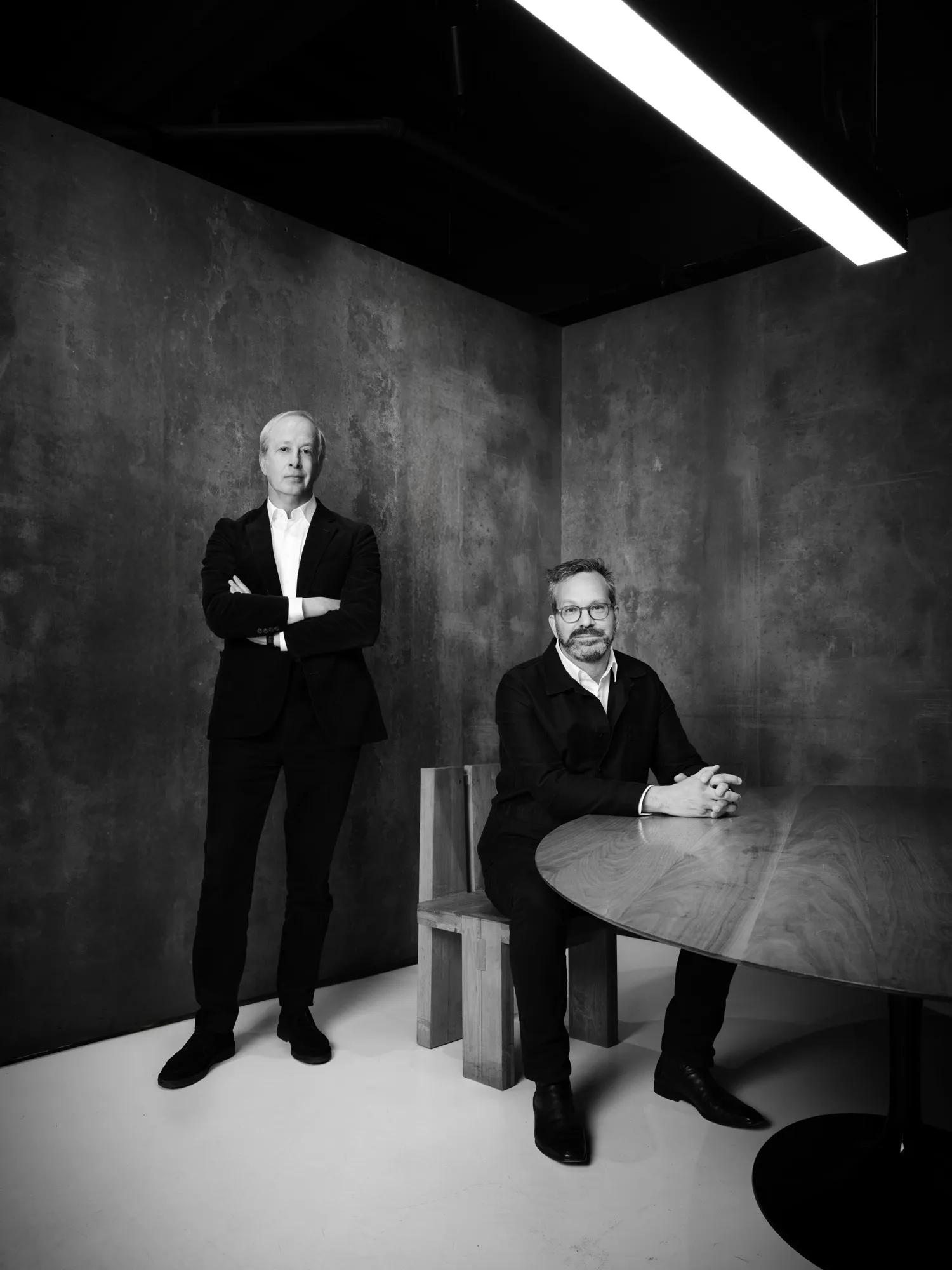
Within vocabulary of contemporary architecture, the office has become an increasingly ambiguous space. No longer strictly a site of production, it oscillates between atelier, salon, and social stage. For Bonetti/Kozerski, whose work has long threaded together fashion, hospitality, and residential design, the conception of a headquarters in New York signals something more deliberate: a controlled collision.
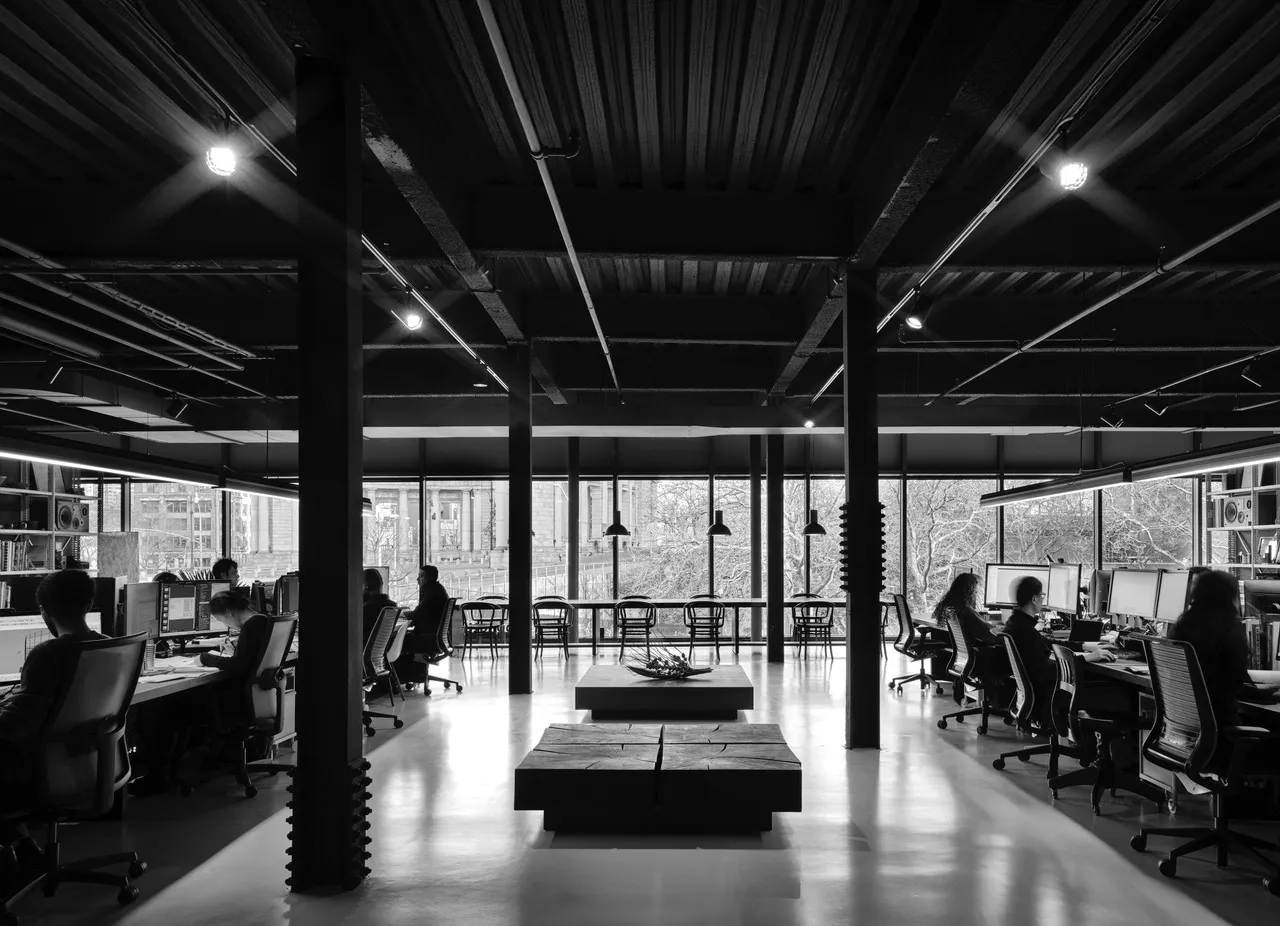
Their new studio is not simply a place to work—it is a spatial manifesto. Loft-like in its openness yet carefully orchestrated in its seduction, the office rejects compartmentalization in favor of proximity. Conversation is not incidental here; it is architectural.
imagine
New York has always mythologized the loft—the raw, industrial shell transformed into a site of artistic production. From SoHo’s cast-iron buildings to Tribeca’s converted warehouses, the typology carries cultural weight. Yet Bonetti/Kozerski’s interpretation avoids nostalgia.
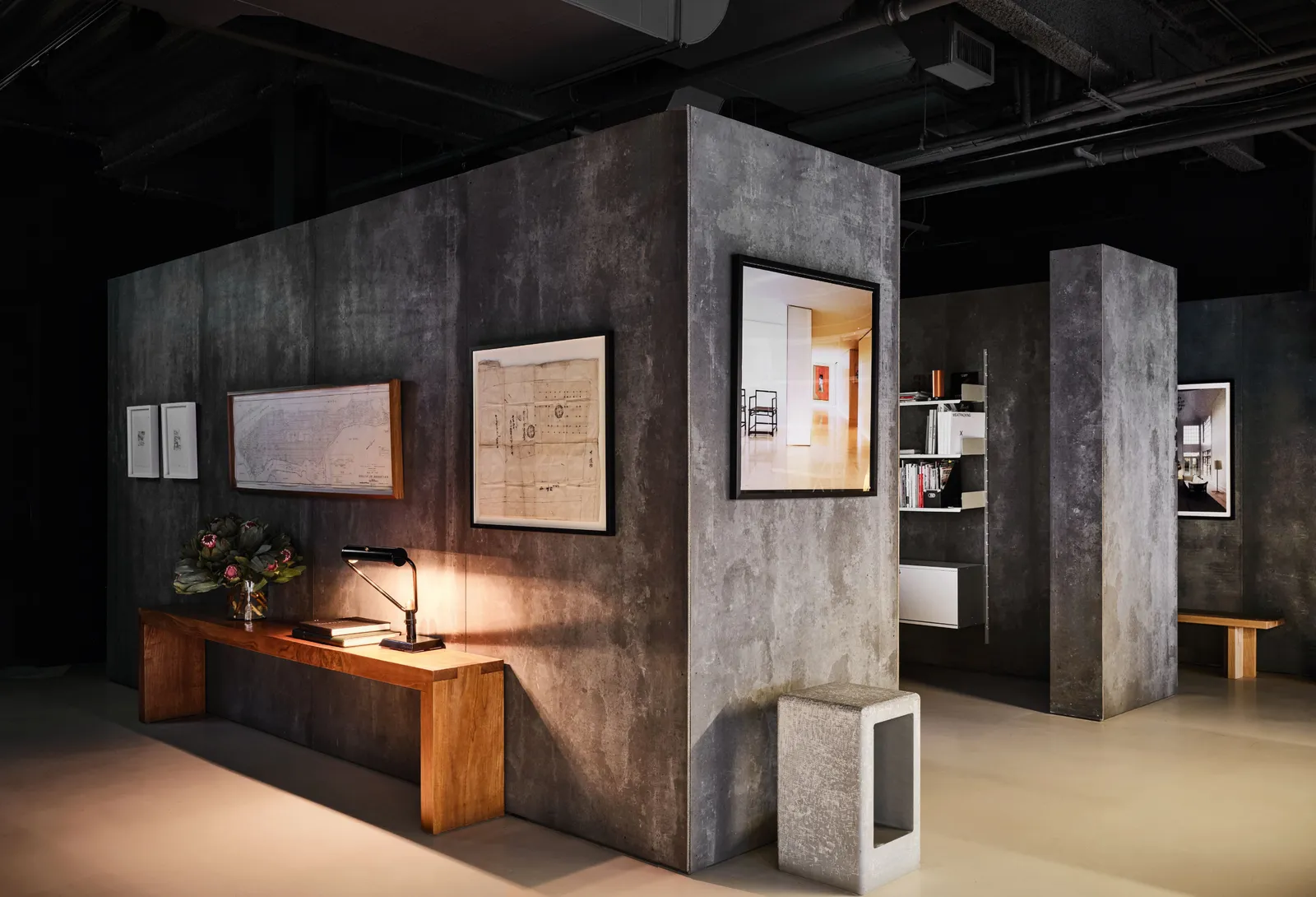
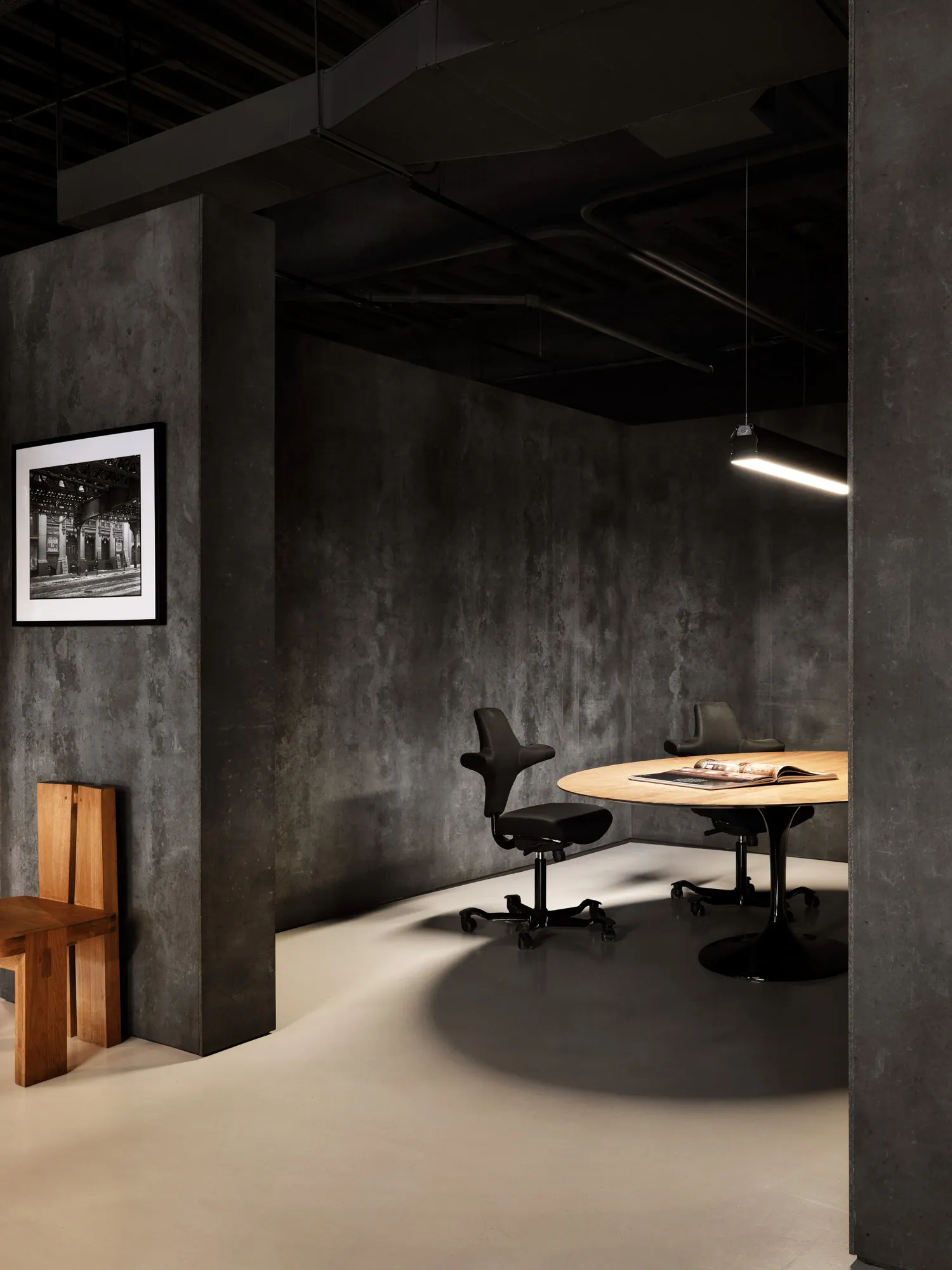
Instead of preserving industrial roughness as aesthetic shorthand, the studio refines it. Volume remains the protagonist: high ceilings, uninterrupted spans, and light that moves freely across the day. But where traditional lofts celebrated grit, this space leans into tactility and precision. Surfaces are calibrated. Materials converse.
The result is a loft that feels less like an artifact and more like an instrument—tuned for interaction.
arrange
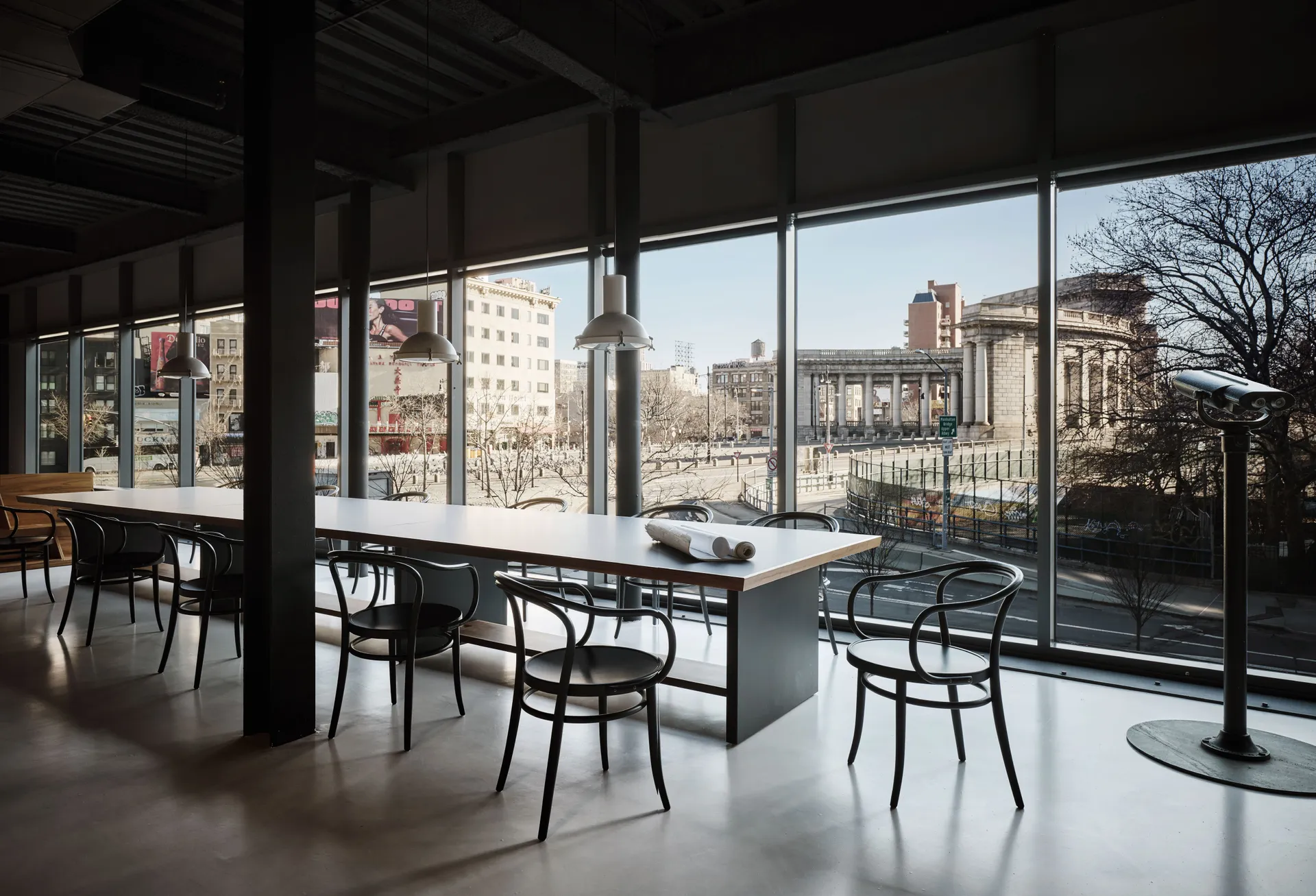
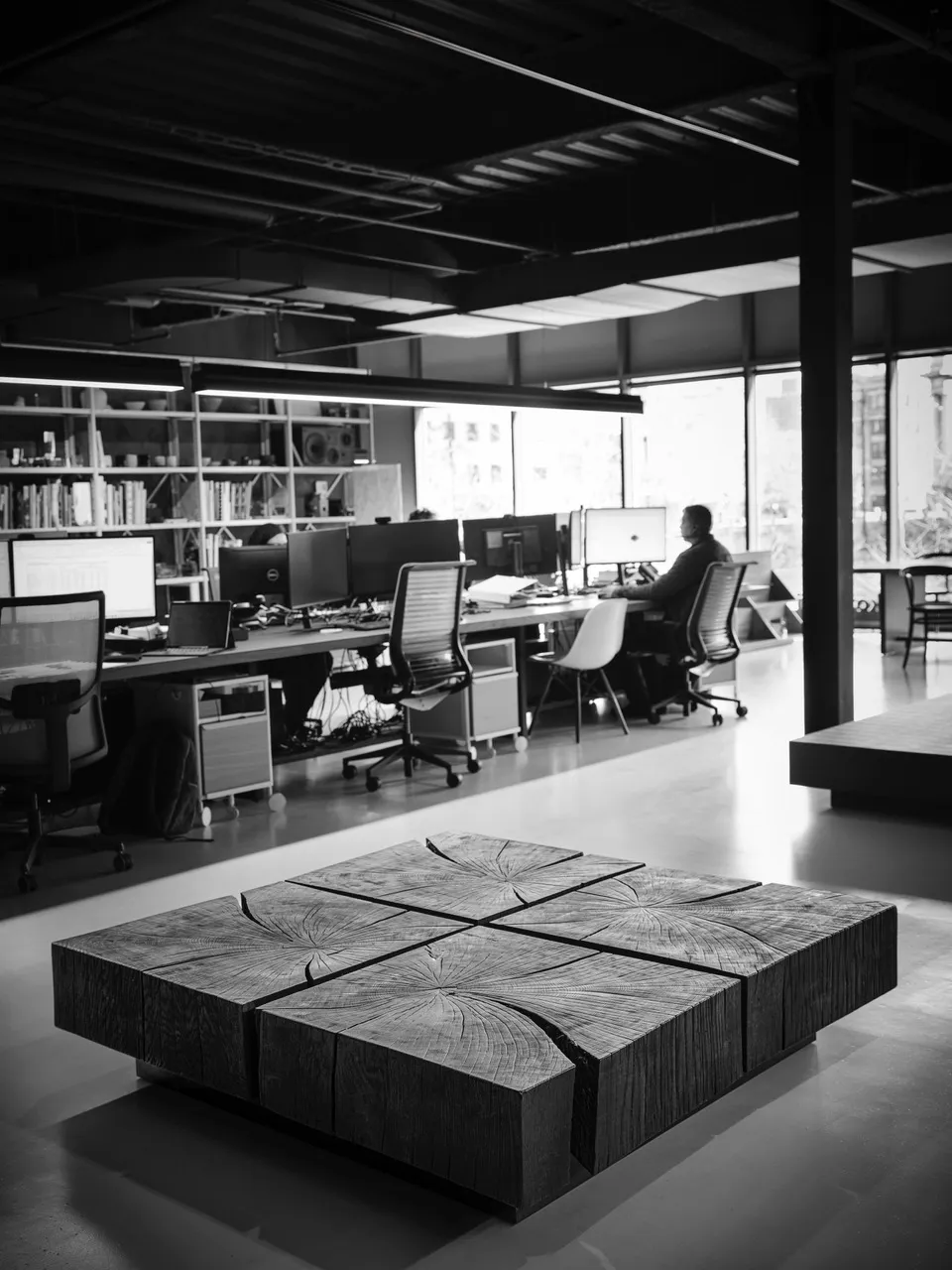
At the center of the studio is an expansive communal table—less furniture than infrastructure. It anchors the room, pulling movement and attention toward it. Around it, zones emerge not through walls but through gradients: a shift in lighting, a change in material underfoot, the subtle repositioning of objects.
This is where the architects’ philosophy becomes most legible. Instead of isolating tasks—design here, meetings there—the layout encourages overlap. Sketching happens adjacent to conversation. Models sit within reach of critique. Ideas are exposed, not protected.
The architecture does not enforce connect; it makes avoidance difficult.
lang
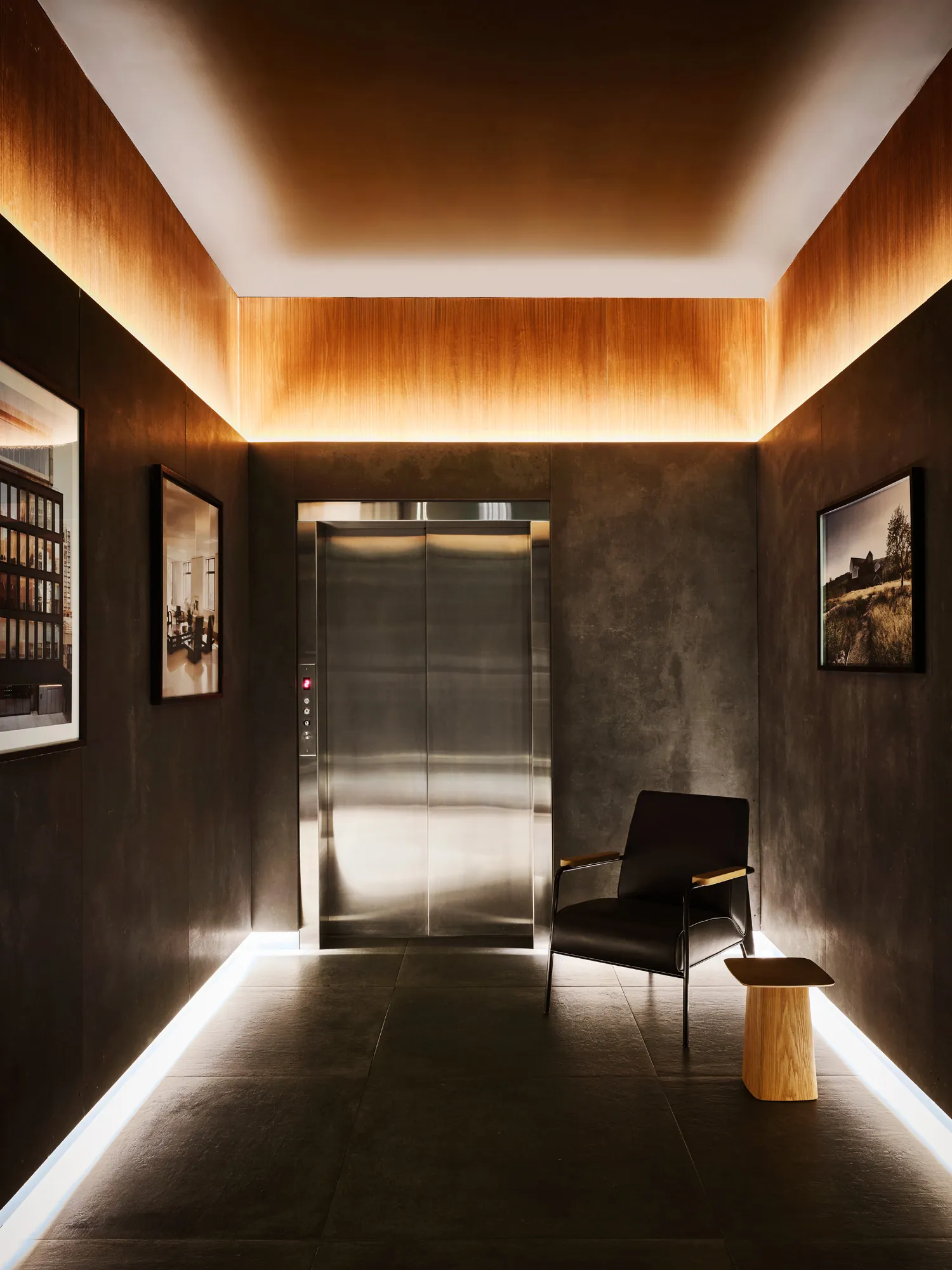
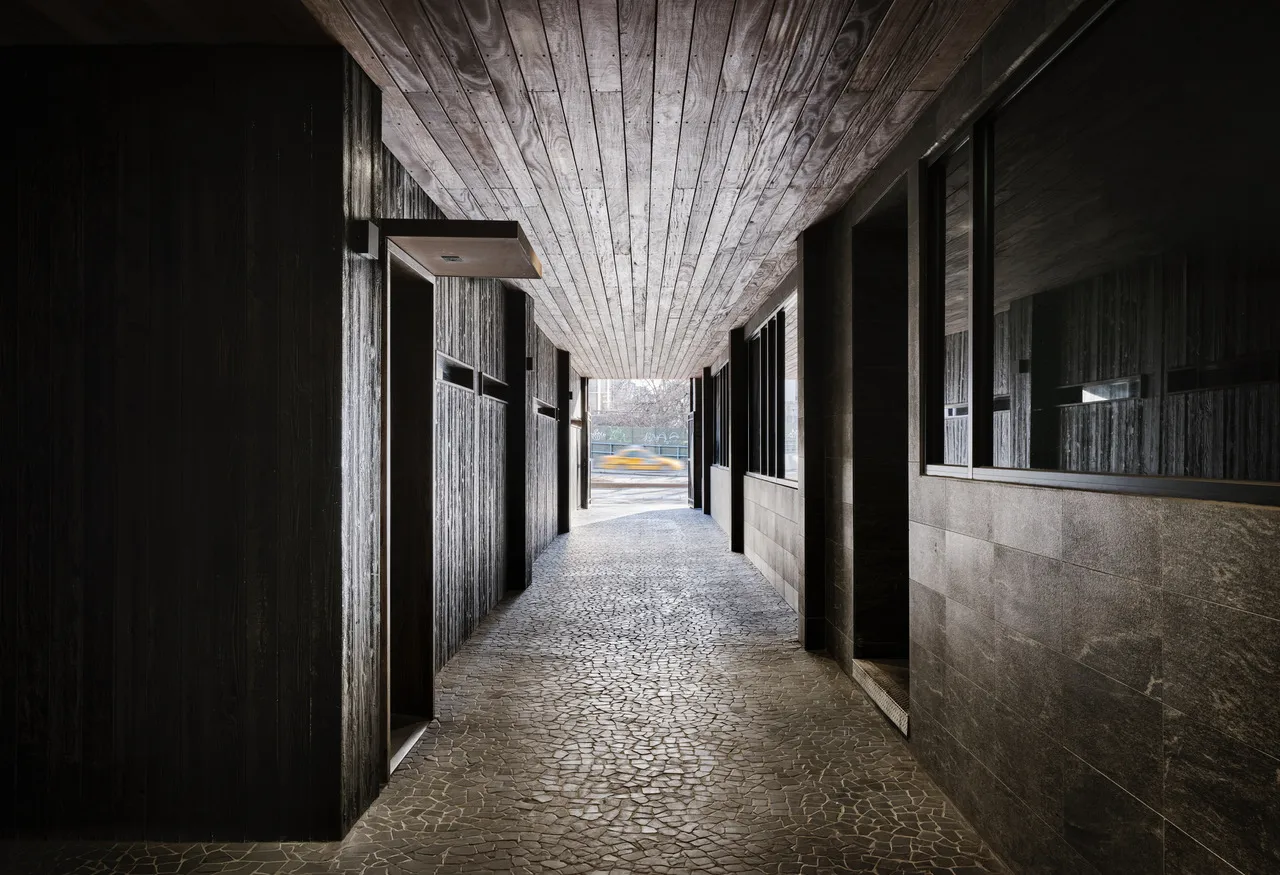
To call the space “minimal” would be reductive. What distinguishes it is not the absence of elements but the clarity of their relationships. Stone, wood, and metal form the core palette, each deployed with precision.
There is a softness to the hardness. Stone is honed rather than polished; wood carries warmth without ornament; metal is brushed, not reflective. Light—natural and artificial—conjures across these surfaces, revealing subtle shifts rather than dramatic contrasts.
Seduction here is quiet. It unfolds over time, through touch and proximity, rather than spectacle.
stir
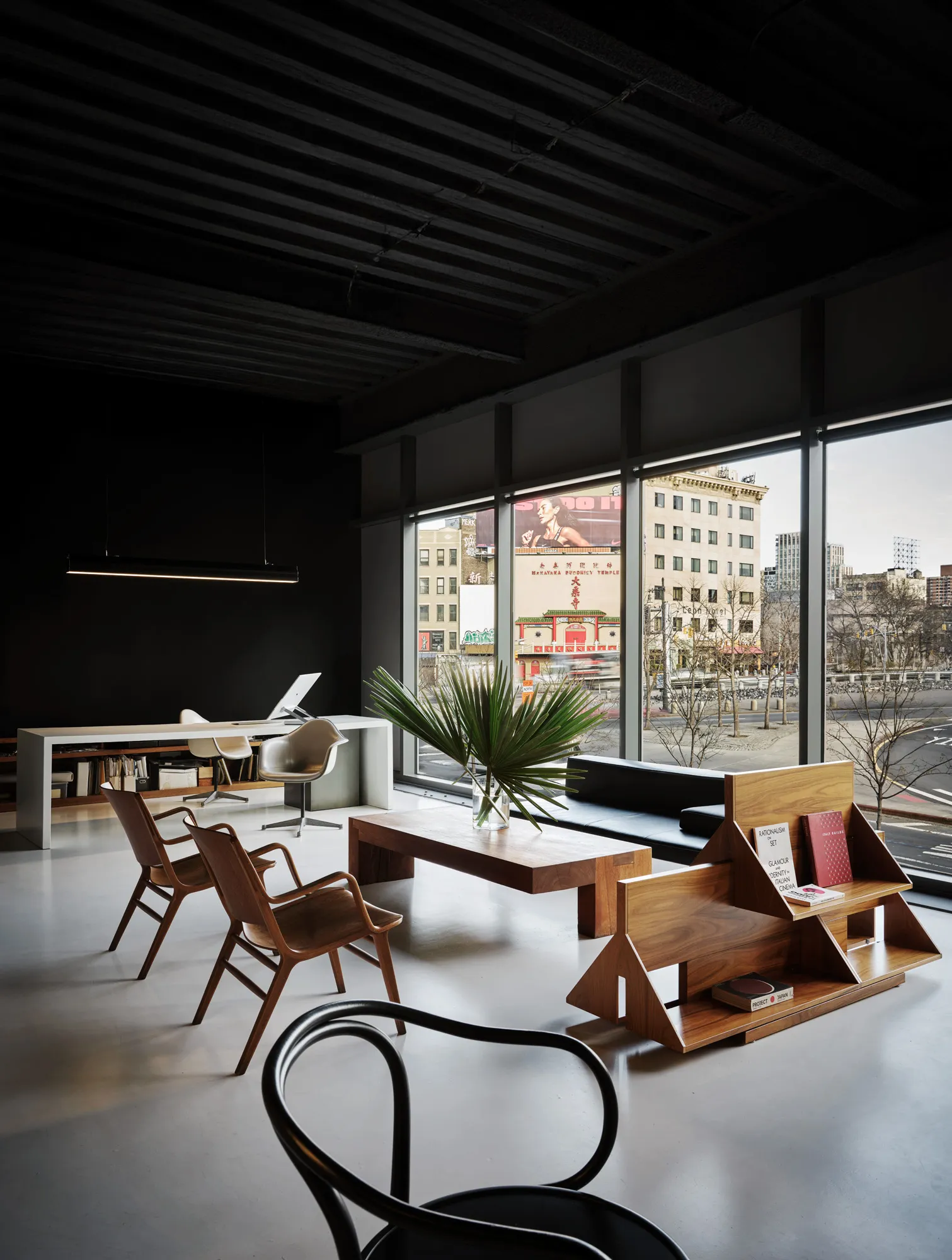
In many offices, furniture is an afterthought. Here, it operates as an extension of the architectural logic. Pieces are custom or carefully selected to maintain continuity with the surrounding space.
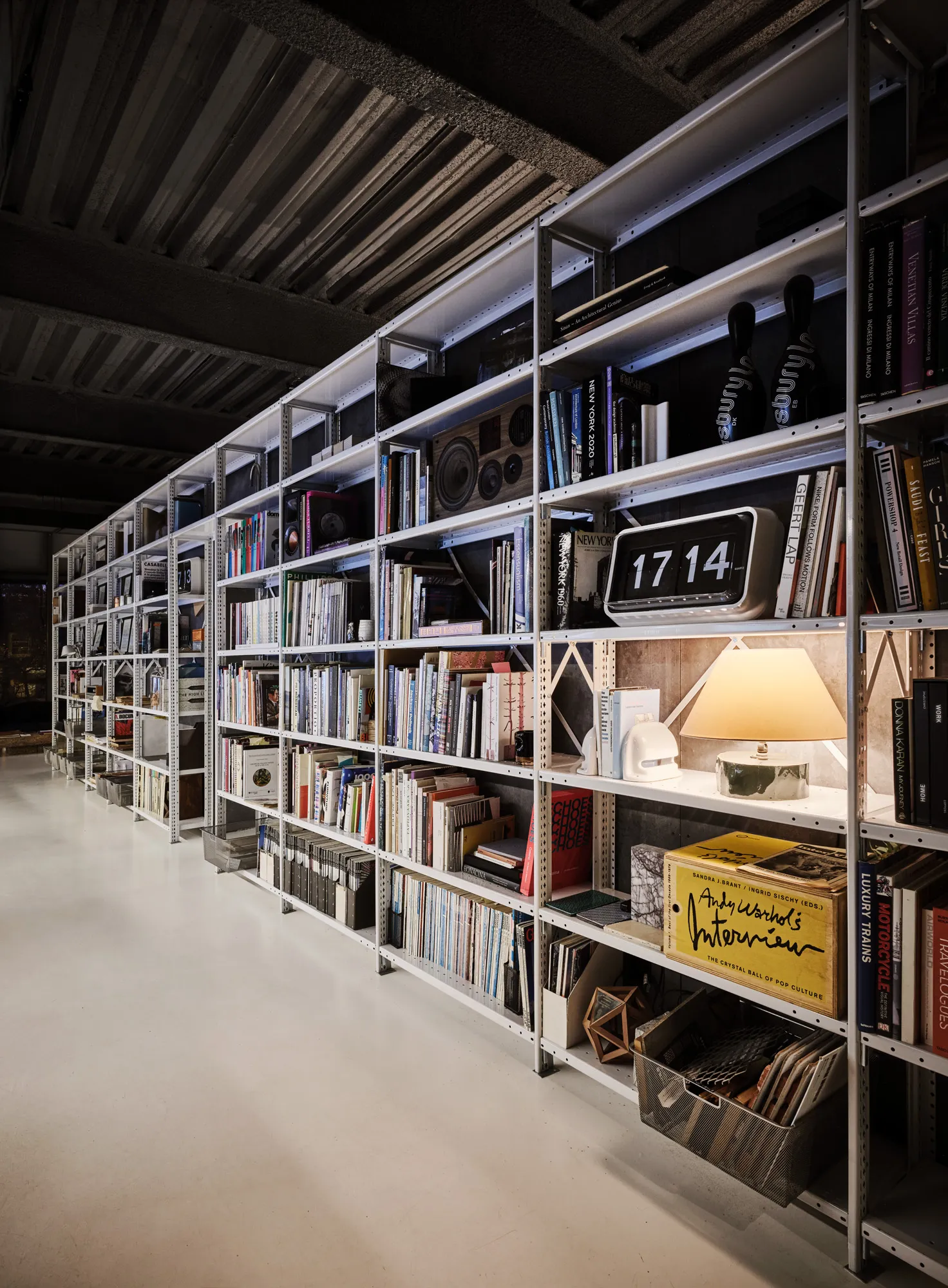
Tables feel monolithic, as if carved rather than assembled. Seating is low, encouraging informal posture and longer conversations. Storage dissolves into the architecture, avoiding potential clutter.
The effect is subtle but significant: nothing interrupts the spatial narrative. Everything participates.
flow
Light is often described in functional terms—illumination, visibility, efficiency. In this studio, it becomes behavioral.
Large windows flood the space during the day, dissolving boundaries between interior and city. As evening approaches, artificial lighting shifts the atmosphere: warmer, more intimate, subtly lowering the tempo.
These transitions are not decorative. They modulate how people inhabit the space. Morning invites focus; afternoon encourages exchange; evening leans toward reflection.
Architecture, in this sense, choreographs time.
strad
Bonetti/Kozerski’s portfolio has long intersected with the fashion world, designing flagships and interiors for brands that operate at the level of image as much as function. That sensibility is present here, though translated into a different register.
The studio reads like a backstage environment—where ideas are constructed before they are presented elsewhere. There is an awareness of composition, of how elements align within a frame. Yet unlike retail environments, which often dictate movement, this space remains open-ended.
It invites interpretation rather than directing it.
consider
The discourse around contemporary workspaces often centers on flexibility, wellness, and hybrid models. While those concerns are not absent here, they are not foregrounded. Instead, the emphasis is on something more fundamental: the exchange of ideas.
By removing barriers—both physical and psychological—the studio amplifies interaction. Conversations happen spontaneously. Critiques are immediate. There is little room for isolation, but also little need for it.
In an era where remote work has normalized distance, this office argues for presence—not as obligation, but as advantage.
oeuvre
Despite its openness, the space evades feeling exposed. This is achieved through scale and proportion. Areas are defined without being enclosed. Sightlines extend, but they are gently interrupted.
Moments of intimacy emerge: a corner where light softens, a seating arrangement that invites pause, a surface that encourages touch. These are not separate rooms but micro-environments embedded within the larger whole.
The studio, in effect, operates at multiple scales simultaneously.
ideology
If there is a unifying idea behind Bonetti/Kozerski’s new headquarters, it is this: architecture can facilitate dialogue. Not metaphorically, but literally.
The arrangement of space, the selection of materials, the modulation of light—all contribute to a condition where interaction becomes inevitable. The office does not merely house conversation; it produces it.
This is perhaps its most radical gesture. In a discipline often preoccupied with form, the studio prioritizes exchange.
theme
New York remains an implicit presence throughout. The loft typology, the scale, the density of activity—all echo the city outside. Yet the studio reframes these qualities, distilling them into a controlled environment.
Where the city can be chaotic, the office is calibrated. Where the city overwhelms, the studio refines. But the underlying energy—the sense of possibility, of constant interaction—remains intact.
It is, in many ways, a microcosm.
tabula rasa
The question that lingers is either this space represents a broader shift. As architecture firms reconsider how they work, the design of the office becomes increasingly consequential.
Bonetti/Kozerski’s headquarters suggests one direction: away from isolation, toward integration; away from hierarchy, toward proximity; away from static environments, toward dynamic ones.
It does not propose a universal solution. Instead, it offers a specific argument—one rooted in the belief that ideas emerge not in solitude, but in collision.
sum
There is a temptation to describe the studio in aesthetic terms—to focus on its materials, its proportions, its visual coherence. But to do so would miss its deeper intention.
This is a space designed not to be looked at, but to be used. To be occupied, debated, inhabited. Its success lies not in how it appears, but in how it performs.
In prioritizing connect and conversation, Bonetti/Kozerski have created more than an office. They have constructed a condition—one where architecture becomes an active participant in the creative process.
And in doing so, they remind us that the most compelling spaces are not those that impose order, but those that invite exchange.