BTS Is Back Together and Launching an 11-Month World Tour

January 18, 2026
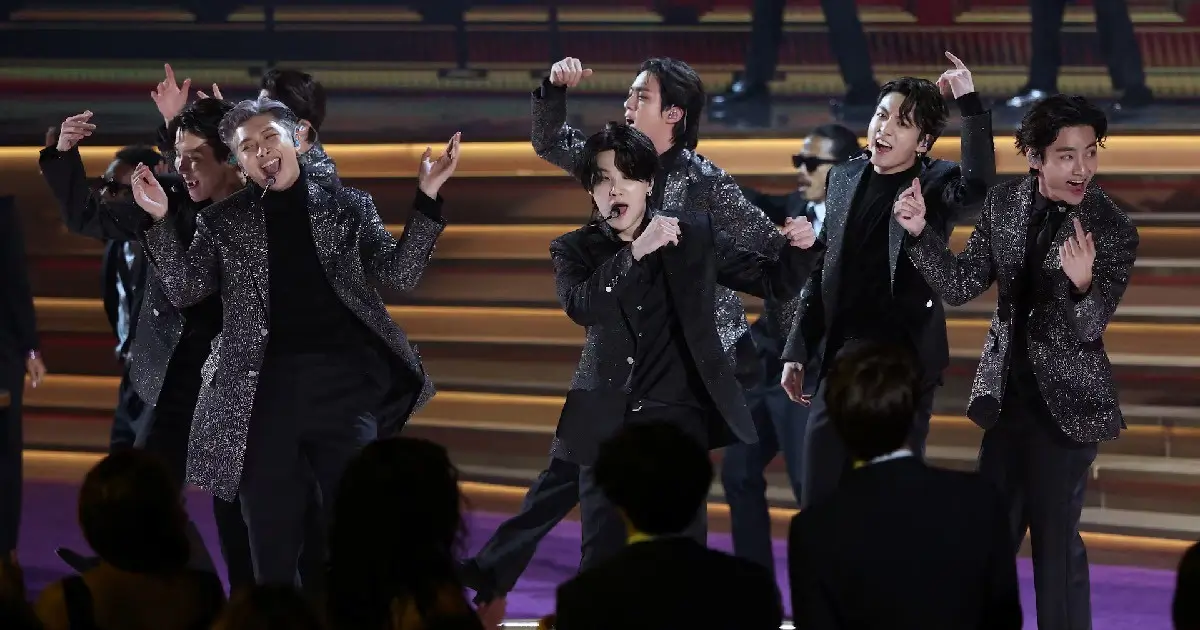
For nearly a decade, BTS operated at a scale that modern pop had rarely seen. They were not simply successful; they were infrastructural. Stadium tours sold out in minutes. Albums moved global markets. Fan mobilization became a case study for governments, brands, and media platforms alike. Then, at the peak of that influence, they paused—not because of burnout or decline, but because of something immovable: South Korea’s mandatory military service.
Now, with all seven members officially discharged, BTS is back together and preparing to launch an 11-month world tour. The announcement lands less like a comeback and more like a geopolitical event. This is not nostalgia-driven reunion theater. This is the return of an institution that deliberately stepped away, matured in public silence, and is now re-entering the global stage with unprecedented control over its narrative.
And yes—watching this unfold does invite a certain cultural thought experiment. It is difficult to imagine how a Western pop star, say Justin Timberlake at his imperial peak, would have handled a full, government-mandated hiatus at the height of fame. BTS, by contrast, absorbed the interruption, distributed it across individual growth arcs, and turned absence into long-term leverage.
the pause
When BTS announced in 2022 that members would begin enlisting, the global music industry braced for impact. Conventional wisdom suggested risk: fragmentation, fading relevance, the impossibility of reconvening lightning in a bottle. Pop history is littered with groups who never quite found their way back after less disruptive pauses.
What made BTS different was structural foresight. Long before the first enlistment, the group—and their label, HYBE—had already reframed BTS not as a single continuous output machine but as a constellation of individual identities orbiting a shared center. Solo albums, collaborations, documentaries, and brand work were not side projects; they were load-bearing pillars designed to keep the ecosystem active during collective downtime.
As a result, BTS never truly disappeared. They simply redistributed attention. Each member used the enlistment window differently: some leaned into introspective solo music, others into performance, fashion, or public service narratives. The absence felt intentional rather than forced—a rare achievement in pop, where pauses often read as loss of momentum.
mil
South Korea’s mandatory service has long complicated idol careers. For decades, it functioned as an unavoidable rupture—one that disproportionately affected male artists just as they reached commercial maturity. BTS’s global status reignited debates about exemption, cultural value, and national branding. In the end, the group chose service.
That choice mattered. Not because it was patriotic theater, but because it aligned BTS with the lived reality of South Korean men rather than positioning them above it. In doing so, the group neutralized potential backlash and reframed service as part of their story, not an interruption imposed upon it.
Culturally, this created a rare symmetry: the world’s most famous boy band experiencing the same civic obligation as millions of ordinary citizens. That shared constraint added credibility at home while reinforcing a core BTS theme abroad—humility amid scale.
It also introduced something pop rarely allows: time.
stir
Pop music thrives on immediacy. Algorithms reward frequency. Streaming platforms favor constant output. BTS’s enforced hiatus ran counter to that logic, and yet it may prove to be one of the most strategically valuable pauses in modern music history.
Time did three things for BTS.
First, it disrupted overexposure. At their peak, BTS risked saturation—not because of diminishing quality, but because global attention has limits. Stepping away reset the emotional stakes.
Second, it allowed for individual artistic recalibration. Solo projects released during enlistment were not attempts to replace the group; they were studies in contrast. Each member explored sound, image, and narrative without needing to harmonize instantly with six others.
Third, it aged the audience alongside the artists. BTS debuted as youth icons. They return as adults with a fanbase that has grown, diversified, and matured. That alignment matters when planning an 11-month world tour that will inevitably carry emotional weight beyond spectacle.
show
An 11-month world tour is not a victory lap. It is a declaration of endurance. Touring at this scale requires logistical mastery, physical stamina, and psychological cohesion. It also signals confidence—not just in demand, but in relevance.
This will not be a simple replay of pre-enlistment BTS. The group returns to a different industry: one more fragmented, more algorithm-driven, and more crowded than the one they left. Yet few acts are better positioned to navigate that landscape.
BTS does not rely on radio dominance. Their fandom infrastructure is global, multilingual, and deeply organized. They sell not just tickets, but participation. Each tour stop becomes a temporary cultural capital, complete with fan-led economies, local collaborations, and digital amplification that extends far beyond the venue.
The length of the tour suggests something else as well: BTS is not testing the waters. They are committing fully, confident that demand will sustain nearly a year of global movement. That level of assurance is rare in an era when many artists struggle to justify even mid-length tours.
reunion
One of the great risks of reunions is regression—the temptation to freeze a group at its most commercially successful moment. BTS appears uninterested in that trap.
The members return having changed. Vocals have deepened. Perspectives have shifted. The group dynamic itself is likely recalibrated by the experience of operating independently and then reconvening by choice rather than necessity.
That evolution will shape the tour’s emotional architecture. Fans are not simply waiting for old songs; they are waiting to see how those songs are reinhabited by artists who have lived differently since last performing them together.
This is where BTS diverges sharply from many Western pop narratives. Reunions in Western music often lean heavily on nostalgia. BTS’s return is framed instead as continuation—same core, expanded context.
justin
The tongue-in-cheek comparison to Justin Timberlake highlights something essential about global pop culture asymmetry.
Imagine Timberlake in the early 2000s, at the height of *NSYNC’s dominance, being told he must step away for nearly two years, mid-career, without exemption, while his peers continued operating. The American pop ecosystem is simply not built for that kind of interruption. Careers there are optimized for individual mobility, not collective obligation.
BTS operates within a different framework—one where collective identity, national context, and long-term strategy intersect. Rather than treating the hiatus as a threat, BTS absorbed it as a structural condition.
This is not a critique of Western pop so much as a reminder that BTS’s success cannot be mapped neatly onto Western paradigms. They are not simply “the Korean version” of a boy band. They are a product of—and a challenge to—how global culture organizes fame, labor, and time.
culture
BTS’s return lands at a moment of global fatigue. Pop culture feels accelerated and disposable. Trends rise and collapse in weeks. Attention spans fracture. Against that backdrop, a group re-emerging after a multi-year pause with near-universal anticipation feels almost anachronistic.
It suggests that longevity is still possible—that cultural investment can survive absence when built on trust rather than constant output. BTS did not vanish into obscurity. They allowed space, and in that space, anticipation grew.
For younger artists watching, the lesson is subtle but profound: control your tempo, or the system will consume you. BTS’s comeback reframes success not as uninterrupted visibility, but as sustainable relevance.
fwd
From an industry standpoint, the tour will be closely watched. Ticket pricing, city selection, venue scale, and ancillary revenue streams will set benchmarks. BTS tours do not merely sell out—they reshape expectations for what global touring can look like when driven by a digitally native, highly organized fanbase.
Merchandising alone operates at a level comparable to major fashion drops. Media coverage extends across continents. Even local economies feel the impact. Few artists command that degree of cross-sector influence.
The return also reasserts HYBE’s long-term strategy: build artists as ecosystems, not products. BTS’s successful pause validates that model and strengthens its credibility for future acts navigating similar constraints.
fin
At its core, BTS’s return is reassuring—not just to fans, but to the idea that pop culture can still support long arcs. That growth, interruption, and return do not have to signal decline.
All seven members completing service and choosing to reunite on their own terms sends a clear message: this was not an obligation fulfilled reluctantly, but a chapter closed deliberately. The reunion feels earned rather than forced.
As the world tour unfolds over eleven months, it will not simply celebrate a group’s past achievements. It will test the durability of a new model—one where global superstardom coexists with civic duty, individual growth, and strategic patience.
And that, more than any chart position or ticket count, is why BTS’s return matters. They did not just survive the pause. They redefined what comes after it.