Camilla And Marc Scope Textured Mid-Rise Short In Ink

April 6, 2026
1 hour ago
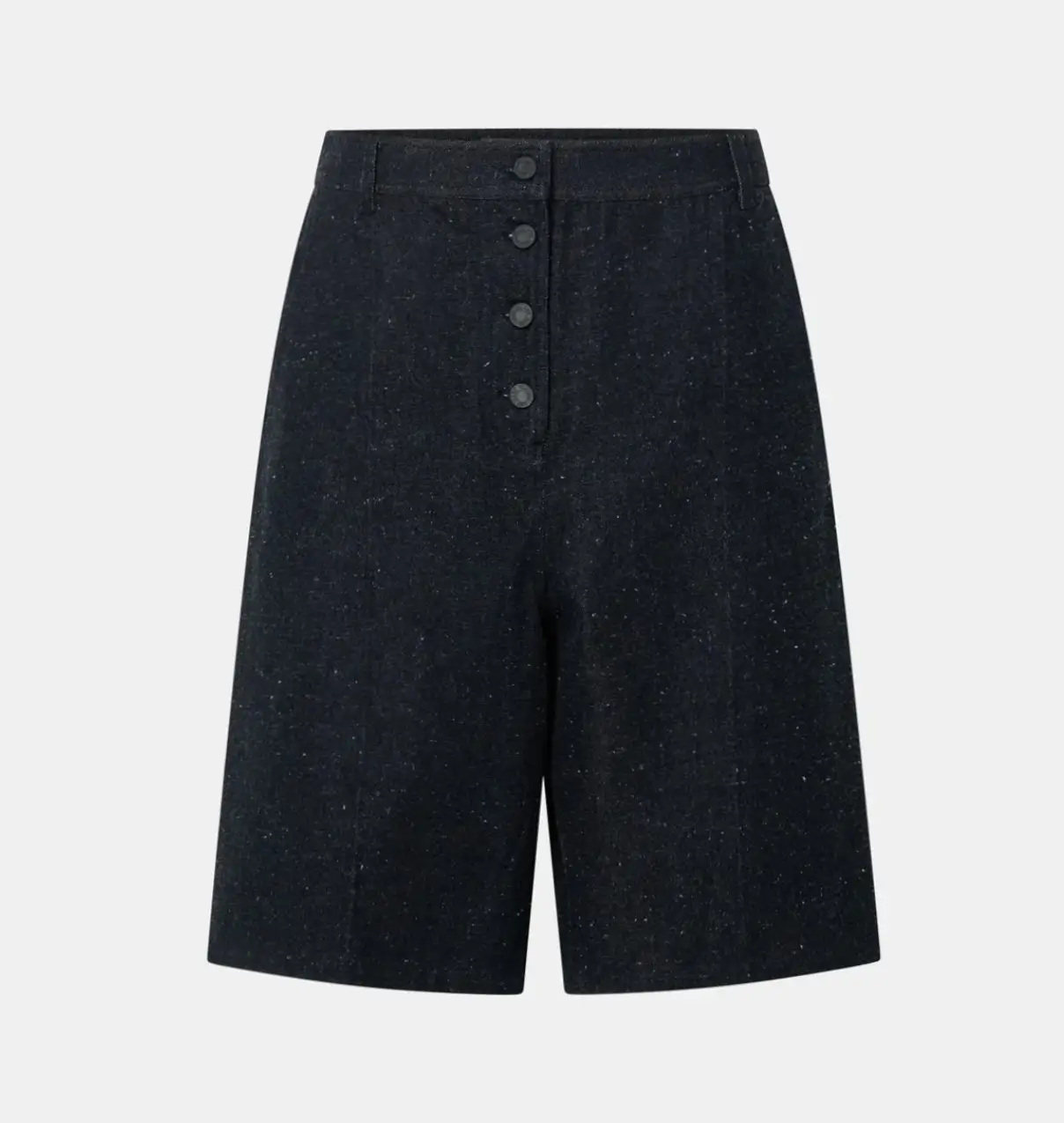
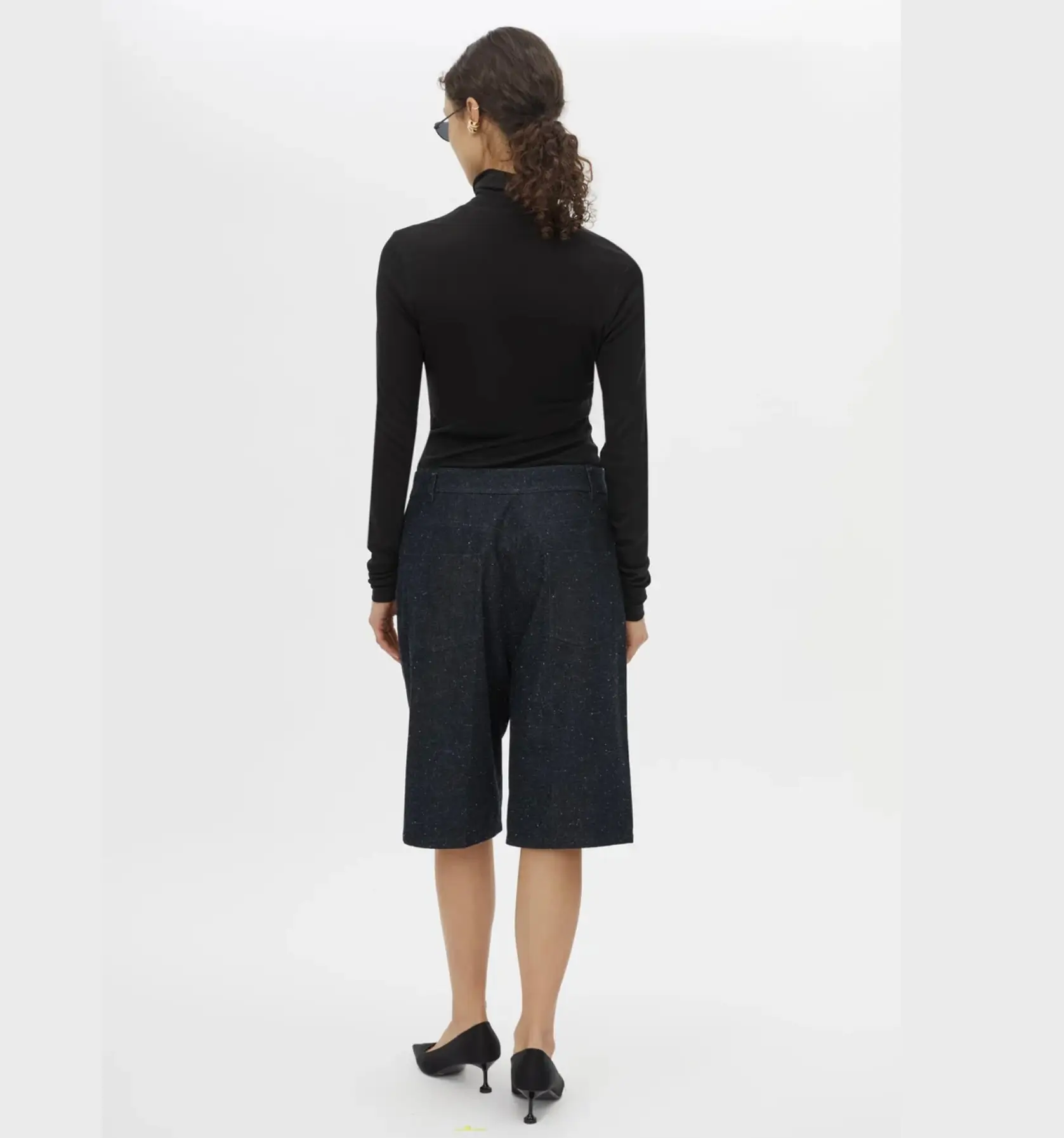
There is a quiet discipline to the Scope textured mid-rise short from CAMILLA AND MARC—a garment that does not attempt spectacle, yet carries a weight of intention in every line, seam, and surface decision. Rendered in an inky, near-obsidian tone, the short positions itself within a vocabulary of restraint, where utility and refinement are not oppositional but co-dependent.
At first glance, the silhouette reads familiar: a mid-rise cut, tailored but not restrictive, designed to sit cleanly at the waist without pulling or collapsing. But familiarity here is a controlled entry point. What unfolds is a study in proportion and surface tension, where each element—topstitching, hardware, pocket placement—operates as both function and visual punctuation.
flow
The defining gesture begins with texture. Not ornamental, not decorative in the conventional sense, but structural—woven into the fabric itself. The material holds shape rather than draping passively, giving the short a sense of presence even off the body. It resists collapse. It maintains its architecture.
This is where the garment aligns with a broader shift in contemporary tailoring: fabric not as background, but as the primary carrier of form. The texture absorbs light unevenly, creating subtle variations in tone across the surface. In motion, the ink color shifts—sometimes matte, sometimes faintly reflective—never static.
The result is a piece that does not rely on pattern or print to communicate depth. It builds dimension through construction alone.
idea
Heavy topstitch detailing runs throughout the short, functioning as both reinforcement and visual mapping. These lines are not hidden—they are emphasized, intentionally visible, almost diagrammatic. They trace the garment’s structure, outlining where tension is held and where movement is allowed.
Topstitching, in this context, becomes a form of annotation. It reveals the logic of the piece. It tells you where the garment has been engineered to endure, where it expects friction, where it anticipates wear.
There is also a tonal subtlety at play. Depending on lighting, the stitching may appear slightly raised or contrasted against the base fabric, adding a secondary rhythm to the surface. It is not loud, but it is insistent.
wear
The exposed logo buttons introduce a different register—one that moves from construction into branding, but without excess. They are not hidden closures; they are part of the garment’s front-facing identity.
This decision shifts the short from purely utilitarian to quietly declarative. The branding is present, but integrated. It does not interrupt the design language—it extends it.
There is something deliberate in exposing these elements. It suggests a confidence in the object itself: nothing needs to be concealed, nothing needs to be softened. The mechanism becomes aesthetic.
fx
The slanted side pockets are cut with precision, angled just enough to follow the natural line of the hand. They do not disrupt the silhouette; instead, they reinforce it. The diagonal entry point introduces movement into an otherwise structured form, preventing the piece from becoming too rigid.
At the back, a single patch pocket grounds the design. It adds asymmetry without imbalance. The placement feels considered, almost architectural, as if it has been positioned not just for utility but for visual counterweight.
These pockets do not read as afterthoughts. They are integrated into the garment’s overall geometry, contributing to its balance and proportion.
View this post on Instagram
style
The inclusion of belt loops opens the piece to interpretation. Worn alone, the short maintains its clean, uninterrupted waistline. Paired with a belt, it shifts—becoming more directive, more styled, more intentional.
This duality is central to its appeal. The garment does not prescribe a single way of being worn. It accommodates both minimalism and intervention.
In a wardrobe increasingly defined by modularity, this flexibility matters. It allows the short to move across contexts: from structured daywear to more considered evening compositions, depending on how it is framed.
contempo
The mid-rise cut operates as a point of equilibrium. It avoids the extremes of high-waisted elongation and low-rise casualness, instead sitting in a space that feels balanced, adaptable, and contemporary.
This positioning allows for a wider range of styling possibilities. It works with cropped tops, oversized shirting, or tailored jackets without requiring adjustment. It does not demand attention—it supports it.
There is also a subtle shift happening in how mid-rise garments are being reinterpreted. No longer seen as neutral or default, they are becoming intentional choices—anchors within a look rather than placeholders.
show
“Ink” is an apt descriptor. It is not simply black, nor navy, but something in between—a color that absorbs rather than reflects. It carries a sense of depth, of quiet saturation.
This ambiguity allows the short to integrate seamlessly into a range of palettes. It can ground lighter tones, deepen monochromatic looks, or act as a neutral base for more expressive pieces.
Color, here, is not a statement—it is a condition. It sets the tone without dictating it.
bal
There is an undercurrent of workwear influence in the Scope short: the topstitching, the patch pocket, the visible hardware. But these references are filtered through a lens of refinement. Nothing feels raw or unfinished. Everything is calibrated.
This tension—between durability and polish—is where the piece finds its identity. It does not fully belong to either category. It exists in the space between.
That in-between space is increasingly where contemporary fashion operates. Garments are no longer confined to singular narratives. They are hybrid, adaptive, responsive.
garment
On the body, the short maintains its structure without rigidity. It moves, but it does not lose form. The fabric holds its line, creating a silhouette that remains consistent throughout the day.
This consistency is part of its appeal. It offers reliability—not in a mundane sense, but in a compositional one. You know how it will sit. You know how it will frame the rest of the outfit.
There is also a certain ease embedded in the design. Despite its tailored construction, it does not feel restrictive. It allows for movement, for variation, for lived-in wear.
allure
The Scope textured mid-rise short does not rely on overt branding, exaggerated proportions, or seasonal novelty to assert itself. Its strength lies in precision—in the accumulation of small, deliberate decisions.
Each element is doing something. Nothing is decorative without purpose. Nothing is included without reason.
This is where the garment aligns with a broader movement in contemporary design: a return to considered construction, to pieces that reveal themselves over time rather than immediately.
It is not about impact in the first glance. It is about endurance—how a piece holds up, how it integrates, how it continues to function across different contexts.
end
The Scope short from CAMILLA AND MARC operates as a study in controlled design. It takes familiar components—mid-rise tailoring, functional pockets, visible stitching—and repositions them within a framework of restraint and clarity.
It is not trying to redefine the category. It is refining it.
And in that refinement, it achieves something more enduring: a garment that feels both immediate and lasting, structured yet adaptable, quiet but unmistakably intentional.