Camper SS26 “Crazy for Tennis”: When the Court Becomes Character

March 29, 2026
40 minutes ago
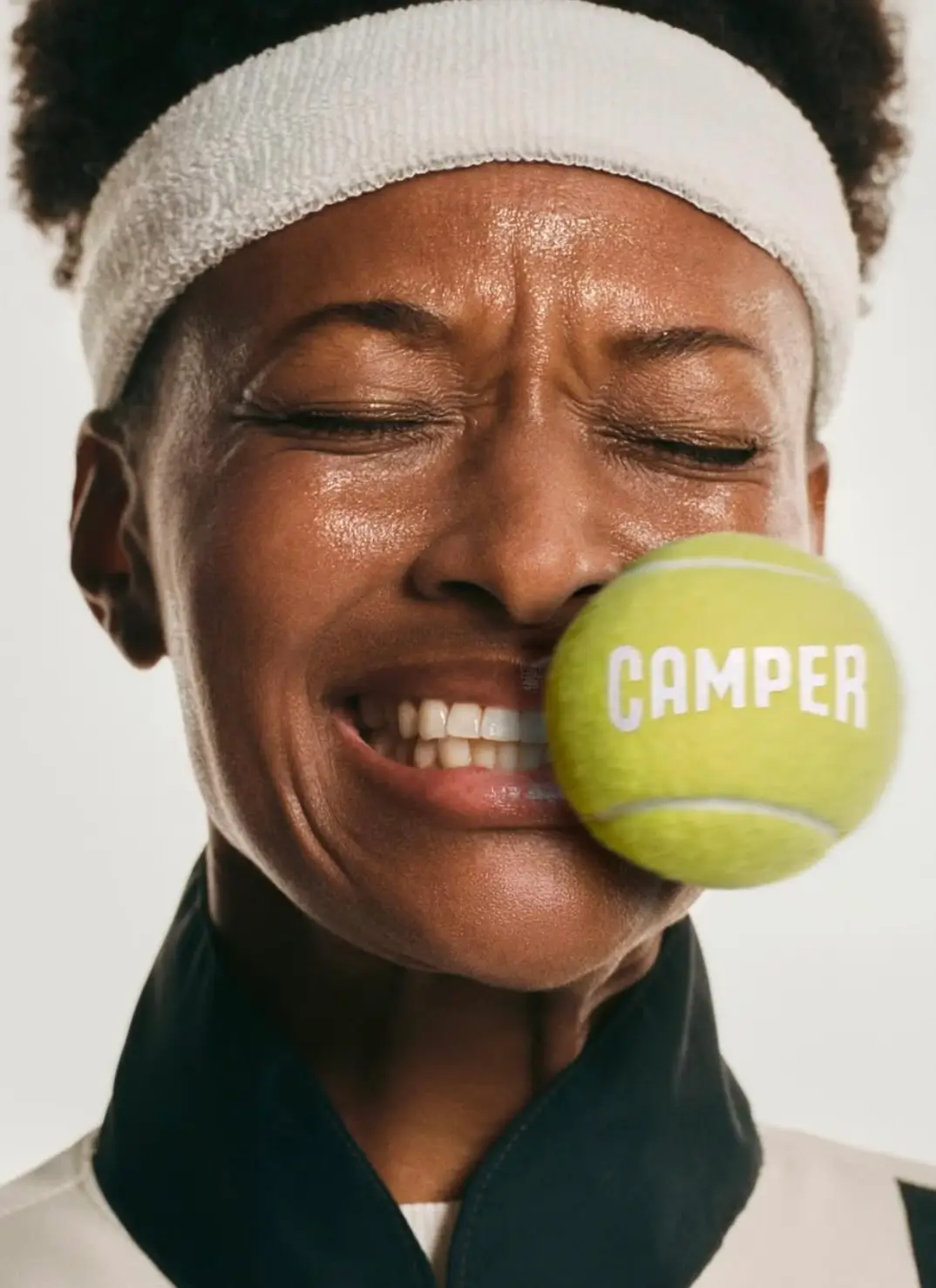
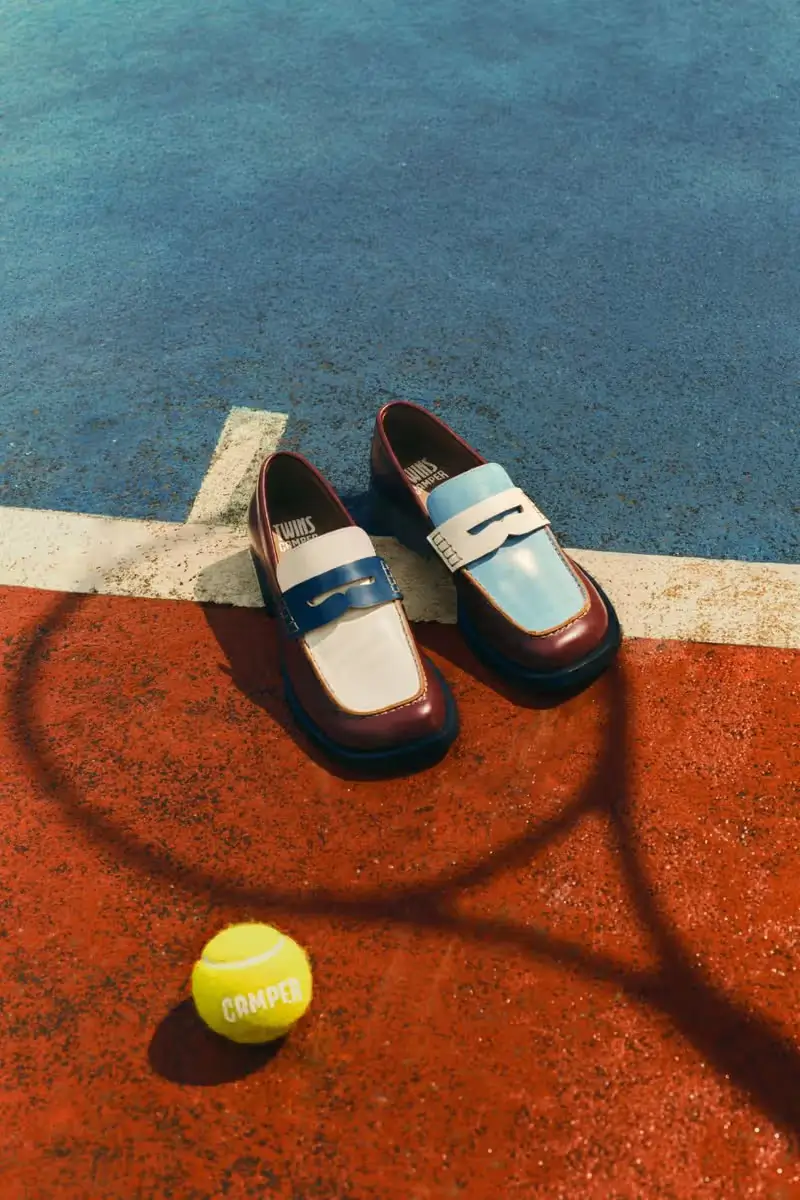
There’s a version of tennis that exists outside rankings, outside discipline, outside the myth of perfect form. It happens somewhere between a missed serve and an overcommitted volley, in that brief second where the body forgets instruction and becomes instinct. That’s the version Camper leans into for Spring/Summer 2026—a collection that doesn’t just borrow from tennis aesthetics, but rewrites the psychology of the court entirely.
“Crazy for Tennis,” named after a 1965 track by Florencio Torrelledó, isn’t nostalgic in the expected sense. It doesn’t look backward to preserve. It looks sideways—to exaggerate, distort, and ultimately humanize the sport’s visual codes. Tennis, in Camper’s hands, becomes less about elegance under pressure and more about awkwardness under observation.
And that shift changes everything.
View this post on Instagram
stir
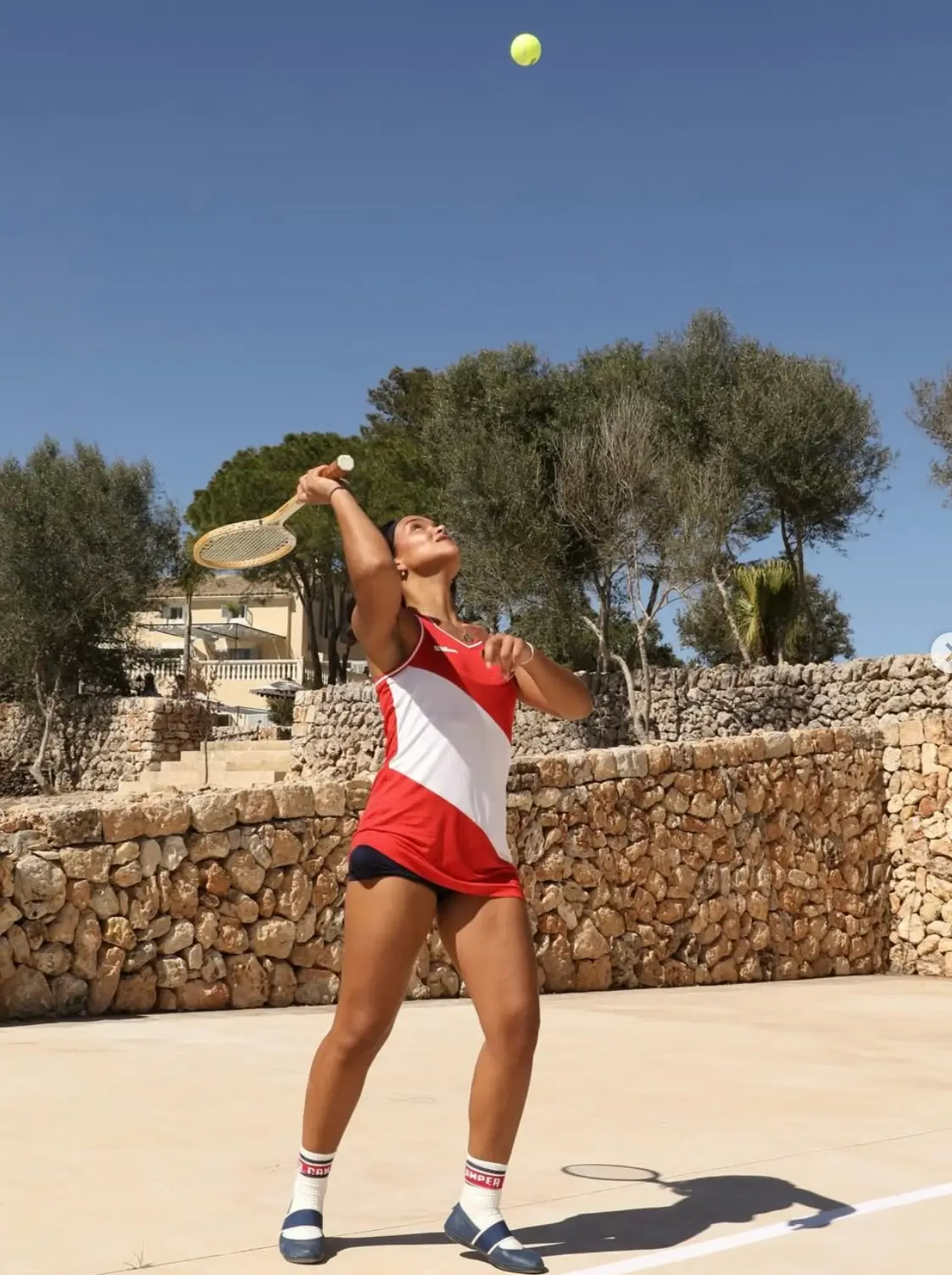
The campaign, shot in Mallorca, avoids the sterile perfection that usually defines tennis imagery. There are no heroic serves frozen mid-air, no cinematic sweat, no myth-making. Instead, there’s a cast of characters who feel like they wandered onto the court rather than trained for it.
At the center is comedian Fabiolo Maza, playing “the Captain”—an eccentric coach whose authority feels improvised at best. He isn’t instructing excellence; he’s orchestrating chaos. Around him, players perform a version of tennis that is more social ritual than athletic endeavor: glances linger too long, movements overextend, timing collapses.
It’s not parody. It’s recognition.
Because most people don’t experience tennis as athletes. They experience it as theater—where clothing, posture, and presence matter just as much as ability. Camper understands this instinctively, and rather than designing for the game, it designs for the feeling of being seen while pretending to play.
idea
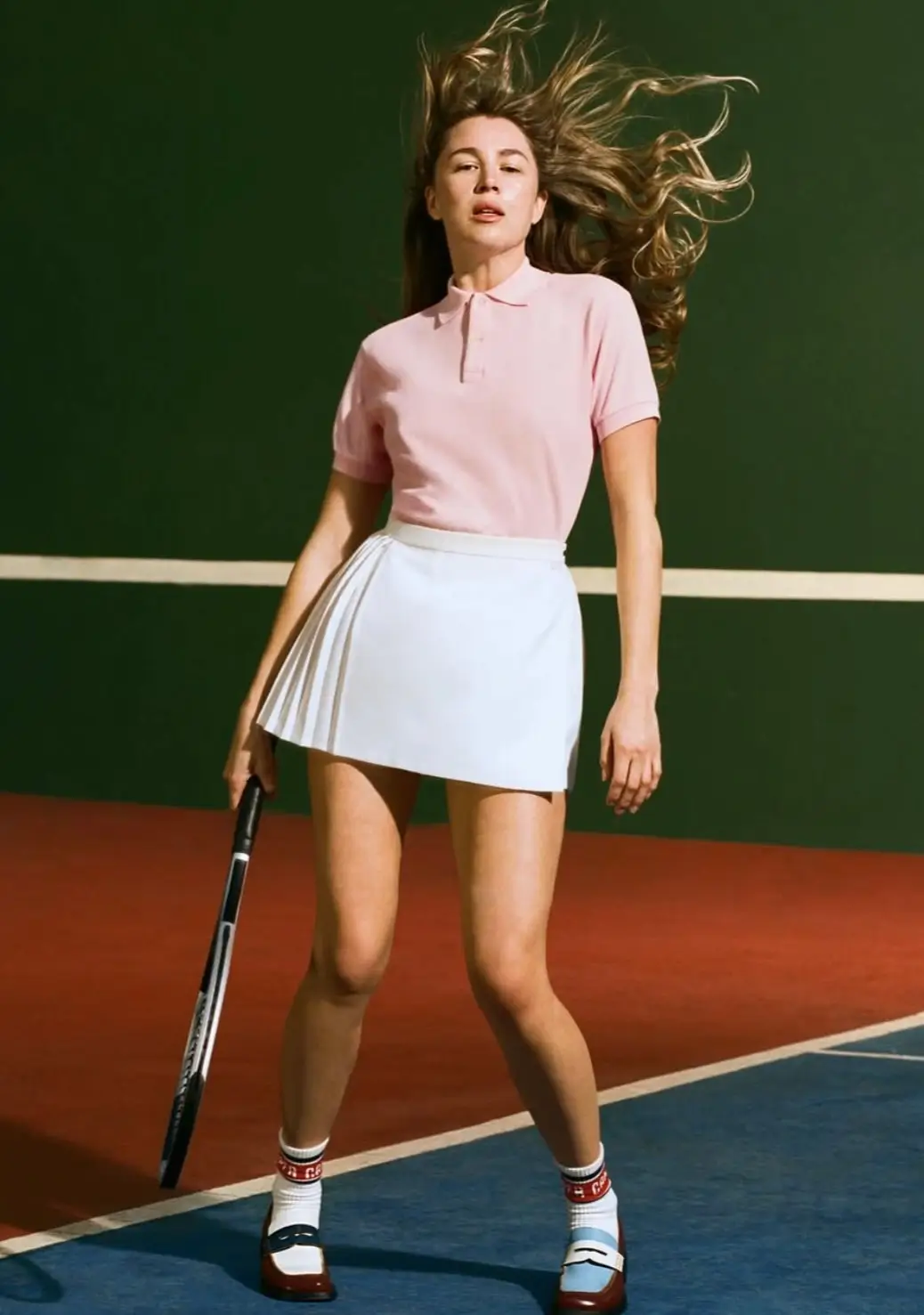
The foundation of the collection is familiar: tennis whites, softened by injections of sky blue, grass green, and clay red. Colors pulled directly from the surfaces of the sport—hard court skies, Wimbledon lawns, Roland Garros dust.
But Camper doesn’t treat these as sacred tones. It treats them as ingredients.
Striped straps echo athletic tape but feel intentionally exaggerated. Stitching is precise but visible, almost diagrammatic. Rubber outsoles are functional yet slightly oversized, grounding otherwise refined silhouettes with a sense of weight. The result is a quiet tension: tradition held in place, then gently pushed out of alignment.
This is where the collection becomes distinctly Camper. Not through loud disruption, but through subtle imbalance. A line that runs slightly off-center. A proportion that feels just unfamiliar enough to register.
It’s preppy, but not polite.
TWINS: The Original Mismatch
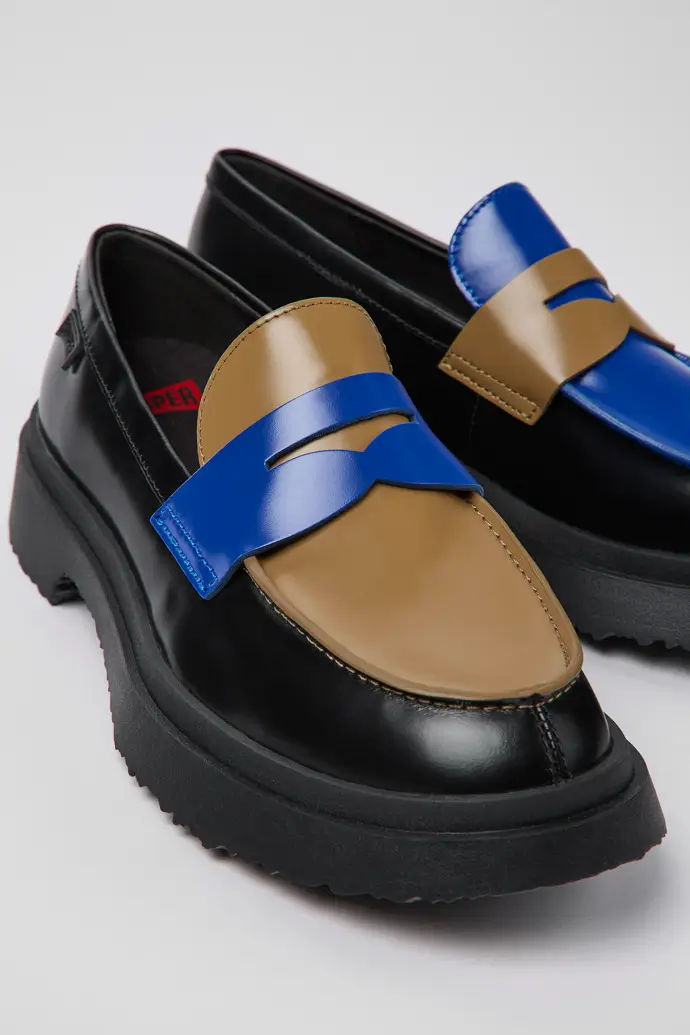
At the mid of the collection is Camper’s TWINS concept—first introduced in 1988 and still one of the brand’s most quietly radical ideas. The premise is simple: a pair of shoes that are intentionally not identical.
For SS26, the TWINS loafer arrives in a tricolor asymmetrical composition that feels both composed and slightly unsettled. One shoe leans into one color story, the other into another. Together, they form a complete sentence—but only when viewed as a pair.
This isn’t novelty. It’s philosophy.
TWINS challenges the assumption that symmetry equals harmony. It suggests that balance can exist in contrast, that identity can be split and still coherent. On a tennis court—where everything from scoring to etiquette is governed by strict structure—this kind of asymmetry feels quietly subversive.
It’s a reminder that perfection is often just repetition.
anita
If tennis has historically been associated with flats and shoes, Anita disrupts that lineage entirely. Introduced this season, the heel doesn’t attempt to translate performance—it ignores it.
Instead, Anita leans into posture. Its silhouette carries a certain composure, but its details—striped accents, grounded soles, subtle material contrasts—pull it away from formality. It feels like something worn to the club, not for the game. Something chosen for presence, not practicality.
And that distinction matters.
Because Anita isn’t asking to belong on the court. It’s asking what the court becomes when someone like this walks onto it.
peu path+
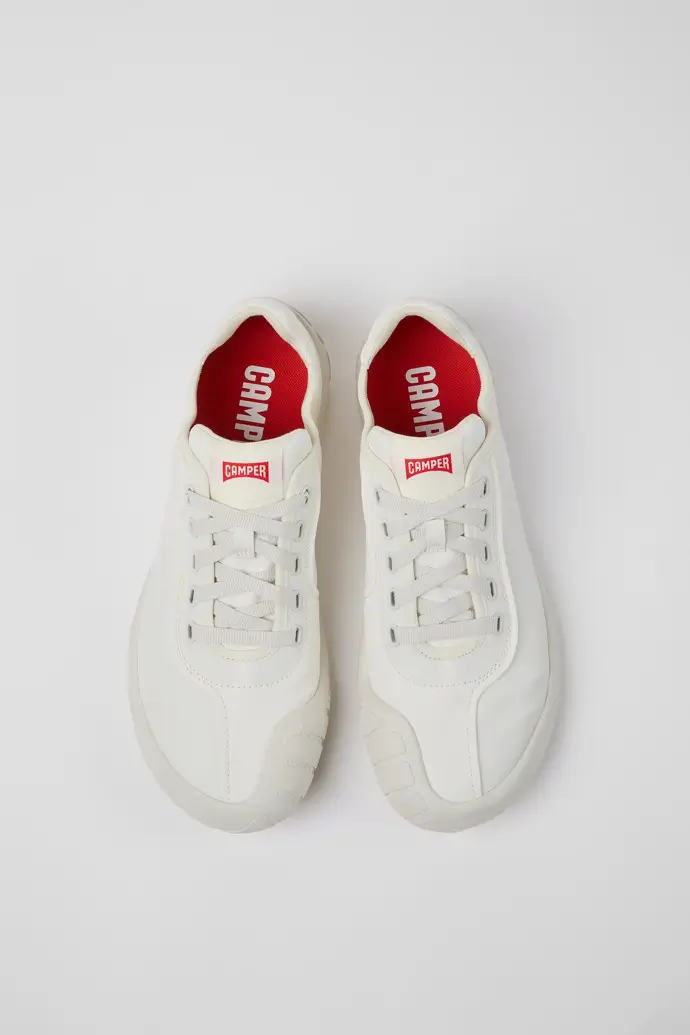
There’s a long-standing tension in footwear between performance and sensation. Most athletic shoes prioritize the former—stability, propulsion, control. Camper’s Peu line has always leaned toward the latter, emphasizing natural movement over engineered precision.
For SS26, the Peu Path+ evolves into a lower-drop silhouette that amplifies its barefoot philosophy. The sole thins. The structure relaxes. The foot sits closer to the ground, allowing movement to feel less mediated.
On a tennis court, this would be impractical.
But that’s precisely the point.
Peu Path+ isn’t interested in optimizing performance. It’s interested in restoring awareness—of surface, of balance, of the small adjustments the body makes when it’s not being corrected by technology.
In a collection about imperfect play, this feels like the most honest shoe of all.
precision
The Right Nina ballerina flat approaches comfort through construction rather than cushioning. Its defining feature—a two-piece sole—introduces flexibility not as an afterthought, but as a structural principle.
Where most flats aim for seamlessness, Nina embraces segmentation. The sole moves in parts, allowing the foot to articulate more naturally. It’s a small detail, but one that shifts the experience of wearing the shoe entirely.
Visually, it remains restrained. But conceptually, it aligns with the rest of the collection’s ethos: break the expected whole into something more responsive, more human.
View this post on Instagram
accessory
It would be easy to overlook the inclusion of three pairs of sporty socks. But within this collection, even the smallest elements carry intention.
Socks here aren’t accessories—they’re extensions of the narrative. Their sporty references ground the collection in its tennis origins, while their styling potential pushes them into fashion territory. Pulled high, slightly slouched, paired with loafers or heels—they become part of the visual rhythm of the outfit.
They reinforce a key idea: that nothing in this collection is purely functional or purely decorative. Everything exists somewhere in between.
show
What ultimately defines “Crazy for Tennis” isn’t its color palette or its silhouettes. It’s its attitude toward effort.
In most sports imagery, effort is heroic. It’s about discipline, mastery, control. Camper flips that script. Here, effort is awkward, visible, sometimes unsuccessful. And that’s where its charm lies.
The campaign doesn’t celebrate winning. It celebrates trying—especially when trying looks slightly ridiculous.
This is where Fabiolo Maza’s “Captain” becomes essential. He embodies a kind of authority that feels performative rather than earned. He instructs, but not convincingly. He leads, but not effectively. And yet, he holds the space together.
Because the point isn’t to play well. The point is to participate in the ritual.
sil
Returning to Mallorca is more than a logistical choice. It anchors the collection in Camper’s identity—not as a global brand chasing trends, but as a company rooted in a specific place with its own rhythms and sensibilities.
The tennis club becomes a microcosm of that world. Local talent, familiar settings, a sense of community that feels organic rather than staged.
It resists the anonymity of global campaigns. It feels specific, grounded, real.
And in a fashion landscape increasingly defined by scale, that specificity carries weight.
fin
At its core, Camper’s Spring/Summer 2026 collection isn’t about tennis.
It’s about what happens when people gather in spaces with expectations—and how they navigate those expectations through clothing, movement, and small acts of self-expression.
The court is just a setting. The real subject is view.
How do you stand when you’re being watched?
What do you wear when you don’t quite belong?
How do you move when you know you’re performing, even unintentionally?
Camper doesn’t answer these questions directly. Instead, it offers a wardrobe that accommodates them. Shoes that don’t demand perfection, but allow for interpretation.
In “Crazy for Tennis,” style isn’t about mastery. It’s about presence—flawed, expressive, and unmistakably human.