Carhartt WIP x F.C.Real Bristol: Workwear Meets the Fiction of Football

April 7, 2026
1 hour ago

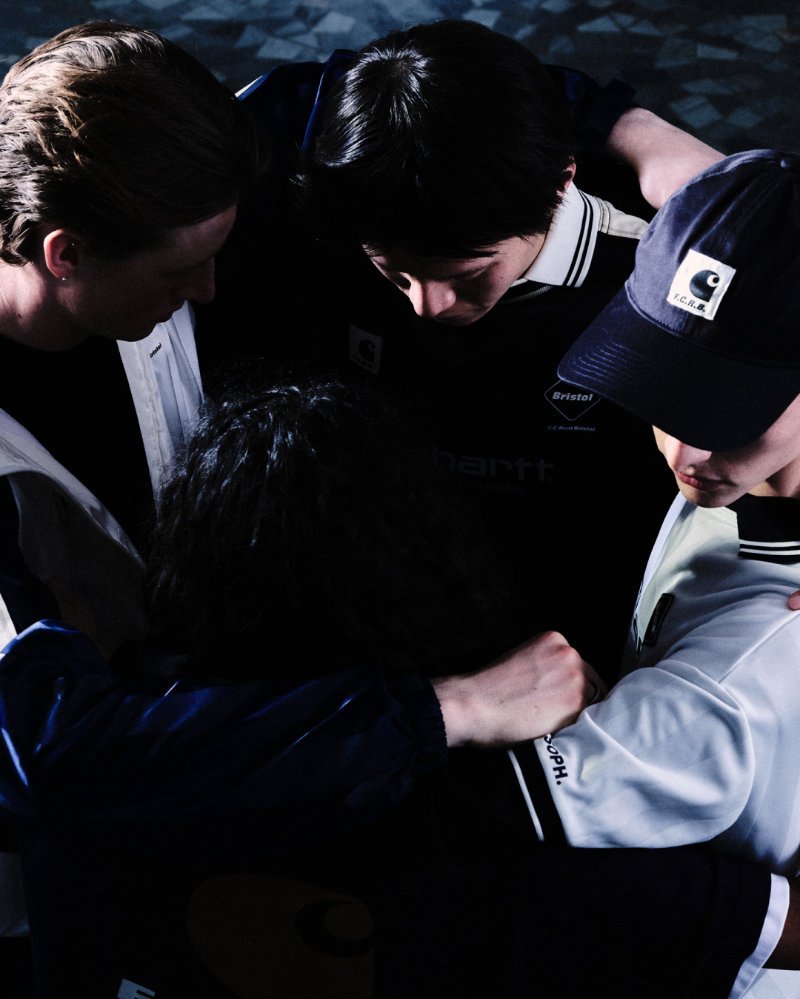
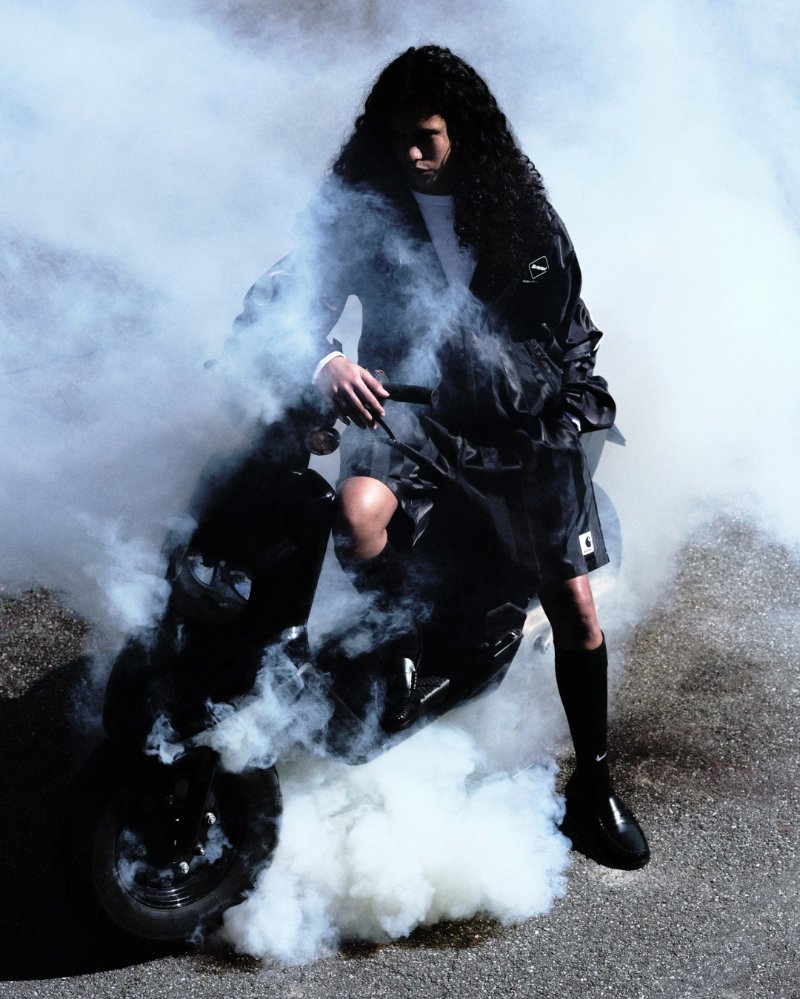
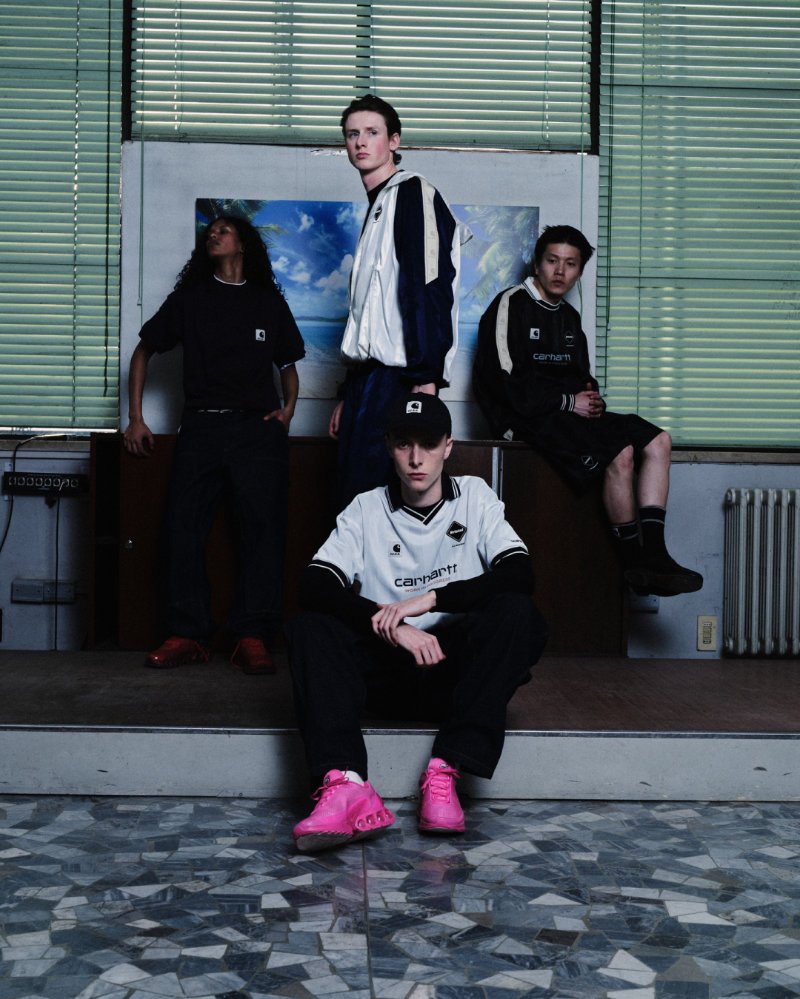

There are merges that function as product, and then there are unions that operate as systems—complete, self-contained worlds that carry their own internal logic. The debut partnership between Carhartt WIP and F.C.Real Bristol belongs to the latter. It doesn’t simply merge two aesthetics; it stages a meeting between two ideologies: one rooted in American labor and durability, the other in Japanese conceptualism and the abstraction of sport.
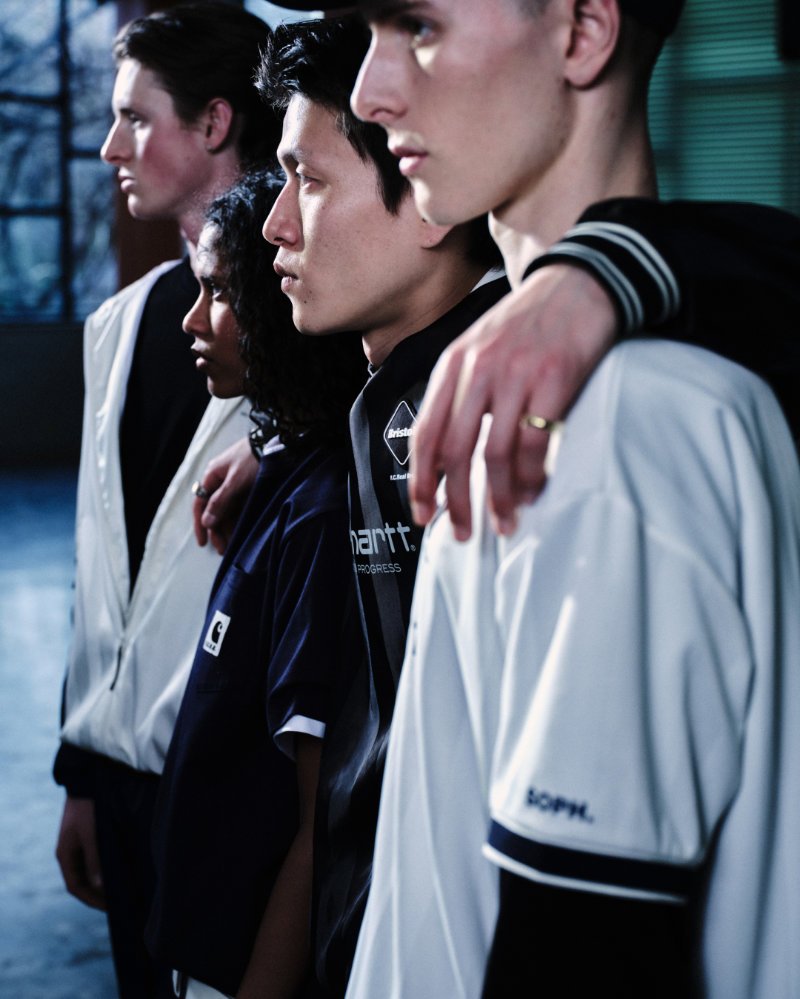
At its core, this capsule reads less like a seasonal drop and more like a uniform for a team that doesn’t exist—but feels entirely real. A fictional club, dressed with the seriousness of heritage workwear. A wardrobe that oscillates between pitch and pavement without ever fully committing to either.
This is where Carhartt WIP and F.C.Real Bristol meet: in the space between function and fiction.
View this post on Instagram
stir
Established in 1999 under SOPH., the label emerged at a moment when football was beginning to exceed the boundaries of sport and enter lifestyle territory. Ahead of the 2002 FIFA World Cup, F.C.Real Bristol proposed something radical: what if a football club could exist purely as an idea?
Not a team with fixtures, standings, or results—but a fully realized aesthetic entity. Kits, training gear, fan merchandise, and seasonal collections designed for players who were never named and supporters who existed only in imagination.
Over time, that abstraction became its own kind of realism. The garments—technical, performance-driven, often referencing authentic football silhouettes—blurred the distinction between actual sportswear and stylized interpretation. Jerseys became everyday shirts. Warm-ups became outerwear. Scarves became fashion accessories rather than matchday necessities.
F.C.Real Bristol wasn’t parodying football culture. It was distilling it.
infra
Opposite this conceptual framework stands Carhartt WIP, the European offshoot of the original Carhartt lineage. Where F.C.Real Bristol builds worlds, Carhartt WIP builds systems—garments engineered for endurance, adapted for urban life.
Its vocabulary is familiar: canvas, duck fabric, reinforced stitching, tonal browns and blacks that speak to labor rather than spectacle. Yet over decades, Carhartt WIP has quietly shifted from utility into cultural infrastructure, becoming a uniform not just for workers, but for skaters, musicians, designers, and subcultures that value authenticity over ornament.
If F.C.Real Bristol imagines a team, Carhartt WIP provides the material reality in which that team might exist.
This collaboration, then, is less about contrast and more about alignment. Both brands deal in uniforms—one fictional, one functional. Both understand clothing as identity, as belonging.
flow
The capsule is anchored in a palette that feels unmistakably Carhartt WIP: Dusty Hamilton Brown, wax, navy, and black. These are not colors that demand attention. They absorb it.
In the context of F.C.Real Bristol, this shift is significant. The label has historically leaned into bold graphics and team-oriented branding, often echoing the visual language of real football clubs. Here, those impulses are restrained, filtered through Carhartt’s subdued chromatic discipline.
The result is a collection that feels heavier—visually, materially, emotionally. The brown tones in particular carry a sense of permanence, grounding the otherwise fluid identity of a fictional team in something tangible.
Even the co-branded jacquard webbing, which threads through multiple pieces, operates with restraint. Logos are present, but never overwhelming. Branding becomes texture rather than statement.
mixology
The silhouettes in this capsule move with intention, each piece negotiating the space between performance and durability.
The varsity jackets, constructed in thick interlock, feel almost ceremonial. They reference American collegiate tradition while aligning with the concept of team identity—a uniform not for play, but for presence. There is a weight to them, both literal and symbolic, as if they belong to a club with a long, undocumented history.
In contrast, the warm-up jackets in lightweight nylon satin lean into motion. These are garments designed for transition: pre-match, post-match, or, more realistically, the in-between spaces of everyday life. The sheen of the nylon introduces a subtle tension against Carhartt’s typically matte finishes, suggesting a dialogue between sport and work rather than a clean fusion.
Game shirts and shorts, rendered in moisture-wicking weaves, remain closest to F.C.Real Bristol’s DNA. Yet even here, the influence of Carhartt WIP is evident in the tonal execution. These are kits stripped of spectacle, reduced to their structural essentials.
What emerges is not a collection of standalone pieces, but a cohesive system of dress. Each item can be layered, interchanged, recontextualized—much like a football kit evolves across training, travel, and matchday.
lang
If the garments establish the team, the accessories define its culture.
The knitted supporter scarf stands as perhaps the most direct reference to football tradition. Yet within this capsule, it feels almost displaced—an artifact of a fandom that doesn’t have a stadium. Wrapped around the neck, it becomes less about allegiance to a team and more about alignment with an idea.
Socks and caps extend this language into the everyday, subtle markers of participation in the fictional club. The canvas cap, in particular, feels distinctly Carhartt WIP—structured, durable, understated—yet recontextualized through F.C.Real Bristol’s branding.
Then there are the objects that push the concept further: a brown rubber duck and a custom football. These pieces sit somewhere between memorabilia and commentary. They acknowledge the culture of collecting that surrounds both football and streetwear, while also gently subverting it.
A rubber duck, rendered in Carhartt brown, branded within a football merge, becomes an emblem of the project’s underlying philosophy: nothing here is entirely literal, but everything is intentional.
material
One of the most compelling aspects of this collaboration is the conversation between materials.
Carhartt WIP brings with it a legacy of heavy-duty fabrics—canvas, duck, structured cottons designed to withstand physical labor. F.C.Real Bristol, by contrast, operates within the realm of performance textiles—lightweight, breathable, engineered for movement.
In this capsule, these material langs intersect rather than compete. Thick interlock coexists with nylon satin. Moisture-wicking weaves sit alongside structured canvas. The garments don’t attempt to resolve these differences; they hold them in tension.
This tension is what gives the collection its depth. It resists the ease of a seamless blend, instead presenting a layered approach to functionality. A jacket might feel robust and grounded, while the shirt beneath it speaks to speed and agility.
The wearer becomes the point of convergence.
idea
F.C.Real Bristol’s long-standing use of fiction as a framework finds new resonance in this collaboration. When paired with Carhartt WIP’s emphasis on authenticity and heritage, the fictional club takes on a different kind of credibility.
It begins to feel less like an imagined entity and more like an alternate reality—one where workwear and football culture have always been intertwined.
This is perhaps the most subtle achievement of the capsule. It doesn’t announce its concept loudly. It allows it to emerge through detail, through material, through the quiet coherence of the pieces.
The absence of an actual team becomes irrelevant. The clothing provides enough evidence to suggest that one could exist.
culture
The blend arrives at a moment when football continues to expand beyond its traditional boundaries. What was once confined to stadiums and broadcasts now permeates fashion, music, and global youth culture.
F.C.Real Bristol anticipated this shift decades ago. Carhartt WIP, in its own way, has always operated within it—its garments adopted by communities that blur the lines between work, leisure, and creative expression.
Together, they articulate a version of football culture that is less about competition and more about identity. A culture that exists in fragments: a jersey worn on the street, a scarf draped in a café, a pair of shorts integrated into everyday dress.
The capsule doesn’t try to define this culture. It reflects it.
movement
A notable restraint runs through the collaboration’s approach to branding. Co-branded elements appear throughout—on jacquard webbing, on labels, on select surfaces—but rarely dominate.
This is a departure from both brands’ more overt expressions. F.C.Real Bristol often leans into visible insignia, echoing the crest-heavy traditions of football clubs. Carhartt WIP, while more subdued, still carries a recognizable logo language.
Here, branding becomes embedded rather than applied. It exists within the construction of the garment, part of its fabric rather than an overlay.
This subtlety aligns with the broader tone of the collection. It invites recognition rather than demanding it.
disrupt
What ultimately emerges from this collab is a sense of completeness. Not completeness in the sense of closure, but in the sense of a fully realized concept.
The fictional club of F.C.Real Bristol is no longer just an idea. Through Carhartt WIP’s materials and sensibility, it gains weight, texture, and presence.
You can imagine the players—not as individuals, but as silhouettes. Moving through a city rather than a stadium. Wearing garments that carry both the discipline of sport and the resilience of workwear.
The club exists, not because it has matches or scores, but because it has a uniform. And that uniform is convincing enough to sustain belief.
fin
The Carhartt WIP x F.C.Real Bristol capsule doesn’t chase novelty. It doesn’t rely on spectacle. Instead, it builds quietly, piece by piece, until the logic of the collaboration becomes undeniable.
It is a study in alignment—of color, of material, of philosophy. A merging of two systems that, at first glance, might seem unrelated, but upon closer inspection reveal a shared understanding of clothing as structure.
In an era saturated with collaborations that prioritize visibility, this one chooses coherence. It asks less to be seen and more to be understood.
And in doing so, it offers something rarer: a world you can step into, fully formed, even if it only exists in fabric.