Carrie Mae Weems: From Quiet Studio Practice to Global Museum Walls

March 15, 2026
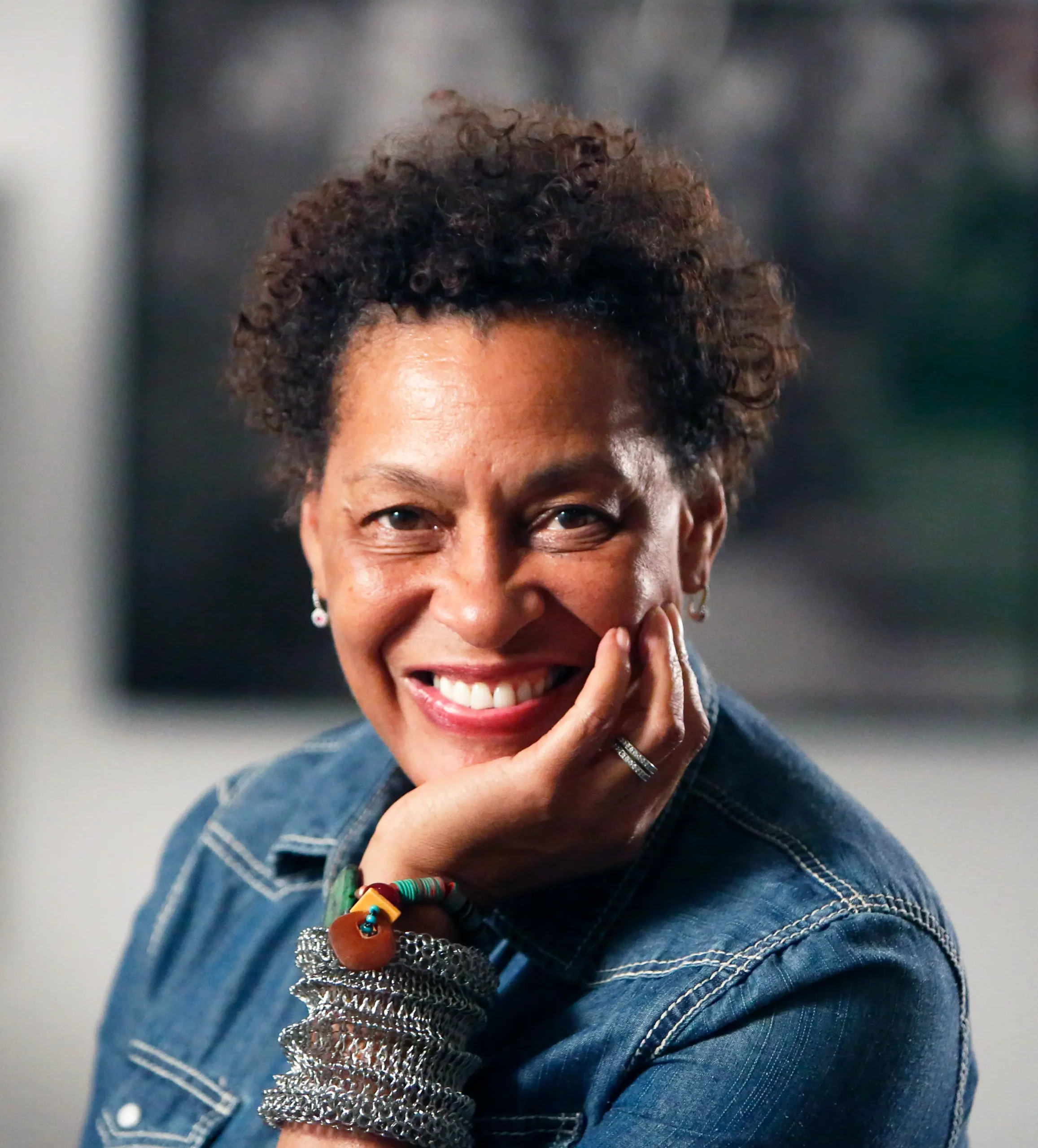
In the past few years, few artists have experienced a cultural surge quite like Carrie Mae Weems. Her photographs—once primarily discussed within academic art circles—are now circulating everywhere: museum retrospectives, viral Instagram posts, art-market auctions, and editorial think pieces about identity and representation. The renewed fascination isn’t random. It reflects a moment when art institutions, collectors, and digital audiences are finally aligning around the importance of an artist whose work has spent four decades dissecting race, gender, power, and storytelling.
From landmark exhibitions to resurgent interest in her iconic images, Weems has become one of the most visible photographers in the contemporary art ecosystem. Museums want her. Collectors want her. And audiences—online and offline—can’t seem to look away.
hx
Born in 1953 in Portland, Oregon, Weems emerged in the late twentieth century as a powerful voice in photography and conceptual art. Her work frequently combines images with text, video, and installation to interrogate how history and identity are constructed in American culture.
From the beginning, she approached photography not simply as documentation but as a narrative medium. Instead of photographing events as they occurred, she staged situations that allowed viewers to confront questions about memory, race, class, and gender.
One of her earliest breakthroughs came with the now legendary Kitchen Table Series (1990). In that project, Weems photographed a fictional narrative set around a single table under a solitary overhead light. She herself appears as the central character, moving through scenes involving lovers, friends, and family members.
The setup was simple—just a table, a room, and carefully staged actors—but the emotional complexity was immense. The series examined relationships, power dynamics, and the intimate negotiations of everyday life, particularly from the perspective of Black womanhood.
More than three decades later, those images still circulate widely online and remain among the most recognizable works in contemporary photography.
View this post on Instagram
stir
Part of the current Weems “takeover” stems from an extraordinary wave of museum exhibitions across the past few years.
Major retrospectives and installations have appeared at institutions worldwide, presenting her work as foundational to contemporary art discourse. A large exhibition titled Looking Forward, Looking Back ran at the Smithsonian American Art Museum through 2024, highlighting the breadth of her career.
At the same time, exhibitions such as The Heart of the Matter have traveled internationally, presenting decades of work that examine history, representation, and social justice.
Museums are not just revisiting old works—they’re commissioning new ones. Recent photographs show Weems placing herself inside monumental museum spaces like the Louvre and the Guggenheim Bilbao, confronting art history and questioning who gets to occupy those halls.
The symbolism is powerful: the artist literally inserting herself into the architecture of cultural authority.
For museums trying to rethink their collections and narratives, Weems offers a compelling bridge between historical critique and contemporary storytelling.
flow
While institutions are rediscovering her work, social media has amplified it.
Many of Weems’s photographs translate almost perfectly into the visual grammar of digital platforms. The strong compositions, theatrical lighting, and symbolic staging feel cinematic—even when viewed on a phone screen.
Take the Kitchen Table Series again. Each image functions almost like a still from a film: a moment frozen mid-conversation, mid-argument, or mid-reflection. The clarity of the staging invites viewers to imagine the story before and after the frame.
That narrative quality makes her work endlessly shareable.
In a digital culture dominated by short attention spans, images that suggest deeper stories tend to travel farther. Weems mastered that formula long before Instagram existed.
why
Another driver of the “Weems moment” is the art market.
Photography has historically lagged behind painting in auction value, but the past decade has seen a steady rise in demand for historically significant photographic work—especially pieces connected to broader cultural narratives.
Collectors increasingly recognize that Weems sits at the intersection of several powerful themes:
-
the evolution of conceptual photography
-
the history of Black American art
-
feminist art practices
-
institutional critique
Her works are represented by major galleries and frequently appear in photography auctions, reflecting growing collector demand and institutional interest.
More importantly, museums themselves are acquiring her work. When a major institution purchases an artist’s piece for its permanent collection, the market typically follows.
For collectors, buying Weems is not just an aesthetic decision—it’s a historical one.
show
One reason Weems continues to resonate is the clarity with which she addresses political and social realities.
Her series Painting the Town, created in the aftermath of the George Floyd protests, transforms boarded-up storefronts into abstract yet emotionally charged images about civic unrest and public memory.
Elsewhere, projects like Constructing History examine how photographs shape narratives about the past.
Rather than offering neutral observations, Weems challenges viewers to reconsider what they think they know about American history and culture.
Her images are beautiful—but they are also confrontational.
That duality keeps them relevant across generations.
idea
Another defining element of Weems’s work is her recurring use of herself as a subject.
Unlike traditional self-portraiture, these images rarely feel autobiographical. Instead, Weems often appears as a symbolic figure moving through historical and cultural spaces.
In many photographs she is seen from behind, gazing toward architecture, monuments, or museum galleries.
The effect is subtle but powerful.
The viewer stands beside her, looking at the world through the perspective of someone historically excluded from those spaces.
It is a quiet but radical shift in the language of photography.
gen
Today’s generation of photographers and visual artists owes a significant debt to Weems.
Her combination of staged photography, performance, and narrative storytelling has influenced countless contemporary practices—from conceptual portraiture to politically engaged art.
You can see echoes of her approach in modern editorial photography, documentary installations, and even fashion campaigns that blend narrative with social commentary.
In many ways, the current wave of narrative-driven photography—common in galleries, magazines, and social feeds—feels like an extension of the strategies she pioneered decades ago.
culture
So why now?
Part of the answer lies in broader cultural shifts.
Over the past decade, museums and audiences have begun reexamining the history of art through a more inclusive lens. Artists whose work interrogates identity and power have moved from the margins to the center of institutional attention.
Weems has been doing exactly that since the 1980s.
What once seemed radical now feels essential.
show
Another reason the current moment feels so strong is that Weems never stopped producing new work.
Even while her early projects gain renewed attention, she continues to experiment with installations, video, performance, and photographic interventions.
That constant reinvention keeps her practice alive and prevents it from being frozen in art-historical nostalgia.
Instead of becoming a “legacy artist,” she remains a living participant in the conversation about culture, representation, and power.
fin
The idea that Carrie Mae Weems is “owning museums, feeds, and big money” might sound like hype—but it reflects something deeper.
Her work has always explored who controls narratives and who gets to be seen.
Now the art world is finally catching up.
Museums are placing her work in the center of exhibitions. Collectors are recognizing its historical importance. And digital audiences are discovering images that feel timeless and urgent at the same time.
In other words, the takeover isn’t just about popularity.
It’s about recognition.
And after forty years of reshaping the language of photography, Carrie Mae Weems has earned every bit of it.

No comments yet.