Casio Rewrites the Everyday: When Calculation Meets Japanese Lacquer Craft

April 2, 2026
2 hours ago
imagine
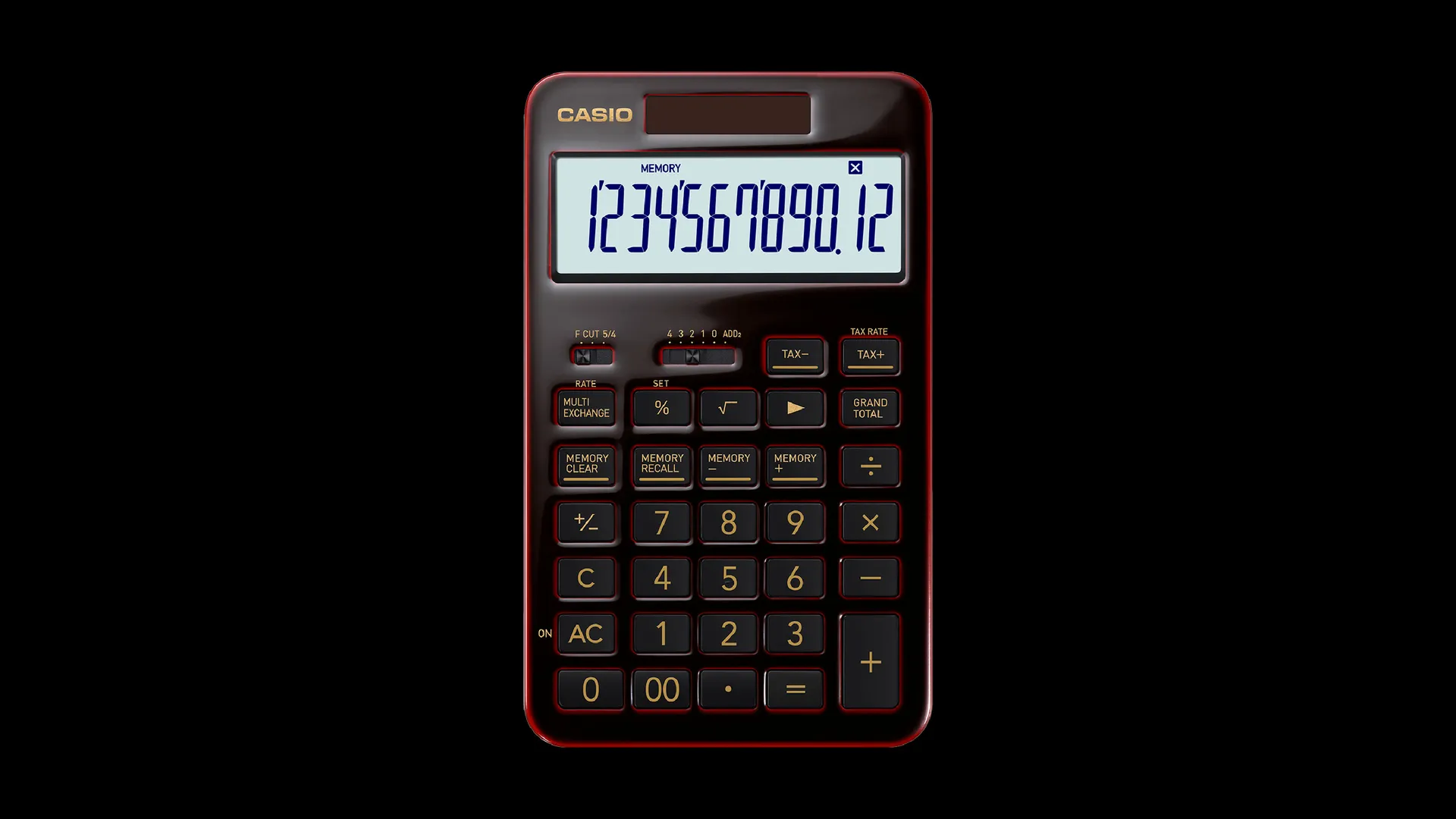
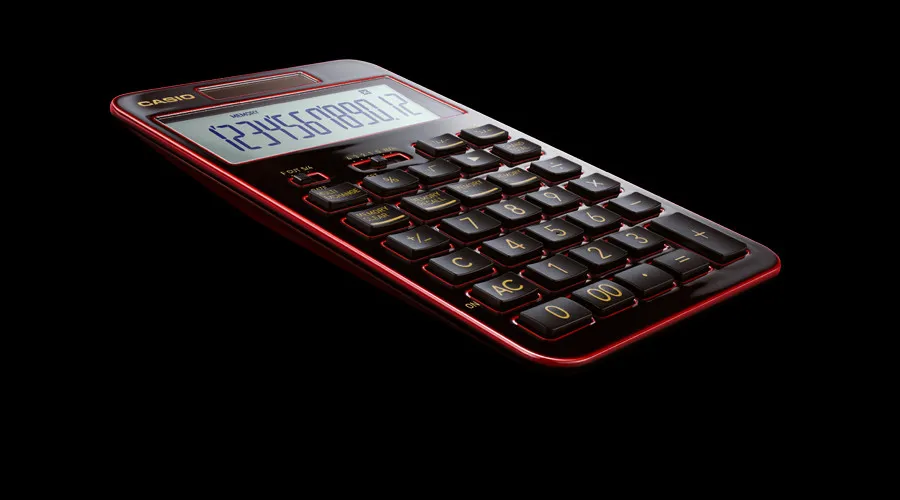
For decades, the calculator has existed in a space of pure function—quiet, indispensable, and largely invisible. It is an object defined not by aspiration but by utility, a tool that lives in offices, classrooms, and studios without ever demanding attention. With its latest flagship concept, Casio disrupts that expectation entirely, transforming the calculator into something far more deliberate: a cultural artifact.
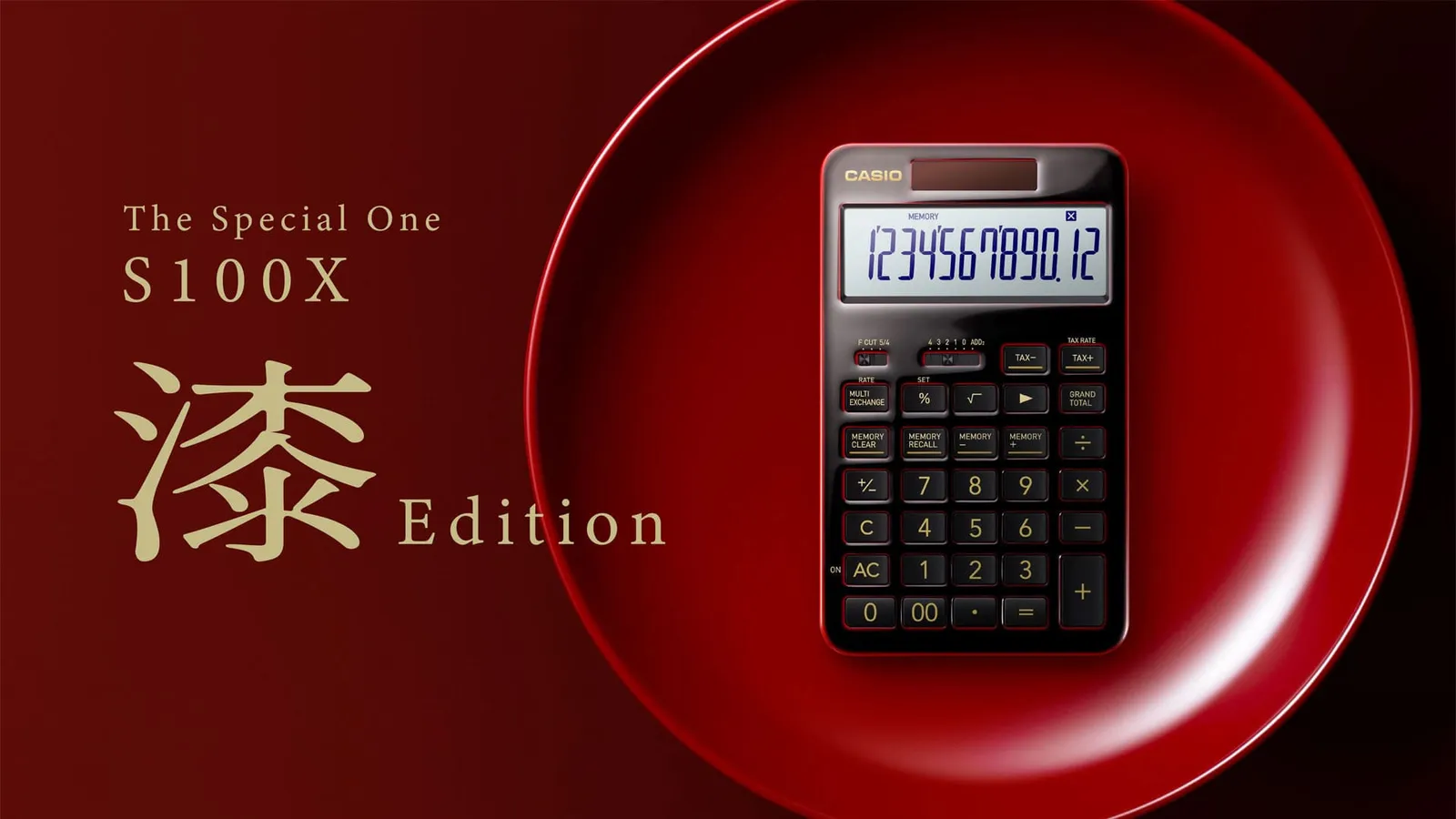
This is not simply a redesign. It is a recontextualization. By incorporating traditional Japanese lacquer work—urushi—into the body of a desktop calculator, Casio bridges two worlds that rarely intersect: precision electronics and centuries-old craftsmanship. The result is an object that asks a new question: what if even the most ordinary tools deserved extraordinary care?
flow
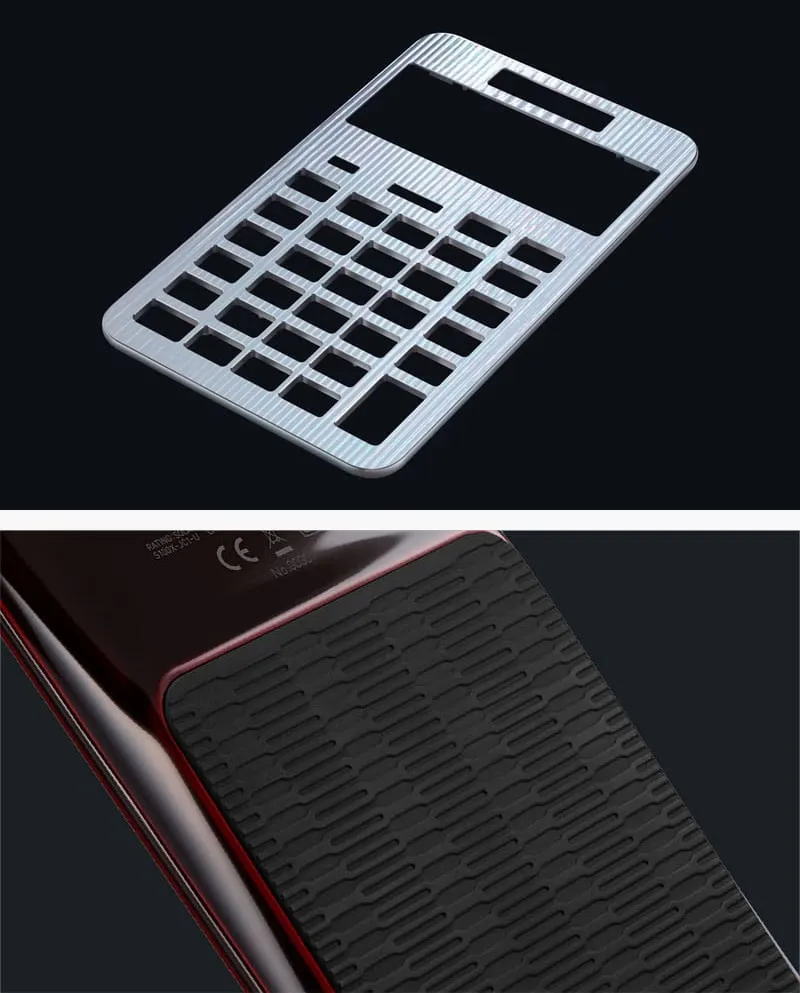
At the center of this transformation is urushi, a natural lacquer derived from the sap of the lacquer tree, long revered in Japanese decorative arts. Its application is meticulous, requiring layers that are hand-applied, cured, polished, and refined over time. The process is not rushed; it is built on patience, repetition, and an understanding that perfection emerges gradually.
Urushi carries with it a sense of permanence. It deepens in tone as it ages, developing a patina that reflects both time and touch. Historically used in objects ranging from ceremonial bowls to armor and furniture, it is a material associated with reverence and durability.
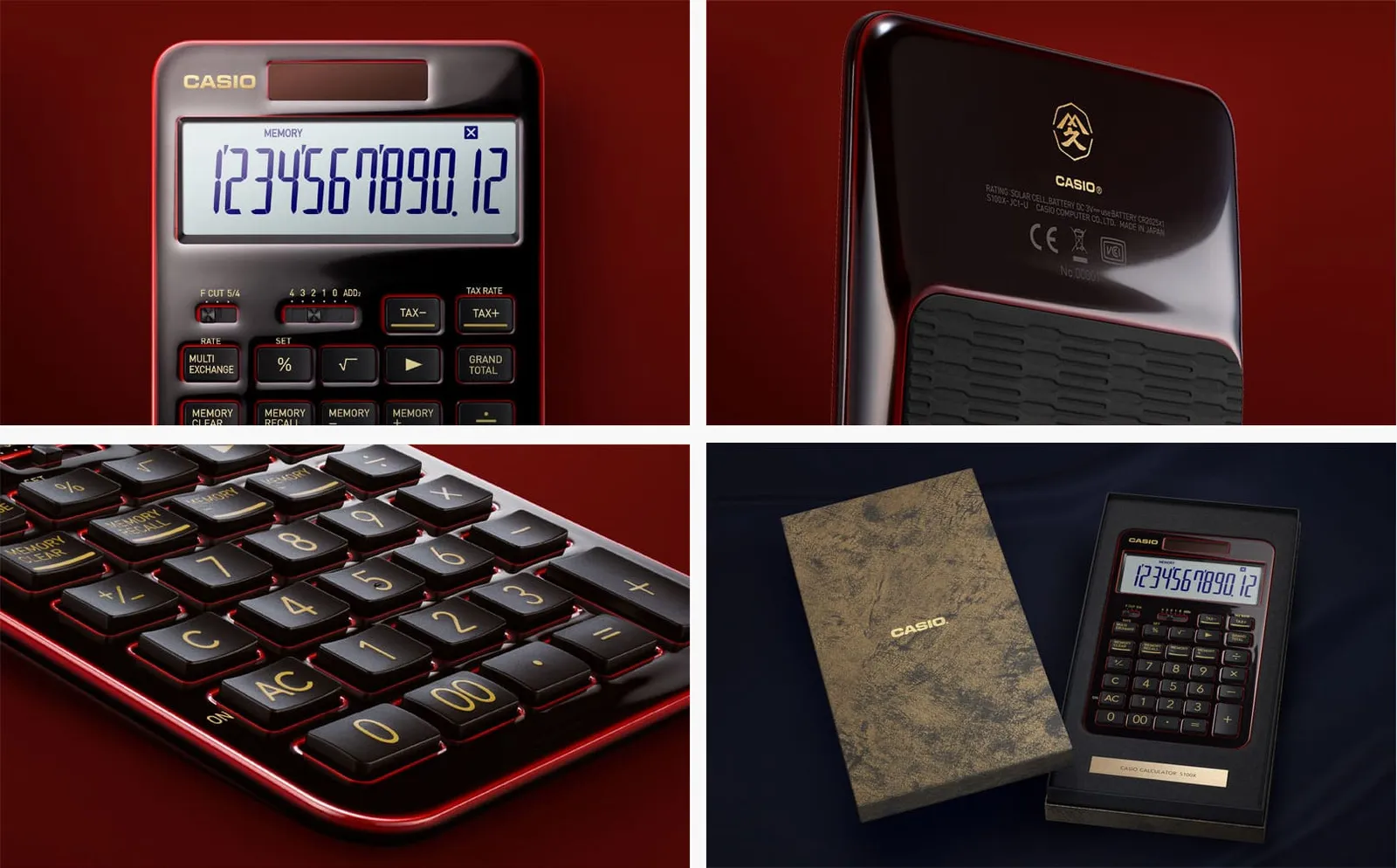
To place urushi on a calculator is to introduce narrative into an otherwise neutral object. Each surface becomes less about protection and more about presence. The sheen is not glossy in a synthetic sense—it is layered, almost organic, catching light in subtle variations that shift depending on angle and environment.
view
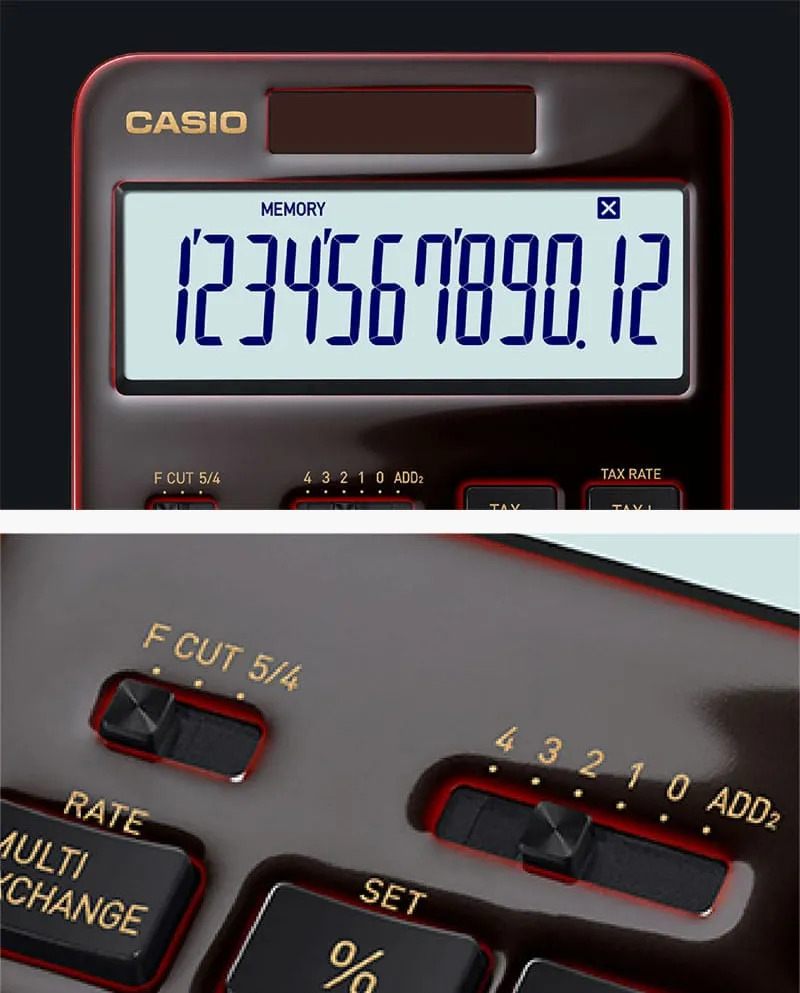
What makes this move particularly compelling is its restraint. Casio has not attempted to over-design the calculator. The familiar form remains intact: a rectangular body, a grid of keys, a display angled for clarity. There is no radical departure in silhouette, no attempt to disguise its identity.
Instead, the transformation happens at the level of surface and material. The lacquer finish introduces depth where there was once uniformity. The color palette leans toward traditional tones—deep blacks, reds, and browns—each one enriched by the layering process of urushi.
This restraint aligns with a broader Japanese design philosophy: the idea that refinement does not require excess. By preserving the recognizable form of the calculator, Casio allows the craftsmanship to speak without interference.
fx
There is a quiet tension in this object. On one hand, it remains a calculator—precise, efficient, designed for speed and accuracy. On the other, the application of urushi introduces a sense of ritual.
To use such a device is to engage with it differently. The tactile experience changes. The weight feels more considered. Even the act of placing it on a desk becomes intentional, as the object now carries visual and material significance.
This duality is where the project finds its strength. It does not abandon function in favor of form; it elevates function through form. The calculator remains a tool, but it also becomes something to be appreciated—perhaps even preserved.
repetition
Casio’s decision arrives at a moment when the value of craftsmanship is being reconsidered across industries. In an era dominated by rapid manufacturing and disposable design, there is a growing appetite for objects that carry evidence of human touch.
The integration of urushi into a mass-market category challenges the notion that craftsmanship must remain confined to niche or haute segments. It suggests that even widely used tools can be reimagined through the lens of tradition.
This is not to say that such a calculator will become ubiquitous. Its production is inherently limited by the nature of the material and the process. Urushi cannot be scaled in the same way as synthetic finishes. Each piece requires time, skill, and environmental conditions that cannot be rushed.
In this sense, the calculator becomes a counterpoint to its own category. It resists the disposability that often defines consumer electronics, instead positioning itself as something enduring.
desk
The rise of remote work and hybrid environments has shifted how individuals relate to their workspaces. The desk is no longer just a site of productivity; it is a curated environment that reflects personal taste and identity.
Within this context, objects like Casio’s lacquered calculator take on new relevance. They function not only as tools but as statements—subtle indicators of how one chooses to engage with work and design.
Placed alongside notebooks, writing instruments, and other considered objects, the calculator becomes part of a larger composition. Its presence contributes to an atmosphere that values intention over convenience.
moment
What Casio achieves here is not merely aesthetic enhancement but cultural dialogue. The calculator, a symbol of modern efficiency, is paired with a material rooted in history and tradition. The result is an object that exists between timelines.
This dialogue is particularly resonant in Japan, where the coexistence of advanced technology and traditional craft is a defining characteristic. By bringing urushi into the realm of consumer electronics, Casio reinforces this dual identity.
It also raises questions about how other everyday objects might be reinterpreted. If a calculator can carry this level of craftsmanship, what about keyboards, phones, or other tools that populate daily life?
move
There is an emotional layer to this project that extends beyond its visual appeal. Objects that are crafted with care tend to invite a different kind of relationship. They are less likely to be discarded, more likely to be maintained, and often become part of personal routines in a deeper way.
The lacquered calculator introduces this emotional dimension into a category that has historically been devoid of it. It transforms calculation—a process often associated with abstraction—into something grounded and tactile.
This shift is subtle but significant. It suggests that even the most functional aspects of life can benefit from a sense of beauty and intention.
position
While details regarding pricing and availability remain limited, it is clear that this calculator occupies a different position within Casio’s lineup. It is not designed to compete on affordability or accessibility. Instead, it operates within a space that values design, materiality, and cultural resonance.
Its impact, however, may extend beyond its immediate market. By demonstrating what is possible within a familiar category, it sets a precedent for future experimentation. Other brands may follow, exploring ways to integrate traditional techniques into modern products.
In this way, the calculator becomes more than a product—it becomes a reference point.
shh
Casio’s lacquered calculator does not announce itself loudly. It does not rely on bold graphics or technological breakthroughs to capture attention. Its innovation is quieter, rooted in material and philosophy rather than spectacle.
Yet this quietness is precisely what makes it compelling. It invites closer النظر—encouraging users to look again at something they might otherwise overlook.
In doing so, it redefines what a calculator can be. Not just a tool, but an object of consideration. Not just functional, but meaningful.
fin
The transformation of a calculator through traditional Japanese lacquer work may seem, at first glance, like a niche endeavor. But its implications are broader. It challenges assumptions about value, utility, and the role of craftsmanship in contemporary design.
For Casio, it represents a willingness to explore beyond the expected—to take a familiar object and imbue it with new significance.
In a world increasingly defined by speed and disposability, this approach feels both timely and necessary. It reminds us that even the most ordinary tools can be elevated, not through excess, but through care.
And in that elevation, something shifts. The calculator remains the same in function—but entirely different in meaning.