Clint Eastwood: A Life Beyond Hollywood without Disdains

April 5, 2026
48 seconds ago
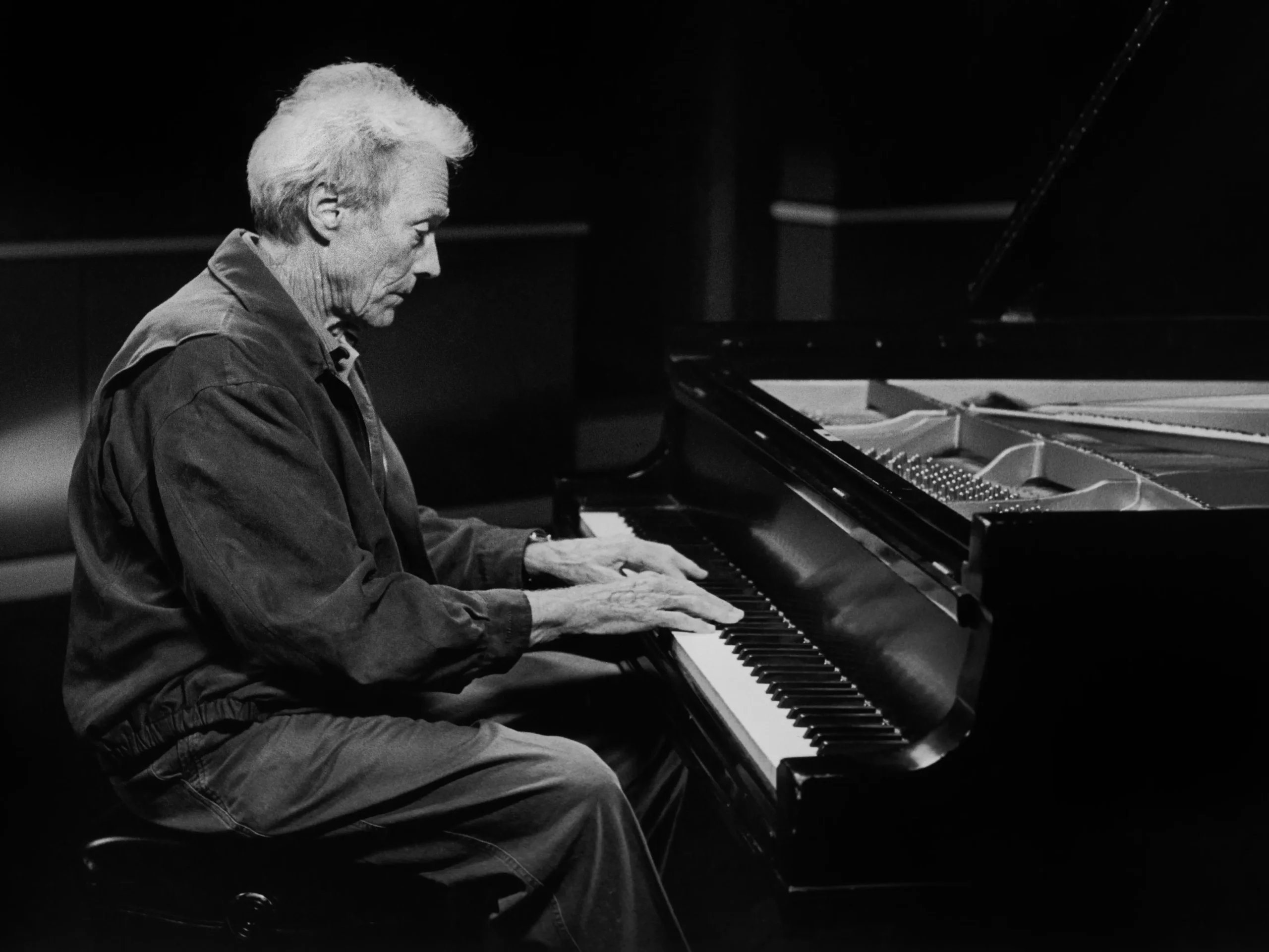
There is a kind of silence that follows a career as expansive as that of Clint Eastwood—not absence, not disappearance, but a recalibration. The industry tends to interpret distance as decline, but in Eastwood’s case, the shift reads differently. It feels deliberate, almost compositional, like the sustained note at the end of a piano phrase that refuses to resolve too quickly.
As he approaches 96, Eastwood has not so much retired as he has withdrawn from the mechanisms that once defined his output. The distinction matters. Hollywood thrives on visibility—press cycles, premieres, strategic relevance—but Eastwood’s current rhythm operates outside that system. He has stepped away not out of exhaustion, but out of completion. Or perhaps more precisely, out of control.
Reports of his retreat—time split between the California coast and Hawaii, a life structured less by production schedules and more by personal ritual—suggest a man reorganizing his relationship to creation. Piano, painting, quiet reflection. These are not replacements for filmmaking; they are extensions of it, stripped of audience expectation.
And yet, the myth persists: is this retirement?
He has denied it.
Which, in itself, is telling.
myth
Retirement, as commonly understood, implies an ending—a closing chapter, a finality. But Eastwood’s career has never followed linear expectations. From his emergence in Rawhide to the cultural rupture of Dirty Harry, and later his evolution into an Oscar-winning director with Unforgiven and Million Dollar Baby, he has consistently resisted categorization.
Even in later works like Gran Torino and The Mule, there was a sense of ongoing refinement rather than conclusion. His filmmaking became quieter, more introspective, less concerned with spectacle and more attuned to moral ambiguity and human fragility.
So when speculation arises—when interviews are misquoted, when headlines suggest a definitive step away—it clashes with the logic of his career. Eastwood has never announced endings. He simply transitions.
The current phase, then, is not retirement. It is reduction.
A narrowing of focus.
show
The image of Eastwood at a piano is not incidental—it is essential.
Music has long been embedded in his work. He has composed scores, collided with jazz musicians, and approached film with a musician’s sensibility: pacing as rhythm, silence as structure, dialogue as phrasing. The shift toward playing piano in private is less a departure than a return to a foundational mode of expression.
What changes is the audience.
Film demands interpretation. It exists in public space, subject to critique, distribution, and historical placement. Piano, in contrast, can remain entirely internal. It elicits for creation without documentation, performance without permanence.
There is a freedom in that.
At 96, the act of making something that does not need to be seen becomes radical. It rejects the archival impulse of modern culture—the need to record, share, monetize—and instead embraces ephemerality.
A melody played once.
A moment unrecorded.
afar
Geography attempts to conjure its own role in this transformation.
Eastwood’s time between coastal California and Hawaii is not simply lifestyle—it is spatial disengagement. Hollywood, as both place and concept, thrives on proximity. Meetings, networks, view. To step away physically is to loosen those ties.
The California coast offers familiarity without intrusion. Hawaii introduces a further degree of separation, an environment where the rhythms of the industry feel irrelevant.
This duality—near and far, connected yet removed—mirrors his current relationship with filmmaking itself. He is not entirely gone. He is simply no longer embedded.
It is worth noting that Eastwood has always maintained a certain distance from Hollywood culture. Even at the height of his career, he cultivated an image of independence, often working outside the conventional studio system’s constraints.
What we see now is that independence taken to its logical conclusion.
the extent
There is a tendency to measure artists by output—films made, roles performed, awards accumulated. By this metric, Eastwood’s legacy is already secured. Few careers encompass such breadth and longevity, spanning genres, decades, and evolving cultural contexts.
But output is only one dimension of artistry.
What happens when an artist continues to create without producing?
When the act itself becomes sufficient?
Eastwood’s current focus on painting and music suggests a redefinition of what it means to be an artist in later life. It is no longer about contribution to the public sphere. It is about sustaining a personal relationship with creativity.
This shift challenges the audience as much as the artist. It asks us to reconsider our expectations: do we value the work, or the presence of the artist within the cultural conversation?
In stepping back, Eastwood disrupts that dynamic. He remains culturally significant while being physically absent from its mechanisms.
be
Legacy is often treated as a fixed entity—a body of work, a list of achievements. But in reality, it behaves more like atmosphere. It surrounds, influences, and persists beyond active participation.
Eastwood’s films continue to circulate, to be revisited, reinterpreted, critiqued. His influence is visible in contemporary filmmaking, in the moral complexity of modern Westerns, in the restrained storytelling of character-driven dramas.
The absence of new work does not diminish this presence. If anything, it amplifies it.
There is a clarity that emerges when an artist stops adding to their catalog. The existing work becomes more legible, its patterns more apparent. Themes recur: justice, aging, redemption, solitude. These concerns feel increasingly aligned with his current life.
It is as if the films were always moving toward this point.
unresolved
Despite all indications of withdrawal, Eastwood’s denial of retirement remains significant.
It preserves possibility.
To declare retirement would be to close a door, to define the current phase as an endpoint. By refusing that language, he maintains an openness that aligns with his career-long unpredictability.
Could he direct again?
Perhaps.
Does he need to?
No.
This tension—between potential and completion—is central to understanding his present moment. It allows him to exist outside the binary of active versus retired, engaged versus absent.
story
There is a cultural discomfort with aging, particularly in industries built on saw and relevance. Narratives tend to frame aging as decline or as heroic persistence—either stepping away gracefully or continuing against the odds.
Eastwood resists both.
He is neither staging a final act nor clinging to productivity. Instead, he is redefining what aging within a creative life can look like. It is quieter, less performative, more internally driven.
This approach aligns with the themes of his later films, which often explored the complexities of aging without sentimentality. Characters confronted their limitations without losing agency. They adapted rather than resisted.
Now, Eastwood himself embodies that perspective.
away
In an era where creation is often synonymous with sharing—where even private acts are documented and distributed—Eastwood’s turn inward feels almost subversive. It suggests that art can exist without validation, without visibility.
This is not a rejection of audience, but a reprioritization.
For decades, his work has been consumed, analyzed, and celebrated. The current moment allows for a different kind of engagement—one that is entirely self-contained.
There is a purity in that.
influ
Younger filmmakers operate in a landscape partially defined by his contributions. The Western genre, in particular, bears his imprint, evolving through reinterpretations of the archetypes he helped solidify.
This continuity underscores a key point: influence does not require presence.
It persists independently.
stanza
To say that Clint Eastwood has stepped away from the industry is accurate in a literal sense. He is no longer embedded in its daily operations, no longer producing work at the pace that once defined his later career.
But to interpret this as an ending would be to misunderstand the nature of his evolution.
The work continues.
It simply takes different forms now—unseen, unheard, but no less significant.
A melody in a quiet room.
A painting that may never be exhibited.
A life still engaged in creation, even as it recedes from view.
In that sense, Eastwood has not left the industry.
He has transcended it.