C.P. Company — 1990s Utility Gilet (White) – Vintage

April 11, 2026
4 hours ago

A study in restraint, function, and structural
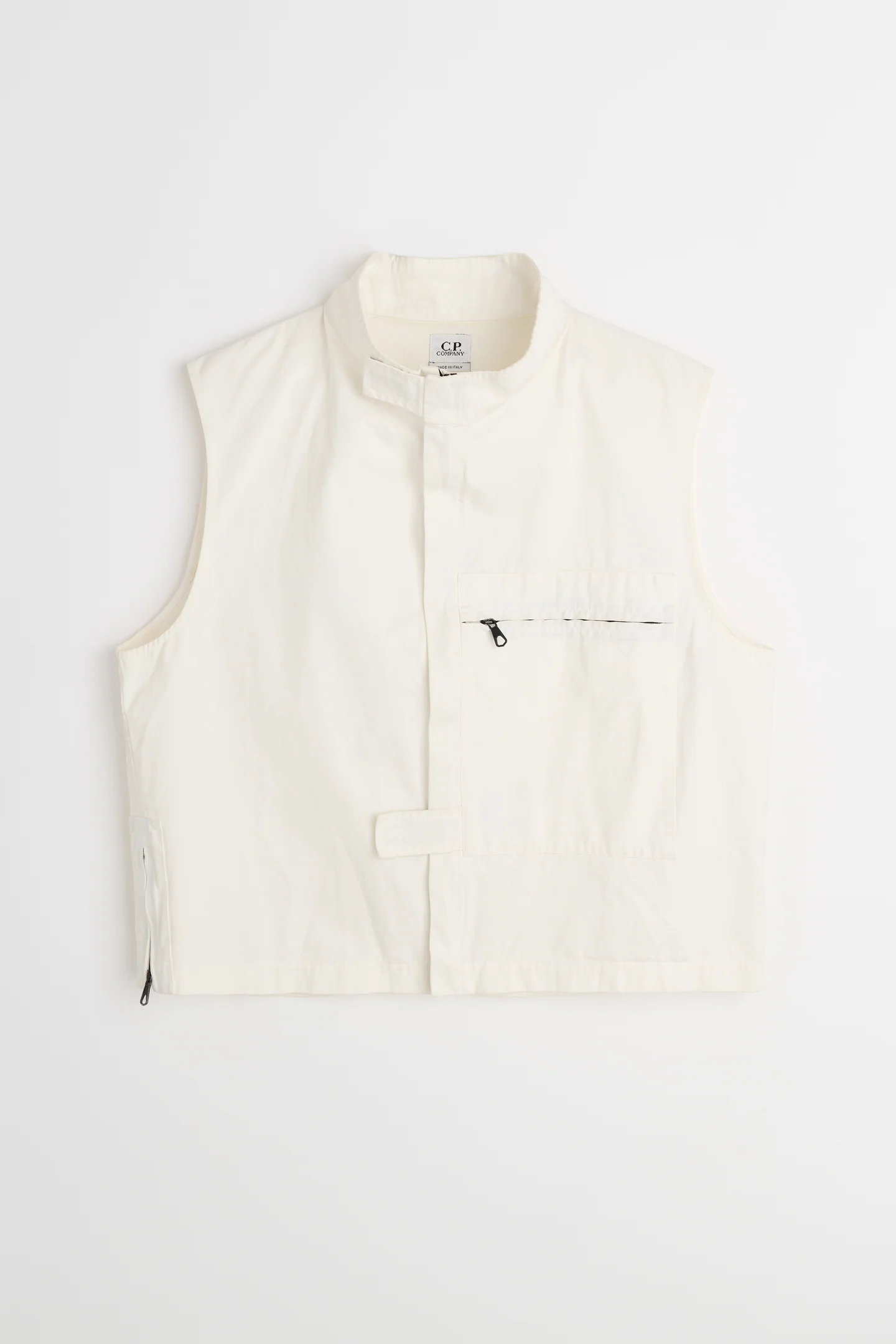
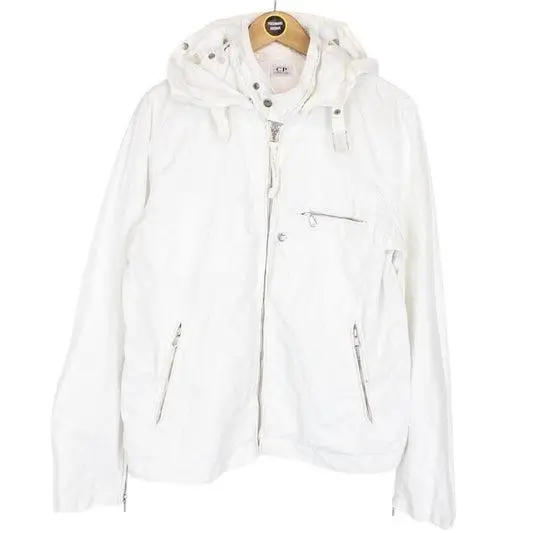
The piece resolves itself quickly, without ornament or narrative excess. A white gilet, cut short and squared, its surface uninterrupted except where function insists. There is no visible branding interrupting the field, no decorative stitching competing for attention. Instead, the garment operates through placement—through the exactness of seams, closures, and voids.
It belongs to a moment within C.P. Company where utility was not aestheticized but engineered into the garment’s logic. The 1990s output, particularly in cloth-based constructions, often leaned toward this quieter articulation. Not spectacle, but system.
stir
The silhouette is immediate: cropped, slightly boxy, and balanced. It neither drapes nor exaggerates; it holds. The cloth fabric weave—dense but not heavy—gives the vest a certain architectural stiffness. Not rigid, but resolved. It allows the garment to sit off the body rather than collapse into it.
This is important. The gilet is not designed to follow the body but to frame it. That distinction separates it from later iterations of technical vests, which often prioritize flexibility or overt performance cues. Here, structure is the primary gesture.
The stand collar reinforces this. It rises cleanly, held in place by a Velcro throat tab that reads less as a stylistic flourish and more as a mechanical solution. There is no attempt to soften the edge. When closed, it completes a continuous vertical line down the center front—interrupted only by the concealed fastening beneath.
(Second Hand CP Company – Vintage)
lang
The front closure is hidden. This is not incidental. Concealment is a recurring logic within the garment: elements are present, but they are not announced.
The chest pocket follows this principle. It exists as a subtle interruption in the surface—a faint rectangular plane, defined more by its boundary than its presence. The zipper line, slightly exposed, becomes one of the few visible gestures on the front. It is not decorative. It is simply unresolved enough to be seen.
This restraint extends across the entire front panel. There is no layering of pockets, no aggressive compartmentalization. Utility is reduced to what is necessary, then embedded quietly.
flow
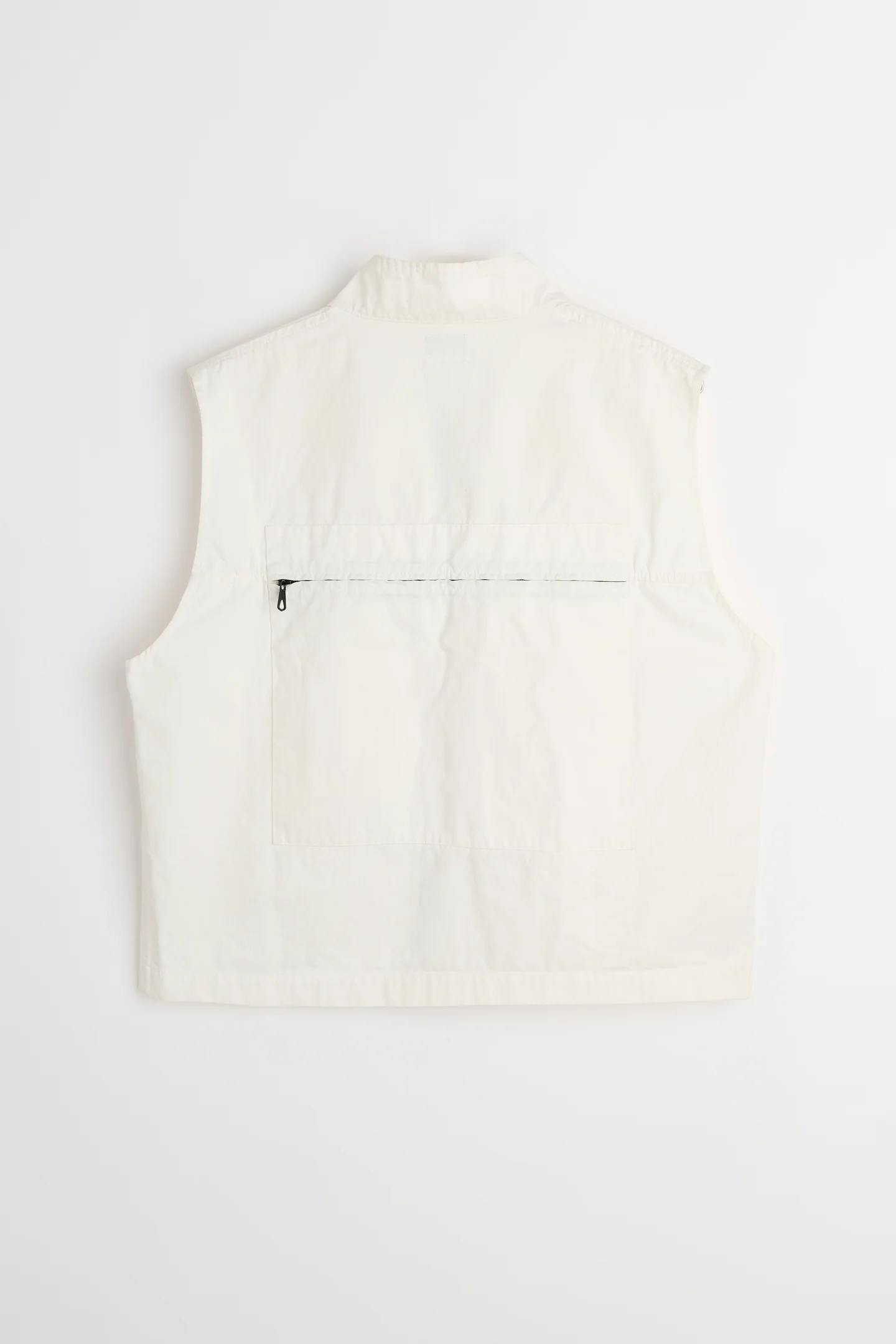
The back of the garment carries its most defining feature: a large, horizontally aligned zip compartment that spans nearly the full width of the vest.
This is where the piece declares itself.
Pocket is not applied; it is integrated. The zipper line cuts cleanly across the back panel, forming a horizon. Below it, a secondary plane—a large storage compartment—sits almost flush with the body of the garment. The scale of this pocket shifts the visual weight of the piece rearward, subtly altering how it reads in motion.
Functionally, it offers capacity. Structurally, it introduces tension.
As placement is deliberate. It avoids the conventions of front-loaded utility and instead redistributes function across the garment. This decision aligns with a broader C.P. Company tendency of the period: rethinking where utility resides, rather than simply adding more of it.
The zipper pull, small and black, is the only contrasting element. It punctuates the otherwise continuous white field. Not an accent, but a marker—indicating interaction.
neutrality
The choice of cloth fabric is significant. In contrast to the synthetic-heavy direction the brand would later explore more aggressively, cotton here serves as a neutral medium.
It holds dye differently. In white, it absorbs light rather than reflecting it sharply. The result is a softer, almost matte surface. This tempers the technicality of the design. The garment feels industrial, but not cold.
There is also a tactile implication. Cotton introduces friction—against the body, against other layers. It anchors the piece within a more grounded, wearable context, even as its structure suggests something more engineered.
shh
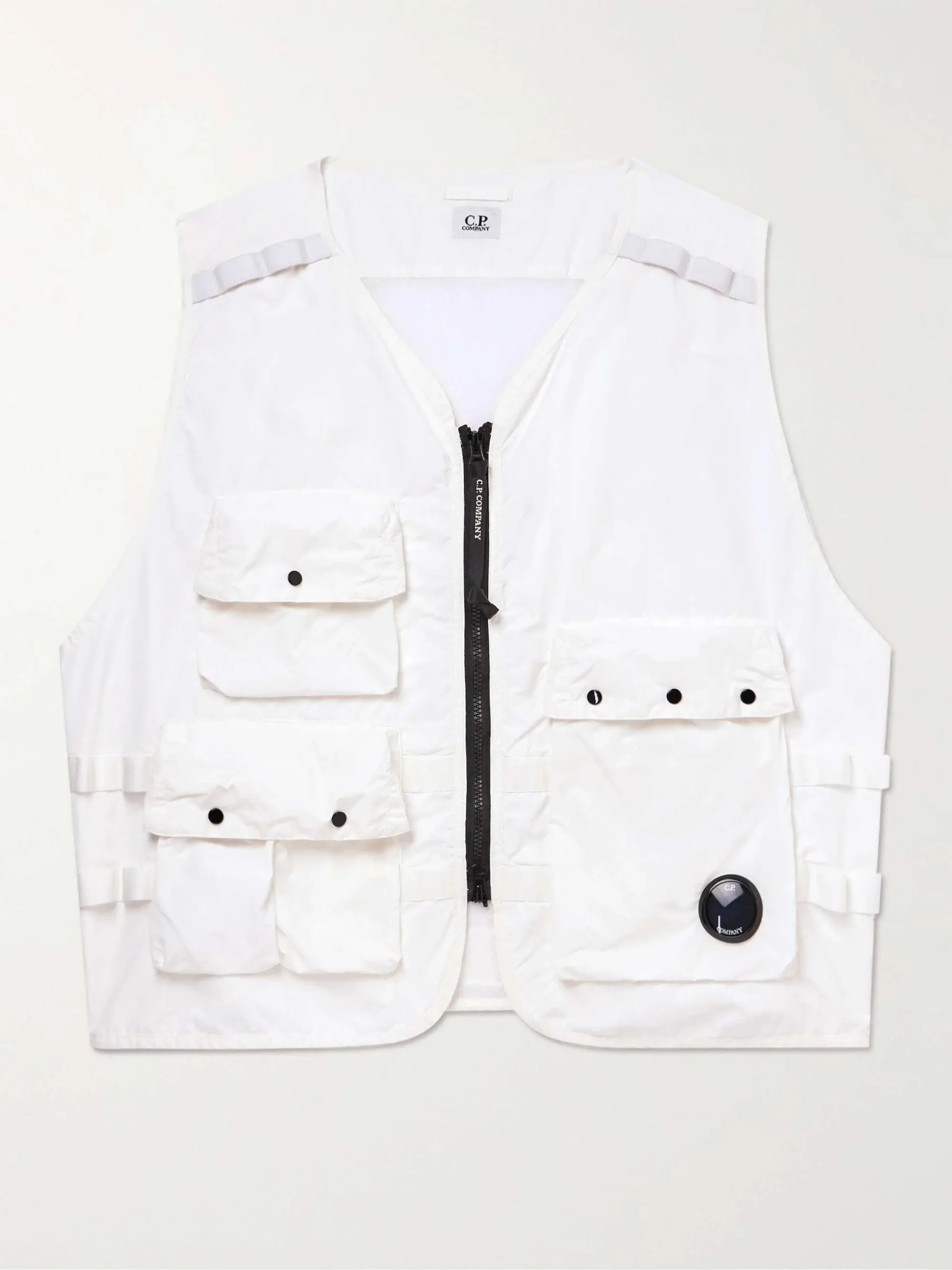
Perhaps the most telling aspect is what is not present. There is no external lens, no badge, no overt insignia.
This absence situates the piece within a narrower, more specific lineage of C.P. Company garments—those that prioritize construction over identity signaling. It predates, or deliberately avoids, the more recognizable brand codes that would later define the label’s mainstream visibility.
As a result, recognition is deferred. The garment does not announce itself. It requires familiarity to be understood.
essay
As a pre-owned piece in good condition, the vest carries minimal visible disruption. The cloth fabric may show slight softening, minor creasing—evidence of use rather than degradation.
This is consistent with the material. The material ages through wear, not breakdown. It adapts. In white, this becomes more visible, but also more nuanced. The garment does not deteriorate into abstraction; it accumulates subtle variation.
The condition, then, does not detract from the piece. It situates it within time.
fx
What remains most pertinent is the garment’s refusal of excess. Every element has a role, but none extend beyond it.
- The collar secures and completes the line
- The front pocket offers immediate access without intrusion
- The rear compartment redistributes storage and defines the silhouette
- The concealed closure maintains continuity
There is no redundancy. No duplication of function for the sake of view density.
This economy is what distinguishes the piece from contemporary interpretations of “utility,” which often equate functionality with quantity. Here, utility is resolved through placement and proportion.
fin
The gilet operates as an object of quiet precision. It does not rely on branding, volume, or material novelty to assert itself. Instead, it constructs a system—one that becomes legible through wear, through interaction, through attention.
It is not designed to be noticed immediately.
But it holds.