
Rewriting the Final Frontier: Inside The Early Drafts Around Star Trek’s Iconic Opening

February 18, 2026
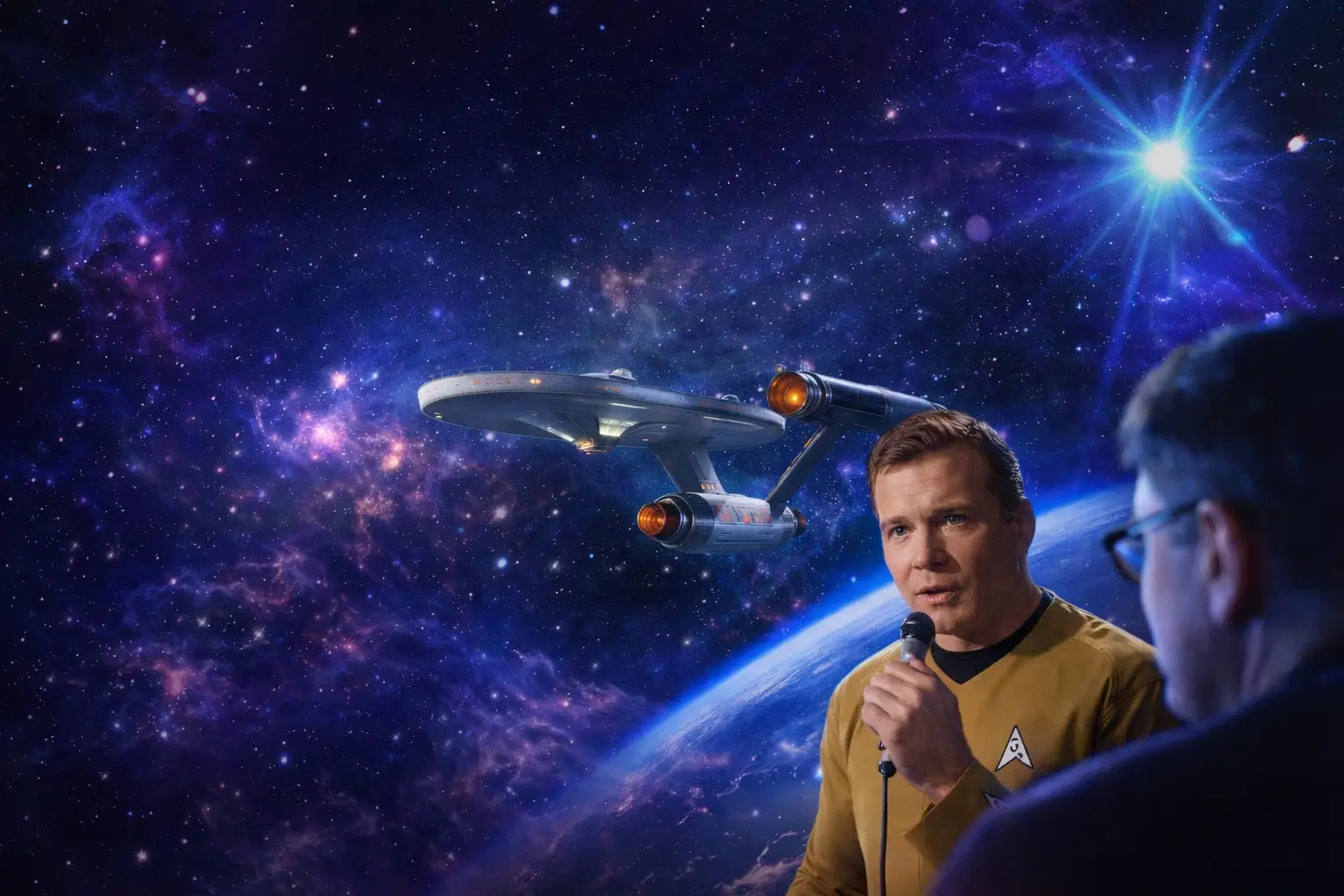
Few lines in television history have reached the mythic cultural status of “Space: the final frontier…”. The opening narration of Star Trek: The Original Series has transcended the boundaries of fandom to become a global shorthand for curiosity, optimism, and exploration. But long before it etched itself into pop culture memory, that opening went through multiple drafts, philosophical tweaks, and tonal experiments. Today, renewed discussion across fan communities, writers’ circles, and entertainment media has revived interest in how those early versions came to be—and what they reveal about the evolving identity of Star Trek itself.
From archival scripts to modern debates about language and legacy, the buzz surrounding the series’ iconic opening has grown louder as the franchise expands into new streaming-era chapters. To understand why, we need to go back to the beginning—before the final line was spoken, before the cadence became legendary, and before the words themselves reflected a broader cultural moment.
The opening narration for Star Trek is iconic. William Shatner recorded it while on a break filming the episode “The Dagger of the Mind”. The narration was a group effort between Gene Roddenberry, John D.F. Black, and Bob Justman, and you can see a bit of its evolution here… pic.twitter.com/X2U9lxBMVD
— Subcommander Tal (@SubcommanderT) February 9, 2026
vis
At the heart of the opening narration stood creator Gene Roddenberry, whose ambition was not simply to make another science-fiction show but to create a futuristic anthology about human potential. Early production notes reveal that Roddenberry wanted language that felt aspirational rather than militaristic. The series was conceived during the height of the space race, when real-world headlines about NASA missions were shaping public imagination, and he believed the show should mirror that collective optimism.
Initial drafts experimented with different tones. Some leaned heavily on adventure, emphasizing danger and unknown worlds. Others were more philosophical, framing the voyage as a humanist quest. Writers reportedly tested alternatives that sounded either too clinical or too poetic, searching for a balance between accessibility and grandeur.
The eventual wording—calm, declarative, and slightly formal—was designed to echo both naval tradition and literary science fiction. The goal was simple: immediately communicate that the audience was about to witness something larger than a typical episodic drama.
stir
The earliest script versions of the opening narration varied significantly from the final familiar form. Some drafts included longer introductions describing the ship in greater technical detail, while others highlighted exploration in broader, more philosophical language. One notable difference across early versions was the pacing. Writers experimented with sentences that felt more conversational, only to realize they lacked the mythic rhythm necessary to anchor a weekly series.
Several drafts reportedly played with alternate phrasing for “to boldly go,” including variations that either softened or intensified the adventurous tone. Ultimately, the final line struck a perfect cadence—slightly unconventional grammatically, but undeniably memorable. The structure created a rhythmic launch into the episode, almost like a countdown before a rocket ignition.
Fans today often debate whether the famous split infinitive was intentional artistic license or simply a stylistic choice that sounded right when spoken aloud. Regardless, its inclusion helped give the opening a distinctive voice, setting it apart from the more rigid narration styles common on television at the time.
perform
While the words themselves mattered, the performance cemented their legacy. The narration delivered by William Shatner as Captain Kirk gave the lines a confident yet reflective tone. His pacing—measured but adventurous—helped transform what could have been a straightforward introduction into something cinematic.
Early recordings reportedly experimented with slightly different deliveries. Some were faster, emphasizing action; others leaned toward solemnity. The final version struck a balance that matched the show’s identity: hopeful, exploratory, and just a little daring.
That performance remains central to contemporary discussions. Fans revisiting archival footage often point out how the delivery itself shaped the mythos, proving that writing and performance are inseparable when it comes to cultural memory.
why
More than half a century later, the opening narration continues to resonate because it taps into universal themes. The language speaks to exploration not just in space but in thought and identity. It frames humanity as collectively moving forward, which explains why the lines often appear in everything from graduation speeches to political commentary.
In modern culture, where science fiction has increasingly embraced darker or dystopian tones, the optimism of Star Trek’sopening feels almost radical. This contrast has fueled renewed appreciation among viewers who see it as a reminder of a more hopeful vision of the future.
As new entries in the franchise expand the universe, creators often reference or reinterpret the original opening, further reinforcing its iconic status. Each reinterpretation sparks debate about fidelity versus innovation—another reason the early drafts have attracted attention recently.
media
Recent online conversations have fueled a wave of curiosity about how the opening evolved. Social media threads analyzing script drafts, video essays breaking down word choices, and podcasts revisiting classic television writing have all contributed to renewed buzz. Fans are particularly fascinated by the idea that something so seemingly inevitable almost turned out differently.
Many discussions focus on language. The phrase “to boldly go” continues to generate debate among linguists and fans alike, with some defending its poetic rhythm while others analyze its grammatical quirks. The conversation has even expanded to broader questions about how storytelling language influences cultural perception.
Another point of discussion centers on inclusivity. In recent years, later Star Trek series have updated or slightly adapted portions of the narration to reflect modern sensibilities, sparking both praise and nostalgia-driven criticism. These debates highlight how deeply attached audiences are to the original wording.
mem
Part of the current fascination stems from the rise of archival culture. Fans now have unprecedented access to behind-the-scenes materials, early scripts, and production notes, thanks to documentaries, streaming platforms, and digital collections. This transparency allows audiences to see iconic moments as works-in-progress rather than finished artifacts.
The opening narration becomes more impressive when viewed through this lens. It wasn’t inevitable—it was crafted, revised, and shaped through creative experimentation. Recognizing that process adds depth to its legacy and reminds viewers how collaborative television storytelling truly is.
Nostalgia also plays a role. As classic franchises continue to evolve, revisiting foundational elements offers a sense of continuity. The early drafts represent a glimpse into alternate histories—versions of Star Trek that might have existed but didn’t.
influ
The impact of the opening extends far beyond the franchise itself. Countless shows, films, and even commercials have parodied or paid homage to the narration’s structure. The phrase “to boldly go” has entered everyday language, used in contexts ranging from business innovation to academic exploration.
This influence explains why discussions about early drafts generate interest even outside fan circles. Writers and creators study the opening as an example of efficient world-building—how a single paragraph can establish tone, stakes, and philosophy within seconds.
In an age where attention spans are shorter and intros are often skipped, the enduring power of this sequence feels almost revolutionary.
what
Modern audiences are increasingly curious about creative origins. Understanding how iconic lines evolve from draft to final form offers insight into the storytelling process itself. The buzz around Star Trek’s opening reflects a broader cultural fascination with revision, experimentation, and artistic decision-making.
It also highlights the importance of clarity and vision. The final narration succeeds because it distills a complex concept into a few unforgettable sentences. It doesn’t overwhelm with exposition; instead, it invites curiosity.
Today’s writers often cite this approach as a benchmark for concise storytelling—proof that simplicity, when executed well, can achieve timelessness.
leg
As the Star Trek universe expands across streaming series and films, the original opening remains a guiding star. New generations encounter it not as a relic but as a foundational statement of purpose. The early drafts remind us that even the most iconic phrases begin as experiments—ideas shaped through revision and collaboration.
The ongoing buzz surrounding these drafts isn’t just about nostalgia; it’s about understanding how cultural icons are made. Fans, critics, and writers continue to explore the choices behind the words because those choices reveal something enduring about the human desire to explore, imagine, and push beyond boundaries.
sum
Early drafts of Star Trek’s iconic opening show that great storytelling rarely arrives fully formed. The narration evolved through trial, revision, and creative risk until it achieved a balance of poetry and clarity that still resonates today. The renewed conversation around these drafts reflects a broader appreciation for process—an understanding that even legendary moments begin as uncertain ideas.
More than fifty years later, the words still feel aspirational, perhaps because they speak to something universal: the urge to move forward into the unknown. And as fans continue to revisit archives, debate phrasing, and celebrate the legacy, one thing becomes clear—the opening narration isn’t just a piece of television history. It’s a living invitation to keep exploring.

No comments yet.


