Elle Fanning Created an OnlyFans Account to Prepare for Apple TV+ Role

March 24, 2026
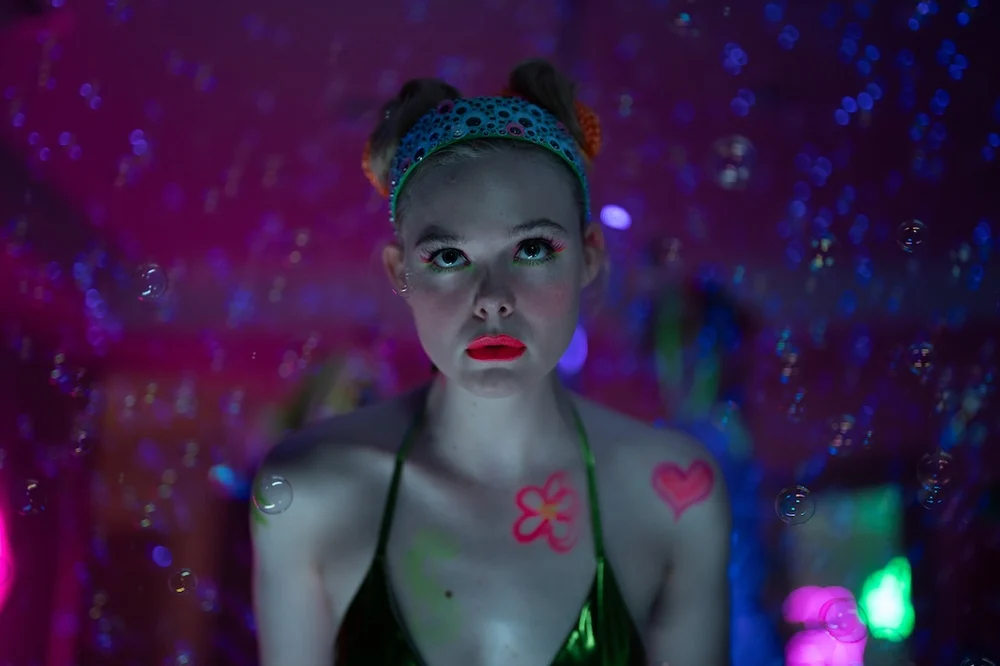
The headline writes itself too easily: a Hollywood actress opens an OnlyFans account. It reads like provocation, or worse, a marketing stunt calibrated for algorithmic traction. But in the case of Elle Fanning, the gesture is neither scandal nor spectacle. It is something quieter, more procedural, and arguably more revealing about how contemporary acting is evolving in tandem with the platforms it seeks to depict.
In preparing for her lead role in the Apple TV+ series Margo’s Got Money Troubles, Fanning created an OnlyFans account—not to participate as a creator in the conventional sense, but to understand the architecture of the platform from within. The move situates her not as an outsider observing internet culture from a safe critical distance, but as a participant studying its rhythms, economies, and psychological textures.
This is less about shock value than it is about access.
View this post on Instagram
stir
At the center of Margo’s Got Money Troubles is Margo Millet, a young woman navigating financial instability, unexpected motherhood, and the precarious calculus of survival in a digitized economy. The narrative hinges on her decision to join OnlyFans as a means of income—a storyline that is less sensational than it is structurally contemporary.
The series, adapted from Rufi Thorpe’s 2024 novel and developed by David E. Kelley, examines what happens when personal identity becomes monetizable infrastructure.
Fanning’s preparation reflects this same logic. Rather than relying solely on secondhand accounts or mediated portrayals, she chose to engage directly with the interface itself—how content is structured, how audiences behave, how creators present themselves, and how the platform shapes both visibility and vulnerability.
As she explained, the process involved setting up an account not only for herself but as part of a broader research effort within the show’s creative environment, allowing her to “check out how the website is.”
The phrasing is deliberately understated. But the implication is significant: to understand a character whose life is mediated through a platform, the actor must first understand the platform as a lived environment.
idea
There is a long tradition of actors immersing themselves in the worlds they portray—learning trades, altering physical habits, embedding within communities. What Fanning’s approach suggests is that this tradition now extends into digital territories that are less tangible but equally formative.
OnlyFans is not simply a website; it is a system of incentives, performances, and negotiated boundaries. It is a space where identity is curated in real time, where economic survival intersects with personal exposure, and where the line between authenticity and performance becomes deliberately blurred.
For an actor, this presents a new kind of challenge.
To portray a character like Margo convincingly requires more than understanding the narrative stakes. It requires grasping how the platform itself conditions behavior—how content is framed, how audiences respond, how creators adapt to feedback loops that are immediate and often unforgiving.
Fanning’s decision to create an account is therefore less about imitation and more about calibration. It allows her to internalize the logic of the platform: the pacing of uploads, the dynamics of subscriber engagement, the subtle pressures to maintain attention in a crowded digital marketplace.
This is method acting translated into interface literacy.
View this post on Instagram
view
What Margo’s Got Money Troubles foregrounds—and what Fanning’s preparation implicitly acknowledges—is that platforms like OnlyFans operate within a broader ecosystem of precarious labor.
The series positions OnlyFans not as an anomaly but as part of a continuum that includes Instagram, TikTok, and other forms of digital self-presentation. Fanning herself referenced her familiarity with these platforms as part of her research baseline.
The distinction lies in the stakes.
Where Instagram might reward aesthetic consistency and TikTok favors viral spontaneity, OnlyFans introduces a more explicit transactional dimension. Content is not merely consumed; it is purchased. Access is tiered, curated, and monetized in ways that collapse traditional boundaries between creator and audience.
For Margo, this becomes a means of survival. For Fanning, it becomes a framework to understand the pressures her character faces—the constant negotiation between agency and expectation, autonomy and demand.
This is not a story about digital fame in the abstract. It is a story about labor.
show
The decision by Apple TV+ to develop a series centered on OnlyFans reflects a broader shift in how streaming platforms approach contemporary subject matter. There is an increasing willingness to engage directly with the infrastructures that shape modern life—platform economies, gig labor, and the commodification of personal identity.
Margo’s Got Money Troubles, set to premiere on April 15, 2026, positions itself within this lineage.
It is both character-driven and structurally aware, using Margo’s personal narrative as a lens through which to examine larger systemic forces. The involvement of figures like Nicole Kidman and Michelle Pfeiffer further situates the project within a high-caliber production context, signaling that this is not a marginal story but a central one.
Fanning’s dual role as both lead actor and executive producer reinforces this positioning. She is not simply interpreting the material; she is shaping how it is presented.
auth
One of the more complex aspects of OnlyFans—and of the series itself—is the question of authenticity. What does it mean to be “real” in a space that is inherently performative?
Creators on the platform often cultivate personas that feel intimate and immediate, even as they are carefully constructed. The audience, in turn, engages with these personas as if they were direct expressions of the self.
For an actor, this creates a layered challenge.
Fanning must portray a character who is herself performing—curating an online identity that is both strategic and responsive. The performance is therefore doubled: an actor playing a character who is performing a version of herself for an audience within the narrative.
This recursive structure demands a nuanced approach. It requires the actor to differentiate between the character’s internal self and her external presentation, and to navigate the tension between the two.
Fanning’s immersion in the platform allows her to observe these dynamics firsthand—to see how creators balance vulnerability and control, spontaneity and calculation.
culture
That a major Apple TV+ series centers on OnlyFans is indicative of a broader cultural shift. What was once considered fringe or taboo has become part of mainstream discourse, particularly as economic pressures and digital infrastructures reshape how people work and present themselves.
The platform itself has evolved from a niche subscription service into a widely recognized component of the creator economy. Its visibility has been amplified not only by creators but by the broader media ecosystem that now engages with it as a legitimate subject of analysis.
Fanning’s involvement further normalizes this shift. As an established actor with both indie credibility and mainstream recognition, her decision to engage with the platform as part of her research signals a willingness within Hollywood to confront these realities directly.
It is not about endorsement. It is about acknowledgment.
straddle
There is a subtle but important distinction between observing a platform and participating in it. Fanning’s approach blurs this boundary.
By creating an account, she moves beyond passive observation into a form of controlled participation. She experiences the platform not as an abstract concept but as a functional system—one that requires navigation, interpretation, and adaptation.
This aligns with a broader trend in acting that prioritizes experiential knowledge over purely intellectual understanding. It is not enough to know what OnlyFans is; one must understand how it feels to exist within its parameters.
At the same time, the participation remains bounded. Fanning’s account is a tool, not an extension of her public persona. It exists within the context of research, not self-branding.
This distinction is crucial. It preserves the integrity of the process while allowing for a deeper engagement with the material.
flow
Fanning’s preparation highlights a broader evolution in how actors approach research. As narratives become more intertwined with specific cultural and technological contexts, the demands placed on actors become more complex.
Research is no longer limited to reading scripts or studying historical references. It involves engaging with systems—platforms, communities, and environments that shape behavior in ways that are not always immediately visible.
In this sense, Fanning’s OnlyFans account is analogous to an actor learning a trade or spending time within a particular community. It is a means of acquiring embodied knowledge, of understanding not just what a character does but how and why they do it.
This approach aligns with a more holistic understanding of performance—one that recognizes the interplay between individual psychology and structural context.
fwd
Ultimately, what makes this story compelling is not the headline itself but what it reveals about the intersection of performance and systems.
Margo’s Got Money Troubles is not simply about a woman who joins OnlyFans. It is about the systems that make such a decision both necessary and viable. It is about the ways in which technology mediates identity, labor, and relationships.
Fanning’s preparation reflects this complexity. By engaging directly with the platform, she positions herself not just as an interpreter of the character but as a student of the system in which the character operates.
This is a subtle but significant shift.
sum
The idea of Elle Fanning creating an OnlyFans account is, on its surface, attention-grabbing. But to stop there is to miss the point.
What this gesture represents is a deeper engagement with the realities of contemporary life—an acknowledgment that the stories being told today are inseparable from the platforms that shape them.
For Fanning, the account is not a spectacle but a method. It is a way of entering the world of her character with precision and empathy, of understanding the nuances that cannot be captured from a distance.
In an era where identity is increasingly mediated through screens, such an approach feels not only relevant but necessary.
The performance, when it arrives, will carry the imprint of that understanding. And perhaps that is the most compelling aspect of all—not the fact of the account, but the discipline behind it.