Emperor Penguins at the Edge: Ice Loss and Slow Marginalization

April 10, 2026
7 hours ago
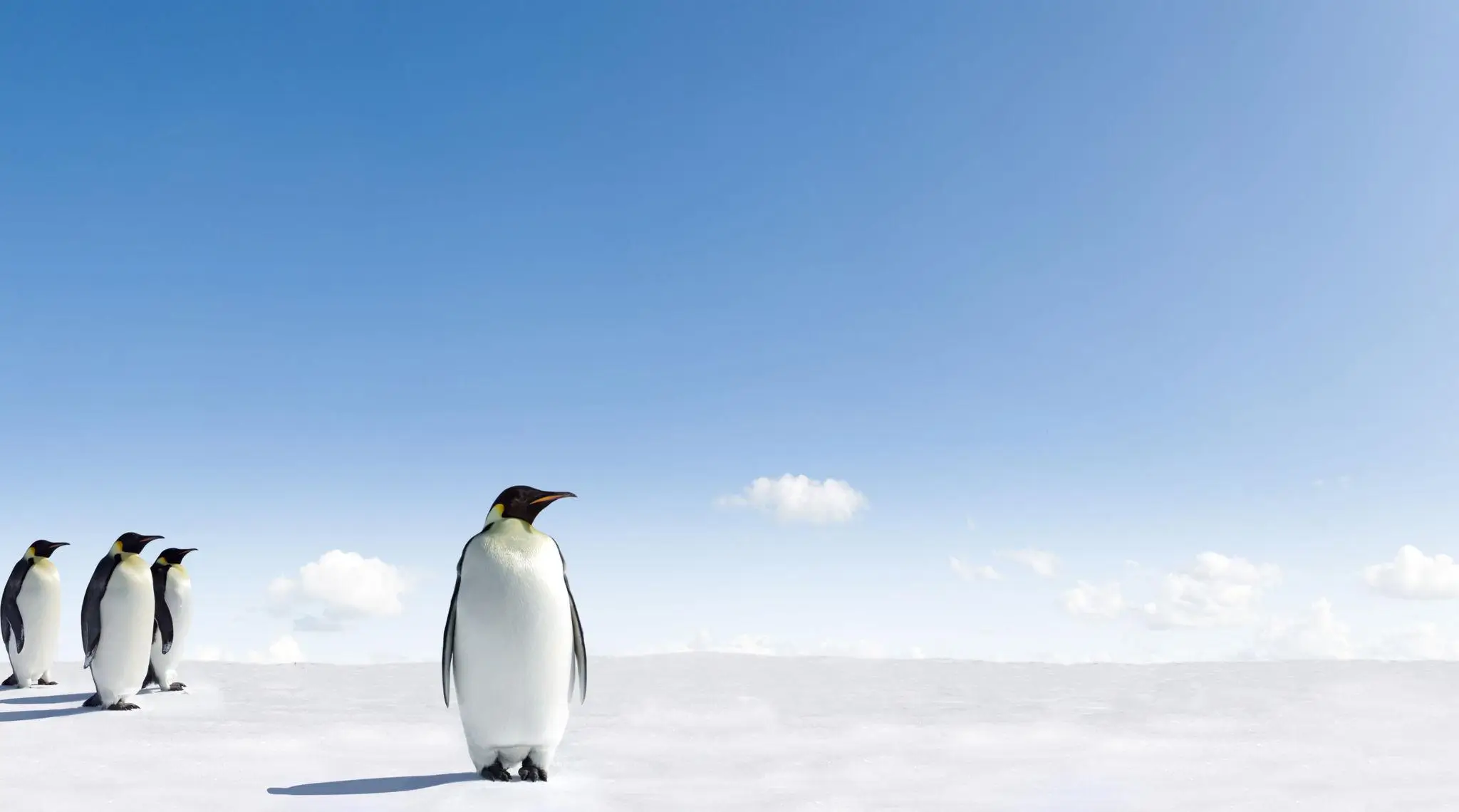
There are moments in environmental history that arrive not as shocks, but as confirmations. The official classification of emperor penguins as endangered is one of them. It is not a sudden catastrophe—it is the formal naming of a condition that has been unfolding in slow motion, visible for years to anyone paying attention.
The designation marks a turning point not because it changes what is happening, but because it forces a shift in language. The emperor penguin is no longer simply “at risk.” It is now a species in measurable decline, tethered directly to one of the most volatile indicators of climate instability: Antarctic sea ice.
stir
Emperor penguins are not just inhabitants of Antarctica; they are engineered around it. Their entire life cycle is synchronized with the presence, thickness, and timing of sea ice formation.
Unlike other penguin species, emperor penguins breed during the Antarctic winter. They rely on stable sea ice platforms to lay eggs, incubate them, and raise chicks through some of the harshest conditions on Earth. The ice is not just habitat—it is infrastructure.
When that infrastructure destabilizes, everything downstream begins to fail.
The timing matters. If sea ice forms too late, breeding is delayed. If it breaks up too early, chicks—still covered in down, not yet waterproof—are forced into the ocean prematurely, where survival rates collapse.
This is not a gradual inconvenience. It is a binary system. Either the ice holds, or it doesn’t.
challenge
Antarctic sea ice has always fluctuated. But what scientists are now observing is not fluctuation—it is acceleration.
Recent years have recorded some of the lowest sea ice extents ever measured. Entire regions that once supported stable penguin colonies are experiencing early ice breakups or failing to form sufficient platforms altogether. In some documented cases, nearly entire cohorts of chicks have been lost in a single season.
This is where the abstraction of climate change becomes immediate.
Sea ice is not melting in a distant, conceptual way. It is disappearing on a timeline that intersects directly with the breeding calendar of a species that cannot adapt quickly enough to compensate.
The emperor penguin’s evolutionary strategy—once perfectly suited to its environment—has become a liability under new conditions.
fragile
What makes emperor penguins particularly vulnerable is the precision of their lifecycle. There is very little margin for error.
A single breeding season requires months of coordination: egg-laying, incubation by males during extreme cold, the return of females from feeding journeys, and the gradual development of chicks. Each phase depends on the stability of ice beneath them.
When sea ice conditions shift unpredictably, that precision collapses.
Unlike species that can relocate or adjust breeding cycles, emperor penguins are geographically and biologically constrained. Their colonies are tied to specific regions, and their reproductive timing is deeply embedded in environmental cues that are now changing faster than the species can respond.
This is not just vulnerability—it is rigidity in the face of volatility.
a view
What makes the emperor penguin’s situation uniquely striking is its visibility. This is not a hidden decline in remote ecosystems. Satellite imagery has elicited scientists to track colonies in real time, observing population changes, breeding failures, and habitat loss across vast regions.
Entire colonies have been documented shrinking or disappearing.
In some cases, the absence is as telling as the presence. Where once there were dense clusters of birds visible from space, there are now gaps—voids where life used to organize itself around ice.
This show changes the emotional register of the crisis. It is harder to ignore a disappearance when it can be mapped, measured, and revisited year after year.
flow
It is tempting to frame the plight of emperor penguins as a localized issue—something happening at the edges of the planet, distant from everyday life. But the forces driving this decline are systemic.
The loss of Antarctic sea ice is tied to global temperature increases, ocean warming, and shifting atmospheric patterns. It is part of a larger feedback loop in which ice loss reduces the Earth’s ability to reflect solar radiation, further accelerating warming.
In this context, the emperor penguin becomes more than a species at risk. It becomes an indicator.
Its decline signals broader instability within polar systems—systems that conjure a critical role in regulating global climate.
limit
There is often an assumption that species will adapt. That given enough time, evolution will find a way forward.
But adaptation requires stability. It requires time.
The rate at which Antarctic conditions are changing is compressing that timeline beyond what many species, including emperor penguins, can accommodate. Behavioral shifts—such as relocating colonies or adjusting breeding timing—are constrained by geography, food availability, and the physical realities of the environment.
This is not a scenario where gradual adaptation can keep pace with rapid environmental transformation.
The system is moving too fast.
sustain
The endangered classification is not just a label—it is a call to action. It opens pathways for conservation efforts, policy interventions, and international cooperation aimed at protecting the species.
But conservation in this context is complex.
Protecting emperor penguins is not simply about safeguarding a habitat. It requires addressing the underlying drivers of climate change—reducing emissions, stabilizing global temperatures, and mitigating further sea ice loss.
This is where traditional conservation strategies meet their limits. You cannot fence off melting ice. You cannot isolate a species from a changing climate.
The scale of the problem demands a scale of response that extends far beyond the immediate environment of the penguins themselves.
mood
There is a paradox in how we perceive species like emperor penguins. They are iconic, recognizable, almost symbolic of the Antarctic. And yet, their distance from everyday human experience creates a kind of emotional buffer.
They exist at the edge of the world, in landscapes most people will never see firsthand.
That distance can make their decline feel abstract, even as the underlying causes are intimately connected to global systems that affect everyone.
Bridging that gap—between symbolic awareness and tangible urgency—is one of the central challenges in communicating environmental crises.
role
Emperor penguins have long occupied a place in visual culture—documentaries, photography, storytelling. They are often portrayed as resilient, enduring, almost stoic in the face of extreme conditions.
That narrative is now being rewritten.
Resilience has limits. Endurance is not infinite.
The shift from viewing emperor penguins as symbols of survival to recognizing them as indicators of vulnerability reflects a broader change in how we understand ecological systems. It is no longer enough to celebrate endurance without acknowledging fragility.
pressure
Scientific projections suggest that if current trends continue, a significant percentage of emperor penguin colonies could be lost by the end of the century. But those projections are not distant—they are already beginning to materialize.
The future is arriving early.
This compresses the sense of time. What once felt like a long-term issue now feels immediate, urgent, unfolding within observable timeframes.
The endangered classification is part of that shift. It acknowledges that the timeline has accelerated.
fwd
The story of emperor penguins is not isolated. It intersects with broader patterns affecting polar ecosystems—krill populations, predator-prey dynamics, ocean circulation, and global climate feedback loops.
Each of these elements is interconnected.
The decline of a single species can have cascading effects, altering the balance of entire ecosystems. In this sense, the emperor penguin is both a subject and a signal—a focal point through which larger systemic changes become visible.
awareness
To declare a species endangered is to acknowledge a failure—not just of environmental stewardship, but of timing. It means recognizing that action did not come early enough to prevent decline.
At the same time, it is an opportunity. A moment to recalibrate, to respond, to shift trajectories where possible.
For emperor penguins, that moment is now.
fin
There is something quietly disorienting about the idea that a species so closely associated with endurance could become a symbol of loss.
Emperor penguins have always existed at the edge—of temperature, of geography, of survivability. What has changed is not their position, but the conditions around them.
The edge has moved.
And as Antarctic sea ice continues to shrink, that edge becomes harder to stand on—not just for the penguins, but for the systems that depend on it, and the broader climate balance that connects even the most distant landscapes to everyday life.
The endangered classification does not resolve that tension. It simply names it.
And in naming it, makes it impossible to ignore.