Eric Emanuel x Converse : A Denim Chuck 70 & Weapon Ox Release

April 2, 2026
2 hours ago
There is a tendency, when denim enters the shoe conversation, for it to be treated as a surface decision—something applied, washed, distressed, and ultimately aesthetic. What Eric Emanuel proposes with his latest project alongside Converse is more structural. Denim here is not a finish. It is the logic of the shoe.
Framed as A Denim Dream, the collide resists theatrics in favor of calibration. Emanuel, whose design lang has long revolved around American athletic codes—mesh shorts, collegiate palettes, gymnasium nostalgia—approaches Converse not as a canvas for disruption, but as a system already fluent in cultural permanence. The task, then, is refinement.
View this post on Instagram
stir
The collection orbits two anchors within the Converse archive: the Chuck 70 and the Weapon Ox. Each silhouette carries a distinct lineage—the former rooted in counterculture and art-school uniformity, the latter embedded in hardwood-era basketball mythology. Emanuel’s intervention does not collapse these histories. It aligns them through material.
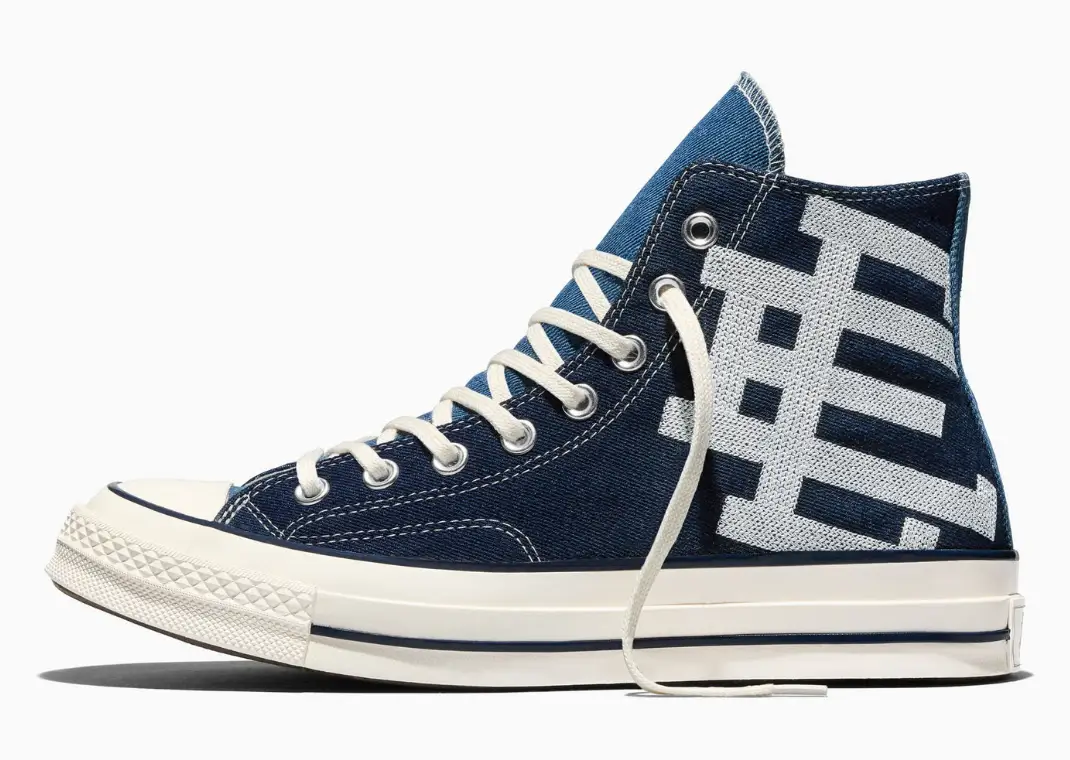
On the Chuck 70, denim replaces traditional canvas with a density that subtly alters posture. The shoe sits with more weight, both visually and physically, giving the high-top a new kind of presence. The indigo reads clean, unforced—closer to raw denim than pre-distressed fashion washes. Contrast stitching becomes a quiet focal point, tracing the architecture of the upper with precision rather than exaggeration.
The Weapon Ox, by contrast, treats denim as an unexpected counterpart to its athletic heritage. Where leather once signaled performance, denim introduces ease. The low-cut profile benefits from this shift; it feels less like a relic of sport and more like a contemporary object—something that moves fluidly between court memory and street reality.
discip
What distinguishes this release is restraint. There is no overstatement, no reliance on aggressive branding or unnecessary embellishment. The denim is allowed to speak in its own register—grain, weave, and fade doing the work that logos often attempt to force.
Even the color story remains disciplined. Variations of indigo dominate, occasionally punctuated by off-white midsoles and subtle accents that recall vintage workwear. It is a palette that understands longevity. Nothing here is chasing immediacy.
This approach aligns with a broader recalibration in sneaker culture, where material honesty has begun to outweigh spectacle. In a landscape saturated with maximalist collaborations, Emanuel’s decision to focus on fabrication feels almost corrective.
straddle
Emanuel’s work has always operated at the intersection of sport and memory. His garments reference a specific American adolescence—summer leagues, locker rooms, regional pride—without becoming trapped in it. That same sensibility informs this Converse project.
Denim, in this context, becomes a bridge. It connects the utilitarian past of American workwear with the expressive present of streetwear. It softens the rigidity of athletic silhouettes while preserving their intent. The result is a shoe that feels lived-in from the outset, without resorting to artificial aging.
There is also a subtle emotional register at play. The phrase Denim Dream suggests something aspirational yet grounded—an idea of everyday luxury that does not rely on rarity alone. These are not shoes designed to be archived. They are meant to be worn, repeatedly, until the material begins to record its own history.
story
Beyond surface impressions, the construction choices reinforce the collaboration’s thesis. The shift from canvas to denim on the Chuck 70 alters not only texture but structure. The upper holds shape differently, creating a silhouette that feels slightly more architectural.
Stitching, often overlooked, becomes a narrative device. It outlines panels, reinforces edges, and subtly references the language of jeans construction—pockets, seams, reinforcement points—translated into footwear form. The effect is cohesive without being literal.
On the Weapon Ox, the interplay between denim panels and traditional sneaker components—rubber cupsole, padded collar, perforations—creates tension. It is this tension that gives the shoe its contemporary relevance. It does not resolve into a single category. It exists between them.
show
The release arrives at a moment when Converse continues to renegotiate its position within the broader sneaker ecosystem. No longer competing solely on heritage, the brand has increasingly leaned into collaborations that reframe its classics through new cultural lenses.
Emanuel’s involvement feels particularly precise within this strategy. His work carries credibility within both streetwear and sportswear communities, yet it avoids the volatility often associated with trend-driven design. He understands pacing.
The rumored rollout—an initial drop through Emanuel’s own channels followed by a wider Converse release—mirrors this sensibility. It creates anticipation without excess, allowing the product to circulate organically rather than through forced hype cycles.
style
Part of the success of this collection lies in its adaptability. The denim upper invites a range of styling approaches without dictating any single one.
With tailored trousers, the Chuck 70 reads elevated, almost formal in its restraint. Paired with athletic shorts—Emanuel’s own signature—the same shoe returns to its roots, casual and immediate. The Weapon Ox, meanwhile, thrives in transitional spaces: denim-on-denim for those inclined toward cohesion, or contrasted against technical fabrics for a more contemporary edge.
This flexibility underscores the central idea of the project. Denim, after all, is one of the few materials that can traverse contexts without losing identity. By embedding it into Converse’s silhouettes, Emanuel extends that versatility into footwear.
exposit
What ultimately defines A Denim Dream is its refusal to overstate. In an industry that often equates impression with volume—louder colors, bigger logos, more aggressive storytelling—this collaboration operates through subtraction.
It trusts the audience to recognize nuance. It assumes a level of literacy in material, in silhouette, in cultural reference. That assumption is not exclusionary; it is respectful.
The shoes do not demand attention. They accumulate it.
sum
There is a clarity to this collide that feels increasingly rare. It understands its references—American sportswear, workwear, sneaker heritage—without becoming burdened by them. It uses denim not as decoration, but as a structural idea, a way of rethinking familiar forms.
In doing so, Eric Emanuel and Converse offer something measured and enduring: a sneaker that does not chase relevance, but quietly inhabits it.
A denim dream, yes—but one grounded firmly in reality.