A Sculptural Approach to Sound by Erwan Bouroullec for Samsung

January 6, 2026
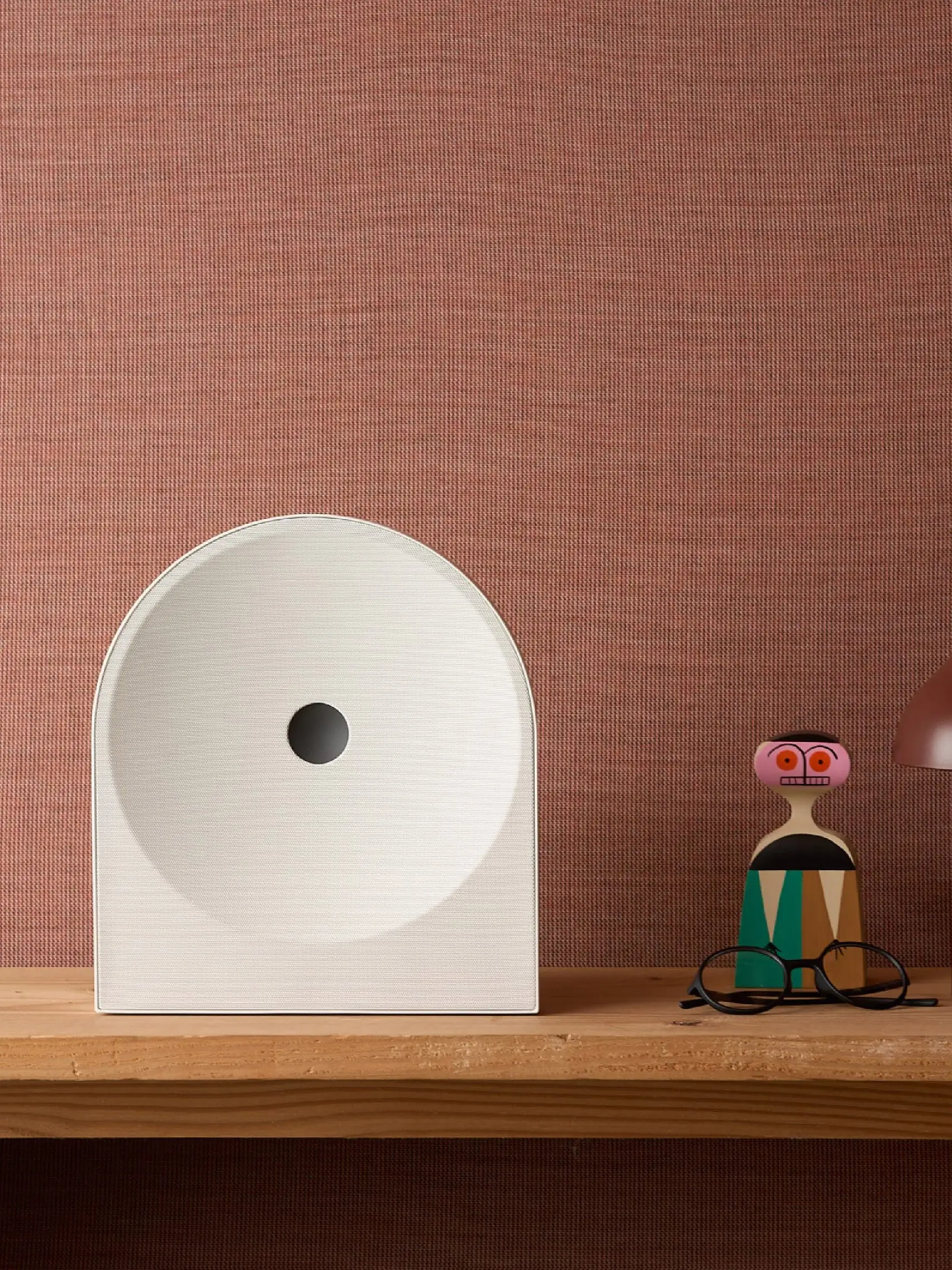
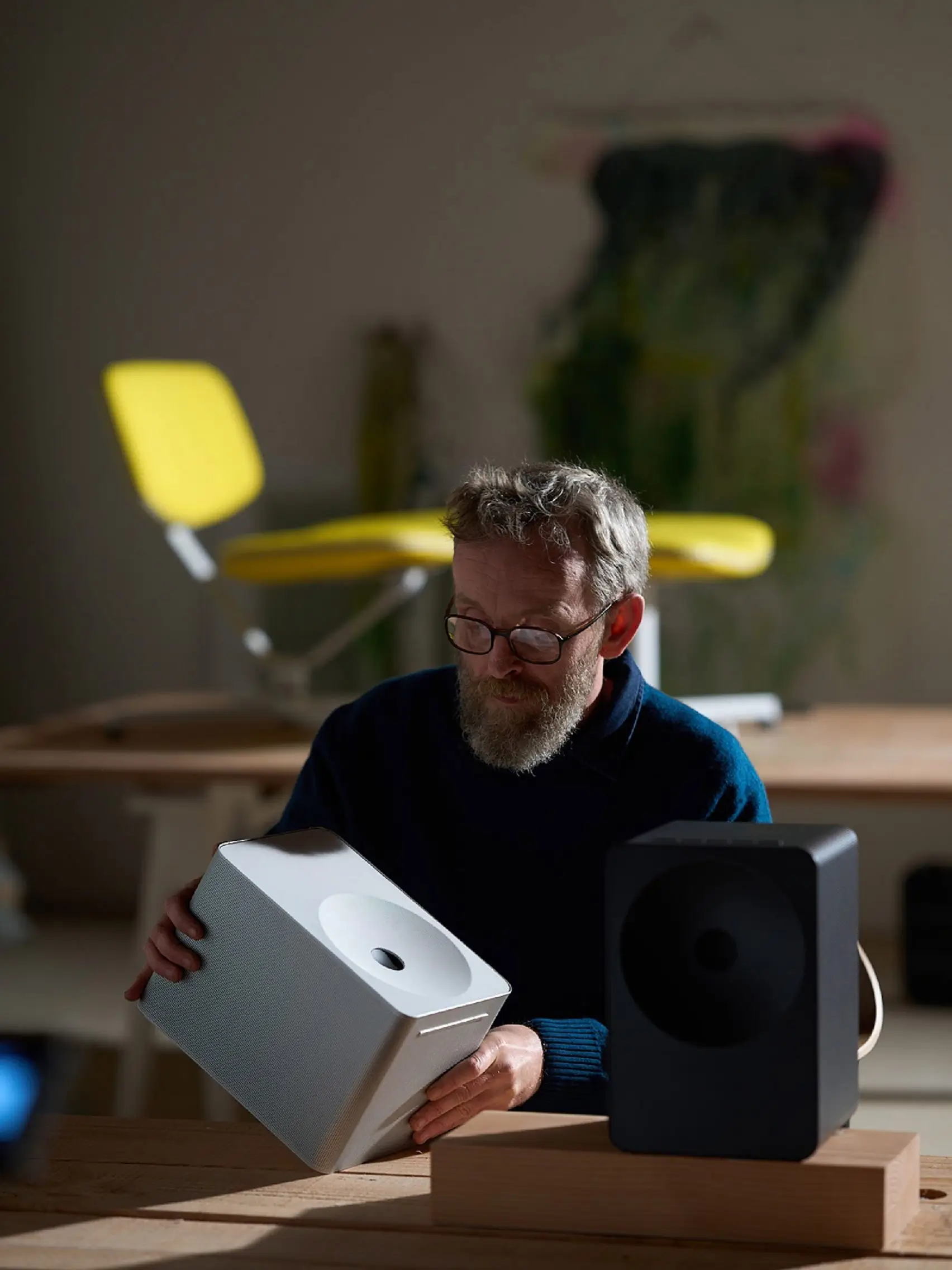
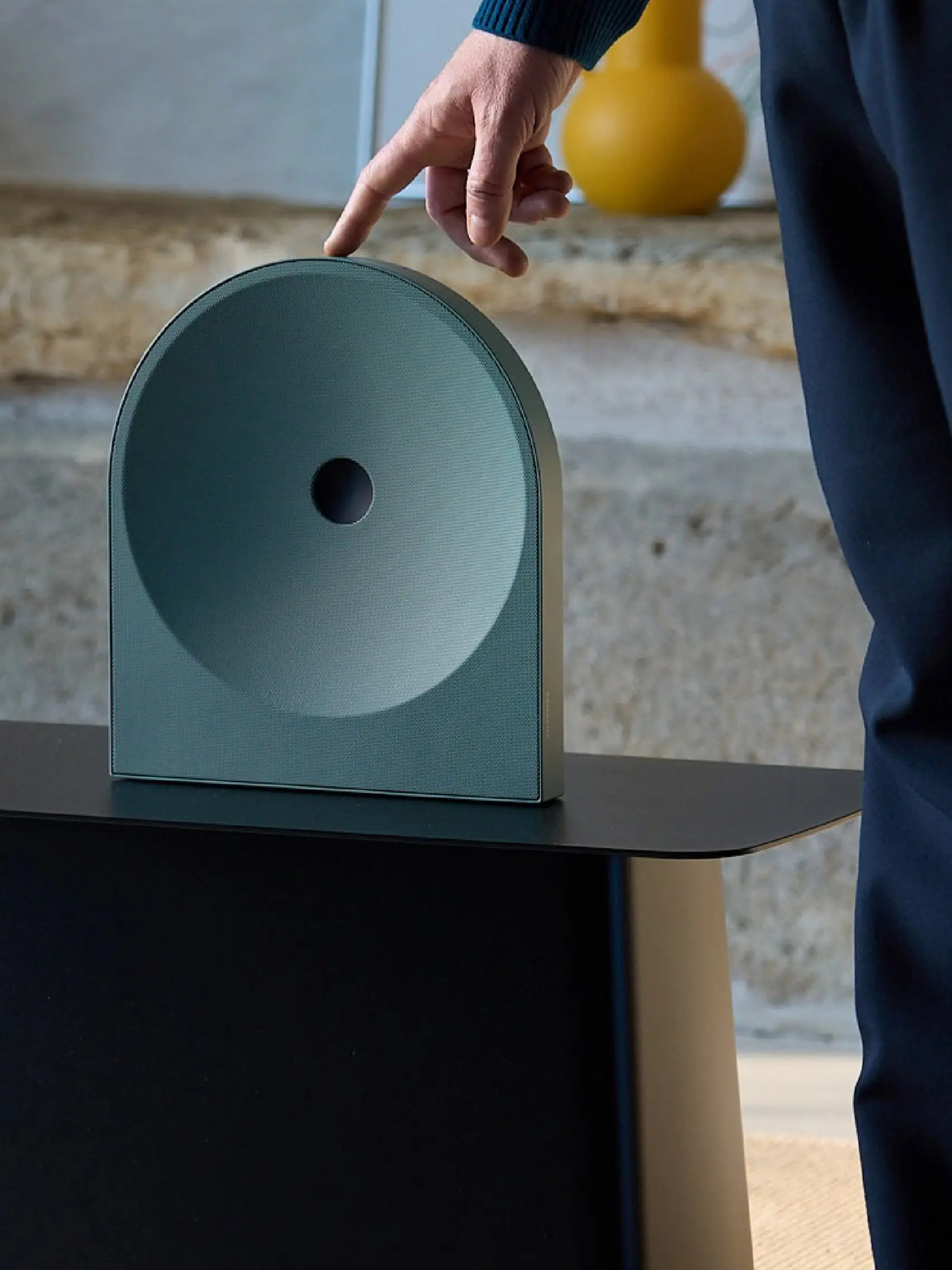
In a market saturated with conspicuous technology, Erwan Bouroullec’s collaboration with Samsung arrives almost anonymously. There is no visual urgency, no immediate declaration of purpose. The object does not perform its function at first glance. Instead, it occupies space quietly, like a sculpture that has always belonged there. Only later does it reveal itself as a speaker.
This inversion is central to Bouroullec’s thinking. For him, technology does not need to assert its presence to justify its existence. In fact, the opposite may be true. The more discreet an object becomes, the more likely it is to integrate into daily life without friction. The Samsung speaker is not designed to compete for attention but to dissolve into the rhythms of the home.
lang
Most speakers speak visually before they ever emit sound. Grilles, buttons, logos, symmetry—these elements telegraph function instantly. Bouroullec deliberately removes this vocabulary. What remains is an abstract form, balanced and self-contained, stripped of recognizable technological signals.
This refusal is not decorative minimalism. It is a critique of how consumer electronics are designed to be legible above all else. Legibility, in this context, often leads to obsolescence. When a product’s identity is tied too closely to current technology aesthetics, it ages the moment those aesthetics change. Bouroullec’s solution is abstraction: a form that resists dating because it resists explanation.
View this post on Instagram
sculpt
Seen in a room, the speaker behaves like an object of contemplation rather than use. It could sit on a shelf, a low table, or the floor without demanding ideal placement. Its mass and proportions suggest deliberation rather than optimization. There is no “front” or “back” that insists on orientation.
This sculptural neutrality allows the object to coexist with furniture, books, artworks, and plants without disrupting their hierarchy. It does not insist on being the focal point. Instead, it becomes part of the spatial composition, contributing weight and rhythm rather than function alone.
mat
The surface treatment plays a crucial role in this transformation. Rather than polished metal or glossy plastic, the speaker appears matte, tactile, and absorbent to light. The textures feel closer to ceramic, plaster, or cast stone than to industrial electronics.
This choice softens the psychological presence of the object. It feels approachable, almost domestic, rather than engineered. Bouroullec has long been interested in how materials affect emotional response, and here the material language suggests durability without harshness. The object seems built to age slowly, to collect time rather than reflect novelty.
idea
When sound finally enters the picture, it does not dominate. The speaker does not appear to project audio outward aggressively. Instead, sound feels diffused, ambient, spatial. It inhabits the room rather than targets the listener.
This approach aligns with Bouroullec’s broader interest in background conditions. Sound, like light or air, becomes part of the environment rather than an event. Listening is not framed as an activity that requires attention but as something that can coexist with living, moving, and thinking.
erwan
The project fits naturally within Bouroullec’s wider body of work. Across furniture, architecture, drawing, and ceramics, his practice consistently avoids spectacle. His objects are often calm, even reserved, yet deeply intentional. They are designed to be lived with over long periods rather than admired briefly.
In recent years, his solo work has leaned increasingly toward the border between design and art. Hand drawings, abstract compositions, and ceramic forms have informed his industrial projects, encouraging a looser, more intuitive approach. The Samsung speaker feels like an extension of this trajectory, translating artistic restraint into a mass-produced object.
evolve
For Samsung, the collaboration signals a continued expansion beyond conventional product categories. The company has increasingly framed itself as part of the cultural and domestic landscape rather than simply a technology provider. From televisions that double as wall art to appliances designed as furniture, Samsung has been exploring how technology can disappear into interiors.
Working with Bouroullec pushes that ambition further. This is not a speaker designed to showcase technical superiority. It is a speaker designed to question whether such showcasing is necessary at all. The collaboration values atmosphere, longevity, and emotional resonance over feature lists.
show
There is an understated political dimension to the object’s discretion. Contemporary smart devices often demand attention, data, and interaction. They blink, listen, notify, and update. Bouroullec’s speaker does none of this visibly. It does not appear to watch or respond. It simply exists.
This restraint feels deliberate. By refusing visual cues of intelligence, the object resists the anxiety often associated with connected devices. It restores a sense of trust through silence. In doing so, it proposes a gentler model for how technology might inhabit private space.
flow
Abstraction has long been a strategy for endurance in art and architecture. By avoiding explicit representation, abstract forms remain open to interpretation across time. Bouroullec applies this logic to product design. The speaker does not explain itself, which allows it to remain relevant even as its internal technology evolves.
This separation between exterior and function is increasingly rare in consumer electronics, where form is often dictated by internal components. Bouroullec reverses this hierarchy. The outer form answers first to space, proportion, and presence, leaving technology to adapt quietly within.
channel
The speaker occupies an ambiguous zone. It is neither purely sculptural nor overtly utilitarian. This ambiguity is its strength. It invites users to relate to it emotionally before functionally, to accept it as part of their environment rather than as a tool.
In this way, the object becomes a companion rather than a device. It does not ask to be learned or mastered. It simply participates. Over time, this participation builds familiarity, the kind that emerges not from interaction but from shared presence.
fwd
By disguising a speaker as sculpture, Bouroullec ultimately reframes the role of sound in domestic life. Music and audio are no longer activities that interrupt space but elements that inhabit it. The object does not command listening; it supports it.
This shift feels timely. As homes absorb more functions—workplace, cinema, social hub—the need for visual and sensory balance becomes critical. Objects that contribute quietly to atmosphere rather than compete for attention offer a new kind of luxury.
impression
Erwan Bouroullec’s Samsung speaker does not attempt to redefine audio technology. It attempts something subtler: to redefine our expectations of technological presence. It asks for no attention, no explanation, no admiration.
Instead, it sits patiently, like a sculpture that happens to speak when invited. In doing so, it offers a vision of design where usefulness is inseparable from calm, and where technology earns its place not by shouting, but by knowing when to be silent.