CASETiFY Marks 30 Years of Evangelion With Tactical Precision

March 23, 2026
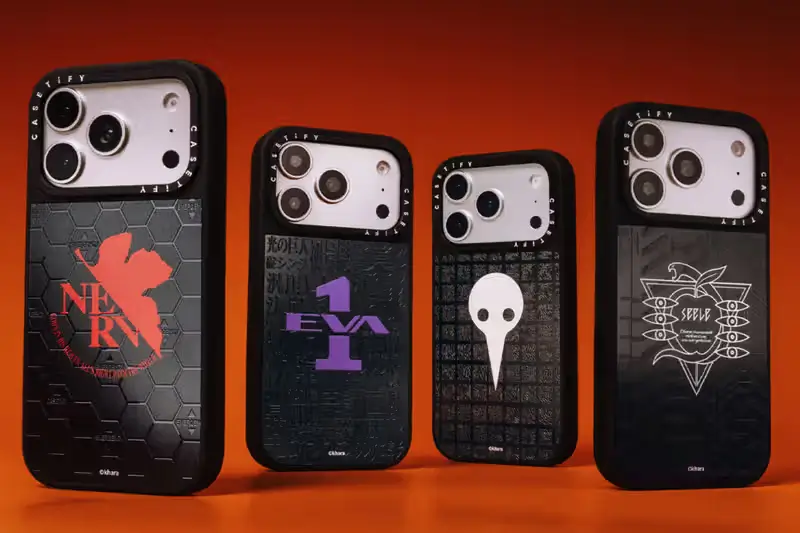
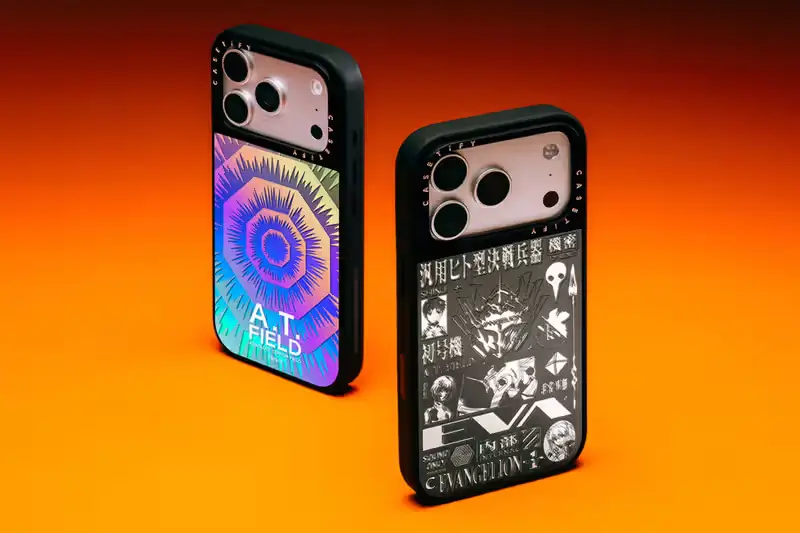
In March 2026, Neon Genesis Evangelion reaches a milestone that few cultural artifacts achieve: 30 years of uninterrupted relevance. To mark the occasion, CASETiFY revives and expands one of its most sought-after anime collaborations, delivering a capsule that feels less like merchandise and more like portable mythology.
This is not merely a reissue. It is a recalibration—an anniversary collection that reframes Evangelion’s dystopian futurism for a generation that now lives inside the very technological anxiety the series once predicted.
View this post on Instagram
leg
When Evangelion first aired in 1995, it wasn’t just another mecha anime. It was psychological, philosophical, and at times deeply unsettling. Directed by Hideaki Anno, the series explored identity, trauma, and existential dread through biomechanical warfare and fractured human relationships.
Thirty years later, its visual language—
- the NERV insignia
- the bio-organic design of Unit-01
- the stark black, neon green, and hazard orange palette
—has become globally recognized, transcending anime into fashion, art, and design.
The CASETiFY collaboration understands this. It doesn’t dilute Evangelion into nostalgia; it weaponizes its iconography for contemporary use.
CASETiFY approaches the 30th anniversary drop with precision, focusing on object permanence—turning everyday tech into artifacts of identity.
core pieces include:
- Impact Cases featuring NERV technical schematics
- Mirror Cases with EVA Unit-01 overlays
- AirPods and AirPods Pro cases shaped by industrial motifs
- Apple Watch bands integrating warning stripes and EVA palettes
- MagSafe accessories echoing control panel aesthetics
Each item feels engineered, not decorated. Typography is pulled directly from Evangelion’s internal systems. Graphics resemble mission readouts, emergency alerts, and classified documents.
The result is less cosplay, more interface design from an alternate reality.
lang
Neon Genesis Evangelion has always balanced chaos with structure. CASETiFY translates that into a design philosophy that merges:
- military-industrial minimalism
- anime maximalist symbolism
- tech product clarity
You’ll see matte finishes interrupted by high-gloss decals. Transparent cases revealing layered prints—almost like looking into a machine’s circuitry. Purple and acid green clash against blackout surfaces, referencing Unit-01’s unmistakable presence.
There’s also a strong emphasis on warning language—“CAUTION,” “RESTRICTED,” “NERV”—which gives each object a sense of urgency, as if your phone itself is part of a classified operation.
anime
This drop lands at a moment when anime is no longer niche—it’s a dominant global aesthetic force.
What CASETiFY does differently is position Evangelion not as fandom, but as design authority.
Comparable shifts have happened before:
- Supreme turning skate culture into luxury streetwear
- Takashi Murakami translating anime aesthetics into fine art
Here, Evangelion becomes tech luxury-adjacent—a visual language applied to objects we carry every day.
Your phone case is no longer protection. It’s a signal.
grad
CASETiFY has collaborated with Evangelion before, but the 30th anniversary iteration is notably more refined.
Earlier drops leaned into:
- bold character graphics
- fan-service imagery
- collectible appeal
The 2026 collection pivots toward:
- abstraction
- system-based graphics
- industrial storytelling
It’s less about who your favorite character is and more about which system you belong to.
This shift mirrors broader trends in design: moving from overt branding to coded visual language.
fx
Beyond aesthetics, CASETiFY continues to emphasize durability and modularity:
- EcoShock™ protection for drop resistance
- MagSafe compatibility across the ecosystem
- sustainable material options
But what’s compelling is how these functional features align with Evangelion’s themes. Protection becomes metaphorical—shielding fragile human identity within mechanized shells.
In that sense, the product design quietly echoes the show’s central question:
Where does the human end and the machine begin?
why
- technological dependence
- emotional isolation
- existential uncertainty
In 2026, those themes feel less speculative and more documentary.
This collaboration resonates because it doesn’t just celebrate the past—it reflects the present. Our devices are no longer tools; they are extensions of identity, memory, and anxiety.
By embedding Evangelion into these devices, CASETiFY creates a feedback loop:
we carry the future that Evangelion warned us about.
flow
The Evangelion x CASETiFY 30th Anniversary collection is not just a collaboration—it’s a case study in how culture evolves.
- Anime becomes design language
- Accessories become identity markers
- Technology becomes emotional territory
And perhaps most importantly, it shows how legacy IP can be recontextualized without losing its edge.
In a market saturated with collaborations, this one stands apart because it understands its source material at a structural level. It doesn’t decorate Evangelion—it translates it.
show
Following high-profile projects with Takashi Murakami and music icons, this Evangelion release reinforces CASETiFY’s trajectory:
- toward cultural authorship
- toward design-driven storytelling
- toward becoming a platform, not just a brand
If Murakami’s FLOWERS BLOOM was about joy and pop maximalism, Evangelion is its inverse:
controlled, coded, and quietly intense.
fin
At 30, Neon Genesis Evangelion remains as relevant—and unsettling—as ever. Through this collaboration, CASETiFYdoesn’t just commemorate that legacy.
It integrates it into daily life.
Your phone becomes a terminal.
Your case becomes a warning.
And somewhere between signal and silence, Evangelion continues to speak.