Everyday Utility, Streetwise Spirit: Carhartt WIP’s Kitchen Apron

May 1, 2025
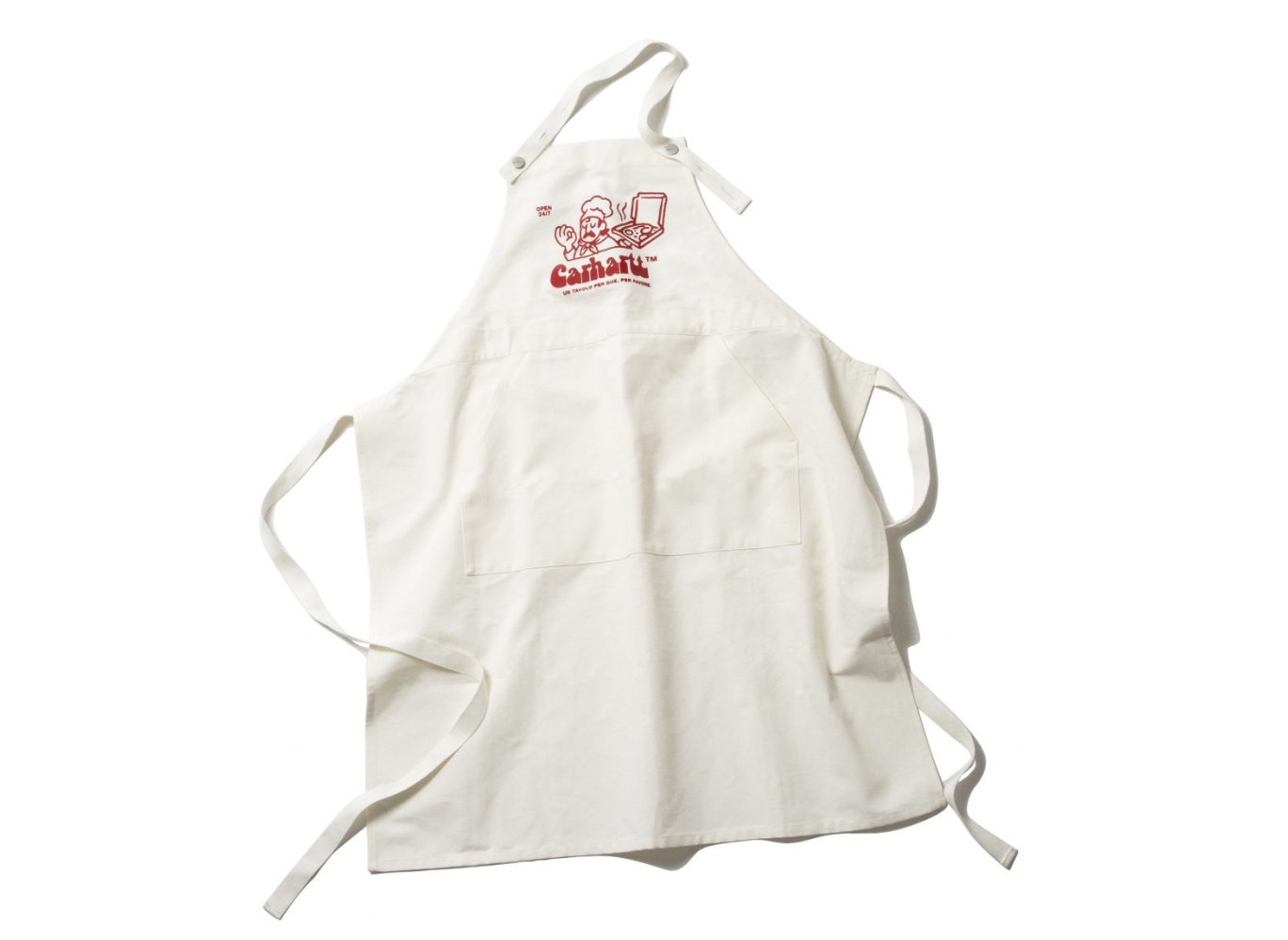
In a world where fashion and lifestyle continually overlap, few brands move as comfortably between the workshop and the sidewalk as Carhartt WIP. The Work In Progress division—Carhartt’s globally attuned, street-savvy reinterpretation of the iconic American workwear brand—has long played with the boundaries of utility and culture. But now, it turns its gaze toward an unlikely domestic frontier: the kitchen.
The item? An apron.
The statement? Clear, but subtle.
A piece designed not just for cooking, but for living—rooted in the tactile sensibility of the street and the everyday poetry of use.
“日常に溶け込むストリートの感覚”—A streetwise sensibility that melts into daily life. That’s the concept. And that’s the quiet genius behind this unexpected product.
FUNCTION BECOMES FORM
At first glance, the Carhartt WIP apron is modest. A simple shape rendered in the brand’s signature canvas, a material known for its toughness—worn by generations of laborers and embraced by a generation of cultural tastemakers. It’s a textile that has taken on paint, oil, dust, and sweat. In this case, it’s just as ready for tomato sauce or charcoal soot.
But what lifts the piece beyond utility is its design language. Carhartt WIP knows how to balance grit with wit. The graphics are playful without veering into kitsch, bold but not loud. Whether it’s a cheeky illustration, a retro-style logo hit, or a color pop in just the right tone, the apron carries with it the visual intelligence that’s defined the label’s rise in the fashion world.
The apron becomes more than a bib. It becomes a uniform for creative living—a garment that recognizes that craft exists not only in studios or job sites, but also at home, at the grill, at the counter, in front of a pot of curry or a rack of lamb.
THE KITCHEN AS CULTURAL STAGE
There’s a quiet revolution happening in how we think about domestic space. The kitchen is no longer just a place of service—it’s a zone of identity. A space where people experiment, share, document, and perform. It’s social, even when solitary. And like all social spaces, what we wear in it begins to matter.
Carhartt’s apron doesn’t just fit into this new lifestyle reality—it enhances it. It’s a symbol of a hands-on, thoughtful, self-styled existence. One where doing things—cooking, fixing, brewing, painting—matters as much as talking about them. The apron suggests you live in your clothes.
By wearing it, you’re not dressing up. You’re gearing up. Preparing yourself to get involved. To stain it. To mark it. To own the hours spent in it.
It’s fashion with function, but not in the tactical or athletic sense. It’s function as rhythm—something worn because your life demands it, not because a trend insists on it.
THE STREET MINDSET, REFLECTED
What makes Carhartt WIP’s approach different from other heritage workwear brands that dip into lifestyle markets is its ongoing conversation with subculture. This apron isn’t trying to be ironic or elevated. It doesn’t wink at the user. It speaks directly. It says: “You work with your hands. You care how things are made. You like your clothes to reflect your rhythm.”
Streetwear, at its best, has always been about codes. Not logos. Codes. How you wear something. Where you wear it. What it says about your context, your community, your energy. This apron enters the streetwear conversation not as a gimmick, but as an evolution of that code. The kitchen becomes the next venue of cool—not in a manicured, influencer sense, but in the deeply personal, low-key intimate sense.
This isn’t about chef-core or ironic nostalgia. It’s about real-life integration. You cook in this. You clean in this. You maybe even run errands in this because you forgot to take it off. And that’s exactly the point.
TEXTURE, DURABILITY, IDENTITY
The canvas apron echoes the material legacy of Carhartt: tough, tactile, lived-in. With wear, it will soften. It will stain. It will fray at the edges. And in doing so, it will become yours.
That’s the quiet power of true utility garments. They age with you. They absorb time. A splatter here, a burn mark there—these are not flaws. They are the embroidery of your actions.
Unlike fast fashion or pristine lifestyle accessories, this apron invites use. It invites abuse. It invites you to forget you’re wearing it and just live. It respects wear.
And in today’s world—where sustainability isn’t just about materials but about meaning—that’s something more brands should pay attention to. Longevity is cultural. Durability is spiritual.
NOT JUST FOR COOKING
Of course, this apron isn’t just for the kitchen. Like many of Carhartt WIP’s best products, it transcends its category. You can use it in a garage. A studio. A garden. A print lab. A tattoo shop. Anywhere you mix function with flow.
The apron becomes a portable workspace—an idea made wearable. A place to stash a pencil, a lighter, a phone. A towel loop. A brush rag. A pocket full of garlic cloves or wire snips.
And that’s where the “street” part re-emerges. Because streetwear was always about mobility, about making the world your workspace, your playground, your gallery. This apron fits right into that mentality. It’s for anywhere your hands get busy and your thoughts turn creative.
FORM FOLLOWS ATTITUDE
At a time when much of fashion feels bloated with abstraction—conceptual drops, meta-collabs, overpriced basics masquerading as luxury—it’s refreshing to see a brand like Carhartt WIP put out something that simply works. And then quietly let it speak for itself.
The brilliance is not in shouting, “This is fashion!” It’s in whispering, “This is yours—go do something with it.”
No pretension. Just presence.
And that’s ultimately what defines the streetwear mindset at its most sincere: attitude over affectation. You wear something not because it’s trending, but because it lets you move better through your life. Because it makes you feel closer to your tools, your people, your process.
WHY SHAPE MATTERS
“形から入るのも悪くない”—It’s not a bad thing to start with form.
It’s a Japanese sentiment that perfectly encapsulates the logic here. Sometimes, you enter a new phase of life not with a plan, but with a garment. A new pair of shoes for the gym. A painter’s jacket before you paint. An apron before you’ve perfected your omelette flip.
The form becomes a signal to yourself. An invitation. A low-stakes commitment to try something new. This Carhartt apron is exactly that kind of shape. A form that opens up a new rhythm in your daily life.
Not by making you a different person. But by giving you permission to act.
CLOSING THOUGHT: STREETWEAR’S QUIET EVOLUTION
Carhartt WIP’s apron may seem like a small gesture. But in the wider scope of streetwear’s evolution—from club to café, studio to home, sneakerhead to sommelier—it represents something larger: the increasing fluidity of lifestyle.
It’s not about categories anymore. It’s about context. About clothes that live where you live. Clothes that hold up under pressure, whether that pressure is from a saw blade or a hot pan or a blank canvas.
This is where streetwear is going: into the daily, the domestic, the unseen but important. Less hype. More hands. Less drop. More wear.
And if the future of that looks like a tough, graphic-splashed apron?
We say: tie it on. And get to work.