Fanakapan’s Hellooo Kitty (Mint Green, Hello Kitty): An Exploration of Pop Culture in 2022

November 24, 2024
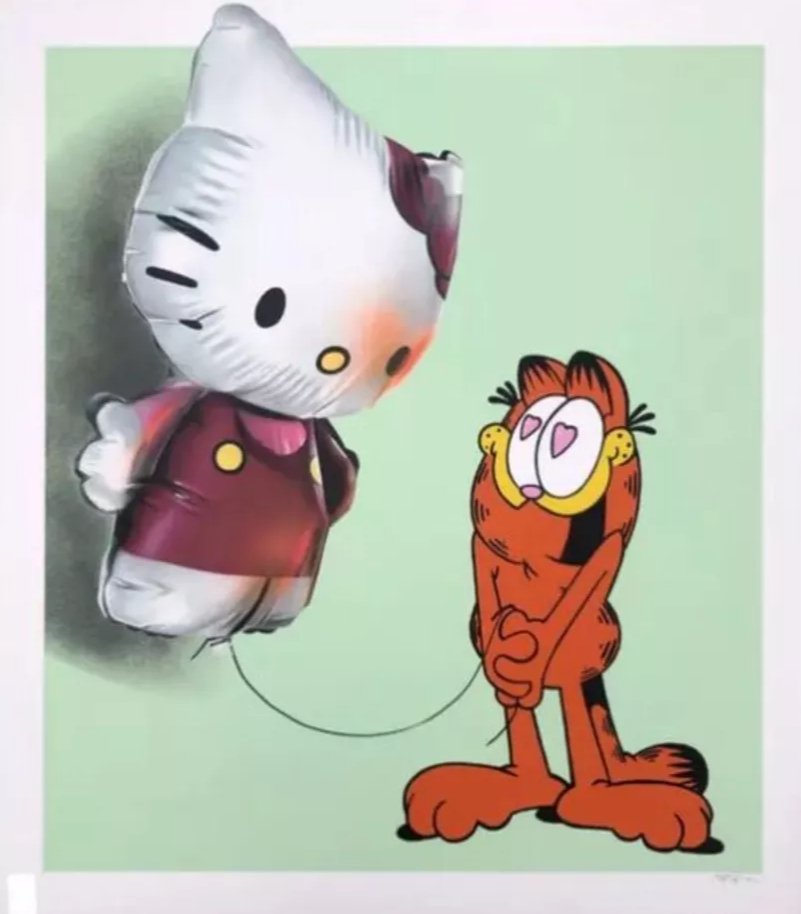
Fanakapan, the renowned London-based street artist known for his hyper-realistic balloon graffiti, has always had a knack for transforming everyday objects into playful, surreal art. In his 2022 piece Hellooo Kitty (Mint Green, Hello Kitty), he merges the universally recognized image of Sanrio’s Hello Kitty with his signature helium balloon aesthetic, creating a piece that’s both nostalgic and innovative.
Fanakapan’s Artistic Style
Before diving into the specifics of Hellooo Kitty, it’s worth examining the artist’s distinctive approach. Fanakapan is celebrated for his ability to create hyper-realistic depictions of metallic and inflatable objects. His works often feature reflective surfaces, capturing light, shadow, and distortion with meticulous detail.
Signature Balloon Art
Fanakapan’s mastery lies in his ability to make flat surfaces appear three-dimensional. Using spray paint, he creates the illusion of inflated balloons with metallic or transparent finishes. His works frequently play with perspective and reflect their surroundings, adding a layer of interactivity to the viewing experience.
Playful Iconography
Much of Fanakapan’s art involves reimagining cultural symbols, from emojis to toys, as helium balloons. This approach evokes a sense of nostalgia while encouraging viewers to reconsider the meaning of these ubiquitous symbols.
Hellooo Kitty: Breaking Down the Artwork
Hello Kitty as a Cultural Icon
Hello Kitty, created by Sanrio in 1974, is one of the most enduring symbols of Japanese pop culture. Recognized worldwide, she embodies innocence, playfulness, and the commercialization of childhood nostalgia. By incorporating Hello Kitty into his work, Fanakapan taps into the character’s rich cultural history, repurposing her as a commentary on modern consumerism.
Mint Green Palette
The use of a mint green background adds a fresh, contemporary feel to the piece. This color choice contrasts with Hello Kitty’s traditional palette of white, red, and pink, giving the work a modern twist. The soft pastel hue complements the reflective qualities of the balloon, enhancing the sense of light and space.
The Balloon Effect
Fanakapan reimagines Hello Kitty as a helium-filled balloon, complete with shiny metallic reflections and the illusion of air-filled volume. The balloon effect creates a sense of playfulness while simultaneously distorting the character’s familiar features, making viewers question their emotional connection to the icon.
Details and Depth
Fanakapan’s attention to detail is evident in the way light interacts with the balloon’s surface. The subtle highlights, shadows, and reflections mimic the texture of a real metallic balloon, creating an uncanny sense of realism. These elements elevate Hellooo Kitty from a simple homage to a masterful exploration of form and light.
Cultural Commentary in Hellooo Kitty
Consumerism and Commodification
Hello Kitty has long been a symbol of mass-market consumerism, appearing on everything from stationery to luxury handbags. Fanakapan’s balloon reinterpretation exaggerates this commercial aspect, presenting Hello Kitty as an inflated, disposable object. This transformation prompts viewers to reflect on how beloved cultural icons are often commodified to the point of losing their original meaning.
The Intersection of East and West
By integrating a Japanese pop culture icon into a Western street art style, Hellooo Kitty bridges two cultural traditions. This fusion highlights the global influence of Hello Kitty while showcasing Fanakapan’s ability to adapt diverse symbols into his artistic narrative.
Nostalgia and Irony
Fanakapan’s work often plays with themes of nostalgia, and Hellooo Kitty is no exception. The piece invites viewers to recall their childhood memories of Hello Kitty while simultaneously questioning the authenticity of these emotions in a world dominated by commercialization.
Fanakapan’s Evolution as an Artist
From Street Art to Fine Art
Fanakapan began his career as a street artist, painting murals in urban spaces. Over time, his work has transitioned into galleries, where pieces like Hellooo Kitty are celebrated as fine art. This evolution reflects the growing acceptance of street art within the mainstream art world, blurring the lines between public and private artistic spaces.
Themes of Jovial Theme
While much of Fanakapan’s work is visually lighthearted, it often carries deeper messages about society, identity, and the commodification of culture. Hellooo Kitty exemplifies this balance, combining whimsical imagery with a subtle critique of consumerism.
Broader Implications of Hellooo Kitty
Art as a Mirror of Culture
By reimagining Hello Kitty as a balloon, Fanakapan turns her into a literal reflection of her surroundings. This metaphor extends to the character’s role as a cultural mirror, reflecting changing trends, values, and consumer habits over time.
The Role of Iconography in Art
Hellooo Kitty underscores the power of icons to evoke emotional responses and shared cultural memories. Fanakapan’s ability to transform these symbols into something fresh and thought-provoking demonstrates the enduring relevance of pop culture in contemporary art.
Street Art’s Global Influence
As an artist who has gained recognition worldwide, Fanakapan represents the global reach of street art. His incorporation of Hello Kitty—a universally recognized figure—further emphasizes the interconnectedness of modern art and culture.
Impression
Fanakapan’s Hellooo Kitty (Mint Green, Hello Kitty) is a playful yet poignant exploration of pop culture and consumerism. By transforming Hello Kitty into a helium balloon, Fanakapan invites viewers to reflect on their relationship with cultural icons and the ways these symbols evolve over time. The piece is a testament to Fanakapan’s technical mastery, creative vision, and ability to blend whimsy with critical commentary.
Whether you’re a fan of Hello Kitty, street art, or contemporary culture, Hellooo Kitty offers a unique perspective on the power of nostalgia and the ever-changing role of art in society. It’s a work that charms, provokes, and ultimately inflates the boundaries of what pop culture-inspired art can achieve.