Fendi Liu Duffle: Where Modern Travel Meets a Redefined Spin

March 22, 2026
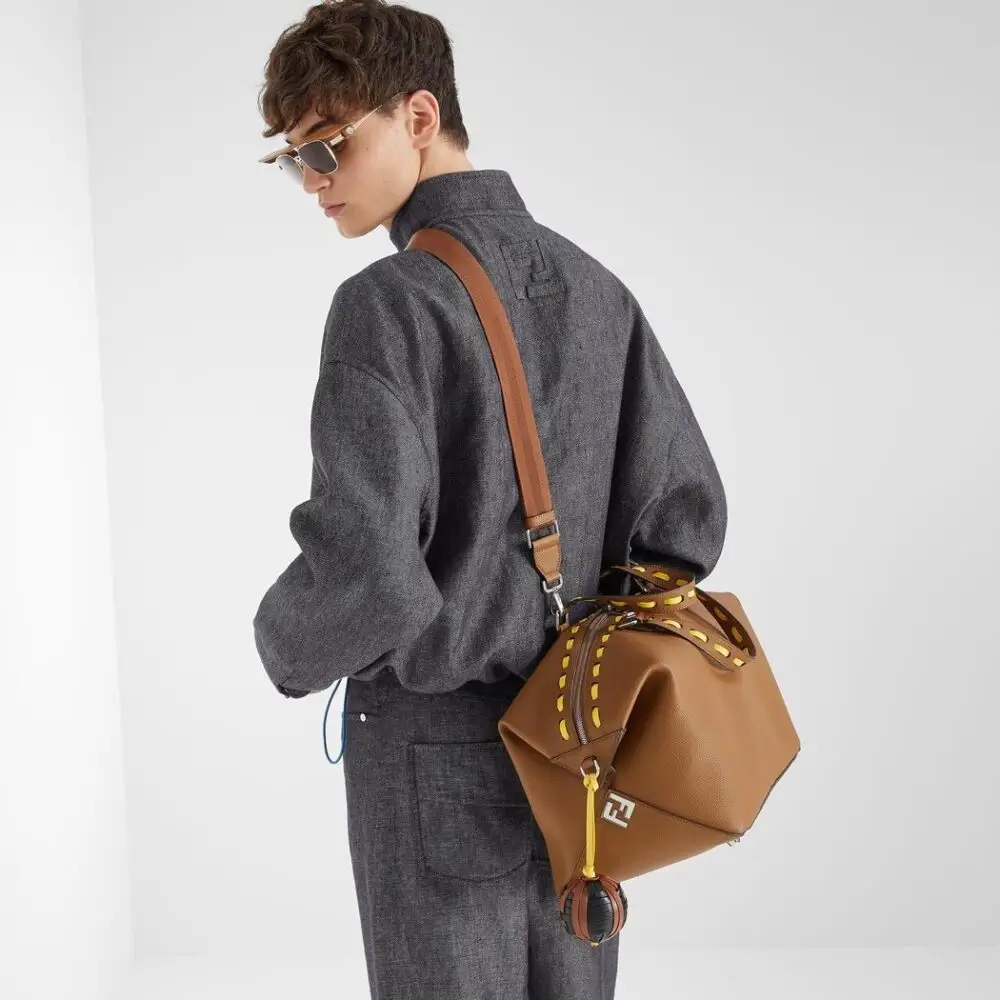
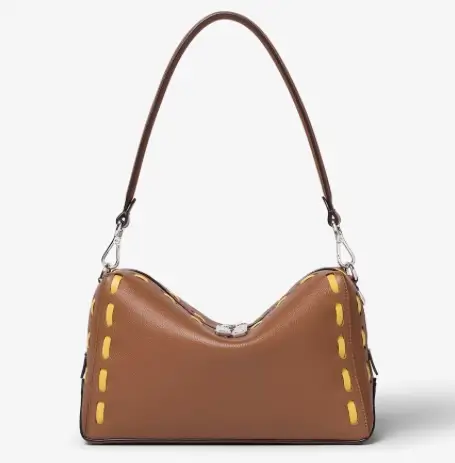
In a fashion landscape increasingly defined by speed, replication, and digital immediacy, it is rare for an object to feel considered. Rarer still for it to feel inevitable. Yet that is precisely the quiet authority of the Liu Duffle Bag from Fendi—a piece that does not announce itself loudly, but rather settles into the cultural bloodstream with confidence. First revealed during Milan Fashion Week Spring/Summer 2026, the Liu does not chase novelty. It refines it.
This is not a duffle bag in the traditional sense. It is not about the gym, nor the airport, nor even the idea of travel as a discrete activity. Instead, it reframes movement itself as a continuous condition—something lived, worn, and carried through the everyday. In doing so, the Liu becomes less a functional accessory and more a sculptural response to how modern haute operates now.
View this post on Instagram
evolve
Founded in Rome in 1925, the house has long existed at the intersection of craftsmanship and experimentation. Its legacy is anchored in leather—precision, tactility, and an almost obsessive attention to finish. Yet Fendi has never been content to rest within heritage alone.
In recent years, the brand has leaned into a more fluid, adaptive approach to menswear. Traditional binaries—formal versus casual, structured versus relaxed—have begun to dissolve. What replaces them is a system of dressing that privileges versatility, tactility, and movement.
The Liu Duffle sits squarely within this shift. It is not nostalgic. It does not replicate archival shapes. Instead, it absorbs the house’s DNA—its material intelligence, its subtle branding codes, its Roman sensibility—and rearticulates them for a world where the lines between function and expression have blurred.
lang
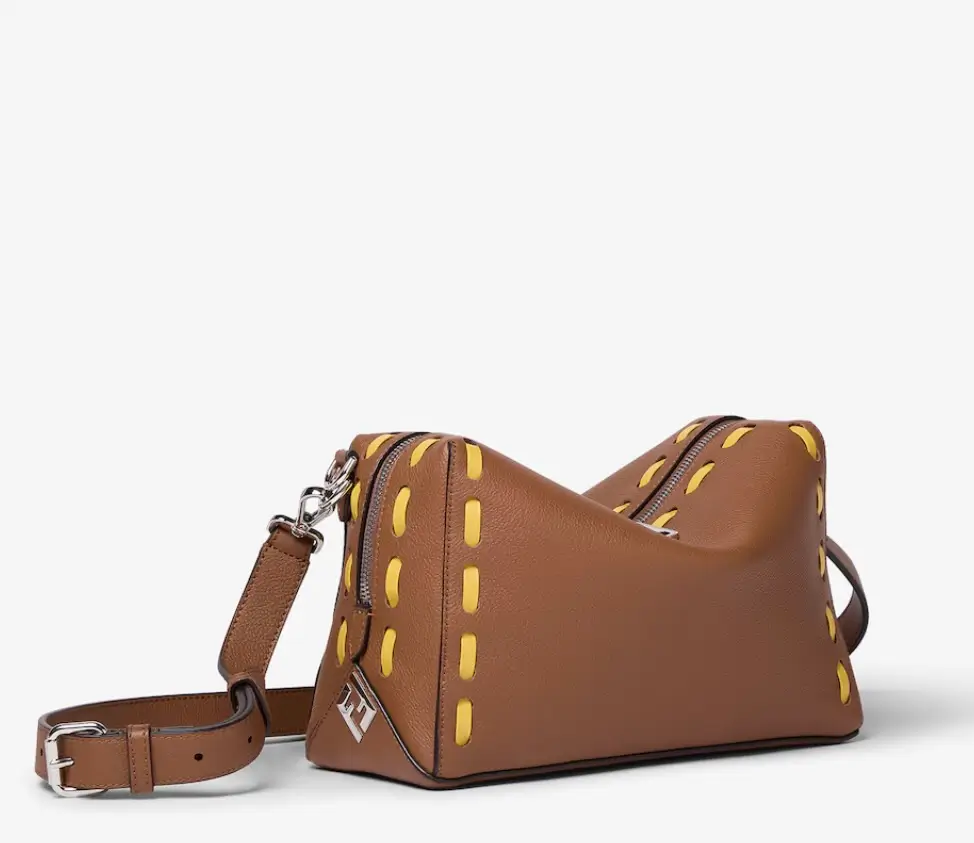
At first glance, the Liu appears deceptively simple. A soft, rounded volume in granulated leather, cinched at the top, suspended by a strap. But as with many Fendi objects, the depth reveals itself through interaction.
The silhouette resists rigidity. It folds, collapses, expands—responding to the body rather than dictating to it. This is crucial. Traditional duffle bags often impose their structure, forcing the wearer to adapt. The Liu reverses that relationship. It moves with you.
This softness is not accidental. It is engineered through:
- Granulated leather construction, providing both flexibility and resilience
- Minimal internal reinforcement, allowing natural drape and deformation
- Strategic seam placement, guiding the bag’s organic shape
The result is a form that feels alive—never static, always shifting. It is less an object and more a gesture.
intel
Fendi’s mastery of leather is well documented, but the Liu demonstrates a particularly refined understanding of how material communicates.
The granulated leather used here carries a subtle pebbling that absorbs light rather than reflecting it. This creates a muted, almost matte presence—luxurious without being ostentatious. It invites touch. It suggests durability.
Over time, this leather will evolve. It will crease, soften, and develop a patina unique to its wearer. In this sense, the Liu is not a finished product. It is a starting point.
This relationship between object and owner is central to the bag’s appeal. It acknowledges that luxury is not static. It is lived.
bal
Perhaps the most striking detail of this particular iteration is the contrast yellow whipstitching that traces the upper seams. It is a deliberate interruption—a moment of tension within an otherwise controlled design.
This detail does several things simultaneously:
- It introduces a handcrafted sensibility, suggesting artisanal intervention
- It disrupts the monochromatic palette, creating visual rhythm
- It subtly references Fendi’s history of playful subversion
The stitching is not merely decorative. It is conceptual. It reminds us that even within refinement, there is room for irreverence.
View this post on Instagram
style
Branding in contemporary luxury has undergone a significant transformation. Where once logos were enlarged, amplified, and made explicit, there is now a shift toward subtlety—toward codes that signal rather than shout.
The Liu Duffle embodies this shift through its FF metal hardware. Positioned discreetly, the logo does not dominate the design. Instead, it anchors it.
For those who recognize it, the FF is unmistakable. For those who do not, it remains simply a detail—clean, considered, precise. This duality is powerful. It allows the bag to operate across contexts, appealing to both insiders and newcomers.
show
Traditionally, a duffle bag is defined by capacity. It is large, cylindrical, utilitarian. The Liu challenges this definition.
While Fendi offers the bag in two sizes, the version seen here leans toward compactness. It compresses the idea of a duffle into something more intimate—closer to a day bag than a travel piece.
This shift reflects broader changes in how we move:
- Travel is more frequent, but often lighter
- Work and leisure are increasingly intertwined
- Objects must serve multiple roles
The Liu responds by offering flexibility. It can function as a travel companion, yes, but also as an everyday carry. It adapts to context rather than dictating it.
flow
The Liu Duffle is explicitly designed for the “modern man,” but this term requires unpacking. In 2026, the modern man is not defined by a single aesthetic or lifestyle. He is fluid—moving between roles, environments, and identities with ease.
He requires objects that reflect this fluidity. Objects that are:
- Versatile, capable of shifting between contexts
- Durable, able to withstand constant movement
- Expressive, but not overwhelming
The Liu meets these needs with quiet confidence. It does not demand attention. It earns it.
stir
One of the Liu’s greatest strengths is its ability to integrate seamlessly into a wardrobe. In the image provided, the bag is styled with a textured grey ensemble, its warm tan leather providing a subtle contrast.
The crossbody wear introduces a sense of ease—hands-free, unencumbered, mobile. It aligns with the broader narrative of movement that defines the piece.
Importantly, the bag does not dominate the look. It complements it. This restraint is key. It allows the wearer to remain the focal point, with the bag acting as an extension rather than a statement.
runway
The journey from runway to retail is often fraught. Many pieces lose their impact when removed from the theatrical context of a show. The Liu, however, retains its presence.
This is because its design is rooted in reality. It is not dependent on spectacle. It functions independently of the runway narrative.
At the same time, it carries the memory of that moment—the energy of its debut, the context of its presentation. This duality enhances its appeal. It is both object and artifact.
culture
The Liu Duffle emerges at a moment when luxury itself is undergoing transformation. There is a growing emphasis on:
- Longevity over immediacy
- Craft over branding
- Experience over possession
Consumers are increasingly seeking objects that offer more than surface appeal. They want depth, narrative, and authenticity.
The Liu delivers on these fronts. It is not a trend-driven piece. It is a considered addition to a wardrobe—a long-term companion rather than a seasonal statement.
xp
Beyond its physical attributes, the Liu engages on an emotional level. There is a particular satisfaction in carrying an object that feels aligned with one’s movement—one’s pace, one’s rhythm.
The softness of the leather, the subtle weight, the way the bag shifts as you walk—all contribute to a sensory experience that extends beyond utility.
This is where the Liu transcends function. It becomes part of the wearer’s daily narrative.
fin
The Liu Duffle Bag does not seek to redefine luxury through spectacle. Instead, it does something more nuanced—and perhaps more enduring. It refines the relationship between object and movement, between material and experience.
In a world that often prioritizes the immediate, the Liu offers something slower, more considered. It invites engagement. It rewards attention.
It is not loud. It does not need to be.
Because in the end, the most powerful statements in fashion are often the ones that whisper—and then remain.